
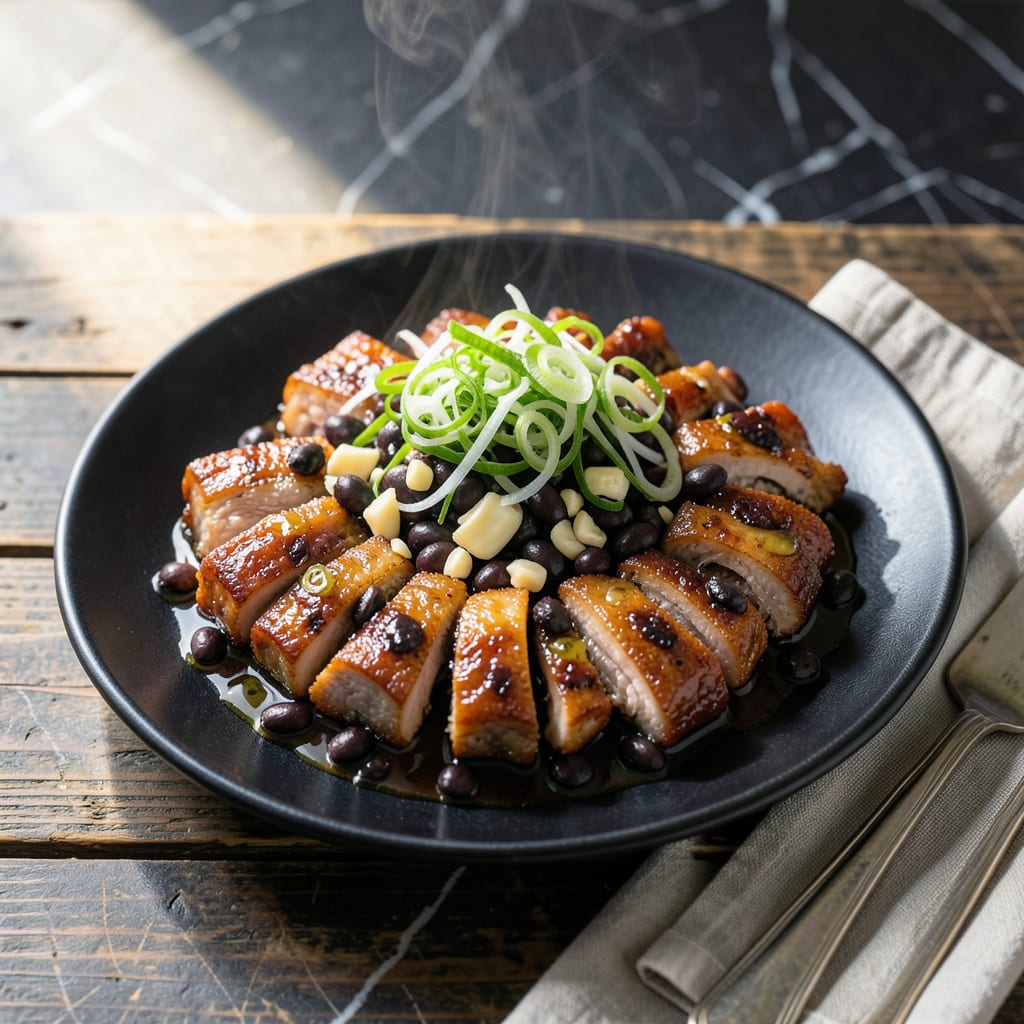
This Cantonese classic delivers tender pork ribs infused with the deep, savory richness of fermented black beans. The steaming process locks in juices while allowing the bold flavors to penetrate every bite.
With just 30 minutes of prep and a simple marinade, you can recreate this restaurant-quality dish at home. The ribs emerge fall-off-the-bone succulent, coated in a glossy, umami-packed sauce that’s irresistibly satisfying.
Ingredients for Steamed Pork Ribs with Black Bean Sauce
Tender ribs meet bold Cantonese flavors with just a handful of pantry staples.
| Ingredient | Amount | Notes |
|---|---|---|
| Pork Spareribs 🐖 | 2 lb | Cut into individual ribs |
| Fermented Black Beans ⚫ | 3 tbsp | Rinsed and chopped |
| Garlic Cloves 🧄 | 6 cloves | Minced finely |
| Fresh Ginger 🌿 | 1 ½ tbsp | Grated or minced |
| Green Onions 🧅 | 4 whole | Chopped, whites and greens separated |
| Soy Sauce 🥫 | 3 tbsp | Low-sodium preferred |
| Oyster Sauce 🍶 | 2 tbsp | Vegetarian oyster sauce if needed |
| Chinese Rice Wine 🍷 | 2 tbsp | Shaoxing wine or dry sherry |
| Granulated Sugar 🍚 | 1 tbsp | Balances saltiness |
| Sesame Oil 🫒 | 1 tsp | Toasted for depth |
| Cornstarch 🌾 | 1 tbsp | For thickening sauce |
| Water 💧 | ¼ cup | For steaming and sauce |
| Vegetable Oil 🫒 | 1 tbsp | Neutral cooking oil |
[recipeingredientscaler]
The ribs are everything here. Pork spareribs give you the right fat-to-meat ratio for that fall-off-the-bone texture. Ask your butcher to cut them into individual ribs (or buy pre-cut from Asian markets—they usually stock them this way). The fermented black beans are non-negotiable—look for the dried kind in plastic bags, not the canned ones. They’re saltier and pack way more umami.
No oyster sauce? Vegan oyster sauce or hoisin works in a pinch. Missing rice wine? Dry sherry at a 1:1 ratio. The cornstarch can be swapped with arrowroot powder at the same amount. If you can’t find spareribs, baby back ribs are a decent substitute (just trim excess fat). Don’t skip the ginger—it cuts through the richness and brightens the whole dish.
Marinate the ribs for at least 2 hours (overnight is even better). Leftovers keep in the fridge for 3-4 days and reheat beautifully. Freeze uncooked marinated ribs for up to 3 months—perfect for a quick weeknight meal.
Why You’ll Love This Recipe
- One Pot Wonder: I just toss everything in the steamer—the ribs, fermented black beans, garlic, and ginger—and let the steam do the work.
- Umami Bomb: The fermented black beans and garlic create this deep, salty-sweet flavor that clings to every bite of tender pork.
- Feeds a Crowd: I make a big batch for family dinners, and it’s always the first dish to disappear.
- Budget Friendly: Pork spareribs are affordable, and a little goes a long way with that bold black bean sauce.
Step-by-Step Instructions for Steamed Pork Ribs With Black Bean Sauce
This Cantonese classic comes together with simple techniques and bold, aromatic flavors.
Step 1: Prepare the Pork Spareribs and Marinade
Cut the 2 lb pork spareribs into individual ribs using a sharp knife. I find it easiest to slice between the bones where the meat naturally separates. Pat them dry with paper towels—this helps the marinade cling better to the meat.
In a large bowl, combine the ribs with 3 tbsp soy sauce, 2 tbsp oyster sauce, 2 tbsp Chinese rice wine, 1 tbsp granulated sugar, and 1 tbsp cornstarch. Mix well to coat every piece evenly. The cornstarch creates a light coating that helps the sauce adhere during steaming.
Let the ribs marinate for at least 15 minutes at room temperature. This gives the flavors time to penetrate the meat, ensuring every bite is well-seasoned.
Step 2: Create the Black Bean Sauce Base
Rinse the 3 tbsp fermented black beans under cold water to remove excess salt, then chop them finely. Heat 1 tbsp vegetable oil in a small saucepan over medium heat. Add the chopped black beans, 6 cloves minced garlic, and 1.5 tbsp fresh ginger. Sauté for 1-2 minutes until fragrant.
Stir in the whites of the 4 green onions (save the greens for garnish) and cook for another 30 seconds. Pour in the 0.25 cup water and bring to a gentle simmer. This creates the aromatic foundation for your sauce.
Let the mixture simmer for 3-4 minutes until slightly reduced. The liquid should look slightly syrupy as it thickens. Remove from heat and set aside.
Step 3: Steam the Pork Spareribs
Arrange the marinated ribs on a heatproof plate that fits inside your steamer, leaving a little space between each piece so the steam can circulate. I use a bamboo steamer lined with parchment paper for easy cleanup.
Bring water to a boil in your steamer base. When ready, place the plate of ribs inside, cover tightly with the lid, and steam over high heat for 20-25 minutes. You want the ribs to become tender enough that the meat nearly falls off the bone when pierced with a fork.
Check the water level halfway through steaming. If it’s running low, carefully add more hot water to the base. Steam is the key to keeping these ribs incredibly moist while allowing the flavors to develop beautifully.
Step 4: Finish with Sauce and Garnish
Once the ribs are cooked, carefully remove them from the steamer and transfer to a serving platter. Pour the black bean sauce evenly over the hot ribs. The heat from the pork will help the sauce thicken slightly as it coats each piece.
Drizzle the 1 tsp sesame oil over the top and sprinkle with the green parts of the green onions for a fresh finish. The sesame oil adds a nutty depth that complements the salty-sweet black bean sauce perfectly.
Let the dish rest for 5 minutes before serving. This allows the sauce to fully meld with the ribs, creating that signature Cantonese-style savory succulence in every bite.
Pro Tips For Making Steamed Pork Ribs With Black Bean Sauce
- Parboil the Ribs: I learned this the hard way—boil the ribs for 5-8 minutes first to remove impurities and tighten the meat, so they hold up better during steaming.
- Rinse the Black Beans: Fermented black beans can be salty and gritty, so give them a quick rinse under cold water to mellow the flavor without losing their punch.
- Skip Overcrowding: Sounds obvious, but resist the urge to pack the steamer basket—leave space between ribs so the heat circulates and they cook evenly.
- Steam Over Boiling Water: Make sure your water is at a full, rolling boil before adding the ribs—this guarantees consistent heat and prevents soggy, unevenly cooked meat.
Health Benefits of These Flavors
Rich in Protein
This dish packs a serious protein punch with 2 lb pork spareribs providing about 50g of protein per serving. Protein is essential for muscle repair and growth, making this a hearty meal that keeps you full and energized for hours. I always feel satisfied after enjoying this Cantonese classic. 💪
Fermented Food Benefits
The 3 tbsp fermented black beans bring probiotic benefits to your gut health. Fermented foods support digestion and boost your immune system. These little beans also add a unique umami depth that’s hard to replicate with other ingredients.
Low in Saturated Fat
Compared to other pork preparations, steaming keeps the fat content in check. The 20-25 minutes of steaming allows excess fat to render out while preserving moisture. This cooking method creates a healthier version without sacrificing flavor.
Essential Minerals
Pork is rich in essential minerals like iron, zinc, and phosphorus. A serving provides about 15% of your daily iron needs, which is crucial for oxygen transport in your blood. The black beans add a boost of calcium and magnesium to support bone health.
B Vitamin Boost
This meal is loaded with B vitamins, particularly B12 and B6 from the pork. These vitamins support energy metabolism and nervous system function. The garlic and ginger in the sauce add extra antioxidants to the mix. 🌟
Balanced Flavors
The combination of savory, sweet, and umami in this dish means you can enjoy rich flavors without relying on excessive salt. The 1 tbsp sugar balances the saltiness of the soy and oyster sauces, creating a harmonious taste profile.
Nutrition Facts
Frequently Asked Questions
Can I use baby back ribs instead of spareribs?
Yes, but trim excess fat first. Baby back ribs are leaner and cook faster, so reduce steaming time to 15-20 minutes. Spareribs are preferred for their higher fat content, which keeps the meat moist during steaming.
Why rinse the fermented black beans?
Rinsing removes excess salt and grit from the preserved beans. This prevents your sauce from becoming overly salty and ensures a cleaner flavor. A quick rinse under cold water for 20-30 seconds is all you need.
What if my sauce is too thin?
Simmer it longer to reduce, or mix 1 tsp cornstarch with 1 tbsp water and stir into the sauce. Heat for 1-2 minutes until thickened. The sauce should coat the back of a spoon but still drizzle easily.
Can I make this ahead of time?
Marinate ribs overnight for deeper flavor. Steam just before serving, or reheat steamed ribs by steaming again for 5-8 minutes. The sauce can be made 2 days ahead and stored in the fridge.

- 6 Egg Cake Recipe with Oil: Light as Air With Buttery Moisture - October 4, 2026
- 4 Bean Casserole Recipe: One-Pan Heartiness With Smoky Paprika Depth - October 4, 2026
- 3-Ingredient Keto Mug Cake Recipe: Microwave Magic in 2 Minutes - October 4, 2026