
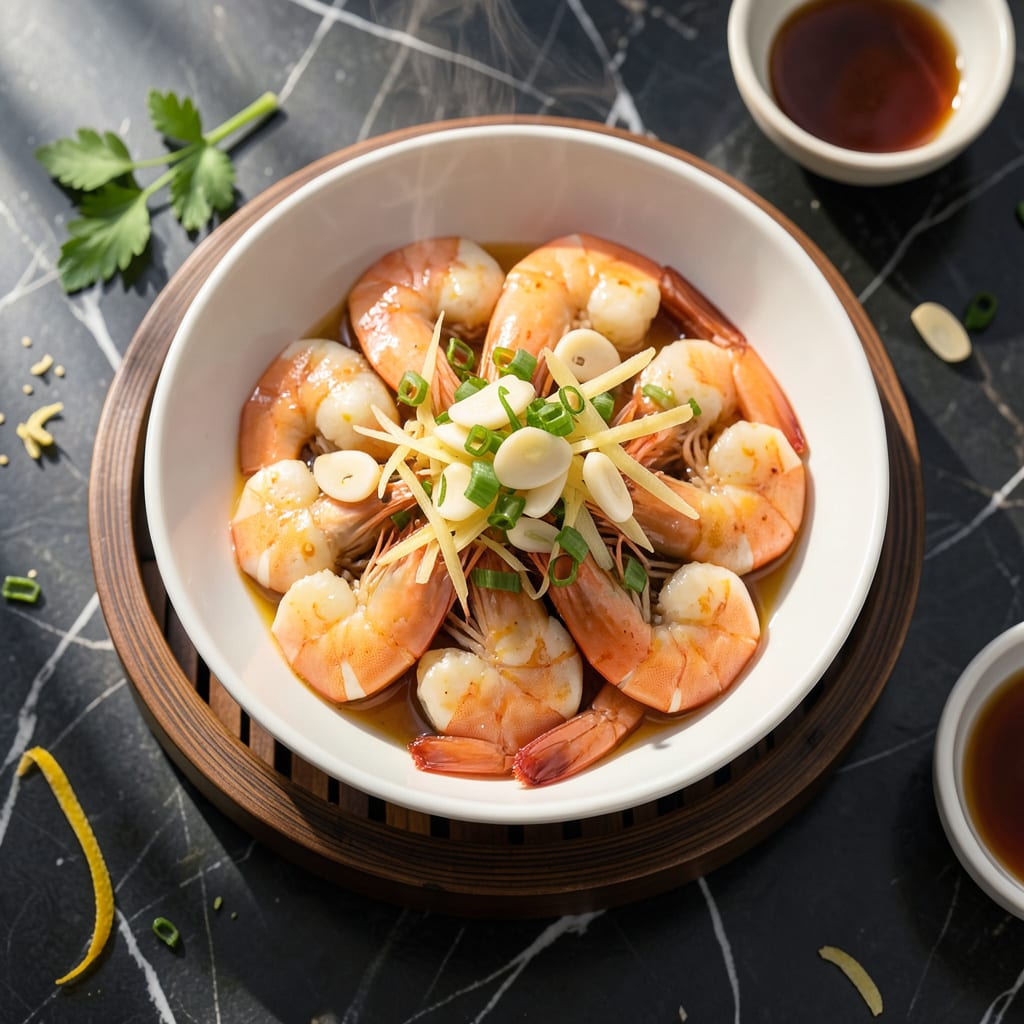
This traditional Chinese steaming method preserves the shrimp’s natural sweetness while infusing it with bold garlic flavor. The key is using fresh shrimp and maintaining high heat throughout the process.
You’ll achieve plump, aromatic shrimp with tender texture in just 10 minutes. The simple sauce of garlic, ginger, and soy enhances without overwhelming the delicate seafood.
Ingredients for Chinese Steamed Garlic Shrimp
Fresh shrimp and bold aromatics create this classic dish with minimal effort and maximum flavor.
| Ingredient | Amount | Notes |
|---|---|---|
| Large Shrimp 🍤 | 1 ½ lb | Peeled, deveined, tails on |
| Garlic Cloves 🧄 | 8 cloves | Minced finely for maximum flavor |
| Fresh Ginger 🌿 | 1 tbsp | Grated or minced |
| Light Soy Sauce 🫒 | 3 tbsp | Low-sodium preferred for balance |
| Shaoxing Wine 🍶 | 2 tbsp | Chinese cooking wine, or dry sherry |
| Sesame Oil 🫒 | 1 tsp | Toasted for depth |
| Green Onions 🧅 | 3 whole | Thinly sliced for garnish |
| Fresh Cilantro 🌿 | ¼ cup | Chopped, stems removed |
| Red Chili Pepper 🌶️ | 1 whole | Thinly sliced, optional for heat |
| Sugar 🍚 | 1 tsp | Balances acidity and salt |
| White Pepper 🧂 | ¼ tsp | Ground, for subtle warmth |
| Vegetable Oil 🫒 | 1 tbsp | Neutral flavor for cooking |
[recipeingredientscaler]
The shrimp quality is non-negotiable here. Wild-caught or sustainably farmed from a reputable fishmonger (or Whole Foods seafood counter) ensures the best texture and flavor. Look for shrimp labeled 16/20 count—they’re large enough to hold up to steaming. Avoid previously frozen shrimp if possible, as they can become mushy. The ginger should be firm and smooth, with vibrant color under the skin.
No Shaoxing wine? Dry sherry or pale dry vermouth work as substitutes. If avoiding alcohol entirely, use additional soy sauce with a splash of rice vinegar. Fresh cilantro can be swapped for parsley if preferred. The green onions are flexible—scallions or chives both add a nice freshness. For a milder dish, omit the chili or seeds.
Steamed shrimp are best served immediately, but leftovers keep for 1-2 days in the fridge. Reheat gently in a steamer or microwave with a damp paper towel. The sauce ingredients (minus fresh herbs) can be prepped 1 day ahead and stored in the refrigerator.
Why You’ll Love This Recipe
- 20-Minute Meal: I can prep this start to finish while the rice cooks—just toss shrimp with garlic, ginger, and a splash of Shaoxing wine.
- Garlic-Ginger Bomb: The combo of fresh ginger and minced garlic with light soy sauce makes every bite ridiculously flavorful. Honestly, I could drink the sauce.
- Weeknight Hero: This works for a quick dinner, impressing guests, or even meal prep—shrimp reheats beautifully.
- Budget Luxury: Large shrimp feel fancy but cost less than takeout, and I stretch leftovers into fried rice the next day.
Step-by-Step Instructions for Chinese Steamed Garlic Shrimp
This method delivers tender shrimp infused with aromatic flavors in just minutes.
Step 1: Prepare the Shrimp and Aromatics
Rinse the 1.5 lb Large Shrimp under cold water and pat them completely dry with paper towels. This prevents excess moisture from diluting the steaming liquid. Arrange the shrimp in a single layer on a heatproof plate that will fit inside your steamer.
Finely mince the 8 cloves Garlic Cloves and grate the 1 tbsp Fresh Ginger. Thinly slice the 3 whole Green Onions, keeping the white and green parts separate. Slice the 1 whole Red Chili Pepper into thin rings if using. These aromatics form the flavor base that will infuse the shrimp during steaming.
Step 2: Create the Steaming Sauce
In a small bowl, combine the 3 tbsp Light Soy Sauce, 2 tbsp Shaoxing Wine, 1 tsp Sugar, and 0.25 tsp White Pepper. Stir until the sugar fully dissolves. This mixture will steam with the shrimp, creating a fragrant, savory sauce.
Scatter the minced garlic, grated ginger, and white parts of the green onions over the shrimp on the plate. Pour the soy sauce mixture evenly over everything. The liquid should pool slightly but not submerge the shrimp—just enough to create steam and flavor.
Step 3: Steam to Perfection
Bring 2-3 inches of water to a rolling boil in a wok or large pot fitted with a steamer basket. Place the plate of shrimp on the steamer rack, ensuring it sits above the water. Cover tightly with a lid and steam over high heat for 6-8 minutes, depending on the size of your shrimp.
You’ll know they’re done when the shrimp turn opaque and pink with a slight C-shape curl. Be careful not to overcook—shrimp continue cooking slightly after removal from the steamer. The aromatics will have released their essence into the sauce, creating an intoxicating aroma.
Step 4: Finish and Garnish
Carefully remove the plate from the steamer. The shrimp will be bathed in a light, flavorful sauce. Drizzle the 1 tsp Sesame Oil evenly over the top, then scatter the remaining green onion slices and 0.25 cup Fresh Cilantro as garnish. The sesame oil adds a nutty depth that complements the garlic and ginger beautifully.
Serve immediately while hot, with extra steaming liquid spooned over each portion. The shrimp should be plump, tender, and infused with the aromatic flavors of garlic, ginger, and Shaoxing wine in every bite.
Pro Tips For Making Chinese Steamed Garlic Shrimp
- Dry the Shrimp: Pat the shrimp completely dry with paper towels before steaming—excess moisture dilutes the garlic and ginger flavors and makes the sauce watery.
- Smash the Garlic: Lightly smash the garlic cloves instead of mincing them; this releases more aroma without turning bitter during steaming.
- Skip Boiling Wine: I learned this the hard way—add Shaoxing wine after removing the dish from heat to preserve its alcohol content and depth, rather than boiling it raw into the shrimp.
- Steam 3-4 Minutes: Large shrimp only need 3-4 minutes over high heat; any longer and they turn rubbery—pull them the second they turn opaque.
Flavor Customization for chinese steamed garlic shrimp
Spicy Kick
Add 2-3 dried red chilies or 1 tsp chili flakes to the steaming liquid for serious heat. I love using Sichuan peppercorns (toasted and crushed) for a numbing spice that pairs perfectly with garlic. Just ½ tsp adds that authentic Chinese restaurant tingling sensation. 🌶️
Sweet and Sour
Balance the savory with 1 tbsp rice vinegar and 1 tsp honey mixed into your soy sauce base. This creates a subtle sweet-tangy profile that complements the shrimp beautifully. I often add ½ cup diced pineapple to the plate before steaming.
Umami Boost
Enhance depth with 1 tbsp oyster sauce or 1 tsp fish sauce in your steaming liquid. For vegetarian umami, try 1 tbsp mushroom soy sauce or 2 chopped shiitake mushrooms added to the aromatics. These additions create a more complex, restaurant-quality sauce.
Herbal Notes
Fresh herbs can transform this dish. Try adding 5-6 Thai basil leaves or 1 stalk lemongrass (bruised) to the steaming plate. The citrusy aroma of kaffir lime leaves (2-3 leaves) also works wonderfully with shrimp. Remove any tough stems before serving.
Citrus Brightness
A splash of citrus at the end brightens all the flavors. I love finishing with 1 tbsp fresh lime juice or the zest of 1 small orange. For a Chinese twist, use yuzu juice if available—just ½ tsp adds incredible fragrance.
Nutty Crunch
Toast 2 tbsp chopped peanuts or cashews and sprinkle over the finished dish. This adds texture contrast and a satisfying crunch. I sometimes use sesame seeds (toasted) for a more subtle nutty note that pairs perfectly with the sesame oil finish. 💛
Nutrition Facts
Frequently Asked Questions
Should I leave the tails on the shrimp?
Yes! Leaving tails on adds visual appeal and helps retain moisture. It also makes handling easier when serving. Just ensure they’re cleaned well before cooking.
What if I don’t have a steamer basket?
Use a heatproof plate on top of an overturned bowl in a pot of boiling water. Or improvise with a metal colander over a pot, covered tightly with a lid.
How do I prevent overcooking?
Watch for the shrimp turning opaque and curling into a C-shape. Remove immediately at 6-8 minutes – they’ll continue cooking off heat. Overcooked shrimp become rubbery.
Can I use frozen shrimp?
Thaw completely in cold water first and pat very dry. Frozen shrimp may release more liquid, so reduce the soy sauce mixture slightly. Fresh is always best for texture.

- 6 Egg Cake Recipe with Oil: Light as Air With Buttery Moisture - October 4, 2026
- 4 Bean Casserole Recipe: One-Pan Heartiness With Smoky Paprika Depth - October 4, 2026
- 3-Ingredient Keto Mug Cake Recipe: Microwave Magic in 2 Minutes - October 4, 2026