
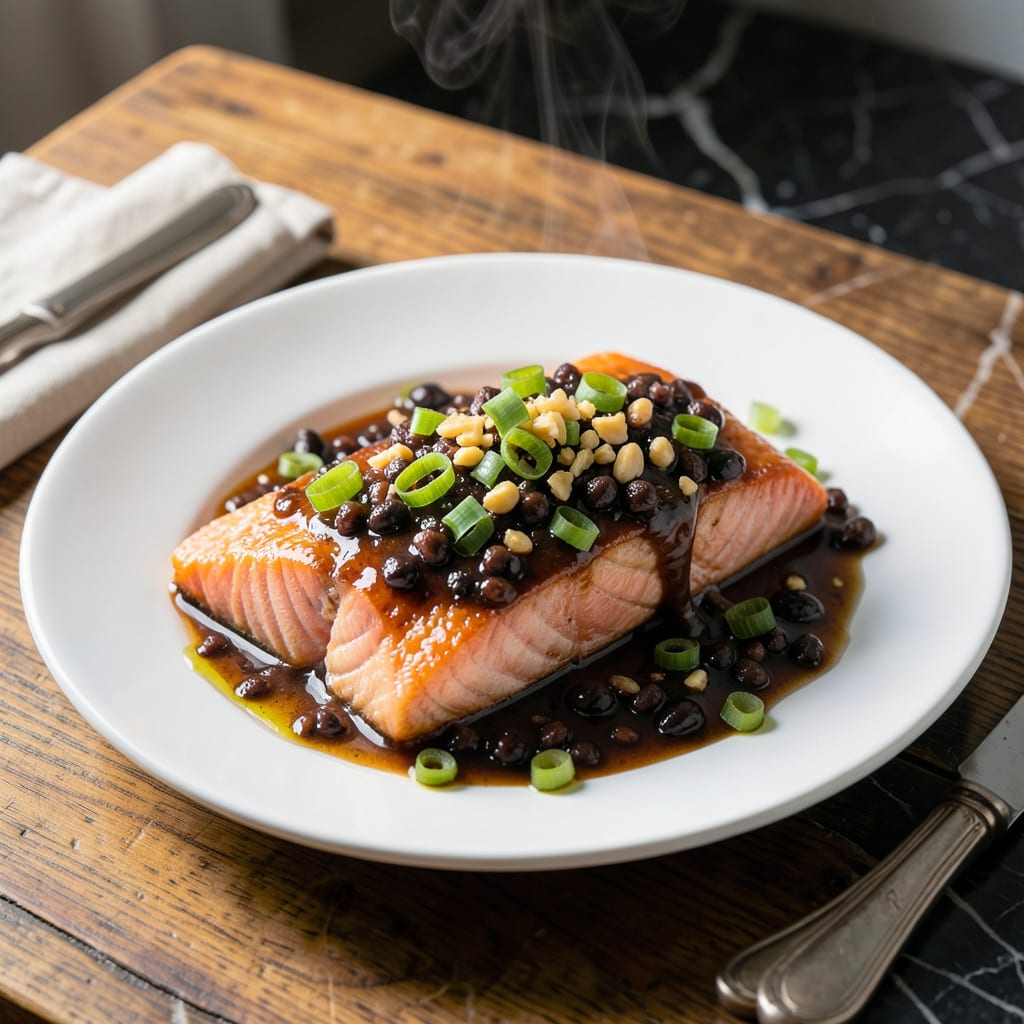
This Cantonese-style dish showcases salmon at its most tender and flavorful, elevated by a rich, aromatic black bean sauce.
Steaming preserves the fish’s natural moisture while the fermented black beans add a deep, savory complexity that’s both traditional and deeply satisfying.
Ingredients for Steamed Salmon Black Bean Sauce
Fresh salmon and aromatic ingredients create this Cantonese-style dish with rich black bean depth.
| Ingredient | Amount | Notes |
|---|---|---|
| Salmon Fillets 🐟 | 1 ½ lb | Skin-on, fresh or thawed |
| Fermented Black Beans ⚫ | 2 tbsp | Rinsed and drained |
| Garlic Cloves 🧄 | 4 cloves | Minced finely |
| Fresh Ginger Root 🌿 | 1 tbsp | Peeled and grated |
| Green Onions 🧅 | 3 whole | Thinly sliced, whites and greens separated |
| Light Soy Sauce 🫕 | 2 tbsp | Low-sodium preferred |
| Shaoxing Wine 🍶 | 1 tbsp | Or dry sherry as substitute |
| Sesame Oil 🫒 | 1 tsp | Toasted variety for depth |
| Sugar 🍚 | 1 tsp | White granulated or rock sugar |
| Vegetable Oil 🫒 | 1 tbsp | Neutral flavor, for cooking |
| Chicken Stock 🍲 | ¼ cup | Low-sodium preferred |
| Cornstarch 🌾 | 1 tsp | Mixed with water for slurry |
| Red Chili Pepper 🌶️ | 1 whole | Thinly sliced, optional for heat |
The salmon quality is non-negotiable. Wild-caught sockeye or king salmon from Whole Foods or Costco offers the best texture and flavor for steaming. The fermented black beans must be the Chinese variety—look for brands like Lee Kum Kee or Koon Chun in Asian markets. Avoid the Japanese black beans (kuromame), as they lack the necessary saltiness and umami punch for this sauce.
No Shaoxing wine? Dry sherry works in a pinch, though the flavor profile shifts slightly. For a non-alcoholic option, chicken stock plus a dash of rice vinegar mimics the depth. The soy sauce should be light (not dark), as dark soy will overpower the dish. Fresh ginger is essential—jarred ginger lacks the vibrant kick this sauce demands. The green onions add brightness; if unavailable, substitute with chives.
The sauce keeps in an airtight container for up to 5 days in the fridge, though it’s best fresh. Reheat gently to preserve the delicate flavors. The salmon is best served immediately but can be stored in the fridge for 1-2 days. Always bring salmon to room temperature before steaming for even cooking.
Why You’ll Love This Recipe
- One Pan Wonder: I steam the salmon right in the sauce—no extra dishes, just a single skillet and 15 minutes of my time.
- Umami Bomb: The fermented black beans and ginger create this deep, savory punch that makes the salmon taste like it came from a high-end restaurant.
- Weeknight Hero: Honestly, it’s my go-to for busy evenings—fancy enough for guests, but simple enough for a Tuesday.
- Leftovers Win: The flavors actually get better overnight, so I always make extra for next-day lunches.
Step-by-Step Instructions for Steamed Salmon Black Bean Sauce
Master the technique for perfectly tender fish with a rich, aromatic Cantonese sauce.
Step 1: Prepare the Salmon and Aromatics
Pat the 1.5 lb Salmon Fillets dry with paper towels to ensure even steaming. Place them on a heatproof plate that fits inside your steamer. I prefer skin-side down for better heat circulation and presentation.
Finely mince the 4 cloves Garlic Cloves and peel and grate the 1 tbsp Fresh Ginger Root. Thinly slice the 3 whole Green Onions, keeping whites and greens separate. Rinse and drain the 2 tbsp Fermented Black Beans to remove excess salt.
Step 2: Create the Black Bean Sauce Base
Heat the 1 tbsp Vegetable Oil in a wok or saucepan over medium heat. Add the minced garlic, grated ginger, and white parts of the green onions. Stir-fry for 30 seconds until fragrant but not browned.
Add the rinsed fermented black beans and cook for 1 minute, pressing them lightly to release their briny essence. Pour in the 1 tbsp Shaoxing Wine and let it simmer for 30 seconds to cook off the alcohol. This builds the foundation of your sauce with layered Cantonese flavors.
Step 3: Steam the Salmon to Perfection
Bring water to a rolling boil in your steamer. Place the plate with salmon inside, cover tightly, and steam for 8-10 minutes. The fish is done when it turns opaque and flakes easily with a fork—it should reach an internal temperature of 145°F.
Avoid overcrowding the steamer; leave space for steam to circulate. If your steamer is small, cook the salmon in batches. The gentle heat preserves the delicate texture while allowing the fish to absorb subtle aromatic notes from the steam.
Step 4: Finish the Sauce and Combine
To the wok with the black bean mixture, add the 2 tbsp Light Soy Sauce, 1 tsp Sugar, and 0.25 cup Chicken Stock. Bring to a simmer and cook for 2 minutes until the sugar dissolves.
Mix the 1 tsp Cornstarch with 1 tablespoon water to create a slurry, then stir it into the sauce. Cook for 1-2 minutes until the sauce thickens to a glossy, velvety consistency. Stir in the 1 tsp Sesame Oil and thinly sliced red chili pepper if using. Remove from heat.
Step 5: Plate and Garnish
Carefully transfer the steamed salmon to a serving platter. Spoon the hot black bean sauce generously over the fillets, ensuring each piece is well-coated. Garnish with the reserved green onion greens for a pop of color and freshness.
Serve immediately while the salmon is still moist and the sauce is at its peak viscosity. The contrast of silky fish with the bold, savory-salty black bean sauce exemplifies Cantonese culinary balance. Pair with steamed jasmine rice to soak up every bit of the flavorful sauce.
Pro Tips For Making Steamed Salmon Black Bean Sauce
- Rinse the Beans: Soak fermented black beans in warm water for 10 minutes to reduce saltiness, then rinse well—I learned this the hard way after my first batch came out unbearably salty.
- Score the Salmon: Make shallow cuts across the skin side of the fillets before steaming to help the heat penetrate evenly and prevent curling.
- Steam Over Boiling Water: Bring the water to a full rolling boil before adding the salmon, then steam for exactly 8-10 minutes depending on thickness—any less and it’s underdone, any more and it dries out.
- Toast the Aromatics: Sauté the garlic, ginger, and black beans in a little oil for 30 seconds before mixing with the steamed salmon to wake up the flavors.
Pro Cooking Tips for steamed salmon black bean sauce
Steamer Selection
Use a bamboo steamer with a tight-fitting lid for best results. I prefer a 12-inch diameter for even heat distribution. Ensure your wok or pot is wide enough to accommodate the steamer without touching the sides.
Water Temperature
Bring water to a rolling boil before adding the salmon. The steam should be vigorous but not so forceful it splashes onto the fish. Maintain this boil throughout the 8-10 minute cooking time for consistent results. 🌡️
Sauce Timing
Start your black bean sauce while the salmon steams. The sauce needs 5-7 minutes from start to finish, which aligns perfectly with the fish’s cooking time. This ensures both components are ready simultaneously.
Salmon Thickness
For fillets thicker than 1.5 inches, add 2-3 minutes to the steaming time. Check doneness by inserting a fork—the fish should flake easily at 145°F internal temperature.
Sauce Consistency
If your sauce thickens too much before the salmon is done, add 1-2 tbsp hot water to loosen it. The cornstarch slurry should create a glossy coating that clings to the fish without being gluey. 💡
Final Touch
Let the salmon rest for 1-2 minutes after steaming before saucing. This allows the juices to settle, preventing them from diluting your carefully crafted black bean sauce.
Nutrition Facts
Frequently Asked Questions
Can I use frozen salmon?
Yes, but thaw it completely in the fridge overnight first. Pat it very dry before steaming to prevent excess moisture from diluting the sauce.
What can I substitute for Shaoxing wine?
Dry sherry works best, but in a pinch use 1 tbsp chicken stock plus 1/2 tsp rice vinegar. Avoid cooking wine—it’s too salty.
How do I prevent the sauce from being too salty?
Rinse the fermented black beans thoroughly under cold water before using. This removes excess salt while keeping the deep umami flavor.
Can I make the sauce ahead of time?
Yes! Prepare the sauce up to 2 days ahead and store in an airtight container. Reheat gently before pouring over freshly steamed salmon.

- 6 Egg Cake Recipe with Oil: Light as Air With Buttery Moisture - October 4, 2026
- 4 Bean Casserole Recipe: One-Pan Heartiness With Smoky Paprika Depth - October 4, 2026
- 3-Ingredient Keto Mug Cake Recipe: Microwave Magic in 2 Minutes - October 4, 2026