
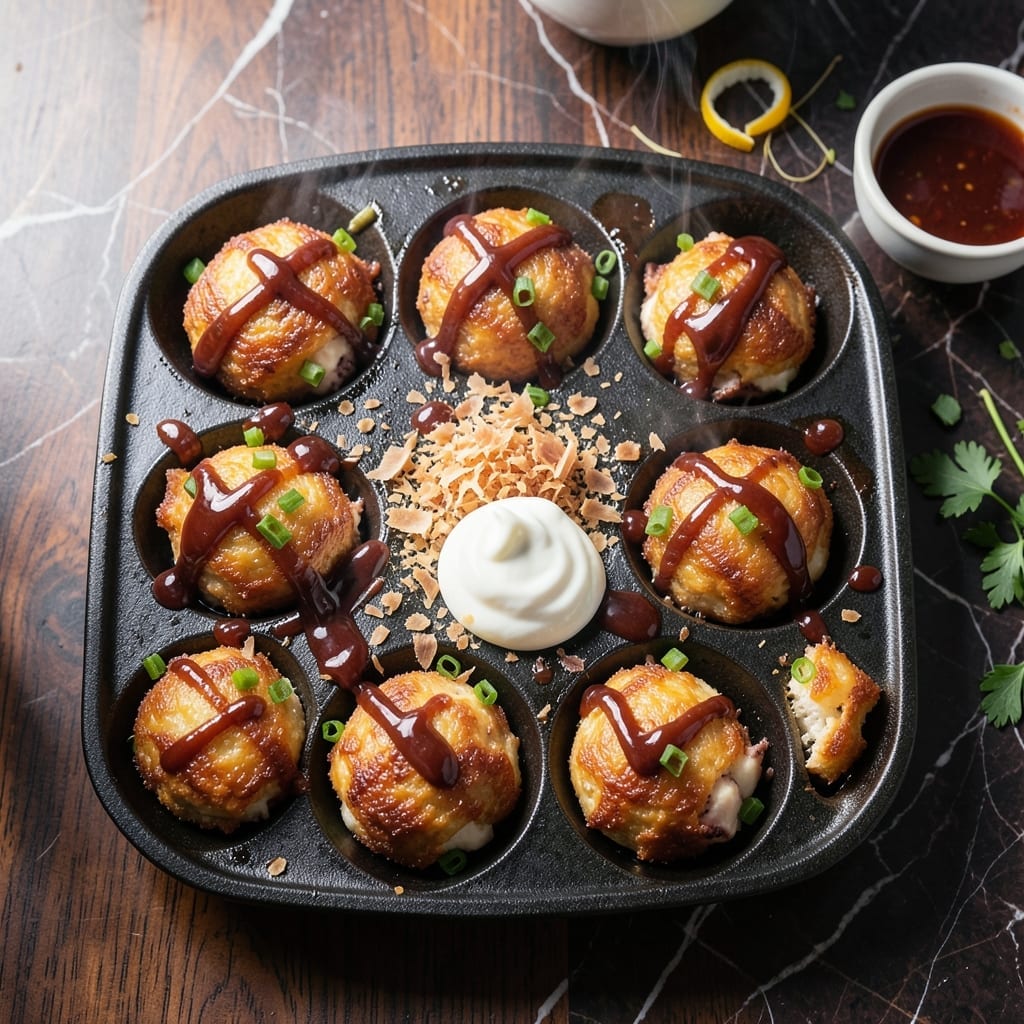
Craving that signature crispy takoyaki texture without a specialized pan? This muffin tin method delivers authentic results with tools you already own.
By baking the batter in preheated, oiled muffin cups, you achieve golden, evenly cooked balls with the same tender interior and slightly crispy exterior as traditional versions.
Each bite delivers the classic octopus filling wrapped in a savory, slightly sweet batter. The oven method ensures consistent cooking without constant flipping.
Perfect for home cooks wanting restaurant-quality takoyaki without special equipment. The secret lies in proper batter consistency and precise baking time.
Ingredients for Takoyaki Recipe Without Pan
A handful of Japanese pantry staples plus fresh octopus come together for this creative take.
| Ingredient | Amount | Notes |
|---|---|---|
| All-Purpose Flour 🌾 | 1 ½ cups | Sifted for smooth batter |
| Large Eggs 🥚 | 2 whole | Room temperature for binding |
| Dashi Stock 🍜 | 1 ¼ cups | Japanese-style, lightly seasoned |
| Cooked Octopus 🐙 | ½ lb | Diced into small pieces |
| Green Onions 🧅 | 3 whole | Thinly sliced, green parts only |
| Tenkasu 🍤 | ½ cup | Tempura scraps, finely chopped |
| Benne Shoga 🌶️ | 2 tbsp | Pickled red ginger, chopped |
| Soy Sauce 🫒 | 2 tbsp | Low-sodium preferred |
| Vegetable Oil 💧 | ¼ cup | For muffin tin and batter |
| Granulated Sugar 🍚 | 1 tbsp | Balances savory flavors |
| Baking Powder ✨ | 1 tsp | Ensures light, airy texture |
| Salt 🧂 | ½ tsp | Adjust to taste preference |
| Kewpie Mayonnaise 🥄 | ½ cup | For serving, traditional topping |
| Takoyaki Sauce 🍯 | ¼ cup | Commercial or homemade |
| Bonito Flakes 🍃 | 2 tbsp | For garnish, optional |
The octopus is non-negotiable for authenticity. Asian markets often carry pre-cooked, vacuum-sealed octopus—look for sashimi-grade if available. Dashi stock is the backbone of flavor; Kikkoman or Ajinomoto brands are reliable. Tenkasu adds texture, but if unavailable, crushed tempura bits or even panko can substitute. For the muffin tin, a standard 12-cup works perfectly—avoid non-stick for better crisping.
No dashi? Fish stock with a splash of soy works in a pinch. Fresh octopus can be used—simmer 45 minutes until tender before dicing. Imitation crab is a budget-friendly swap, though the flavor differs. Benne shoga adds tang; pickled ginger from sushi restaurants is an easy alternative. The batter should be thin but not watery—adjust with dashi or flour as needed.
Batter keeps 1 day refrigerated, but best used fresh. Cooked takoyaki balls freeze well for up to 1 month—reheat in an oven or toaster oven to revive crispness. Store toppings separately to prevent sogginess.
Why You’ll Love This Recipe
- No Fancy Equipment: I love that I can make these crispy little octopus balls without digging out a special pan—just a muffin tin works.
- Dashi Magic: The dashi stock in the batter gives that authentic Japanese flavor that makes them taste like street food from Osaka.
- Weeknight Rescue: Honestly, it’s my go-to when I need something quick but still impressive for unexpected guests.
- Budget Stretcher: A little octopus goes a long way, and the flour-egg batter is so cheap it feels like stealing.
Step-by-Step Instructions for Takoyaki Without a Pan
This muffin tin method delivers authentic flavor and texture with a simple baking approach.
Step 1: Prepare the Muffin Tin and Preheat Oven
Preheat your oven to 400°F to ensure proper rising and crisping. While the oven heats, thoroughly grease a standard 12-cup muffin tin with ¼ cup vegetable oil, making sure to coat each cup completely, including the sides.
Place the prepared tin in the oven for 5 minutes to heat the oil. This step is crucial—it creates a non-stick surface and helps the batter form that coveted crispy exterior as it bakes.
Step 2: Make the Takoyaki Batter
In a large mixing bowl, whisk together 1.5 cups all-purpose flour, 1 teaspoon baking powder, ½ teaspoon salt, and 1 tablespoon granulated sugar until fully combined. The baking powder ensures the takoyaki will be light and airy rather than dense.
Create a well in the center and add 2 whole large eggs, 1¼ cups dashi stock, and 2 tablespoons soy sauce. Whisk vigorously until the batter is smooth and free of lumps. The consistency should be similar to pancake batter—thick enough to coat the back of a spoon but still pourable.
Step 3: Fold in the Fillings
Drain any excess moisture from ½ pound diced cooked octopus, then fold it into the batter along with ½ cup tenkasu, 3 whole thinly sliced green onions, and 2 tablespoons benne shoga. Distribute these fillings evenly so each takoyaki has a balanced mix of flavors and textures.
Real talk: the octopus should be in small, bite-sized pieces to ensure even distribution. The tenkasu adds that signature tempura crunch, while the benne shoga provides a tangy, spicy kick that cuts through the richness of the batter.
Step 4: Bake Until Golden and Crisp
Carefully remove the hot muffin tin from the oven. Fill each cup ¾ full with batter, leaving room for expansion. Return the tin to the oven and bake for 18-20 minutes, or until the tops are golden brown and the edges have pulled away from the sides of the cups.
Resist the urge to open the oven early—this disrupts the baking process. You’ll know they’re ready when the takoyaki have puffed slightly and formed a crisp, golden crust. If the tops brown too quickly, tent the tin with foil for the remaining baking time.
Step 5: Serve with Traditional Toppings
Let the takoyaki cool in the tin for 2 minutes before carefully removing them with a small offset spatula or butter knife. They should release easily if the tin was properly greased.
Transfer to a serving plate and drizzle generously with ¼ cup takoyaki sauce and ½ cup Kewpie mayonnaise. Garnish with 2 tablespoons bonito flakes, which will dance beautifully from the residual heat. Serve immediately while hot and crispy—they’re best enjoyed fresh from the oven.
Pro Tips For Making Takoyaki Recipe Without Pan
- Pre-Cook the Octopus: If using raw octopus, simmer it in dashi stock for 3-5 minutes until tender before chopping—this guarantees it stays soft and absorbs more flavor.
- Chill the Batter: Let your flour-egg-dashi mixture rest in the fridge for 15 minutes before cooking; it thickens slightly and prevents the takoyaki from falling apart.
- Use a Muffin Tin: Grease a muffin tin well and bake at 400°F for 12-15 minutes—this mimics the pan’s shape and gives you that crispy exterior without special equipment.
- Skip Overmixing: Stir the batter just until combined—lumps are fine and overmixing makes the takoyaki tough, I learned this the hard way.
Wine and Beer Pairings for This Recipe
Japanese Beer Pairings
I always reach for a crisp Sapporo or Asahi Super Dry with takoyaki—their clean, slightly bitter profiles cut through the richness of the batter and octopus. The carbonation refreshes your palate between bites. 🍺
Sake Recommendations
A chilled junmai ginjo sake like Dassai 39 complements the savory-sweet flavors beautifully. Its fruity notes balance the umami from dashi and soy, while the smooth finish doesn’t overpower the delicate octopus.
Light Lager Options
For non-Japanese beers, a pilsner like Stella Artois works well. The light body and mild hoppiness won’t compete with the takoyaki’s flavors. Avoid heavy, malty beers that can feel overwhelming.
Wine Alternatives
If you prefer wine, a dry Riesling from Germany offers citrusy acidity that pairs surprisingly well. The slight sweetness mirrors the batter’s subtle sweetness while balancing the savory elements. 🍷
For red wine lovers, try a light Pinot Noir served slightly chilled—its earthy notes complement the octopus without overpowering the dish.
Nutrition Facts
Frequently Asked Questions
Can I use a silicone muffin mold instead?
Yes, but preheat it on a baking sheet for 10 minutes to ensure crispiness. Silicone won’t conduct heat as well as metal, so expect slightly softer edges.
What if my batter is too thick?
Thin it with 1-2 tablespoons dashi stock until it pours easily. A thick batter won’t cook through properly in the muffin tin.
Can I skip the octopus?
For authenticity, no—but shrimp or crab work as substitutes. Avoid overloading fillings to prevent soggy results.
How do I reheat leftovers?
Use a toaster oven at 375°F for 5-7 minutes to revive crispness. Microwaving makes them rubbery.

- 6 Egg Cake Recipe with Oil: Light as Air With Buttery Moisture - October 4, 2026
- 4 Bean Casserole Recipe: One-Pan Heartiness With Smoky Paprika Depth - October 4, 2026
- 3-Ingredient Keto Mug Cake Recipe: Microwave Magic in 2 Minutes - October 4, 2026