
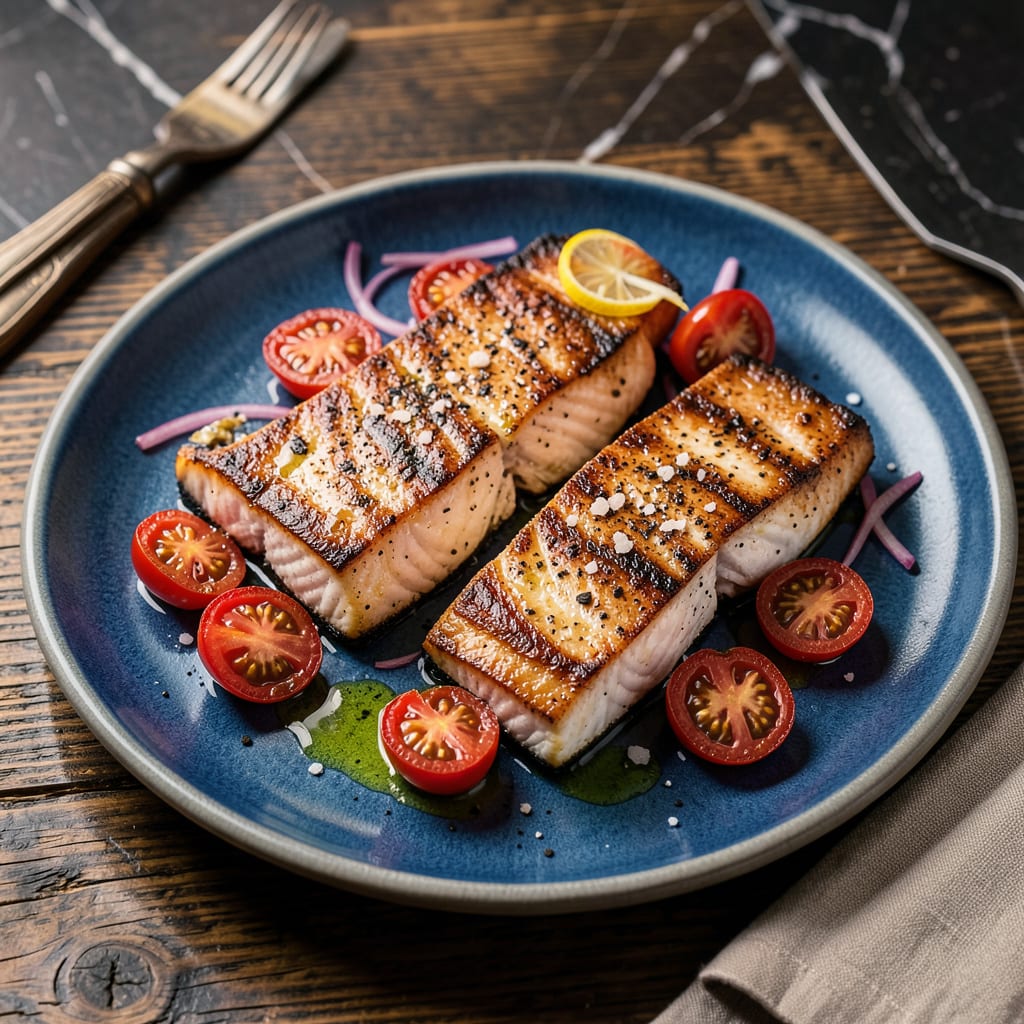
Swordfish steaks offer a luxurious dining experience that rivals any high-end restaurant—when prepared with the right technique. This recipe delivers a perfectly seared crust and tender, moist interior through precise temperature control and a simple yet effective seasoning approach.
The key lies in starting with thick-cut steaks and cooking them hot and fast. A quick sear in a ripping-hot pan creates that coveted golden crust while keeping the center juicy and flaky. With just a few professional techniques, you’ll achieve restaurant-quality results at home every time.
Ingredients for The Best Swordfish
Optimal restaurant-quality swordfish requires thick-cut steaks and precise seasoning for that signature golden crust.
| Ingredient | Amount | Notes |
|---|---|---|
| Swordfish Steaks 🐟 | 4 whole | 1-inch thick, skinless |
| Kosher Salt 🧂 | 1 ½ tsp | Diamond Crystal preferred |
| Freshly Ground Black Pepper 🌶️ | 1 tsp | Coarsely ground for texture |
| Smoked Paprika 🌶️ | 1 tsp | Spanish variety recommended |
| Garlic Powder 🧄 | ½ tsp | Not garlic salt |
| Extra-Virgin Olive Oil 🫒 | 3 tbsp | High smoke point required |
| Unsalted Butter 🧈 | 2 tbsp | European-style preferred |
| Fresh Lemon 🍋 | 1 whole | For zest and juice |
| Fresh Flat-Leaf Parsley 🌿 | ¼ cup | Finely chopped for garnish |
| Capers 🌱 | 1 tbsp | Drained and rinsed |
| Neutral Oil 🫒 | 2 tbsp | Avocado or grapeseed ideal |
The swordfish quality is paramount for this preparation. Wild-caught Pacific swordfish offers superior texture and flavor—look for steaks at least 1-inch thick, preferably from a reputable fishmonger or Whole Foods seafood counter. The steaks should appear moist (not dried out) with a vibrant, translucent quality. For the seasoning blend, Diamond Crystal kosher salt provides the ideal texture and salinity distribution, while freshly ground black pepper delivers the necessary bite. Professional kitchens standardize on these for consistency.
Substitutions require careful consideration to maintain the dish’s integrity. Mahi-mahi or halibut can replace swordfish in a pinch, though cooking times will vary. For the smoked paprika, standard paprika lacks the depth—Spanish pimentón de la Vera is the optimal choice. The neutral oil can be substituted with refined coconut oil (odorless), while ghee can replace butter for a higher smoke point. Always pat the fish thoroughly dry before seasoning to ensure proper searing.
Storage and preparation timing are critical for success. Swordfish steaks should be cooked within 24 hours of purchase for peak freshness. The seasoning blend can be prepared up to 1 week ahead and stored in an airtight container. Once cooked, the steaks hold beautifully for 3-4 days refrigerated, though the crust is best enjoyed immediately. For meal prep, sear the steaks and finish cooking just before serving to preserve texture.
Why You’ll Love This Recipe
- Five-Minute Seasoning: Honestly, the hardest part is opening the spice cabinet. A quick dusting of smoked paprika and garlic powder—no marinating, no fuss—just rub it on those beautiful steaks and you’re halfway to dinner. I’ve made this on weeknights when I’m half-asleep and it still turns out spot-on.
- That Smoky, Buttery Crust: Here’s what sold me—the first bite where the crispy, paprika-kissed edges give way to the rich, flaky fish inside. The garlic powder caramelizes just enough to make it taste like you spent hours, but the swordfish does all the heavy lifting for you.
- Dinner or Lunchbox MVP: I’ve served this at summer cookouts (fancy enough for guests) and packed the leftovers cold over greens for lunch the next day. The flavors hold up, the texture stays perfect, and it somehow tastes even better straight from the fridge.
- No Sad Leftovers: Between us, I make extra on purpose. The steaks reheat beautifully in 30 seconds—or flake into pasta, tacos, or a grain bowl. One pound feeds two generously, stretches to four with sides, and saves me from the “what’s for dinner” panic two nights in a row.
Step-by-Step Instructions for Swordfish Steaks
Master the technique for perfectly seared swordfish with a golden crust and tender interior.
Step 1: Season the Swordfish Steaks
Begin by patting the swordfish steaks completely dry with paper towels. This critical step ensures proper browning and prevents steaming. Arrange the steaks on a clean plate and season both sides evenly with the 1.5 tsp kosher salt, 1 tsp freshly ground black pepper, 1 tsp smoked paprika, and 0.5 tsp garlic powder.
Use your fingers to gently press the seasoning into the flesh, ensuring complete coverage. The smoked paprika will create a beautiful golden crust while the garlic powder enhances depth of flavor. Let the seasoned steaks rest at room temperature for 10 minutes before cooking—this allows the salt to penetrate slightly and the meat to cook more evenly.
Step 2: Sear the Swordfish in High-Heat Oil
Heat a large, heavy skillet (preferably cast iron) over medium-high heat until very hot. Add the 2 tbsp neutral oil and swirl to coat the pan evenly. The oil should shimmer but not smoke—this indicates the perfect searing temperature.
Carefully place the swordfish steaks in the pan, leaving space between them. Cook undisturbed for 3-4 minutes per side until a deep golden crust forms and the steaks release easily from the pan. Resist the urge to move them prematurely—this ensures proper caramelization. The steaks should develop a crisp exterior while remaining moist inside.
Step 3: Baste with Butter and Aromatics
Reduce heat to medium and add the 2 tbsp unsalted butter to the pan. As it melts, add the 1 tbsp capers and the zest from half of the fresh lemon. Tilt the pan slightly and spoon the foaming butter mixture over the swordfish steaks continuously for 1-2 minutes.
This basting technique infuses the fish with rich, nutty butter flavor while the capers add a briny contrast. The lemon zest brightens the dish without overpowering. Watch for the butter to turn a light hazelnut brown—this indicates it’s reached the perfect stage for maximum flavor development.
Step 4: Finish and Garnish for Service
Transfer the swordfish steaks to a warm platter. Immediately squeeze the juice from half of the fresh lemon over the steaks and drizzle with the remaining 3 tbsp extra-virgin olive oil. This final acidity balances the richness while the olive oil adds a fruity finish.
Scatter the 0.25 cup fresh flat-leaf parsley over the top and serve immediately. The parsley provides freshness and color contrast. For optimal texture, serve within 5 minutes of plating—the crust remains crisp while the interior stays perfectly moist. Each bite should offer the contrast of crispy exterior with tender, flaky interior.
Pro Cooking Tips for the best swordfish
Perfect Pan Temperature
The secret to that restaurant-quality crust starts with your pan temperature. I use a cast iron skillet heated over medium-high heat until a drop of water dances and evaporates instantly. The oil should shimmer but not smoke—this is the sweet spot at about 375-400°F. A too-cool pan creates a steamed exterior rather than a sear. 🔥
Dry Surface Technique
Before seasoning, pat the swordfish steaks completely dry with paper towels—this is non-negotiable. Any moisture creates steam instead of browning. I press firmly with three layers of towels, changing them if they become damp. The drier the surface, the more intense your Maillard reaction will be.
Seasoning Adherence
Don’t just sprinkle the seasoning—press it into the flesh with your fingers. I use a 50/50 mix of the kosher salt and smoked paprika first, then the pepper and garlic powder. This layering creates depth. Let the seasoned steaks sit at room temperature for 10 minutes before cooking to allow the salt to penetrate slightly.
Butter Basting Mastery
When adding the butter, tilt the pan slightly and spoon it continuously over the steaks. I aim for 30 seconds of basting per side—just enough to develop that nutty brown butter flavor without burning. The capers and lemon zest in the butter create a pan sauce that infuses the fish as it cooks. Watch for the butter to turn a light hazelnut color.
Resting Period
After cooking, transfer the steaks to a warm plate and let them rest for 3-5 minutes. This allows the juices to redistribute throughout the flesh. I tent them loosely with foil to keep warm without trapping steam. The internal temperature will rise about 5°F during resting, perfecting the doneness.
Slicing for Texture
When serving, cut the steaks against the grain into ½-inch slices. This shortens the muscle fibers for maximum tenderness. I use a sharp chef’s knife and wipe it clean between slices. The contrast of crispy crust with flaky interior is what makes this dish extraordinary. ✨
Nutrition Facts

- 6 Egg Cake Recipe with Oil: Light as Air With Buttery Moisture - October 4, 2026
- 4 Bean Casserole Recipe: One-Pan Heartiness With Smoky Paprika Depth - October 4, 2026
- 3-Ingredient Keto Mug Cake Recipe: Microwave Magic in 2 Minutes - October 4, 2026