
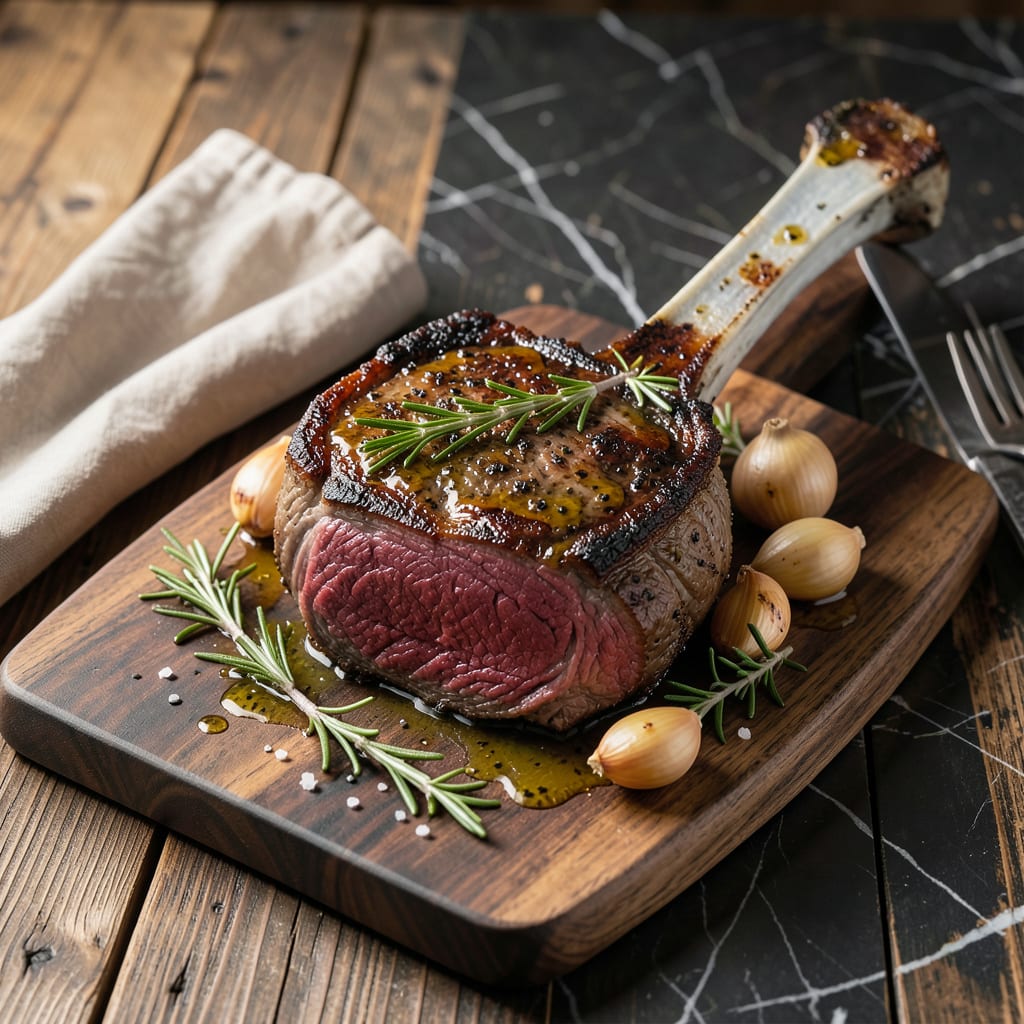
This reverse-sear method delivers a perfectly cooked tomahawk steak with a beautiful crust and juicy interior. The oven handles the slow, even cooking while the sear adds that essential char.
I’ve refined this approach to ensure consistent results—tender, flavorful meat with that coveted medium-rare finish. The key is patience and precise temperature control.
Ingredients for Tomahawk Steak in Oven
Quality beef and simple seasonings create this showstopping centerpiece for your table.
| Ingredient | Amount | Notes |
|---|---|---|
| Tomahawk Steak 🥩 | 4 lb | Bone-in ribeye, 2 inches thick |
| Kosher Salt 🧂 | 2 tbsp | Diamond Crystal preferred |
| Coarse Black Pepper 🌶️ | 1 tbsp | Freshly ground for best flavor |
| Garlic Cloves 🧄 | 4 cloves | Smashed but not minced |
| Fresh Rosemary Sprigs 🌿 | 4 pieces | Whole for infusing flavor |
| Fresh Thyme Sprigs 🍃 | 4 pieces | Whole for infusing flavor |
| Extra-Virgin Olive Oil 🫒 | ½ cup | High smoke point for searing |
| Unsalted Butter 🧈 | 4 tbsp | For basting during sear |
| Canola Oil 💧 | 2 tbsp | Neutral flavor for high heat |
| Fresh Parsley 🌿 | ¼ cup | Chopped, for garnish |
| Flaky Sea Salt 🧂 | 1 tsp | For finishing |
The steak itself is non-negotiable. Tomahawk cuts should have generous marbling and a thick bone—2 inches minimum. Source from a trusted butcher or high-end grocer like Whole Foods. Look for USDA Prime if available, otherwise Choice works. The bone not only adds drama but insulates the meat during cooking, ensuring even doneness. Bring it to room temperature before starting.
No fresh herbs? Dried rosemary and thyme at half the amount work in a pinch, but fresh is ideal for that aromatic punch. If you must skip the garlic, onion powder at one-third the quantity adds depth. The butter can be swapped for ghee or avocado oil if avoiding dairy. For the oil, avocado or grapeseed are excellent high-heat alternatives to canola.
Store uncooked steak in the coldest part of your fridge for up to 5 days. Once cooked, rest it properly before slicing—keeps 3-4 days refrigerated. For leftovers, reheat gently in a low oven to preserve tenderness. Never refreeze previously frozen steak.
Why You’ll Love This Recipe
- Oven Simplicity: I just season, sear, and let the oven do the work—no flipping or babysitting required.
- Herb-Crusted Luxury: That rosemary and garlic crust forms the most ridiculous flavor on the tomahawk’s thick cut.
- Special Occasion Ready: I pull this out for birthdays or anniversaries, and it always feels like a steakhouse at home.
- Leftovers? Yes Please: Honestly, the next-day steak sandwiches with that garlic-rosemary flavor might be even better.
Step-by-Step Instructions for Tomahawk Steak in Oven
This reverse-sear method guarantees even cooking with a flawless crust on your tomahawk.
Step 1: Season and Slow-Roast the Tomahawk Steak
Pat the 4 lb Tomahawk Steak completely dry with paper towels. rub the surface with the 2 tbsp Kosher Salt and 1 tbsp Coarse Black Pepper until fully coated. The dry surface ensures optimal browning during the sear.
Place the steak on a wire rack set over a baking sheet. Insert a meat thermometer into the thickest part, avoiding the bone. Roast in a 250°F oven until the internal temperature reaches 110-115°F for medium-rare, typically 1 to 1.5 hours.
This low-temperature phase gently brings the steak to the perfect internal temperature before the final sear, ensuring edge-to-edge consistency.
Step 2: Infuse the Basting Oil with Aromatics
In a small saucepan, combine the 0.5 cup Extra-Virgin Olive Oil, 4 cloves Garlic Cloves, 4 pieces Fresh Rosemary Sprigs, and 4 pieces Fresh Thyme Sprigs. Heat over low heat for 5-7 minutes until the garlic is fragrant and the oil takes on the herbs’ aroma.
Remove from heat and let it steep while the steak roasts. This infused oil will add depth of flavor during the searing process. Strain out the solids just before basting if you prefer a cleaner presentation.
Step 3: Sear the Steak in a Ripping-Hot Pan
Heat the 2 tbsp Canola Oil in a cast-iron skillet over high heat until it begins to shimmer. Carefully place the steak in the pan and sear undisturbed for 2-3 minutes until a deep brown crust forms.
Flip the steak and immediately add the 4 tbsp Unsalted Butter and half the infused oil. Tilt the pan slightly and baste the steak continuously with the hot oil and butter for 2-3 minutes, ensuring all surfaces are coated.
For even cooking, sear the edges of the steak by holding it with tongs for 30 seconds per side. The internal temperature should now read 125-130°F for perfect medium-rare.
Step 4: Rest and Finish with Fresh Herbs
Transfer the steak to a cutting board and let it rest uncovered for 10-15 minutes. This allows the juices to redistribute throughout the meat, ensuring every bite is moist and flavorful.
Chop the 0.25 cup Fresh Parsley and sprinkle it over the steak along with the 1 tsp Flaky Sea Salt just before serving. The resting period also lets the internal temperature rise to the ideal 130-135°F for medium-rare.
Carve the steak off the bone and slice against the grain for maximum tenderness. The bone-in presentation makes for an impressive centerpiece at the table.
Pro Tips For Making Tomahawk Steak In Oven
- Preheat the Pan: Sear the tomahawk in a screaming-hot cast iron skillet for 2-3 minutes per side before transferring to the oven—this builds a deep crust that oven-alone cooking can’t achieve.
- Dry the Steak: Pat the tomahawk bone-dry with paper towels before seasoning; any moisture will steam the surface instead of letting it brown properly.
- Skip the Overcrowding: If using garlic and rosemary, place them under the steak in the pan—not around it—so they infuse without burning before the meat is done.
- Rest Before Slicing: Let the steak rest for 10 minutes under foil after cooking; I learned this the hard way when all the juices ended up on the cutting board instead of the plate.
Storing and Reheating tomahawk steak in oven
Refrigerator Storage
Let your cooked tomahawk cool to room temperature, then wrap it tightly in plastic wrap or place in an airtight container. It will keep in the fridge at 40°F or below for 3-4 days. I always store mine with a paper towel to absorb excess moisture. ❄️
Freezer Storage
For longer storage, wrap the cooled steak in plastic wrap followed by heavy-duty foil or a freezer bag. Squeeze out all air to prevent freezer burn. It maintains quality for up to 3 months at 0°F.
Oven Reheating
Preheat your oven to 250°F and place the steak on a wire rack. Warm for 10-15 minutes until the internal temperature reaches 110°F, then finish with a quick sear in a hot pan. This method preserves moisture beautifully. 🔥
Sous Vide Reheating
For perfect results, vacuum-seal the steak and reheat in a 130°F water bath for 30-45 minutes. This gentle method keeps the meat at ideal serving temperature without overcooking. I use my Anova Precision Cooker for this.
Microwave Reheating
Slice the steak and place portions on a microwave-safe plate. Cover with a damp paper towel and heat at 50% power in 30-second intervals until reaching 130°F. Check frequently to avoid drying out.
Nutrition Facts
Frequently Asked Questions
What oven temperature works best for a thick steak?
Start with a 250°F oven for the slow-roast phase. This low heat ensures even cooking throughout the thick cut. Finish with a hot sear for the perfect crust.
How do I know when it’s done without cutting it?
Use a meat thermometer—it’s the only reliable method. For medium-rare, pull it at 110-115°F before searing. The temp will rise to 130-135°F after resting.
Can I skip the resting step?
Never skip resting! Let it sit for 10-15 minutes so juices redistribute. Slicing too soon means dry meat and lost flavor on the cutting board.
What if my pan isn’t cast iron?
A heavy stainless steel skillet works too. Avoid nonstick—it won’t get hot enough for a good sear. Preheat the pan 5-7 minutes for maximum heat.

- 6 Egg Cake Recipe with Oil: Light as Air With Buttery Moisture - October 4, 2026
- 4 Bean Casserole Recipe: One-Pan Heartiness With Smoky Paprika Depth - October 4, 2026
- 3-Ingredient Keto Mug Cake Recipe: Microwave Magic in 2 Minutes - October 4, 2026