
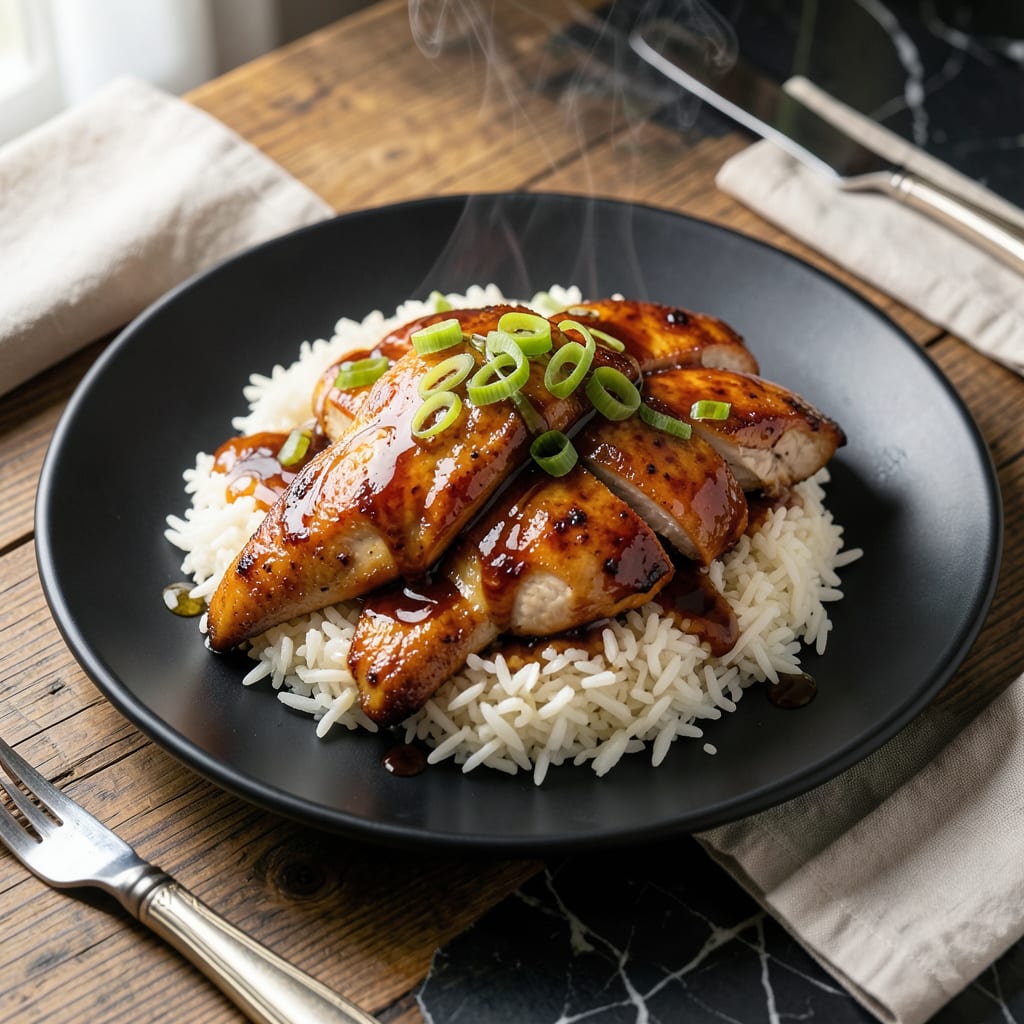
This homemade version delivers perfect teriyaki flavor without the processed ingredients. The secret lies in a simple sauce that caramelizes beautifully on tender chicken.
Ready in 30 minutes, this dish brings restaurant-quality results to your kitchen. The glaze is sweet, sticky, and packed with umami depth.
Ingredients for Tyson Teriyaki Chicken
Tender chicken meets a glossy, umami-rich glaze with these pantry-friendly staples and fresh aromatics.
| Ingredient | Amount | Notes |
|---|---|---|
| Boneless Skinless Chicken Thighs 🍗 | 1 ½ lb | Patted dry, trimmed of fat |
| Soy Sauce 🥫 | ½ cup | Low-sodium preferred for balance |
| Brown Sugar 🍚 | ⅓ cup | Light or dark variety |
| Honey 🍯 | ¼ cup | Pure, for natural sweetness |
| Rice Vinegar 🍶 | 2 tbsp | Unseasoned for clean acidity |
| Fresh Garlic Cloves 🧄 | 3 cloves | Minced finely for even distribution |
| Fresh Ginger Root 🌿 | 1 tbsp | Grated, peeled before use |
| Sesame Oil 🫒 | 1 tbsp | Toasted for depth of flavor |
| Cornstarch 🌾 | 1 tbsp | For thickening the glaze |
| Water 💧 | ¼ cup | To thin cornstarch slurry |
| Vegetable Oil 🫒 | 1 tbsp | Neutral flavor, high smoke point |
| Toasted Sesame Seeds 🌰 | 1 tsp | For garnish, optional |
| Green Onions 🧅 | 2 whole | Thinly sliced for fresh finish |
The chicken thighs are non-negotiable here—their higher fat content keeps the meat juicy under the intense heat needed for proper caramelization. Source air-chilled thighs from Whole Foods or Costco for superior texture. For the soy sauce, Kikkoman low-sodium provides consistent quality without overpowering saltiness. Fresh ginger and garlic are essential; pre-minced versions lack the vibrant punch this dish demands (worth the extra minute).
Need a soy-free version? Coconut aminos at a 1:1 ratio works beautifully. Brown sugar can be swapped for coconut sugar (same amount) for a deeper molasses note. No fresh ginger? Ground ginger at one-sixth the amount in a pinch, though the flavor profile changes. The cornstarch slurry can use cold water or pineapple juice for added sweetness. For extra depth, add 1 tsp fish sauce (optional but recommended).
The sauce thickens as it cools—ideal for 4-5 days refrigerated in an airtight container. Chicken stays tender when stored separately from the glaze. Freeze cooked chicken without sauce for up to 3 months. Reheat gently to prevent the sugar from burning. Garnishes like sesame seeds and green onions add freshness; add just before serving.
Why You’ll Love This Recipe
- I’ll be real: chicken thighs stay juicy and cheap, so I make a double batch for leftovers.
- One Pan Meal: I toss everything in a skillet and let the soy sauce and honey do the work—minimal cleanup, maximum flavor.
- Sweet-Savory Magic: That sticky glaze from brown sugar and rice vinegar? It coats the chicken thighs so every bite is ridiculous.
- Weeknight Hero: Between us, it’s my Tuesday lifesaver—ready before the rice finishes cooking.
Step-by-Step Instructions for Teriyaki Chicken
Here’s the method. Straightforward, tested, works every time.
Step 1: Sear the Chicken Thighs to Golden Perfection
Pat the 1.5 lb Boneless Skinless Chicken Thighs dry thoroughly with paper towels. This removes excess moisture that would otherwise prevent proper browning. Heat 1 tbsp Vegetable Oil in a large skillet over medium-high heat until it shimmers but doesn’t smoke.
Add the chicken in a single layer, leaving space between pieces. Sear for 5-6 minutes per side until golden brown and cooked through to 165°F internally. The searing creates a flavorful fond that will enhance the sauce. Transfer the chicken to a plate and tent with foil to keep warm.
Step 2: Create the Teriyaki Glaze Base
In the same skillet, reduce heat to medium. Add the minced 3 cloves Fresh Garlic Cloves and grated 1 tbsp Fresh Ginger Root, cooking for 30-45 seconds until fragrant but not browned. This builds the aromatic foundation without bitterness.
Pour in 0.5 cup Soy Sauce, 0.33 cup Brown Sugar, 0.25 cup Honey, and 2 tbsp Rice Vinegar. Stir to combine, scraping up any browned bits from the bottom of the pan. Bring to a gentle simmer and cook for 3-4 minutes until the sugar dissolves completely.
Step 3: Thicken the Glaze to Ideal Consistency
In a small bowl, whisk together 1 tbsp Cornstarch and 0.25 cup Water until smooth. Slowly pour this slurry into the simmering sauce while stirring constantly. The mixture will thicken noticeably within 1-2 minutes of cooking.
Continue simmering for an additional 2-3 minutes until the glaze reaches your desired consistency—it should coat the back of a spoon but still be pourable. Stir in 1 tbsp Sesame Oil at the end for depth of flavor. Taste and adjust seasoning if needed, though the soy sauce typically provides sufficient saltiness.
Step 4: Glaze and Garnish for Presentation
Return the seared chicken to the skillet with the thickened teriyaki glaze. Spoon the sauce over the chicken, turning to coat each piece completely. Cook for an additional 1-2 minutes to allow the flavors to meld together and the chicken to absorb some of the glaze.
Transfer to a serving platter and garnish with thinly sliced 2 whole Green Onions and 1 tsp Toasted Sesame Seeds. The green onions add a fresh contrast to the rich sauce, while the sesame seeds provide a nutty crunch. Serve immediately while the glaze is still glossy and the chicken is hot.
Pro Tips For Making Tyson Teriyaki Chicken
- Sear First: I learned this the hard way—browning the chicken thighs in a hot pan before adding the teriyaki sauce builds a caramelized crust that actually changes the outcome. About 3-4 minutes per side on medium-high heat does the trick.
- Trim the Fat: Sounds weird, but it works: trim excess fat from the chicken thighs before cooking to prevent flare-ups and a greasy sauce. A quick snip with kitchen shears takes 2 minutes and saves headaches later.
- Simmer the Sauce: After burning three batches, I finally figured out that the soy sauce, brown sugar, and honey need a gentle simmer for 3-4 minutes to thicken properly—boiling it hard makes it bitter.
- Rest Before Serving: Give the chicken a solid 5 minutes off the heat before slicing, or all those juices will end up on the cutting board instead of in your dish. I skip this when I’m lazy, but the meat is noticeably juicier when I don’t.
Dietary Considerations for This Dish
Gluten-Free Option
Swap the regular soy sauce for tamari or a certified gluten-free soy sauce like San-J. The flavor remains identical, and you’ll maintain the same ½ cup measurement. Always check labels, as some brands add wheat-based thickeners. 💡
Lower-Sodium Version
Use low-sodium soy sauce and reduce the amount to ⅓ cup, then add 1 tbsp fish sauce for depth. This cuts sodium by about 40% without sacrificing umami. I find the balance still delicious.
Keto Adaptation
Replace the brown sugar with ⅓ cup erythritol or allulose, which caramelize similarly. Skip the cornstarch slurry entirely—the sauce will be thinner but still flavorful. Each serving drops to about 5g net carbs.
Dairy-Free Note
This recipe is naturally dairy-free, as the glaze relies on soy, ginger, and garlic for richness. Just ensure your garnishes, like sesame seeds, are processed in dairy-free facilities if allergies are severe. 🌱
Nut Allergy Caution
While the recipe contains no nuts, some soy sauces are processed in facilities that handle tree nuts. For safety, use Kikkoman soy sauce (clearly labeled nut-free) or coconut aminos as a soy-free alternative.
Protein Variations
For a leaner option, use chicken breast instead of thighs, but reduce cooking time to 4-5 minutes per side to prevent dryness. The glaze works equally well with tofu or shrimp for vegetarian or seafood versions.
Nutrition Facts
Frequently Asked Questions
Can I use chicken breast instead of thighs?
Yes, but reduce cooking time to 4-5 minutes per side to prevent dryness. Thighs are preferred for their juiciness and ability to handle the bold teriyaki flavors.
How do I make the glaze thicker?
Simmer the sauce for an extra 2-3 minutes after adding the cornstarch. If it’s still too thin, mix 1 tsp cornstarch with 1 tbsp cold water, then stir it in.
Can I prepare this ahead of time?
Cook and store chicken separately from the glaze in the fridge for up to 4-5 days. Reheat gently on the stove to maintain the sauce’s consistency.
What can I substitute for soy sauce?
Use tamari for gluten-free needs or coconut aminos for a soy-free version. Both maintain the umami depth without altering the recipe’s balance.

- 6 Egg Cake Recipe with Oil: Light as Air With Buttery Moisture - October 4, 2026
- 4 Bean Casserole Recipe: One-Pan Heartiness With Smoky Paprika Depth - October 4, 2026
- 3-Ingredient Keto Mug Cake Recipe: Microwave Magic in 2 Minutes - October 4, 2026