
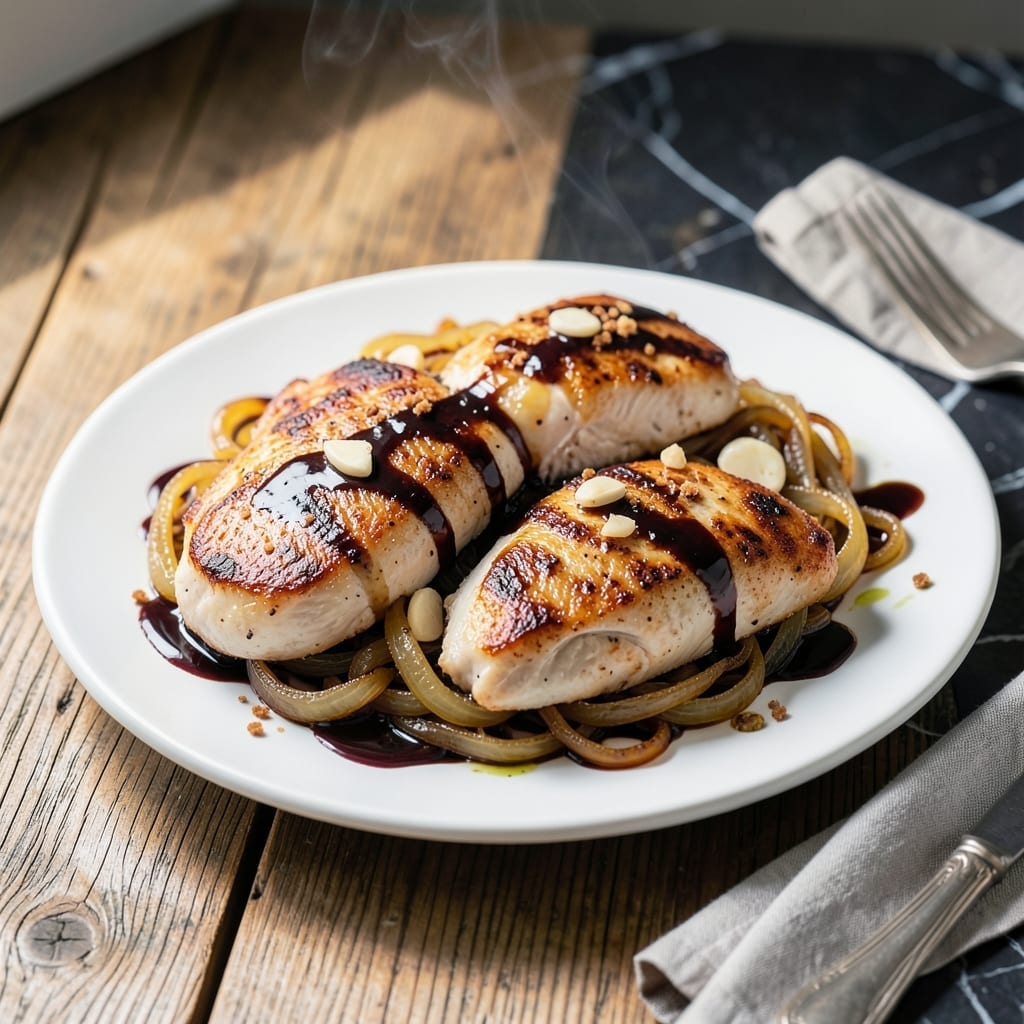
This balsamic chicken delivers a sweet-tangy glaze that transforms simple ingredients into a restaurant-worthy meal. The caramelized onions add deep, rich flavor that pairs perfectly with the vinegar’s bright acidity.
I developed this recipe after tasting Trader Joe’s version, then perfected it with a few simple tweaks. The key is reducing the balsamic vinegar until it becomes syrupy, creating a glossy coat that clings to the chicken.
You’ll get juicy, tender chicken with a glossy, caramelized finish and onions so sweet they melt in your mouth. The entire dish comes together in under 45 minutes with minimal effort.
Serve it over mashed potatoes or with roasted vegetables for a complete, impressive dinner.
Ingredients for Trader Joe’s Balsamic Chicken
Pantry staples plus chicken create this glossy, caramelized showstopper in under an hour.
| Ingredient | Amount | Notes |
|---|---|---|
| Boneless Skinless Chicken Breasts 🍗 | 1 ½ lb | Pounded to even thickness |
| Balsamic Vinegar 💧 | ¾ cup | Aged for richer flavor |
| Yellow Onions 🧅 | 2 whole | Thinly sliced for caramelizing |
| Olive Oil 🫒 | 2 tbsp | Divided for cooking |
| Garlic Cloves 🧄 | 3 cloves | Minced for depth |
| Brown Sugar 🍚 | 2 tbsp | Light or dark variety |
| Dijon Mustard 🟡 | 1 tbsp | For tangy complexity |
| Chicken Broth 🥣 | ½ cup | Low-sodium preferred |
| Fresh Thyme Sprigs 🌿 | 4 sprigs | Leaves stripped, stems discarded |
| Salt 🧂 | 1 tsp | Diamond Crystal kosher |
| Black Pepper 🌶️ | ½ tsp | Freshly ground preferred |
| Butter 🧈 | 1 tbsp | Unsalted, for finishing |
The balsamic vinegar is doing the heavy lifting here. Trader Joe’s has a solid aged balsamic that’s affordable (and tastes way better than most grocery store brands). For the chicken, boneless, skinless breasts work best—thighs stay juicier but don’t get as nice a sear. I grab my chicken from Whole Foods when it’s on sale, but any supermarket will do. Look for pieces that are evenly thick so they cook at the same rate.
No balsamic? Apple cider vinegar plus 1 tsp honey gets you in the ballpark (though it won’t be as syrupy). Brown sugar can be swapped for honey or maple syrup. Fresh thyme not happening? Dried thyme at one-third the amount works—just add it earlier in cooking. The Dijon mustard is flexible too: regular yellow mustard if that’s all you’ve got, though it won’t be as complex.
Leftovers keep beautifully for 4-5 days in the fridge. The onions actually get sweeter as they sit. Freezes well for 3 months too (I portion into single-serving containers for easy lunches). Reheat gently to keep the glaze from breaking.
Why You’ll Love This Recipe
- One Pan Wonder: I toss everything in a single skillet—chicken, onions, garlic, and that rich Trader Joe’s balsamic—then let it do its thing.
- Sweet-Tangy Magic: The vinegar caramelizes with the onions into this glossy, finger-licking glaze that coats every bite.
- Weeknight Hero: I’ve served it over rice, in wraps, and straight from the pan. Honestly, it works for anything.
- Budget Stretcher: A few chicken breasts and pantry staples feed my family for two nights, no fancy ingredients required.
Step-by-Step Instructions for Balsamic Chicken With Caramelized Onions
Here’s the method I use for perfect sweet-tangy chicken with deeply caramelized onions every time.
Step 1: Prepare the Chicken and Start the Onions
Pat the 1.5 lb Boneless Skinless Chicken Breasts dry with paper towels, then season both sides evenly with the 1 tsp Salt and 0.5 tsp Black Pepper. I always pound them to an even ½-inch thickness first—this ensures they cook uniformly and stay juicy.
Meanwhile, heat 1 tbsp Olive Oil in a large skillet over medium heat. Add the 2 whole Yellow Onions, thinly sliced, and cook for 10 minutes, stirring occasionally, until they begin to soften and turn translucent. This is where the magic starts.
Step 2: Build the Caramelized Foundation
Once the onions soften, add the remaining 1 tbsp Olive Oil, the 2 tbsp Brown Sugar, and the 3 cloves Garlic Cloves (minced). Stir well and cook for another 5-7 minutes until the onions turn a deep amber color. Watch for the edges to start caramelizing—that’s your visual cue.
Add the 4 sprigs Fresh Thyme Sprigs (leaves stripped) and the 1 tbsp Dijon Mustard, stirring to coat the onions evenly. The mustard adds a subtle tang that balances the sweetness of the caramelizing sugar. Let this cook for 1-2 minutes until fragrant.
Step 3: Cook the Chicken and Deglaze
Push the onions to the edges of the skillet and increase the heat to medium-high. Add the chicken breasts and sear for 5-6 minutes per side until golden brown and cooked through (internal temp should reach 165°F). Transfer the chicken to a plate and tent with foil to keep warm.
With the skillet still hot, pour in the 0.75 cup Balsamic Vinegar and scrape up all the browned bits from the bottom. This deglazing step is critical—it captures all the flavor built up during searing. Let it simmer for 2 minutes until slightly reduced.
Step 4: Finish with Broth and Butter
Pour in the 0.5 cup Chicken Broth and stir to combine with the balsamic mixture. Let it simmer for 3-4 minutes until the sauce thickens slightly and coats the back of a spoon. This is when the flavors truly meld together.
Remove the skillet from heat and stir in the 1 tbsp Butter until fully melted. The butter adds a silky richness that ties everything together. Return the chicken to the skillet, spooning the onions and sauce over the top to coat evenly.
Pro Tips For Making Trader Joe’S Balsamic Chicken
- Pound the Chicken: Use a rolling pin or meat mallet to pound the breasts to an even ½-inch thickness—this guarantees they cook through at the same rate and soak up the balsamic glaze better. I learned this the hard way after pulling dry, uneven pieces out of the pan.
- Caramelize the Onions: Give the yellow onions a full 8-10 minutes on medium-low heat until deep golden brown before adding the balsamic. Sounds tedious, but it builds the sweet, rich base that makes this dish taste like it simmered for hours.
- Reduce the Vinegar: After adding the balsamic vinegar, let it bubble and thicken for 2-3 minutes before adding the chicken back in. My first few attempts were watery and sour until I realized the reduction step is non-negotiable.
- Rest Before Serving: Tent the chicken with foil and let it rest for 5 minutes after cooking—this keeps the juices inside where they belong, not all over your cutting board. I skip this when I’m in a rush, but the difference is noticeable.
Troubleshooting This Dish
Sauce Too Thin
If your balsamic glaze isn’t thickening, don’t add more vinegar. Let it simmer uncovered over medium heat for 3-5 extra minutes. The water content needs time to evaporate. I often tilt my skillet slightly to pool the sauce in one spot for faster reduction.
Onions Burning
If your onions darken too quickly, lower the heat to medium-low and add a splash of chicken broth. Stir frequently and be patient—they need 20-25 minutes total to caramelize properly. A heavy-bottomed skillet prevents hot spots. 🔥
Chicken Dryness
Overcooked chicken is often the result of uneven thickness. Always pound breasts to ½-inch thickness before cooking. If your chicken is already dry, serve it with extra sauce spooned over the top to add moisture back.
Bitter Glaze
A harsh vinegar taste means the balsamic needs more reduction. Balance it with 1 tsp brown sugar or a pinch of salt. Aged balsamic vinegar (like Trader Joe’s) has natural sweetness that reduces this risk. Taste as you go.
Sauce Separating
If your sauce looks broken or greasy, it’s usually from the butter. Remove from heat and whisk vigorously for 30 seconds. If that fails, add 1 tsp cold water and stir. This brings the emulsion back together.
Uneven Cooking
Hot spots in your pan can cause this. Rotate your skillet 180 degrees halfway through cooking. Also, avoid crowding the pan—cook in batches if needed. I use a cast iron skillet for even heat distribution. ✨
Nutrition Facts
Frequently Asked Questions
Can I use chicken thighs instead of breasts?
Chicken thighs stay juicier and are more forgiving with cooking times. Use 1.5 lb boneless, skinless thighs and cook to 175°F internal temperature. They’ll soak up the balsamic glaze beautifully.
How do I make the sauce thicker faster?
For a quicker reduction, increase heat to medium-high and stir constantly. Tilt the pan to pool the sauce in one area. A cornstarch slurry (1 tsp mixed with 1 tbsp water) can also thicken it instantly.
What can I serve with this dish?
Mashed potatoes or creamy polenta work perfectly to soak up the sauce. For a lighter option, try roasted asparagus or a simple green salad. The sweet-tangy glaze pairs well with almost anything.

- 6 Egg Cake Recipe with Oil: Light as Air With Buttery Moisture - October 4, 2026
- 4 Bean Casserole Recipe: One-Pan Heartiness With Smoky Paprika Depth - October 4, 2026
- 3-Ingredient Keto Mug Cake Recipe: Microwave Magic in 2 Minutes - October 4, 2026