
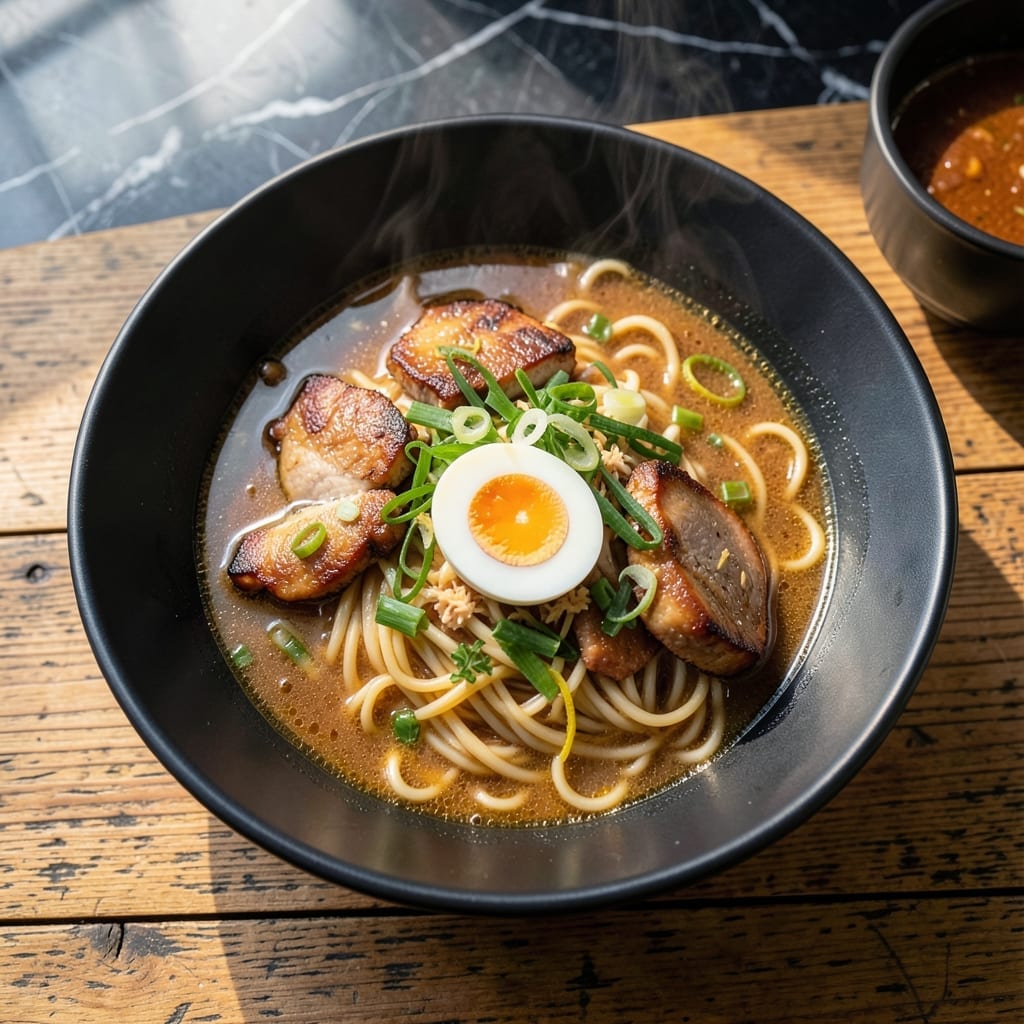
This traditional ramen delivers the tender chicken and rich broth that defines authentic Japanese comfort food. I’ve refined this method over years to capture the depth of flavor found in Tokyo’s best ramen shops.
The key is a slow-simmered chicken broth infused with garlic, ginger, and soy. This creates a base that’s both complex and deeply satisfying, while the noodles soak up every bit of that savory liquid.
What sets this apart is the attention to detail – from the perfectly poached chicken to the soft-boiled eggs that melt in your mouth. Each element comes together to create a bowl that’s greater than the sum of its parts.
Serve with sliced green onions and nori for the complete experience. Here’s how to make it.
Ingredients for Traditional Chicken Ramen
Rich broth, tender chicken, and chewy noodles—this bowl has it all.
| Ingredient | Amount | Notes |
|---|---|---|
| Chicken Thighs 🍗 | 1 ½ lb | Boneless, skin-on for flavor |
| Chicken Stock 🥣 | 8 cups | Low-sodium preferred for control |
| Fresh Ginger 🌿 | 3 tbsp | Peeled and grated |
| Garlic Cloves 🧄 | 6 cloves | Minced for depth of flavor |
| Soy Sauce 🫒 | ½ cup | Low-sodium for balance |
| Ramen Noodles 🍜 | 1 lb | Fresh or dried (4 nests) |
| Soft-Boiled Eggs 🥚 | 4 whole | 6-minute eggs for jammy yolks |
| Green Onions 🧅 | 4 whole | Thinly sliced for garnish |
| Nori Sheets 🌊 | 4 sheets | Cut into strips |
| Sesame Oil 🫒 | 1 tbsp | Toasted for aroma |
| Rice Vinegar 🍚 | 2 tbsp | For brightness in broth |
| Miso Paste 🍜 | 2 tbsp | White or red variety |
| Corn 🌽 | 1 cup | Fresh or canned kernels |
| Bok Choy 🥬 | 2 whole | Baby bok choy, halved |
| Chili Oil 🌶️ | 1 tbsp | Optional for heat |
The chicken stock is non-negotiable here. Homemade is ideal (save those chicken bones!), but Kettle & Fire or Bonafide Provisions make solid store-bought options. Look for low-sodium so you can control the seasoning. The ginger and garlic? Fresh only—powdered doesn’t cut it for that bright, zingy depth. I grab mine at Whole Foods for quality.
No ramen noodles? Fresh udon or soba work in a pinch. Out of miso? Fish sauce at half the amount adds umami (but skip if you want it strictly chicken-based). The eggs can be medium-boiled if you prefer firmer yolks. Trader Joe’s has great nori sheets and baby bok choy—both are perfect here.
Broth keeps 5 days in the fridge, freezes for 3 months. Soft-boiled eggs peel easier when shocked in ice water. Slice the green onions right before serving so they stay crisp. Everything else? Prep ahead (trust me on this one).
Why You’ll Love This Recipe
- One Pot Meal: I love that everything—chicken thighs, stock, ginger, and garlic—simmers together in one pot. No extra dishes, just rich flavor.
- Umami Bomb: The soy sauce and garlic create this deep, savory broth that hits the spot every time. Honestly, it’s the kind of taste that lingers in the best way.
- Weeknight Hero: Between us, this is my go-to when I need something hearty but don’t have hours to spare. Ready before the kids start asking for snacks.
- Budget Stretcher: Chicken thighs and simple pantry staples keep costs low, and the leftovers reheat beautifully. I’ll be real: it’s saved me more than once on busy weeks.
Step-by-Step Instructions for Traditional Chicken Ramen
Here’s my go-to method for building layers of flavor that taste like hours of work.
Step 1: Build the Broth Base with Chicken and Aromatics
In a large pot, combine the 1.5 lb chicken thighs, 8 cups chicken stock, 3 tbsp fresh ginger, and 6 cloves garlic cloves. Bring to a boil over high heat, then reduce to a gentle simmer. Skim off any foam that rises to the surface during the first 10 minutes—this keeps the broth clean and clear.
Let this simmer uncovered for 45 minutes until the chicken is fully cooked and the broth has taken on a golden, fragrant color. You’ll notice the ginger and garlic infusing the stock with their warm, pungent aromas. Remove the chicken, shred the meat, and return the bones to the pot to deepen the flavor.
Step 2: Season the Broth and Prepare the Noodles
Strain the broth through a fine-mesh sieve into a clean pot to remove all solids. Stir in the 0.5 cup soy sauce, 2 tbsp miso paste, 2 tbsp rice vinegar, and 1 tbsp sesame oil. Taste and adjust seasoning—you want a balance of umami, saltiness, and a slight tang from the vinegar.
While the broth simmers, cook the 1 lb ramen noodles according to package instructions, but stop 1 minute early for that perfect al dente bite. Drain and rinse briefly under cold water to stop the cooking process. This prevents them from turning mushy when added to the hot broth.
Step 3: Blanch the Vegetables and Assemble the Bowls
In the same pot of boiling water used for the noodles, blanch the 2 whole bok choy (halved) and 1 cup corn for 2-3 minutes until the bok choy is bright green and the corn is heated through. Drain and set aside. This step keeps the vegetables vibrant and crisp, adding freshness to the rich broth.
Divide the noodles among four bowls. Ladle the hot broth over the noodles, then arrange the shredded chicken, bok choy, and corn in each bowl. The broth should be steaming hot—this ensures everything stays at the perfect temperature while you finish assembling.
Step 4: Add the Finishing Touches
Top each bowl with 1 soft-boiled egg (halved), a drizzle of 1 tbsp chili oil, and a sprinkle of thinly sliced green onions. Add strips of nori sheets for a touch of oceanic flavor and visual appeal. The egg yolks should be jammy, ready to burst and enrich the broth when pierced.
Serve immediately while everything is hot. The contrast of temperatures and textures—silky broth, chewy noodles, tender chicken, and crisp vegetables—makes this dish unforgettable. Encourage everyone to mix in the egg yolk for the full experience.
Pro Tips For Making Traditional Chicken Ramen
- Sear the Thighs First: Brown the chicken thighs in batches in a hot pan before adding liquid—about 4-5 minutes per side. I learned this the hard way: skipping this step leaves the broth bland and the meat rubbery.
- Simmer, Don’t Boil: Keep the stock at a gentle simmer, not a rolling boil, once the chicken is back in the pot. After burning three batches, I finally figured out that a hard boil makes the broth cloudy and toughens the meat.
- Use Fresh Ginger: Grate the ginger just before adding it—pre-grated stuff from the jar loses that sharp, aromatic kick. My grandmother swore by this, and she was right: fresh ginger actually changes the outcome.
- Skim the Foam: As the stock simmers, skim off the foam that rises to the top with a spoon. Sounds weird, but it works: this keeps the broth clean and lets the chicken and soy sauce flavors shine.
Common Mistakes When Making traditional chicken ramen
Overcooking the Broth
Simmering the broth too vigorously or for too long can make it bitter and cloudy. Keep it at a gentle simmer—just a few bubbles breaking the surface—and don’t exceed the 45-minute cook time for the chicken thighs. This preserves the clean, aromatic flavor of your ramen. 🔥
Skipping the Skimming
Not skimming the foam during the first 10 minutes of simmering leaves impurities in your broth. Use a fine-mesh skimmer and remove all foam as it rises. This small step makes a huge difference in the clarity and purity of your final dish.
Mushy Noodles
Overcooking the noodles or letting them sit in hot broth too long turns them to mush. Cook them 1 minute less than package instructions, rinse under cold water, and add them to the bowl just before serving. This keeps them perfectly chewy.
Underseasoned Broth
The broth should taste bold and complex on its own. Don’t be shy with the soy sauce and miso paste. Taste as you go and adjust—remember, the noodles and toppings will dilute the flavor slightly when assembled.
Rushing the Eggs
Soft-boiled eggs need precise timing for that jammy yolk. Use 6 minutes in boiling water, then shock in ice water to stop the cooking. Peeling is easier when they’re slightly cooled, and the texture will be just right. 🥚
Neglecting Garnishes
The toppings aren’t just for looks—they add layers of flavor and texture. Don’t skip the green onions, nori, or chili oil. Each one contributes to the authentic ramen shop experience you’re aiming for.
Nutrition Facts
Frequently Asked Questions
Can I use chicken breast instead of thighs?
Yes, but thighs stay juicier during the 45-minute simmer. If using breast, reduce cook time to 25-30 minutes to prevent dryness. Thighs also add richer flavor to the broth.
How do I make the broth richer?
Add 2 tbsp of chicken fat or butter at the end for extra depth. Simmering the chicken bones for an extra 30 minutes after shredding also boosts richness significantly.
Can I prepare this ahead of time?
Broth keeps 5 days refrigerated or 3 months frozen. Cook noodles and assemble bowls fresh to avoid mushiness. Soft-boiled eggs can be made 1 day ahead and peeled before serving.

- 6 Egg Cake Recipe with Oil: Light as Air With Buttery Moisture - October 4, 2026
- 4 Bean Casserole Recipe: One-Pan Heartiness With Smoky Paprika Depth - October 4, 2026
- 3-Ingredient Keto Mug Cake Recipe: Microwave Magic in 2 Minutes - October 4, 2026