
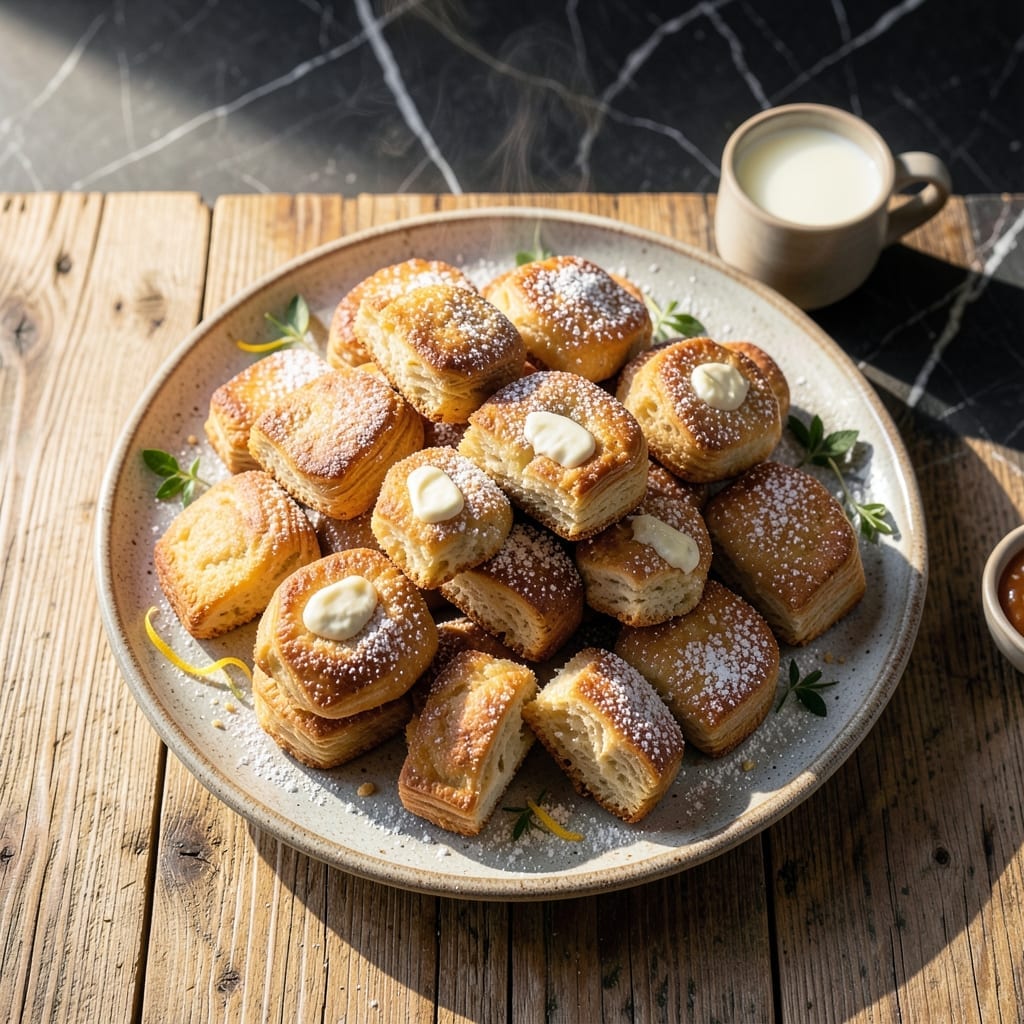
Achieving flaky layers in biscuits requires precision and the right technique. This recipe delivers tender, buttery results every time without complicated steps.
The secret lies in cold ingredients and minimal handling. Cutting the butter into the flour properly creates pockets that expand during baking, forming those perfect layers.
You’ll end up with golden-brown biscuits that pull apart effortlessly, revealing a light, airy interior with rich, buttery depth in every bite. The texture is what sets these apart.
Serve warm for the best experience. The process is straightforward but demands attention to detail for the ideal outcome.
Ingredients for Tudor’s Biscuit
Precise ingredients create those coveted flaky layers in these biscuits every time.
| Ingredient | Amount | Notes |
|---|---|---|
| All-Purpose Flour 🌾 | 2 cups | Plus extra for dusting surface |
| Baking Powder 🧂 | 1 tbsp | Aluminum-free preferred |
| Granulated Sugar 🍚 | 1 tbsp | Fine white sugar |
| Salt 🧂 | 1 tsp | Fine sea salt or table salt |
| Unsalted Butter 🧈 | ½ cup | Very cold, cut into cubes |
| Whole Milk 🥛 | ¾ cup | Plus extra for brushing tops |
| Baking Soda 🧂 | ½ tsp | Ensures proper rise |
| Buttermilk 🥛 | ¼ cup | Cold, for extra flakiness |
| Cream of Tartar 🧂 | ¼ tsp | Optional for stability |
The butter must be ice-cold—this is non-negotiable for flaky layers. European-style unsalted butter (like Plugrá) has a higher fat content, which creates better lamination. For flour, King Arthur or Gold Medal are reliable choices. Avoid cake flour; all-purpose gives the right structure. The milk should be whole for richness, but 2% works in a pinch.
No buttermilk? Mix 3/4 cup whole milk with 1 tbsp lemon juice or vinegar and let it sit for 5 minutes. Baking powder can be substituted with 1.5 tsp for each tbsp, but avoid doubling the amount. For a richer flavor, replace 1 tbsp of milk with heavy cream. The sugar is subtle—omit it if you prefer savory biscuits.
Store biscuits in an airtight container at room temperature for up to 2 days. For longer storage, freeze unbaked dough on a tray, then transfer to a bag—bake from frozen, adding 2-3 minutes to cooking time. Always serve warm for the best texture.
Why You’ll Love This Recipe
- One-Bowl Wonder: I mix everything right in the same bowl—flour, butter, the works—no extra dishes to wash.
- Buttery Layers: The cold butter creates these flaky pockets that melt in your mouth with just the right hint of sugar.
- Breakfast to Dessert: I serve these warm with jam at breakfast, then drizzle honey on them after dinner.
- Pennywise Classic: Five basic ingredients I always have on hand, and they stretch to feed a hungry table.
Step-by-Step Instructions for Tudor’s Biscuits
Master the technique for achieving those signature flaky layers with rich, buttery depth.
Step 1: Combine Dry Ingredients for Lift and Structure
In a large mixing bowl, whisk together the 2 cups All-Purpose Flour, 1 tbsp Baking Powder, 1 tbsp Granulated Sugar, 1 tsp Salt, 0.5 tsp Baking Soda, and 0.25 tsp Cream of Tartar. This blend of leavening agents ensures the biscuits rise properly while maintaining structural integrity.
The cream of tartar works in tandem with the baking soda to create a stable lift, while the baking powder provides an additional boost. Ensure all ingredients are evenly distributed—this prevents pockets of concentrated flavor or uneven rise in the finished biscuits.
Step 2: Cut in Cold Butter for Flaky Layers
Add the 0.5 cup Unsalted Butter, cut into small cubes, to the dry mixture. Using a pastry cutter or your fingertips, work the butter into the flour until the mixture resembles coarse crumbs with pea-sized butter pieces visible. The key here is keeping the butter cold—this creates the flaky layers as it melts during baking.
If the butter begins to soften or melt from the heat of your hands, chill the mixture for 10 minutes before proceeding. You should see distinct butter flecks throughout the dough; these will steam and separate the layers, giving you that coveted flakiness.
Step 3: Incorporate Liquids for Tenderness
Create a well in the center of the flour-butter mixture. Pour in the 0.75 cup Whole Milk and 0.25 cup Buttermilk. Using a wooden spoon or spatula, gently stir until the dough just comes together. The buttermilk adds a subtle tang and extra tenderness to the biscuits.
Be careful not to overmix—the dough should look shaggy and slightly uneven. Overworking the dough develops gluten, which can make the biscuits tough instead of tender. If there are a few dry spots, that’s fine; they’ll hydrate as the dough rests.
Step 4: Fold and Turn for Layered Texture
Turn the dough out onto a lightly floured surface and pat it into a 1-inch-thick rectangle. Fold the dough in thirds, like a letter, then rotate it 90 degrees and pat it back into a rectangle. Repeat this fold-and-turn process 2-3 times.
This lamination technique creates distinct layers in the biscuits, similar to puff pastry but on a smaller scale. Each fold multiplies the layers, ensuring a flaky, lift-filled result. Dust with flour only as needed to prevent sticking—too much can dry out the dough.
Step 5: Shape, Bake, and Finish
Pat the dough to an even ¾-inch thickness and cut into rounds using a biscuit cutter or a glass. Press straight down without twisting to maintain the layers. Place the biscuits on a parchment-lined baking sheet, barely touching each other.
Brush the tops with a bit of whole milk for a golden finish. Bake in a preheated 425°F oven for 12-15 minutes until the biscuits are tall, golden brown on top, and the layers are visible on the sides. Serve warm for the best texture and flavor.
Pro Tips For Making Tudor’S Biscuit
- Chill the Butter: Keep your unsalted butter ice-cold until the very last moment—cut it into the flour mixture straight from the fridge. I learned this the hard way after my biscuits turned out flat and tough from melted butter.
- Don’t Overmix: Stir just until the dough comes together, even if it looks shaggy. Overworking develops the gluten, and your biscuits will end up dense instead of flaky.
- Use Fresh Baking Powder: If your baking powder’s been sitting in the cupboard for months, test it first by dropping a teaspoon in hot water—if it doesn’t bubble vigorously, it’s dead. Sounds weird, but it works.
- Cut Thick: Roll the dough to at least 1 inch thick before cutting. Thin biscuits dry out faster and won’t rise as high—my grandmother swore by this, and she was right.
Dietary Considerations for This Recipe
Gluten-Free Adaptation
For a gluten-free version, swap the all-purpose flour for 2 cups gluten-free 1:1 baking flour like King Arthur Measure for Measure. Add 1 tsp xanthan gum if your blend doesn’t include it. The texture will be slightly denser but still flaky.
Dairy-Free Option
Use cold coconut oil or vegan butter (like Miyoko’s) in place of the unsalted butter. Replace the whole milk and buttermilk with unsweetened almond milk plus 1 tbsp apple cider vinegar to mimic tanginess. 💪
Lower-Carb Version
Replace 1 cup of the flour with almond flour for a lower-carb option. Note that the texture will be more crumbly, so handle the dough gently. You may need an extra 1-2 tbsp milk to bring the dough together.
Vegan Modifications
Combine the dairy-free butter swap with flax eggs (1 tbsp ground flaxseed + 3 tbsp water) to replace any egg wash. Use plant-based milk for brushing the tops. The flavor remains rich and buttery without animal products.
Reduced Sugar
Omit the granulated sugar entirely for a savory biscuit. If you’d like a hint of sweetness, use just ½ tsp instead. This works well for pairing with hearty meals like stews or gravies.
Nut Allergy Note
Ensure all ingredients, especially flour and milk substitutes, are processed in nut-free facilities if allergies are a concern. Brands like Bob’s Red Mill offer nut-free gluten-free flour blends. 🌱
Nutrition Facts
Frequently Asked Questions
Why must the butter stay cold?
Cold butter creates steam during baking, which separates the dough into flaky layers. If it melts too soon, the biscuits will be dense instead of light and airy.
Can I make these ahead of time?
Yes! Shape and cut the biscuits, then freeze on a tray. Bake from frozen, adding 2-3 minutes to the 425°F oven time for best results.
What if I don’t have buttermilk?
Mix 3/4 cup whole milk with 1 tbsp lemon juice or vinegar and let it sit for 5 minutes. This creates a tangy substitute that works perfectly.
How do I prevent tough biscuits?
Handle the dough as little as possible and avoid overmixing. Overworking develops gluten, which makes biscuits tough instead of tender.

- 6 Egg Cake Recipe with Oil: Light as Air With Buttery Moisture - October 4, 2026
- 4 Bean Casserole Recipe: One-Pan Heartiness With Smoky Paprika Depth - October 4, 2026
- 3-Ingredient Keto Mug Cake Recipe: Microwave Magic in 2 Minutes - October 4, 2026