
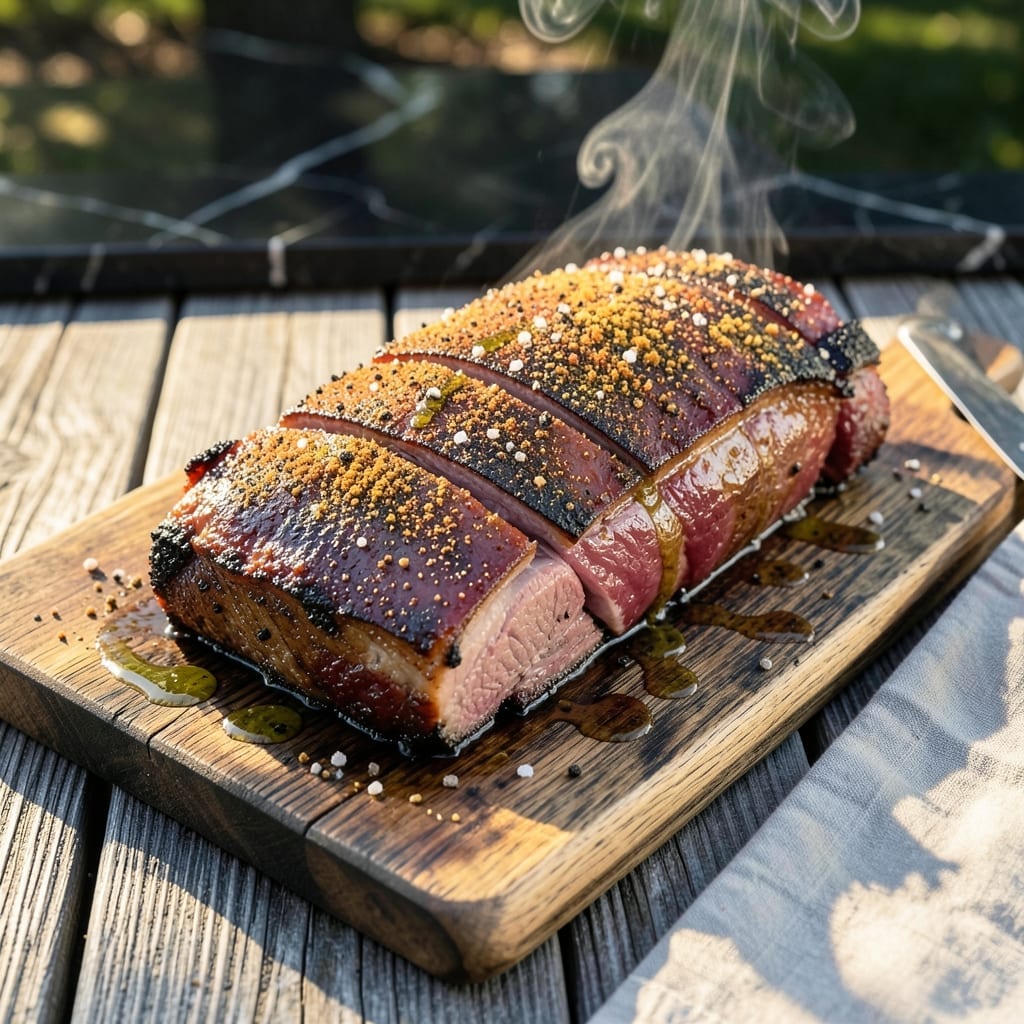
Achieving competition-worthy brisket on a Weber kettle is absolutely possible with the right technique. This method delivers that coveted smoky bark and tender interior without expensive equipment.
The key is maintaining a consistent 225°F temperature for the low and slow cook. I use a combination of charcoal and wood chunks to create steady heat and that authentic smoke flavor.
What sets this apart is the attention to detail: proper seasoning, precise temperature control, and knowing exactly when to wrap. The brisket emerges with a deep mahogany crust and meat so tender it nearly falls apart.
Patience is required, but the results speak for themselves. This technique produces brisket that rivals any pitmaster’s best work.
Ingredients for Weber Kettle Bbq Recipe Brisket
Quality meat and simple seasonings create that legendary bark and melt-in-your-mouth texture everyone craves.
| Ingredient | Amount | Notes |
|---|---|---|
| Beef Brisket 🥩 | 4 lb | Full packer cut preferred |
| Coarse Kosher Salt 🧂 | ¼ cup | Diamond Crystal brand recommended |
| Coarsely Ground Black Pepper 🌶️ | ¼ cup | Freshly ground for best flavor |
| Garlic Powder 🧄 | 2 tbsp | Not garlic salt |
| Onion Powder 🧅 | 2 tbsp | Fresh ground preferred |
| Smoked Paprika 🌶️ | 1 tbsp | Sweet or hot variety |
| Brown Sugar 🍚 | ¼ cup | Light or dark works |
| Mustard Powder 🟡 | 1 tbsp | Optional for extra depth |
| Charcoal Briquettes ⚫ | 10 lb | Lump charcoal preferred |
| Wood Chunks 🪵 | 4 pieces | Hickory or oak recommended |
| Apple Cider Vinegar 🍏 | ½ cup | For spritzing during cook |
| Beef Broth 🥩 | 2 cups | Low sodium preferred |
| Butter 🧈 | ½ cup | Unsalted, for wrapping |
| Yellow Mustard 🟡 | ¼ cup | Binder for rub |
The brisket itself is non-negotiable—full packer cut from a reputable butcher ensures the right fat-to-meat ratio. Look for good marbling throughout, not just on the surface. Costco or Whole Foods carry solid options if you don’t have a local butcher. The salt matters too: Diamond Crystal kosher salt is the pitmaster standard (its larger flakes dissolve perfectly into the meat). Lump charcoal burns hotter and cleaner than briquettes, but either works in a pinch.
Out of smoked paprika? Regular paprika plus a pinch of cayenne gets you close. No mustard powder? Skip it—the yellow mustard binder still does its job. For wood, hickory gives strong smoke, while oak is more subtle. Apple juice can replace the cider vinegar spritz. The beef broth in the wrap keeps moisture in—substitute water if needed, but broth adds depth you’ll notice.
Store brisket in the fridge for up to 5 days before cooking (or freeze for 12 months). The rub can be mixed ahead and kept in a jar for 6 months. Leftover cooked brisket? It reheats beautifully—just keep it wrapped and warm gently. Never rush the cook; low and slow is the only way to that perfect texture.
Why You’ll Love This Recipe
- Set It and Forget: That Weber kettle does the heavy lifting—I just season the brisket with salt, pepper, and those powders, then let the smoke work its magic for hours.
- Crust Worth the Wait: The coarse salt and pepper build a bark so dark and crisp it cracks when you slice it, while the garlic and onion powder sink deep into the meat.
- Feeds a Hungry Table: I’ve served this at summer cookouts and Sunday suppers alike—one brisket, a dozen happy people, and zero complaints.
- Leftovers for Days: Honestly, it tastes even better the next day in tacos or piled on toast with a fried egg.
Step-by-Step Instructions for Weber Kettle BBQ Brisket
Master the art of low and slow smoking with this proven kettle grill method.
Step 1: Prepare and Season the Brisket
Begin by trimming the 4 lb beef brisket fat cap to about ¼ inch thickness, using a sharp knife for precision. This protects the meat while allowing smoke penetration. Pat the surface completely dry with paper towels—residual moisture prevents proper bark formation.
Create the rub by combining the 0.25 cup coarse kosher salt, 0.25 cup coarsely ground black pepper, 2 tbsp garlic powder, 2 tbsp onion powder, 1 tbsp smoked paprika, 0.25 cup brown sugar, and 1 tbsp mustard powder. Stir in the 0.25 cup yellow mustard as a binder. Apply this mixture generously to all surfaces, pressing firmly to adhere. Let the seasoned brisket rest at room temperature for 1 hour before smoking.
Step 2: Configure the Weber Kettle for Indirect Heat
Arrange the 10 lb charcoal briquettes in a snake-like pattern around the perimeter of the kettle, leaving the center empty for indirect cooking. Add the 4 pieces wood chunks (hickory or oak) directly on the coals for consistent smoke production.
Place a disposable aluminum pan filled with the 2 cups beef broth in the center of the grill. This creates a moisture reservoir that stabilizes temperatures and adds humidity to the cooking environment. Aim to maintain a steady 225-250°F throughout the cook.
Step 3: Smoke the Brisket to Perfection
Position the brisket fat-side up on the grill grate directly over the water pan. Insert a meat probe into the thickest part of the flat, avoiding the fat cap. Smoke undisturbed for 4-5 hours until the internal temperature reaches 165-170°F and a dark bark forms.
Every 45-60 minutes, spritz the brisket with the 0.5 cup apple cider vinegar to keep the surface moist and enhance bark development. Avoid opening the lid unnecessarily—each peek adds 10-15 minutes to your cooking time by dropping the internal temperature.
Step 4: Wrap and Finish the Cook
When the brisket hits 170°F internally, transfer it to a large sheet of heavy-duty foil. Dot the surface with the 0.5 cup butter and pour in ½ cup of the beef broth from the water pan. Wrap tightly, return to the grill, and continue cooking until the internal temperature reaches 200-203°F.
This wrapping stage, called the Texas crutch, powers through the stall while keeping the meat moist. Expect this phase to take another 2-3 hours. The brisket is done when a probe slides through the thickest part with the resistance of warm butter.
Step 5: Rest and Slice the Brisket
Remove the wrapped brisket from the grill and let it rest, still wrapped, in a towel-lined cooler for at least 1 hour. This critical resting period allows the juices to redistribute throughout the meat, ensuring maximum tenderness and moisture.
Unwrap and slice against the grain into ¼-inch thick pieces, adjusting the cutting angle as you go since the grain direction changes between the flat and point. The result should be tender slices with a dark, flavorful bark and a beautiful smoke ring just beneath the surface.
Pro Tips For Making Weber Kettle Bbq Recipe Brisket
- Trim the Fat Cap: Leave about 1/4 inch of fat on the brisket—any thicker and it won’t render properly in the kettle. I learned this the hard way after my first brisket came out greasy instead of tender.
- Season Overnight: Coat the brisket with salt, pepper, garlic, and onion powder the night before. Sounds weird, but it works: the dry rub penetrates deeper and forms a better bark.
- Control the Heat: Keep your Weber kettle between 225-250°F using the vents—any hotter and the brisket will dry out before it gets tender. After burning three batches, I finally figured out patience is non-negotiable.
- Wrap at the Stall: When the internal temp hits 160-170°F, wrap the brisket in butcher paper and return it to the grill. This pushes through the stall faster and locks in moisture—I skip this when I’m lazy, but the dish is noticeably better when I don’t.
Serving Suggestions for weber kettle bbq recipe brisket
Classic Pairings
Serve your brisket with classic BBQ sides that complement its smoky richness. I love pairing it with creamy coleslaw—about 2 cups provides the perfect cool contrast. Smoked baked beans add a hearty, sweet element that balances the meat’s depth.
Bread Options
For sandwiches, use soft brioche buns or Texas toast to soak up those delicious juices. Toast the bread lightly with 1 tbsp butter for extra flavor. I always keep a stack of white bread on hand for anyone who prefers a simpler approach.
Fresh Accompaniments
Brighten up the plate with pickled red onions or sliced jalapeños for a tangy kick. A simple vinegar-based cucumber salad with 1 tbsp sugar and 2 tbsp white vinegar adds refreshing crunch. These cut through the richness beautifully. 🥗
Sauce It Up
Offer traditional BBQ sauce on the side—I recommend Sweet Baby Ray’s for its balance of sweet and tangy. For a Texas twist, serve with white BBQ sauce made from mayonnaise and apple cider vinegar. Let guests add their own amount.
This keeps the brisket as the star while giving everyone options. 🔥
Drink Pairings
Cold iced tea or lemonade works perfectly for a non-alcoholic option. For beer lovers, a dark lager or amber ale complements the smoky flavors. I always keep a Shiner Bock in the fridge for brisket nights.
Nutrition Facts
Frequently Asked Questions
How do I maintain a steady temperature on my kettle?
Use the snake method with charcoal and limit lid openings. A water pan helps stabilize heat, and adding unlit coals gradually keeps it at 225-250°F.
When should I wrap the brisket?
Wrap in foil when it reaches 170°F internally, usually after 4-5 hours. This helps push through the stall while keeping it moist.
Can I use a different wood for smoking?
Yes! Hickory and oak are classic, but cherry or pecan add unique flavors. Avoid softwoods like pine—they create bitter smoke.
What if my brisket finishes too early?
Wrap it tightly in towels and place in a cooler. It will stay hot for 2-4 hours while the juices redistribute.

- 6 Egg Cake Recipe with Oil: Light as Air With Buttery Moisture - October 4, 2026
- 4 Bean Casserole Recipe: One-Pan Heartiness With Smoky Paprika Depth - October 4, 2026
- 3-Ingredient Keto Mug Cake Recipe: Microwave Magic in 2 Minutes - October 4, 2026