
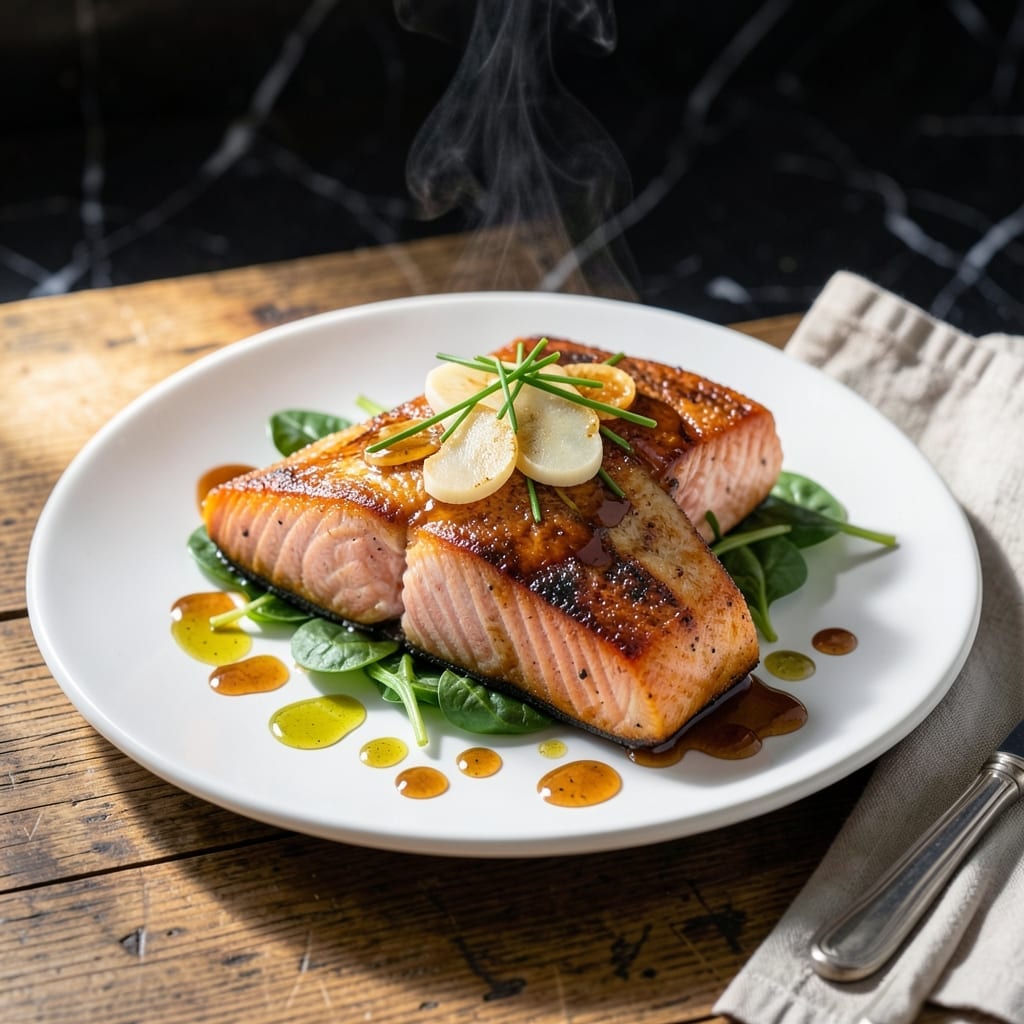
This maple-glazed salmon delivers a perfect balance of sweet and savory without relying on soy sauce for depth. The natural caramelization of maple syrup creates a glossy, restaurant-quality finish that enhances the fish’s natural richness.
I developed this method after realizing most salmon glazes depend too heavily on soy for umami. A touch of Dijon mustard and apple cider vinegar in the glaze adds the complexity needed to complement the maple’s sweetness.
The result is tender, flaky salmon with a sticky-sweet coating that caramelizes beautifully under the broiler. The glaze reduces to a perfect consistency, coating each piece without overpowering the delicate fish.
Ready in 20 minutes with minimal effort, this dish proves you don’t need soy to create a deeply flavorful salmon experience. The technique ensures consistent results every time.
Ingredients for Maple Salmon Recipe Without Soy Sauce
A handful of pantry staples transforms fresh salmon into a restaurant-worthy dish.
| Ingredient | Amount | Notes |
|---|---|---|
| Salmon Fillets 🐟 | 1 ½ lb | Skin-on or skinless, wild-caught preferred |
| Pure Maple Syrup 🍁 | ⅓ cup | Grade A or Grade B, dark for richer flavor |
| Dijon Mustard 🟡 | 2 tbsp | Smooth, not whole grain |
| Apple Cider Vinegar 🍏 | 1 tbsp | Raw, unfiltered preferred |
| Garlic Cloves 🧄 | 3 cloves | Minced finely for glaze |
| Fresh Ginger 🌿 | 1 tsp | Grated, for depth |
| Olive Oil 🫒 | 2 tbsp | Extra-virgin, for searing |
| Salt 🧂 | 1 tsp | Diamond Crystal kosher salt preferred |
| Black Pepper 🌶️ | ½ tsp | Freshly ground, coarse |
| Unsalted Butter 🧈 | 2 tbsp | For finishing glaze |
| Lemon 🍋 | 1 whole | Zested and juiced, for brightness |
| Fresh Dill 🌿 | 2 tbsp | Chopped, for garnish |
The salmon quality is paramount here. Wild-caught fillets from Whole Foods or Trader Joe’s offer superior texture and flavor, though farmed Atlantic works in a pinch. Look for bright, evenly colored flesh with no brown spots. For the maple syrup, dark Grade B provides deeper caramel notes than the lighter varieties, though either will work. The Dijon mustard should be smooth and sharp—avoid sweet or whole-grain varieties.
No Dijon? Whole-grain mustard at half the amount adds texture but maintains the tang. Apple cider vinegar can be swapped with rice vinegar or white wine vinegar (both slightly milder). Fresh ginger is ideal, but ground ginger at one-quarter the amount works if needed. The butter finish is optional but recommended—substitute with coconut oil for a dairy-free version.
Salmon is best cooked the day of purchase but keeps 1-2 days in the fridge. The glaze can be mixed ahead and stored for 1 week refrigerated. Leftovers hold 3-4 days and reheat gently to preserve the fish’s moisture.
Why You’ll Love This Recipe
- One Pan Magic: I mix the maple syrup, mustard, and vinegar right in the baking dish—no extra bowls to wash.
- Sweet & Tangy: The maple syrup caramelizes while the vinegar cuts through with a bright zing that balances the rich salmon.
- Weeknight Hero: Honestly, it’s my go-to for busy evenings when I need dinner on the table fast but still want it to feel special.
- Leftovers? Even Better: The flavors deepen overnight, so I actually make extra for lunch the next day.
Step-by-Step Instructions for Maple Glazed Salmon
Master this technique for restaurant-quality salmon with a perfectly balanced sweet and tangy glaze.
Step 1: Prepare the Salmon Fillets
Pat the 1.5 lb Salmon Fillets completely dry with paper towels to ensure proper searing. Season both sides evenly with the 1 tsp Salt and 0.5 tsp Black Pepper, pressing gently so the seasoning adheres well.
This step is crucial—moisture on the surface causes the salmon to steam rather than sear, preventing that beautiful golden crust. I always let the seasoned fillets sit at room temperature for 10 minutes before cooking to promote even doneness.
Step 2: Sear the Salmon to Golden Perfection
Heat the 2 tbsp Olive Oil in a large skillet over medium-high heat until it shimmers. Place the salmon fillets skin-side down (if skin-on) and sear undisturbed for 4-5 minutes until the edges turn opaque and the bottom develops a golden-brown crust.
Resist the urge to move the fillets—this allows a proper crust to form. Carefully flip and cook for an additional 2-3 minutes on the other side. The salmon should flake easily when tested with a fork and reach an internal temperature of 145°F.
Step 3: Create the Maple Glaze
In a small saucepan over medium heat, combine the 0.33 cup Pure Maple Syrup, 2 tbsp Dijon Mustard, 1 tbsp Apple Cider Vinegar, minced 3 cloves Garlic Cloves, and 1 tsp Fresh Ginger. Stir frequently as the mixture comes to a gentle simmer.
Cook for 3-4 minutes until slightly thickened and the raw garlic aroma mellows. Remove from heat and stir in the 2 tbsp Unsalted Butter until fully melted and incorporated. The glaze should be smooth and glossy, coating the back of a spoon.
Step 4: Finish and Garnish the Salmon
Transfer the seared salmon to a serving platter. Spoon the warm maple glaze generously over each fillet, allowing some to pool around the base. For brightness, zest the 1 whole Lemon over the top and squeeze a small amount of juice to cut through the richness.
Garnish with the 2 tbsp Fresh Dill, sprinkling it evenly across the fillets. The dill adds a fresh, herbaceous note that complements the sweet and tangy glaze beautifully. Serve immediately while the glaze is still warm and glossy.
Pro Tips For Making Maple Salmon Recipe Without Soy Sauce
- Pat Salmon Dry: I learned this the hard way—skip this and your maple glaze will slide right off. Use paper towels to remove all moisture from the fillets before adding the marinade.
- Preheat the Pan: Medium-high heat for 2-3 minutes before adding the salmon. A screaming hot pan guarantees that perfect sear without sticking, even with the sticky maple syrup.
- Balance the Glaze: After burning one batch, I now mix 3 parts maple syrup with 1 part apple cider vinegar—it cuts the sweetness and keeps the glaze from caramelizing too fast.
- Rest Before Serving: Give it 5 minutes under loose foil after cooking. The salmon reabsorbs its juices, and the residual heat finishes the cooking without drying it out.
Best Sauces and Condiments for This Dish
Sweet Glaze Boosters
I love drizzling honey over the finished dish for extra sweetness—about 1 tbsp per fillet enhances the maple without overpowering it. A sprinkle of toasted pecans adds crunch and complements the sweetness beautifully.
Tangy Complements
A side of pickled red onions cuts through the richness perfectly. Quick-pickle thin slices in ½ cup apple cider vinegar and 1 tsp sugar for 30 minutes. The acidity balances the glaze’s sweetness wonderfully.
Creamy Sauces
For a restaurant-style finish, serve with a creamy dill sauce. Mix ½ cup Greek yogurt, 1 tbsp lemon juice, and 1 tbsp chopped fresh dill. It adds a cool, tangy contrast to the warm, sweet salmon. 💫
Spicy Kicks
If you enjoy heat, stir ½ tsp cayenne pepper into the glaze before spooning it over the salmon. For milder spice, top each fillet with ¼ tsp red pepper flakes just before serving.
Fresh Herb Finishes
Beyond dill, chopped chives or parsley add freshness. A lemon-dill butter compound (mix 2 tbsp softened butter with 1 tsp lemon zest and 1 tbsp dill) melts beautifully over the hot salmon.
Nutrition Facts
Frequently Asked Questions
Can I use honey instead of maple syrup?
Yes, honey works but will taste slightly different. Use the same amount, but reduce cooking time by 1 minute to prevent burning. Honey caramelizes faster than maple.
What if my glaze is too thin?
Simmer it for 1-2 minutes longer until it coats the back of a spoon. Avoid high heat, which can cause burning. The butter at the end will also thicken it slightly.
Can I bake the salmon instead of searing?
Bake at 375°F for 12-15 minutes, brushing with glaze halfway through. The texture will be more tender but less crispy.
How do I prevent the glaze from burning?
Keep heat at medium and stir constantly while making the glaze. Remove from heat immediately once thickened. The vinegar helps balance sweetness and reduce burning risk.

- 6 Egg Cake Recipe with Oil: Light as Air With Buttery Moisture - October 4, 2026
- 4 Bean Casserole Recipe: One-Pan Heartiness With Smoky Paprika Depth - October 4, 2026
- 3-Ingredient Keto Mug Cake Recipe: Microwave Magic in 2 Minutes - October 4, 2026