
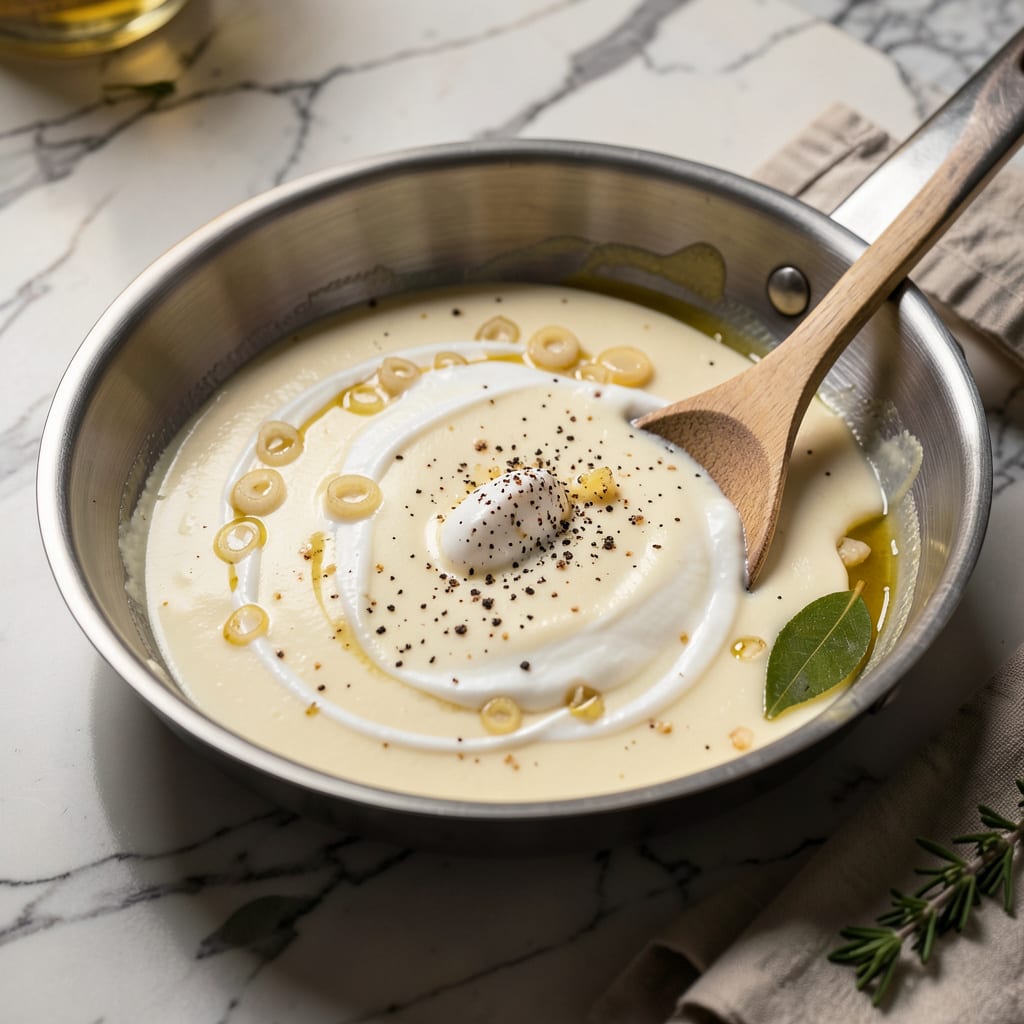
A silky white wine sauce can transform simple dishes into restaurant-quality meals with just a few precise techniques. This versatile reduction balances acidity, richness, and aromatic depth—perfect for elevating chicken, fish, or pasta. The key lies in proper reduction timing and careful emulsification to avoid separation.
With just 20 minutes and pantry staples, you’ll master a sauce that’s creamy without being heavy, complex without being overpowering. I’ll guide you through the critical steps: from deglazing with wine to finishing with butter for that signature velvety texture. No culinary school required—just attention to detail.
Ingredients for White Wine Sauce
These nine ingredients transform into a velvety, restaurant-worthy sauce with proper technique and timing.
| Ingredient | Amount | Notes |
|---|---|---|
| Dry White Wine 🍷 | 1 ½ cups | Sauvignon Blanc or Pinot Grigio preferred |
| Shallots 🧅 | 2 whole | Finely minced for even distribution |
| Garlic Cloves 🧄 | 3 cloves | Microplaned for maximum infusion |
| Unsalted Butter 🧈 | ½ cup | European-style for superior emulsification |
| Heavy Cream 🥛 | ½ cup | Full-fat for proper body and texture |
| Dijon Mustard 🟡 | 1 tbsp | Smooth variety for balanced acidity |
| Fresh Thyme Sprigs 🌿 | 3 sprigs | Leaves stripped, stems discarded |
| Fresh Parsley 🌿 | 2 tbsp | Finely chopped for finishing |
| Kosher Salt 🧂 | ¾ tsp | Diamond Crystal preferred for precision |
| Freshly Ground Black Pepper 🌶️ | ¼ tsp | Coarse grind for subtle texture |
[recipeingredientscaler]
The wine is everything here—Sauvignon Blanc or Pinot Grigio give that perfect balance of acidity without overpowering. I grab mine from Trader Joe’s (their $5 bottles work beautifully). For the butter, European-style (like Plugrá) has higher fat content, which means better emulsification and that signature silky finish. Shallots (not onions) add delicate sweetness without harshness. Look for firm bulbs with dry, papery skins at the store.
No white wine? Dry vermouth actually works better—it keeps longer and has similar acidity. Out of shallots? One small yellow onion, finely minced, gets you 90% there. The heavy cream can be half-and-half in a pinch, but the sauce won’t be as luscious. For a dairy-free version, full-fat coconut milk (the canned kind) mimics the richness surprisingly well. Just skip the butter if you go that route.
This sauce holds beautifully for 3 days refrigerated in an airtight container. The butter will solidify, so reheat gently over low while whisking in a splash of water. For longer storage, freeze in ice cube trays—good for 3 months. Always make extra; it’s just as good (maybe better) the next day once flavors meld.
Why You’ll Love This Recipe
- One-Pan Magic: I love that this comes together in a single skillet—no blender, no straining, just a quick sauté of shallots and garlic before the wine and cream do their thing. Cleanup is faster than the sauce reduces.
- That Butter-Wine Balance: The way the dry white wine cuts through the richness of the butter and cream? It’s like the sauce knows exactly what your chicken or pasta needs. Honestly, I’ve caught myself “taste-testing” it straight from the spoon.
- Dinner Party Hero: I’ve served this over seared scallops for guests and stirred it into weeknight pasta for my kids. Same sauce, two totally different vibes—no one suspects it’s the same 15-minute trick.
- Leftovers? Lucky You: Between us, this sauce thickens overnight into something even better—like a fancy Alfredo you didn’t have to babysit. I stash extra in a jar and drizzle it over roasted veggies or grilled fish later in the week.
Step-by-Step Instructions for White Wine Sauce
This method transforms simple ingredients into a luxurious sauce with perfect balance and body.
Step 1: Sauté Aromatics for Flavor Foundation
Begin by finely mincing the 2 whole Shallots until they’re nearly translucent. In a heavy-bottomed saucepan, melt 2 tablespoons of the 0.5 cup Unsalted Butter over medium heat. Add the minced shallots and cook for 4-5 minutes, stirring frequently, until they soften without browning.
Next, add the 3 cloves Garlic Cloves that you’ve microplaned for maximum flavor infusion. Cook for just 30 seconds until fragrant but not colored. This gentle cooking preserves their delicate flavor while removing any raw harshness. The aroma should be sweet and pungent, signaling the base is ready for the next step.
Step 2: Deglaze with Wine for Depth
Pour in the 1.5 cups Dry White Wine all at once, scraping up any browned bits from the pan bottom. I prefer Sauvignon Blanc for its crisp acidity that cuts through the richness. Increase heat to medium-high and let it simmer vigorously for 8-10 minutes until reduced by about two-thirds.
You’ll know it’s ready when the sharp alcohol smell dissipates and the liquid becomes syrupy. The reduction should coat the back of a spoon lightly. At this stage, add the 3 sprigs Fresh Thyme Sprigs (leaves only) and continue simmering for 1 minute to infuse their earthy notes into the sauce.
Step 3: Emulsify with Cream and Mustard
Reduce heat to low and whisk in the 0.5 cup Heavy Cream in a slow, steady stream. This gradual incorporation prevents the sauce from breaking. Add the 1 tbsp Dijon Mustard and whisk vigorously until fully dissolved – this adds both tang and emulsifying power to create that velvety texture.
Now add the remaining 0.5 cup Unsalted Butter, one tablespoon at a time, whisking constantly. Each addition should fully incorporate before adding more. The sauce will transform from translucent to creamy and opaque. Maintain the heat just high enough to keep it simmering gently – you should see small bubbles at the edges.
Step 4: Season and Finish with Precision
Stir in the 0.75 tsp Kosher Salt and 0.25 tsp Freshly Ground Black Pepper. Taste carefully – the sauce should have a balanced acidity from the wine with just enough salt to enhance all flavors. Remember that the salt will become more pronounced as the sauce cools slightly.
Remove from heat and stir in the 2 tbsp Fresh Parsley. The residual heat will wilt it just enough to release its bright, grassy notes without losing its vibrant green color. Let the sauce rest for 2-3 minutes before serving – this allows the flavors to meld completely and the texture to reach its silkiest consistency.
Perfect Pairings for This white wine sauce
Protein Pairings
This velvety sauce transforms simple chicken breasts into restaurant-worthy fare. I love pan-searing bone-in, skin-on chicken thighs until golden, then spooning the sauce over the top. The acidity cuts through the richness beautifully. For a lighter option, try it with poached salmon fillets—the wine notes complement the fish’s natural oils. 🍗
Pasta Perfection
Toss with fettuccine or pappardelle for a luxurious weeknight meal. Cook 12 ounces of pasta al dente, reserving ½ cup pasta water to loosen the sauce. The starch helps the sauce cling perfectly. I always add grated Parmesan at the table for extra depth.
Vegetable Enhancements
Drizzle over roasted asparagus or blistered green beans for an elegant side. The sauce’s richness balances the vegetables’ earthiness. For a heartier dish, try it with mushroom risotto—the umami from the mushrooms pairs wonderfully with the wine reduction.
Wine Pairings
Serve with the same wine you used in the sauce—I prefer a crisp Sauvignon Blanc from New Zealand. The citrus notes mirror the sauce’s acidity. For red wine lovers, a light Pinot Noir works surprisingly well. The key is matching the wine’s body to the dish’s richness. 🍷
Bread Companions
Offer crusty baguette slices for dipping—they soak up the sauce beautifully. I toast mine with garlic butter for extra flavor. For a heartier option, serve with cheesy pull-apart bread; the sauce makes every bite decadent.
Potato Partners
Spoon over garlic mashed potatoes for ultimate comfort food. The sauce’s acidity cuts through the creaminess. For a crispy contrast, try it with crispy roasted baby potatoes. The sauce softens their edges while keeping the centers fluffy.
Nutrition Facts
Frequently Asked Questions
Can I use cooking wine instead of regular white wine?
Avoid cooking wine—it contains added salt and preservatives that alter the flavor. A $5 bottle of Sauvignon Blanc or Pinot Grigio works perfectly. The alcohol cooks off during reduction, leaving only the wine’s natural acidity and fruit notes.
Why did my sauce separate after adding butter?
This happens when the sauce gets too hot or butter is added too quickly. Keep heat at low and whisk constantly while adding butter 1 tablespoon at a time. If separation occurs, remove from heat and whisk vigorously to re-emulsify.
How far ahead can I make this sauce?
Prepare up to 3 days ahead and refrigerate in an airtight container. Reheat gently over low heat, whisking in 1-2 tablespoons water to restore creaminess. The flavors actually deepen after resting overnight.
What’s the best substitute for heavy cream?
For a lighter option, use half-and-half (texture will be thinner). For dairy-free, full-fat coconut milk works surprisingly well. Avoid skim milk—it lacks the fat needed for proper emulsification and will make the sauce watery.
Can I freeze leftover sauce?
Yes! Freeze in ice cube trays for up to 3 months. Thaw overnight in the fridge, then reheat gently. Note that the texture may be slightly less velvety after freezing, but stirring in 1 teaspoon butter at the end restores creaminess.

- 6 Egg Cake Recipe with Oil: Light as Air With Buttery Moisture - October 4, 2026
- 4 Bean Casserole Recipe: One-Pan Heartiness With Smoky Paprika Depth - October 4, 2026
- 3-Ingredient Keto Mug Cake Recipe: Microwave Magic in 2 Minutes - October 4, 2026