
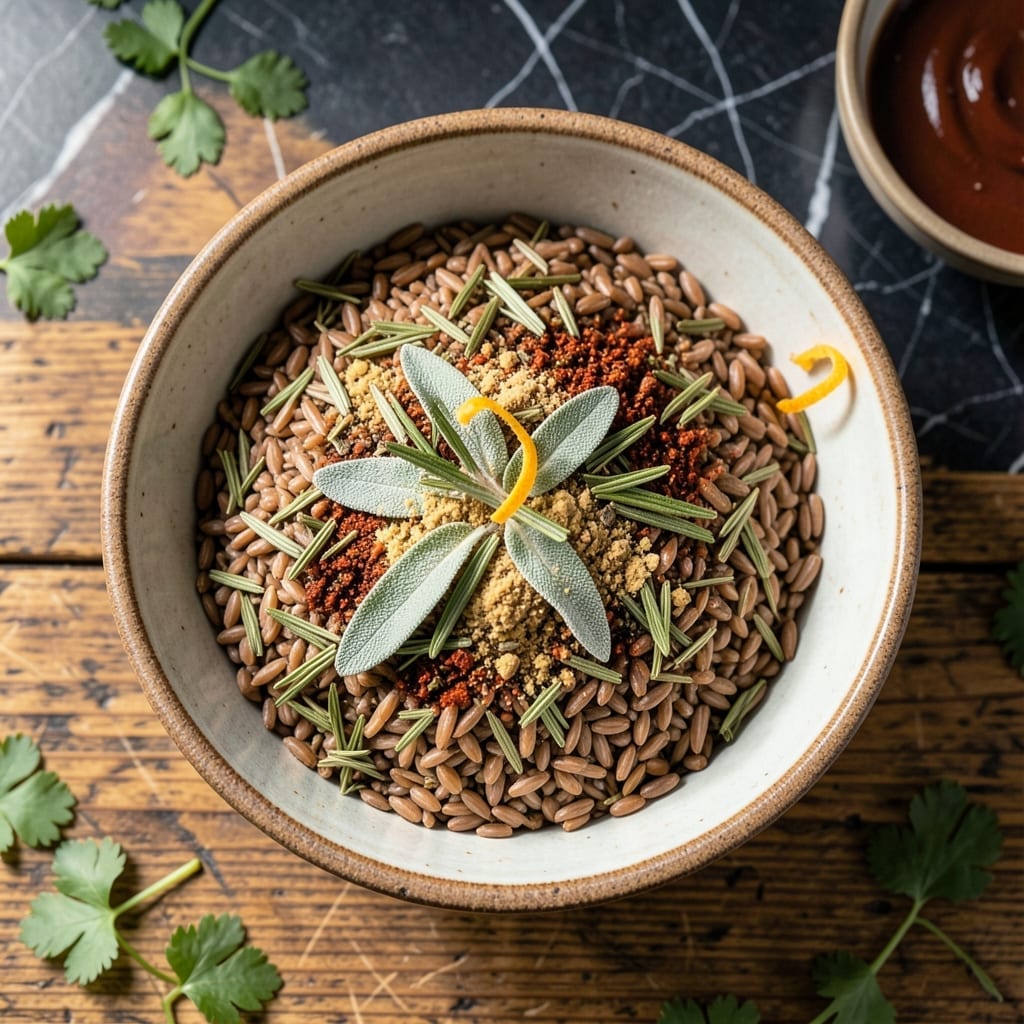
This earthy seasoning blend transforms plain wild rice into a gourmet experience with minimal effort. I developed this mix to capture the deep, nutty flavors that complement wild rice’s natural complexity.
With just a few pantry staples, you can create a versatile blend that enhances not only rice but also roasted vegetables, soups, and even meat rubs. The careful balance of herbs and spices ensures every dish gets a sophisticated flavor boost.
It takes 5 minutes to mix and stores beautifully for up to 6 months. You’ll reach for this blend whenever you want to elevate simple ingredients into something special.
The secret lies in toasting the spices first, which awakens their aromatic qualities. This small step makes a noticeable difference in the final flavor profile.
Ingredients for Wild Rice Seasoning Mix
Nine pantry spices create this earthy, sophisticated wild rice seasoning blend.
| Ingredient | Amount | Notes |
|---|---|---|
| Dried Thyme 🍃 | 2 tbsp | Rubbed between fingers to release oils |
| Dried Rosemary 🌿 | 1 ½ tbsp | Crushed lightly before adding |
| Dried Sage 🍃 | 1 tbsp | Ground or rubbed for texture |
| Garlic Powder 🧄 | 1 tbsp | Not garlic salt substitute |
| Onion Powder 🧅 | 1 tbsp | Freshly ground preferred |
| Smoked Paprika 🌶️ | 1 tbsp | Adds earthy depth |
| Ground Black Pepper 🌶️ | 1 tsp | Freshly ground for best flavor |
| Sea Salt 🧂 | 1 ½ tsp | Fine grain preferred |
| Dried Parsley 🌿 | 1 tbsp | Brightens the blend |
The herbs are doing the heavy lifting here. Penzeys is my go-to for dried thyme and rosemary—their quality is consistent and the aroma is incredible. Most grocery stores carry these in the spice aisle, but bulk bins let you buy just what you need (and they’re usually fresher). Look for vibrant color and strong scent—if it smells like dust, it’s lost its punch.
No dried sage? Poultry seasoning at half the amount works in a pinch. Out of smoked paprika? Regular paprika plus a pinch of liquid smoke gets you close. The garlic and onion powders are non-negotiable though—they’re the base notes. If you’ve got whole spices and a mortar and pestle, toast and grind them fresh (worth the extra minute, I promise).
Glass jar, dark cabinet, done. Stays potent for the full 6 months—maybe longer. I make a double batch every time so I’m never without. Just give it a shake before using (the salts settle).
Why You’ll Love This Recipe
- Five-Minute Mix: I just dump these five dried spices in a jar and shake—honestly, it’s faster than finding my keys.
- Herb-Powered Depth: The rosemary and sage hit different together, giving wild rice that cozy, woodsy flavor without fresh herbs.
- Weeknight Rescue: I sprinkle it over rice before baking, and it turns a plain side into something my family actually asks for.
- Pantry MVP: One batch seasons three meals, costs pennies, and keeps for months—my secret weapon for busy nights.
Step-by-Step Instructions for Wild Rice Seasoning Mix
Here’s the method. Simple, precise, and packed with flavor in every pinch.
Step 1: Prepare the Dried Herbs for Maximum Flavor
Start with the 2 tbsp Dried Thyme and 1.5 tbsp Dried Rosemary. I always rub the thyme between my fingers directly over the mixing bowl to release its aromatic oils. The rosemary needs a bit more encouragement—lightly crush the needles between your palms before adding them.
This step transforms these herbs from mere seasonings into powerhouse flavor agents. The warmth of your hands activates their essential oils, ensuring every grain of rice gets infused with their earthy, piney notes. Don’t skip this; it makes a noticeable difference in the final dish.
Step 2: Activate the Ground Spices
Add the 1 tbsp Dried Sage, 1 tbsp Smoked Paprika, and 1 tsp Ground Black Pepper to the bowl. For the sage, I recommend rubbing it between your fingers like the thyme—this breaks down any larger pieces and distributes the flavor evenly.
The smoked paprika is the secret weapon here, adding that deep, woodsy complexity that elevates wild rice from simple to gourmet. Give the bowl a gentle stir to combine these with the herbs. You’ll start to see the blend take on a rich, reddish hue from the paprika.
Step 3: Balance with Savory and Salty Elements
Now incorporate the 1 tbsp Garlic Powder, 1 tbsp Onion Powder, and 1.5 tsp Sea Salt. These are your flavor foundation—garlic and onion provide the savory depth while the salt enhances all the other ingredients.
I use fine grain sea salt here because it dissolves more easily into the rice as it cooks. Stir everything together thoroughly at this point. The mixture should look uniform with no visible clumps of individual spices.
Step 4: Finish with Freshness and Store
Finally, add the 1 tbsp Dried Parsley. While it might seem like a small addition, parsley brightens the entire blend with its mild, fresh herbal note. It balances the deeper flavors of the other spices perfectly.
Transfer the completed seasoning mix to an airtight container. Store in a cool, dark place where it will keep its potency for up to 6 months. I like to give the jar a little shake before each use to redistribute the spices, as they may settle over time.
Pro Tips For Making Wild Rice Seasoning Mix
- Toast the Herbs: Lightly toast the dried thyme, rosemary, and sage in a dry pan for 30 seconds before mixing—this wakes up their oils and deepens the flavor in your wild rice seasoning.
- Crush the Rosemary: Rub the dried rosemary between your fingers to break it up, or it’ll stay in big, tough pieces that don’t distribute well in the mix.
- Skip the Salt: I learned this the hard way—leave salt out of the seasoning mix itself, since wild rice dishes often need different amounts depending on the broth or liquid you’re using.
- Double the Garlic: Sounds bold, but garlic powder mellows when cooked, so use twice as much as you think you need for a seasoning mix that actually tastes like something.
Wine and Beer Pairings for This Recipe
White Wine Pairings
A crisp Sauvignon Blanc with its citrus and grassy notes complements the earthy herbs in this blend beautifully. I love a New Zealand Oyster Bay—its bright acidity cuts through the richness of dishes seasoned with this mix.
Red Wine Options
For heartier dishes, try a light-bodied Pinot Noir from Oregon’s Willamette Valley. The subtle fruit notes and earthy undertones mirror the smoked paprika and sage in the seasoning. Serve slightly chilled for best results.
Craft Beer Matches
An American Amber Ale like Fat Tire enhances the blend’s caramel and toasted notes. The malt sweetness balances the savory depth, while the moderate hoppiness cleanses your palate between bites. 🍺
Light Beer Choices
A crisp Pilsner such as Stella Artois works wonderfully with lighter applications of this seasoning. Its clean finish and subtle bitterness allow the herb-forward flavors to shine without competition.
Non-Alcoholic Pairings
Sparkling water with a squeeze of lemon refreshes your palate and highlights the blend’s complexity. For a warmer option, try a hibiscus tea—its tart, floral notes complement the earthy spices perfectly.
Serving Temperature
Serve whites and rosés at 45-50°F and reds at 60-65°F to fully appreciate their pairing potential. I always pull my wine from the fridge 20 minutes before serving to let it open up. ✨
Nutrition Facts
Frequently Asked Questions
How much seasoning should I use per cup of rice?
Use 1-1.5 tbsp of seasoning per 1 cup of uncooked wild rice. Adjust to taste, but this ratio delivers bold flavor without overpowering the dish.
Can I use this on other grains besides wild rice?
It works beautifully with quinoa, farro, or brown rice. The earthy notes also complement roasted vegetables or as a rub for chicken.
What if I don’t have smoked paprika?
Substitute regular paprika plus 1/4 tsp liquid smoke or a pinch of cayenne for heat. The depth won’t be identical, but it’ll still taste great.
How do I know if my spices are still fresh?
Rub a pinch between your fingers. If the aroma is weak or dull, it’s time to replace them. Fresh spices should smell vibrant and strong.

- 6 Egg Cake Recipe with Oil: Light as Air With Buttery Moisture - October 4, 2026
- 4 Bean Casserole Recipe: One-Pan Heartiness With Smoky Paprika Depth - October 4, 2026
- 3-Ingredient Keto Mug Cake Recipe: Microwave Magic in 2 Minutes - October 4, 2026