
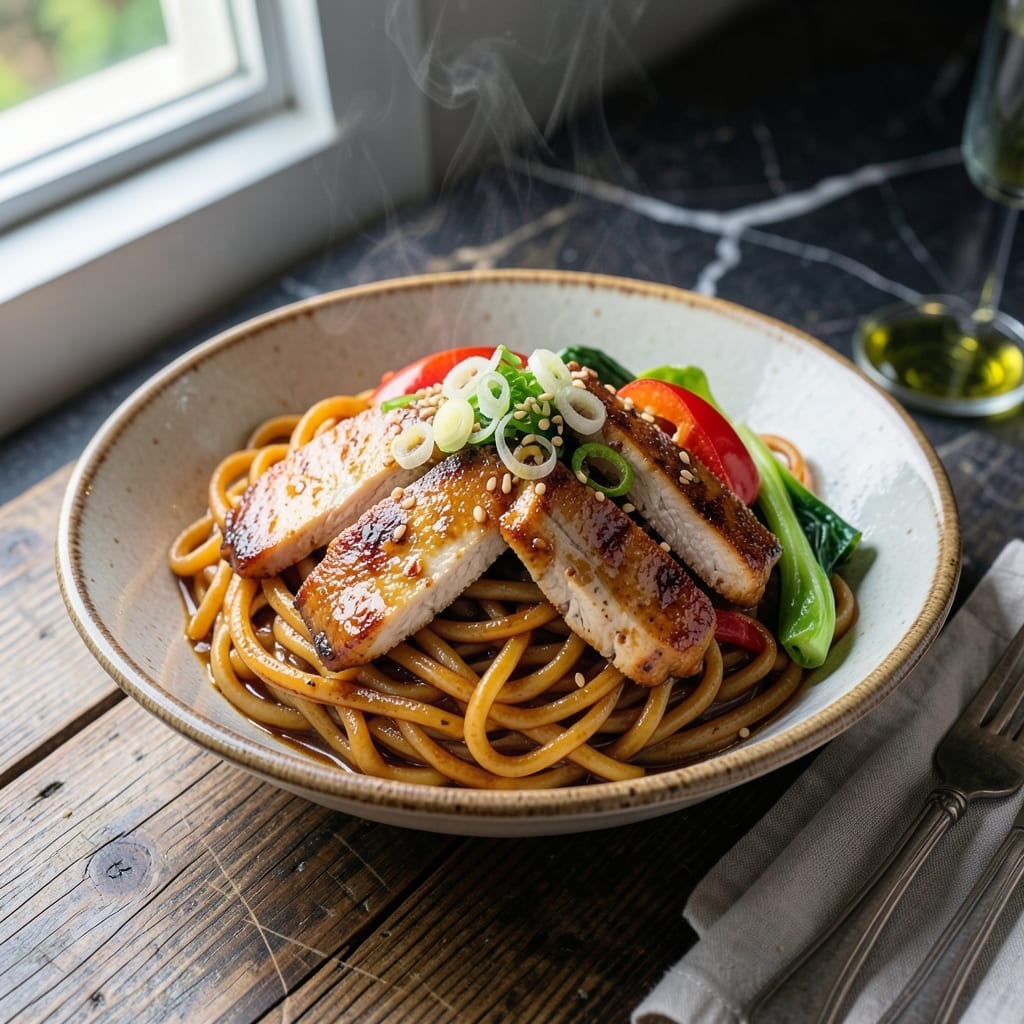
This wok-tossed udon delivers the bold, savory flavors you’d expect from a Wagamama classic, right in your own kitchen. The thick, chewy noodles absorb a rich sauce that’s both tangy and umami-packed, with just the right amount of char from high-heat cooking.
The secret lies in the sauce—a perfect balance of soy, mirin, and oyster sauce—tossed with fresh vegetables and protein. I’ve streamlined the process to ensure restaurant-quality results without the restaurant price.
What you’ll get is a dish that’s hearty, satisfying, and full of texture. The noodles stay springy, the veggies retain a slight crunch, and every bite is coated in that addictive sauce.
Ready in 20 minutes, this is weeknight cooking at its best.
Ingredients for Yaki Udon Recipe Wagamama
A handful of fresh veggies, chewy noodles, and a sauce that packs serious umami flavor.
| Ingredient | Amount | Notes |
|---|---|---|
| Udon Noodles 🍜 | 14 oz | Fresh or frozen, uncooked |
| Soy Sauce 🫒 | ½ cup | Low-sodium preferred |
| Mirin 🍶 | ¼ cup | Sweet rice wine |
| Oyster Sauce 🍤 | 3 tbsp | Vegetarian oyster sauce if needed |
| Sesame Oil 🫒 | 2 tbsp | Toasted variety preferred |
| Chicken Breast 🍗 | 1 lb | Boneless, skinless, thinly sliced |
| Red Bell Pepper 🌶️ | 1 whole | Thinly sliced into strips |
| Green Cabbage 🥬 | 3 cups | Thinly shredded |
| Carrots 🥕 | 2 whole | Julienned or matchstick cut |
| Garlic Cloves 🧄 | 4 cloves | Minced for maximum flavor |
| Fresh Ginger 🌿 | 1 tbsp | Grated or finely minced |
| Green Onions 🧅 | 4 whole | Thinly sliced for garnish |
| Neutral Cooking Oil 🫒 | 2 tbsp | High smoke point like vegetable or canola |
| Sesame Seeds 🌰 | 1 tbsp | Toasted for garnish |
The sauce is everything here. Kikkoman soy sauce is my go-to for balance, but any quality brand works. Look for mirin with real sugar—some cheaper versions use corn syrup and taste flat. For the oyster sauce, Koon Chun or Lee Kum Kee are solid choices. Fresh udon noodles (found in the refrigerated section at Asian markets) are worth hunting down, but frozen works in a pinch.
No chicken? Shrimp, beef strips, or tofu all work great—just adjust cooking time accordingly. Swap bell pepper for snap peas or broccoli if that’s what’s in the fridge (the crunch is key). Out of mirin? 1 tbsp sugar plus 3 tbsp water gets you close. The ginger and garlic can be pre-minced (I won’t tell), but fresh tastes brighter. For extra heat, add a pinch of red pepper flakes.
This keeps 3-4 days in the fridge—reheats beautifully in a skillet with a splash of water. The noodles will soak up more sauce over time, so add a little extra when warming. Freezing isn’t ideal (udon gets mushy), but if you must, undercook the noodles by a minute first. Always garnish fresh with those green onions and sesame seeds.
Why You’ll Love This Recipe
- One Pan Wonder: I toss everything in a single skillet—udon, soy, mirin—and it’s done in 15 minutes flat.
- Umami Bomb: The oyster sauce and sesame oil hit that Wagamama sweet-savory note I crave every time.
- Feeds a Crowd: Honestly, I double the batch and pack leftovers for lunch the next day—still tastes spot-on.
- Budget Friendly: Udon noodles and pantry staples mean I spend under $10 for a meal that feels restaurant-worthy.
Step-by-Step Instructions for Wok-Tossed Savory Noodle Delight
Here’s the method. Straightforward, tested, works every time.
Step 1: Prepare the Noodles and Protein
Cook the 14 oz Udon Noodles according to package instructions until just al dente, then drain and rinse under cold water to stop the cooking process. This keeps them from turning mushy when stir-fried later. Meanwhile, slice the 1 lb Chicken Breast into thin strips—about ¼-inch thick—so they cook quickly and evenly.
Pat the chicken dry with a paper towel to ensure it sears properly in the pan. I like to toss the cooked noodles with a drizzle of 2 tbsp Sesame Oil while they’re still warm to prevent sticking and add a nutty depth of flavor.
Step 2: Stir-Fry the Aromatics and Vegetables
Heat 2 tbsp Neutral Cooking Oil in a large wok or skillet over high heat until shimmering. Add the sliced chicken and cook for 3-4 minutes until no longer pink. Remove the chicken and set aside.
In the same pan, add the minced 4 cloves Garlic Cloves and grated 1 tbsp Fresh Ginger. Stir for 30 seconds until fragrant—don’t let them burn. Toss in the 1 whole Red Bell Pepper (sliced), 3 cups Green Cabbage (shredded), and 2 whole Carrots (julienned) and stir-fry for 4-5 minutes until the vegetables are crisp-tender.
Step 3: Combine Everything with the Sauce
Return the chicken to the pan and add the cooked udon noodles. Pour in the 0.5 cup Soy Sauce, 0.25 cup Mirin, and 3 tbsp Oyster Sauce. Toss everything together with tongs, coating the noodles and vegetables evenly.
Cook for an additional 2-3 minutes until the sauce has thickened slightly and everything is heated through. The noodles should glisten with the sauce, and the vegetables should retain a slight bite for texture contrast.
Step 4: Garnish and Serve Immediately
Transfer the yaki udon to serving plates and garnish with the thinly sliced 4 whole Green Onions and 1 tbsp Sesame Seeds. The green onions add a fresh, sharp crunch, while the sesame seeds provide a subtle nutty finish.
Serve hot, while the noodles are still glistening and the flavors are vibrant. This dish comes together quickly, so have everything prepped and ready to go before you start cooking. The key is high heat and constant motion to achieve that classic wok-tossed texture.
Pro Tips For Making Yaki Udon Recipe Wagamama
- Pre-boil the noodles: Parboil the udon noodles for 1-2 minutes before stir-frying—this prevents them from turning to mush when they hit the hot wok with the sauce.
- High heat only: Crank the heat to maximum before adding the noodles. I learned this the hard way after ending up with soggy, steamed udon instead of that coveted slight char.
- Use fresh udon: Skip the dried stuff—fresh or vacuum-packed udon noodles hold up better to stir-frying and soak up the soy-mirin-oyster sauce like a dream.
- Toast the sesame oil: Add the sesame oil at the very end and let it sizzle for 10 seconds in the hot pan—it brings out a nutty aroma that dried herbs just can’t match.
Pro Cooking Tips for yaki udon recipe wagamama
Wok Heat Control
High heat is non-negotiable for that Wagamama-style char. I use a carbon steel wok on my gas burner cranked to max. If your stove runs weak, preheat the wok for 5 minutes before adding oil. The smoke point of your oil matters—avocado oil handles 520°F beautifully. 🔥
Sauce Timing
Mix your soy sauce, mirin, and oyster sauce in a bowl before cooking. Adding them separately risks uneven distribution. Pour the sauce mixture down the sides of the wok, not directly on the food, to prevent temperature shock.
Noodle Prep Trick
Undercook your udon noodles by 1 minute—they’ll finish in the wok. Rinse with cold water immediately after boiling to remove excess starch. Toss with 1 tbsp sesame oil while warm to keep them from clumping during stir-fry.
Protein Perfection
Slice your chicken breast against the grain into ¼-inch strips. Velouting (tossing with 1 tsp cornstarch) gives that restaurant-style glossy finish. Cook chicken first, then remove—this prevents overcooking while you stir-fry the veggies.
Veggie Sequence
Start with aromatics (garlic, ginger) for 30 seconds, then add harder veggies (carrots) first. Finish with cabbage and bell pepper since they cook fastest. Keep everything moving with a wok spatula for even char.
The Final Toss
Return all ingredients to the wok for the final 2 minutes of cooking. Use long tongs to lift and flip the noodles, coating every strand. The sauce should reduce to a glossy sheen, not a pool. Garnish with green onions and sesame seeds just before serving.
Nutrition Facts
Frequently Asked Questions
Can I use a different protein instead of chicken?
Try shrimp (cook 2-3 minutes), thinly sliced beef, or firm tofu for a vegetarian option. Adjust cooking times accordingly for best results.
What if I can’t find fresh udon noodles?
Frozen udon works perfectly—just thaw in warm water first. Avoid dried udon as it lacks the signature chewy texture. Cook 1 minute less than package instructions to prevent mushiness.
How do I prevent the noodles from sticking?
Use high heat and keep them moving. Toss with 1 tbsp sesame oil after boiling. A well-seasoned carbon steel wok or nonstick pan helps too.
Can I make this dish gluten-free?
Swap regular soy sauce for tamari and use rice noodles instead of udon. Ensure your oyster sauce is gluten-free or use a substitute.

- 6 Egg Cake Recipe with Oil: Light as Air With Buttery Moisture - October 4, 2026
- 4 Bean Casserole Recipe: One-Pan Heartiness With Smoky Paprika Depth - October 4, 2026
- 3-Ingredient Keto Mug Cake Recipe: Microwave Magic in 2 Minutes - October 4, 2026