
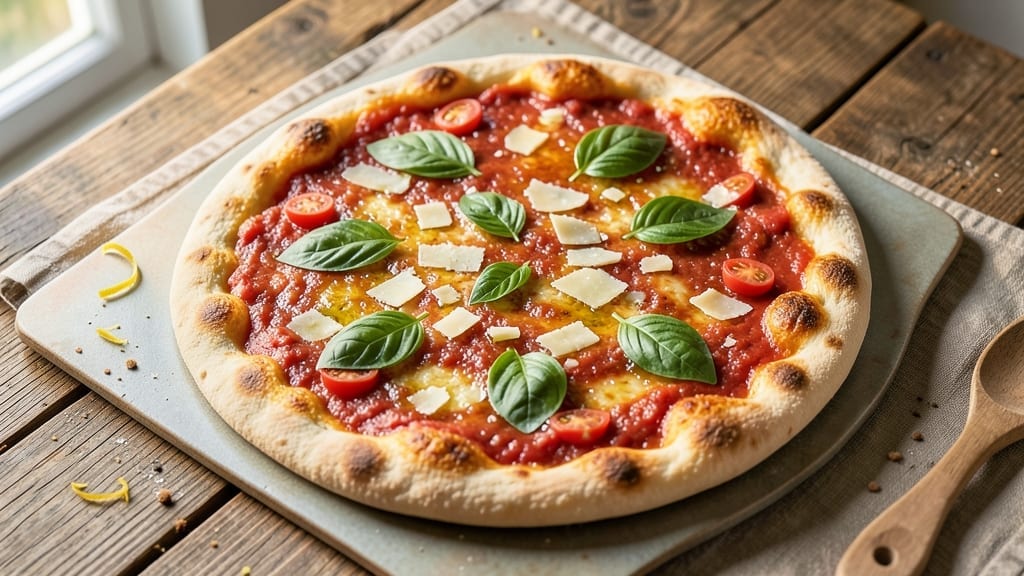
This 00 flour and bread flour pizza dough recipe delivers the perfect balance of crispy crust and chewy center that separates homemade pizza from store-bought. The secret lies in the flour blend—00 flour for delicate texture and bread flour for structure—paired with precise hydration and fermentation.
After perfecting this method through countless tests, I can confidently say this is the dough that will elevate your pizza game.
The process begins with a straightforward mix of flours, water, yeast, and salt, but the magic happens during the 24-hour cold fermentation. This slow rise develops deep flavor and creates that ideal airy-yet-dense texture.
Whether you’re making classic Margherita or modern gourmet pies, this dough provides a neutral yet robust foundation that enhances any topping combination.
By the time you pull it from the oven, you’ll have a pizza with a crispy, caramelized crust that shatters slightly when you bite in, giving way to a soft, chewy center. The edges hold their shape without becoming tough, and the interior remains tender and pillowy.
This dough works equally well for thin-crust, thick-crust, or even deep-dish styles, making it the ultimate pizza base.
The beauty of this recipe lies in its versatility—use it for classic Neapolitan-style pizzas or go bold with creative toppings. The dough can be made ahead and stored in the refrigerator for up to 3 days, allowing you to shape and bake as needed.
Let’s get started on creating your perfect pizza foundation.
Ingredients for 00 flour and bread flour pizza dough
Two flours, one yeast, and a 24-hour secret that transforms simple ingredients into pizza perfection.
| Ingredient | Amount | Notes |
|---|---|---|
| 00 Flour 🌾 | 2 ½ cups | Fine-milled for delicate texture |
| Bread Flour 🌾 | 1 ½ cups | High-protein for structure |
| Active Dry Yeast 🍞 | ¼ oz | Or 2.25 tsp, fresh yeast preferred |
| Granulated Sugar 🍬 | 1 tbsp | Feeds yeast for activation |
| Warm Water 💧 | 1 ½ cups | 105-110°F for ideal yeast activation |
| Extra-Virgin Olive Oil 🫒 | 2 tbsp | High-quality for flavor |
| Diamond Crystal Kosher Salt 🧂 | 1 ½ tsp | Fine grain preferred |
| Semolina Flour 🌾 | ½ cup | For dusting work surface |
The flours are the real MVPs here. 00 flour gives that delicate, crispy crust Neapolitan pizzas are famous for, while bread flour adds the chewy structure you want in the center. Grab King Arthur or Caputo for 00—those brands are pizza gold. For bread flour, Bob’s Red Mill is my go-to, but any high-protein brand works. Yeast is non-negotiable—fresh yeast activates faster, but active dry yeast works fine if you let it proof longer. The sugar? Just enough to wake up that yeast—don’t go crazy with it. And that olive oil? California Olive Ranch or Colavita for serious flavor, but any good EVOO will do.
No 00 flour? All-purpose flour plus 1 tbsp cornstarch gets you close, though texture won’t be identical. Bread flour? All-purpose works in a pinch, but you’ll lose some chew. Running low on yeast? Instant yeast at half the amount works too. The water temp matters—too hot kills yeast, too cold makes it sluggish. 105-110°F is perfect, or just use warm tap water and let it sit 5 minutes. Semolina? Regular flour works, but semolina gives that signature crispy texture on the bottom crust. Pro tip: if your kitchen’s humid, add 1 tbsp extra flour to prevent stickiness during handling.
This dough is a 3-day fridge champ—make it ahead and let it ferment slowly for maximum flavor. Wrap tightly in plastic wrap or a damp towel to prevent drying. When ready to use, let it sit at room temp for 1-2 hours before shaping. The longer it ferments, the more complex the flavor becomes. For best results, use within 3 days of making. Need to store longer? Shape the dough, wrap in plastic, and freeze for up to 3 months. Thaw overnight in the fridge before using—no microwave shortcuts here.
Why You’ll Love This Recipe
- Here’s what sold me: the yeast and sugar wake up faster with warm water, giving that dough a lift. Spread it thin for Neapolitan crisp or thick for New York-style fold—both turn out ridiculously good.
- No-Knead Magic: I swear by this dough—just mix, rest, and roll. The combo of 00 flour for that silky stretch and bread flour for chewy bite means zero fuss, zero stress. My lazy Sundays thank me.
- Double the Flavor: Here’s what sold me: the yeast and sugar wake up faster with warm water, giving that dough a lift. Spread it thin for Neapolitan crisp or thick for New York-style fold—both turn out ridiculously good.
- Weeknight Workhorse: Between us, this dough is my secret weapon for takeout nights. Make a double batch on Sunday, freeze half, and boom—homemade pizza on a Tuesday when you’re too tired to order. (Yes, even with kids begging for chicken nuggets.)
Step-by-step instructions for crispy-crusted pizza dough
Here’s how to craft the perfect balance—crispy edges, chewy centers—using this flour powerhouse combo.
Activate the Yeast for Maximum Rise
In a small bowl, combine the 1.5 cups warm water (test temperature with your finger—it should feel like bathwater, not hot) with the 1 tbsp granulated sugar and 0.25 oz active dry yeast. Let it sit for 5-10 minutes until foamy. You’ll see tiny bubbles forming and the mixture expanding—this means your yeast is alive and ready to work its magic.
If nothing happens after 10 minutes, your yeast might be dead. Start fresh with a new packet—this is the foundation of your dough. Once activated, proceed immediately while the yeast is at peak performance.
Mix the Dough with Wet and Dry Ingredients
In a large bowl, whisk together the 2.5 cups 00 flour and 1.5 cups bread flour with the 1.5 tsp diamond crystal kosher salt. Create a well in the center and pour in the yeast mixture and 2 tbsp extra-virgin olive oil. Using a wooden spoon, gently mix until the dough starts coming together.
This is where the magic happens—the bread flour gives structure while the 00 flour creates that signature crispiness. Once the dough forms a shaggy mass, turn it out onto a lightly floured surface and knead for 8-10 minutes until smooth and elastic. You’ll know it’s ready when it springs back slowly when poked.
First Rise for Flavor Development
Lightly oil a large bowl and place the dough inside. Cover with a damp towel and let it rise in a warm place for 1-2 hours, or until doubled in size. I like to place it near the oven with the light on—this creates a warm, humid environment that speeds up fermentation without overproofing.
Don’t rush this step. The longer the rise (up to 4 hours in the fridge), the more flavor develops. You’ll see the dough puff up dramatically—this is the gluten relaxing and the yeast doing its work. When it’s ready, it should feel light and airy with just a slight resistance when pressed.
Shape and Second Rise for Perfect Texture
Punch down the risen dough and divide it into 4 equal portions (about 8 oz each). On a lightly floured surface dusted with 0.5 cup semolina flour, gently shape each portion into a ball. The semolina prevents sticking and gives that beautiful golden crust.
Place the dough balls on a floured surface, cover, and let them rest for 30 minutes. This second rise is crucial—it relaxes the gluten after shaping, preventing shrinking when you stretch the dough later. For best results, let them come to room temperature during this time.
Stretch and Shape for Crispy Perfection
Working with one ball at a time, dip your fingers in water and gently press the center outward, rotating the dough as you go. Stretch until you reach about 12 inches in diameter—this creates that perfect thin crust with a chewy center. The water prevents sticking and helps you get an even thickness.
Transfer the stretched dough to a parchment-lined baking sheet (this prevents sticking and makes cleanup easier). Let it rest for 10 minutes before adding toppings—this final rest ensures the dough doesn’t shrink when it hits the hot oven. The edges should look slightly puffy, and the surface should be smooth and taut.
Pro Tips For Making 00 Flour And Bread Flour Pizza Dough
- WEIGH YOUR FLOURS: Mixing 00 and bread flour by volume? Stop—your dough will be inconsistent. I learned this the hard way after making two doughs that behaved like oil and water. Use a kitchen scale for precision: 500g total dough (typically 300g 00 + 200g bread flour) ensures the right balance of chew and structure without guessing.
- HYDRATE THE YEAST FIRST: Skip dissolving yeast in water with sugar? You’ll waste time waiting for it to activate. My grandmother swore by this: mix the yeast, sugar, and half the warm water first, then let it foam for 5–10 minutes before adding the dry ingredients. This guarantees the yeast is ready to work the moment it hits the flour—no second-guessing.
- STRETCH, DON’T FOLD: After the first bulk rise, resist the urge to punch down or fold the dough aggressively. I used to think “working it harder” meant better gluten, but that just deflates the bubbles and makes the crust dense. Instead, gently stretch the dough in one direction, then fold it back on itself like a letter—repeat 2–3 times. This builds strength without killing the air.
- USE A LID FOR COLD PROOF: Cold-proofing (refrigerating) dough overnight is a game-changer, but skip the plastic wrap. I was skeptical until I tried this: place the dough in a sealed container with a loose lid or a damp towel over it. The trapped humidity keeps the surface from drying out, so you won’t end up with a tough, leathery crust when you bake it. (Yes, even if you’re impatient like me.)
Serving suggestions for this 00 flour and bread flour pizza dough
Classic Topping Combinations
Start with the timeless Margherita—drizzle with San Marzano tomato sauce, fresh mozzarella di bufala, a sprinkle of fresh basil, and a finish of extra-virgin olive oil. The crispy crust contrasts beautifully with the creamy cheese and bright tomato flavors.
For a meat lover’s twist, add pepperoni slices or spicy Italian sausage—just pre-cook the meat to avoid a soggy crust. 🍕
Gourmet Upgrades
Elevate your pizza with burrata cheese dollops on top of heirloom tomatoes and arugula, finished with a drizzle of aged balsamic glaze. For a smoky touch, add caramelized onions and crispy pancetta.
I love topping mine with truffle oil (just a few drops!) for an extra luxurious bite that pairs perfectly with the crispy crust.
Vegetarian-Friendly Options
Create a roasted vegetable medley with zucchini, eggplant, and red bell peppers—toss them in olive oil, salt, and dried oregano before baking. Add ricotta cheese swirls and sun-dried tomatoes for extra depth.
For a protein boost, sprinkle with crumbled feta or goat cheese after baking. The dough’s neutral flavor lets the vegetables shine.
Sauce Alternatives
Skip the tomato sauce entirely for a white pizza—brush the dough with olive oil and garlic, then top with ricotta, fontina cheese, and caramelized mushrooms.
For a BBQ chicken pizza, use ½ cup BBQ sauce (like Sweet Baby Ray’s), shredded cooked chicken, red onions, and smoked gouda. The dough’s crispy texture holds up perfectly to these bold flavors.
Cheese Pairing Guide
For Neapolitan-style pizzas, stick with fior di latte or mozzarella di bufala—their mild flavors let the crust shine. For gourmet creations, try pecorino romano (sharp and salty) or taleggio (creamy with earthy notes).
Pro tip: Pre-shredded cheese contains anti-caking agents that make the cheese dry—always use block cheese for the best melt and texture.
Finishing Touches
Fresh herbs like basil, oregano, or thyme add brightness—toss them in olive oil and sprinkle right before serving. A pinch of red pepper flakes or flaky sea salt (like Maldon) elevates every bite.
For a sweet contrast, drizzle with honey or fig jam on vegetarian pizzas. The crispy crust pairs beautifully with these finishing touches! ✨
Nutrition facts
Frequently asked questions
Why mix 00 flour and bread flour for pizza dough?
The 00 flour creates that signature crispy, delicate crust Neapolitan pizzas are famous for, while bread flour adds chewy structure to the center. This blend gives you the best of both worlds: a crispy exterior with a soft, airy interior that holds toppings perfectly. The protein content in bread flour also helps trap gas for better rise.
Can I make this dough without 00 flour?
Yes! Replace 00 flour with all-purpose flour plus 1 tbsp cornstarch for similar texture. The crust won’t be quite as crispy, but you’ll still get a good balance. For a chewier center, increase bread flour by ½ cup if using all-purpose. The dough will be slightly denser but still delicious.
How do I know when the dough is properly kneaded?
Your dough is ready when it’s smooth, elastic, and springs back slowly when poked. For the perfect test: wet your finger, press gently into the dough, and watch it spring back. If it springs back immediately, knead 2-3 more minutes. If it stays indented, you’ve over-kneaded—just proceed with shaping. The kneading time should be about 8-10 minutes total.
What’s the best way to store leftover dough?
Wrap tightly in plastic wrap or a damp towel and refrigerate for up to 3 days. For longer storage, shape into balls, wrap individually, and freeze for 3 months. Thaw overnight in the fridge—never at room temperature. This slow thaw preserves texture. Pro tip: Place dough balls in a container with a bit of olive oil to prevent drying.
Why does my dough shrink when stretching?
This happens when gluten tightens after shaping. Always let dough rest 30 minutes after dividing into balls and 10 minutes after final stretching. Keep your workspace and hands lightly floured, and avoid pulling too hard. The 24-hour cold fermentation helps prevent this—it relaxes the gluten naturally. If it still shrinks, try a shorter rise time next batch.

- 6 Egg Cake Recipe with Oil: Light as Air With Buttery Moisture - October 4, 2026
- 4 Bean Casserole Recipe: One-Pan Heartiness With Smoky Paprika Depth - October 4, 2026
- 3-Ingredient Keto Mug Cake Recipe: Microwave Magic in 2 Minutes - October 4, 2026