
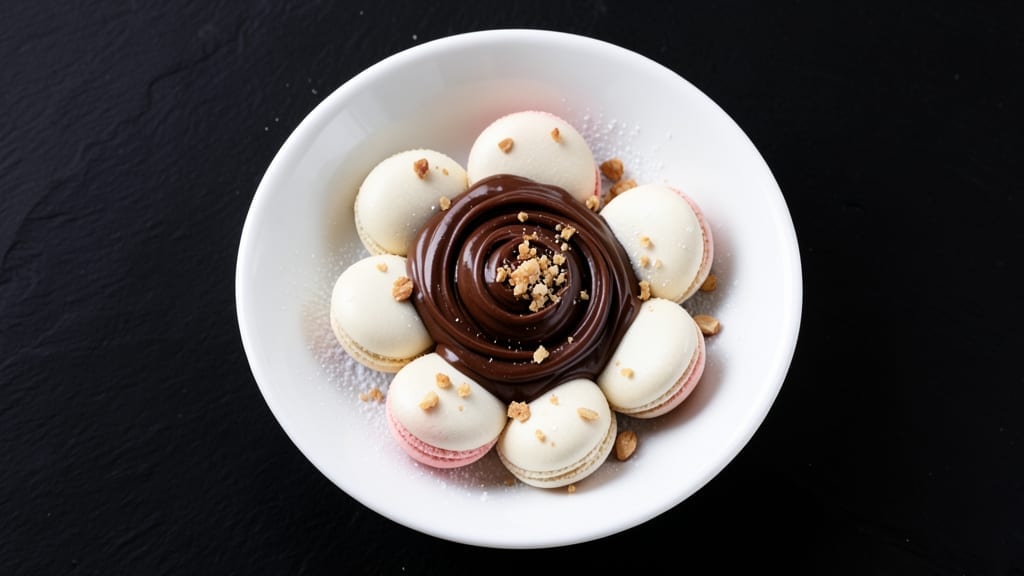
This 1-egg macaron recipe delivers restaurant-quality French pastries with just half the eggs—proof that delicate texture comes down to technique, not quantity. The secret lies in properly whisked meringue, precise almond flour mixture, and a foolproof resting process that ensures smooth shells every time.
I’ve perfected this method after years of trial and error, and it’s the only version that consistently delivers those coveted feet and silky ganache fillings.
The process requires patience but rewards with crispy shells that soften just enough to hold ganache without leaking. We’ll use a simple 3-2-1 ratio (3 parts egg whites, 2 parts sugar, 1 part almond flour) to create a stable batter that pipes smoothly and bakes evenly.
No stand mixer? No problem—this recipe works with a hand mixer and careful technique. The key is room-temperature ingredients and a light touch when folding.
By the end, you’ll have perfectly rounded macarons with matte, crack-resistant shells and a tender interior, ready to be filled with rich dark chocolate ganache or fruity jam. The ganache recipe included is silky-smooth and sets at the perfect firmness for clean slices.
This isn’t just a dessert—it’s a skill you’ll master, one batch at a time.
Whether you’re baking for a special occasion or simply treating yourself, these macarons will impress even the most discerning palates. The beauty of this recipe is in its precision—every step matters, but the results are worth the effort. Let’s get started on creating your first perfect batch.
Ingredients for 1 egg macaron
Precision meets elegance: these ingredients transform into delicate macarons with restaurant-quality shells.
| Ingredient | Amount | Notes |
|---|---|---|
| Large Egg Whites 🥚 | 3 whole | Room temperature, pasteurized if preferred |
| Granulated Sugar 🍚 | 2 cups | Superfine preferred for smooth texture |
| Almond Flour 🌰 | 1 cup | Finely ground, skinless preferred |
| Powdered Sugar 🍚 | 1 cup | For dusting and macaronage |
| Dark Chocolate Chips 🍫 | 6 oz | 70% cocoa or higher for ganache |
| Heavy Cream 🥛 | ½ cup | Full-fat for rich ganache |
| Unsalted Butter 🧈 | 2 tbsp | Cold, cut into small cubes |
| Vanilla Extract 🌿 | ½ tsp | Pure, high-quality preferred |
| Salt 🧂 | ¼ tsp | Fine sea salt for meringue |
| Cornstarch 🌾 | ½ tsp | For smooth batter consistency |
| Food Coloring (optional) 🎨 | 2 drops | Gel-based for vibrant color |
The egg whites are the foundation—room temperature is non-negotiable for stable meringue. Pasteurized whites eliminate salmonella risk without sacrificing texture. For almond flour, Bob’s Red Mill or Anthony’s brands yield the finest grind, crucial for smooth shells. Superfine sugar dissolves completely, preventing graininess in the batter. If using regular granulated, pulse it in a food processor for 30 seconds to mimic superfine texture. The 3-2-1 ratio (egg whites:sugar:almond flour) maintains structural integrity while keeping shells tender. For chocolate ganache, Valrhona or Guittard chocolate chips melt more evenly than store brands, creating a silky-smooth filling.
No superfine sugar? Blend granulated sugar with 1 tbsp cornstarch for 2 minutes in a food processor. Substitute almond flour with hazelnut flour for a nutty twist, though texture may vary slightly. For a dairy-free ganache, replace heavy cream with full-fat coconut cream (chill overnight first). The cornstarch in the macaron batter prevents cracking—don’t skip it. Food coloring can be omitted entirely for classic white macarons, but if using, gel-based colors blend without altering moisture levels. For extra stability, chill the batter for 30 minutes before piping, especially in humid climates.
Store almond flour in the freezer to prevent rancidity (lasts 6 months). Meringue peaks should form stiff but not dry—overmixing causes weeping. Pipe shells onto a silicone mat for easy release. Baked macarons cool for 1 hour before filling to prevent ganache leakage. Assembled macarons keep 3 days at room temperature in an airtight container, or 1 week refrigerated. For long-term storage, freeze filled macarons on a tray before transferring to a bag—thaw at room temperature for 30 minutes before serving. The ganache can be reheated gently in 10-second bursts in the microwave if it thickens.
Why You’ll Love This Recipe
- No Whisk Arm Fatigue: I swear by this recipe because it only needs one egg white—no overmixing, no aching arms from beating meringue until your biceps scream. Just a few minutes with a hand mixer, and those peaks hold perfectly. Honestly, it’s the kind of recipe that makes me question why I ever did fussy French macarons.
- Chocolate-Creamy Magic: That dark chocolate chip swirl? It’s the star. The almond flour gives it a nutty richness, but the moment you bite into the crisp shell and hit that gooey powdered-sugar center with melted chocolate—well, let’s just say it’s the kind of sweet that sticks around for days. (Yes, even on a Tuesday night.)
- Packable Perfection: These travel like champs. I’ve taken them to work in a lunchbox, packed them in my kids’ school snacks, and even slipped a few into my purse for “emergency dessert” moments. The powdered sugar coating keeps them from getting squished, and the almond flour makes them sturdy enough to handle.
- Pantry Staple Upgrade: Between us, I always have egg whites, sugar, and almond flour on hand. This recipe turns three basic ingredients into something that tastes like you slaved over it—no specialty items, no last-minute grocery runs. And if I make a batch, they last a week in the fridge, so I’m not scrambling to eat them all at once.
Step-by-step instructions for delicate French meringue macarons
Mastering macarons requires precision—follow these exact steps for perfect shells every time.
Prepare the Meringue with Exact Technique
In a clean, grease-free bowl, beat the 3 whole large egg whites on medium speed until soft peaks form. Gradually add the 2 cups granulated sugar while continuing to beat, increasing speed to high until the meringue reaches a glossy, thick consistency. The mixture should hold stiff peaks that don’t immediately collapse when the whisk is lifted.
This stage is critical—your meringue must be completely smooth with no graininess. If you see any sugar crystals, continue beating for another 30 seconds. The meringue should be thick enough to hold its shape when piped, but not so stiff that it cracks during the resting process.
Incorporate Almond Flour and Color
Sift together the 1 cup almond flour, 0.5 teaspoon cornstarch, and 0.25 teaspoon salt into the meringue. Gently fold with a spatula in small batches using the “macaronage” technique—this means folding just until the batter flows like lava when you lift the spatula, with no dry spots remaining.
Add the 2 drops of food coloring (if using) and the 0.5 teaspoon vanilla extract to the batter. The batter should be smooth, glossy, and thick enough to hold its shape when piped onto the baking sheet. If it’s too thin, add a bit more almond flour; if too thick, add a tiny amount of meringue back in.
Pipe and Rest the Macarons
Transfer the batter to a piping bag fitted with a round tip. Pipe 1-inch circles onto a parchment-lined baking sheet, spacing them about 1.5 inches apart. Tap the baking sheet firmly on the counter to release any air bubbles and create a smooth surface. Let the macarons rest at room temperature for 30-60 minutes until a dry skin forms on top.
This resting period is essential—it allows the top layer to dry slightly so the shells can expand properly in the oven. The edges should feel firm to the touch, but the centers should still be slightly tacky. If you see any bubbles or cracks forming, gently smooth them with a wet finger before baking.
Bake at Precise Temperature
Preheat your oven to 300°F. Bake the macarons for 15-18 minutes, rotating the baking sheet halfway through for even baking. The shells are done when they spring back when gently pressed and have a matte finish. Avoid opening the oven door during baking—temperature fluctuations can cause cracking.
Let the macarons cool completely on the baking sheet before removing them. This cooling process is crucial—it prevents the ganache from melting the shells when you fill them later. Once fully cooled, they should sound hollow when tapped gently.
Prepare and Fill with Ganache
Heat the 0.5 cup heavy cream in a small saucepan until it just begins to simmer. Pour it over the 6 oz dark chocolate chips in a heatproof bowl and let sit for 2 minutes. Stir until completely smooth, then add the 2 tablespoons cold cubed butter and the 0.5 teaspoon vanilla extract. Let the ganache cool slightly until it reaches a thick but pourable consistency.
Pipe or spoon the ganache between two macaron shells, pressing gently to create a seal. Let the filled macarons set at room temperature for at least 1 hour before serving. This ensures the ganache sets properly while maintaining the delicate texture of the shells.
Pro Tips For Making 1 Egg Macaron
- Age Your Egg Whites: Pop the whites into the fridge for 24 hours before whipping—this cuts down the fat content, giving you stiffer peaks and a smoother batter. I used to skip this, and my macarons always felt too soft, no matter how hard I whipped.
- Sift Almond Flour Twice: Clumps in almond flour wreck texture. Sift it once, then sift the leftover bits again through a fine-mesh sieve. Yes, it’s tedious, but your shells will be uniform and crisp instead of lumpy.
- Pipe Slowly, Space Evenly: Dribble the batter in steady streams, not blobs, and leave a gap between shells—they’ll spread about 20% during baking. I learned this after watching my first batch merge into one sad, misshapen pancake.
- Rest Before Baking: Let the piped macarons sit for 30–60 minutes until they’re dry to the touch. Skipping this causes them to crack or collapse when they hit the oven—like dropping a wet cake in hot oil.
Make-ahead tips for this dish
Prep Ahead Strategy
Prepare the meringue and almond flour mixture up to 24 hours in advance and store in an airtight container in the fridge. The flavors meld beautifully overnight, and the batter will be perfectly chilled for piping.
Just let it sit at room temperature for 30 minutes before using to achieve the ideal consistency. 🌙
Batter Storage Tips
If you can’t bake immediately, pipe the macaron shells onto a parchment-lined tray and refrigerate for up to 2 days. Before baking, let them sit at room temperature for 1 hour to prevent excessive spreading in the oven.
For longer storage, freeze unbaked shells on a tray before transferring to a bag—thaw for 30 minutes before baking. 🧊
Ganache Prep Ahead
Make the ganache up to 3 days in advance and store it in an airtight container at room temperature. Reheat gently in 10-second microwave bursts or in a double boiler until pourable.
For extra stability, chill the ganache for 15 minutes before filling to prevent melting the shells. This prepped ganache saves time and ensures consistent results. ✨
Assembled Macaron Storage
Once filled, store macarons in an airtight container at room temperature for 3 days or refrigerate for up to 1 week. For longer storage, freeze filled macarons on a tray, then transfer to a bag.
Thaw at room temperature for 30 minutes before serving to restore their delicate texture. Avoid reheating filled macarons—they’re best enjoyed fresh from storage. 🍫
Equipment Prep
Clean and dry all equipment 24 hours in advance to ensure no residual grease affects the meringue. Store piping bags and tips in a ziplock bag with a paper towel to keep them dry.
Preheat your oven to 300°F at least 30 minutes before baking to maintain consistent temperature. This prep step eliminates last-minute stress and ensures perfect baking conditions. 🔥
Flavor Boost Shortcuts
Infuse the ganache with flavors ahead of time by adding 1 teaspoon of instant coffee powder (for mocha) or 1 teaspoon of orange zest (for citrus) while the chocolate is melting.
Store these flavored ganaches separately in small jars for easy access. This shortcut adds depth without extra effort during the final assembly. 💛
Nutrition facts
Frequently asked questions
Why does my macaron batter look too thick or too thin?
If your batter is too thick, gently fold in a tiny amount of meringue until it flows like lava when you lift the spatula. Too thin? Add 1 teaspoon more almond flour at a time. The ideal consistency should coat the back of a spoon but still hold its shape when piped. Remember, the batter should be smooth and glossy, not grainy or dry.
Can I make macarons without a stand mixer?
Use a hand mixer or even a whisk for the meringue—just be patient. Beat the egg whites on high for 5-7 minutes until stiff peaks form. For the almond flour mixture, fold gently with a spatula. The key is patience and a clean, grease-free bowl to avoid deflating the meringue.
What causes macarons to crack or not form feet?
Cracking often happens if the batter isn’t rested long enough (needs 30-60 minutes to dry) or if the oven temperature fluctuates. For proper feet, ensure your oven is fully preheated to 300°F and avoid opening the door during baking. Also, tap the tray firmly after piping to release air bubbles.
How do I fix macarons that spread too much in the oven?
Over-spreading usually means the batter wasn’t rested long enough or the oven was too hot. Next time, let the shells rest until a dry skin forms (edges firm but centers slightly tacky). Also, verify your oven temperature with an oven thermometer—many run hotter than set. Bake at 300°F for 15-18 minutes maximum.
Can I use this recipe for other fillings besides ganache?
Yes! Try fruit preserves (like raspberry or apricot) or whipped cream for lighter fillings. For jam, let it cool slightly before piping between shells. Buttercream works too—just make sure it’s firm enough to hold its shape. Always let filled macarons set for 1 hour before serving to prevent leakage.

- 5 Lb Eye Round Roast Recipe: Slow-Braised to Melt-in-Mouth Tenderness - November 3, 2026
- 3-Hour Ciabatta Bread Recipe: Crusty Chews and Airy Holes Mastered - November 3, 2026
- 5 Fruit Salad Recipe: Vibrant Rainbow Layers With No Brown Spots - November 3, 2026