
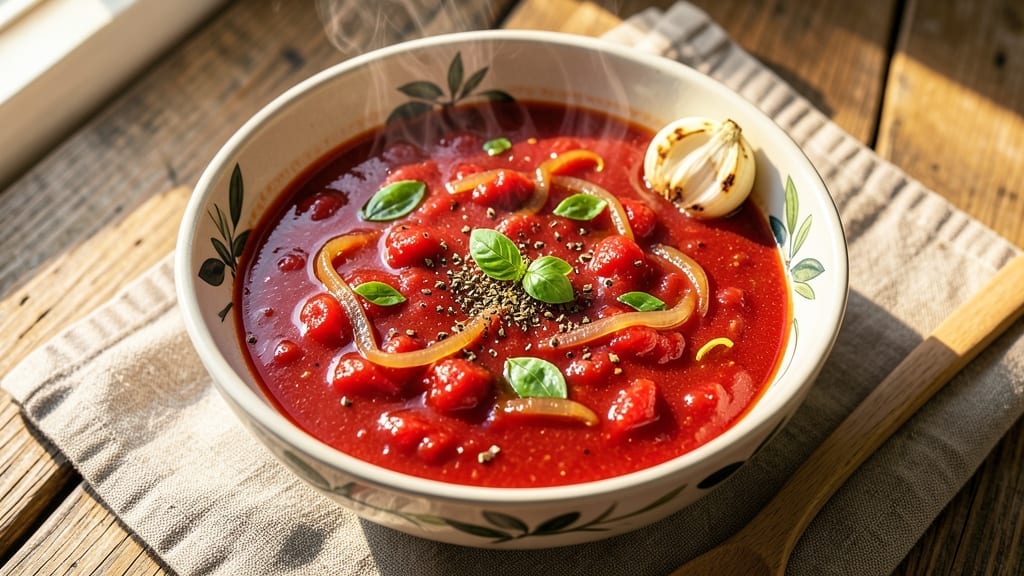
A 1-hour soup recipe that delivers restaurant-quality tomato basil with al dente pasta—no shortcuts, just smart timing and simple techniques. The secret lies in building layers of flavor through aromatics and slow simmering, while the pasta cooks directly in the broth for maximum efficiency.
This isn’t just soup; it’s a complete, satisfying meal in under an hour, with velvety tomato sauce and perfectly tender pasta strands.
What sets this recipe apart is the two-stage cooking method: first, a rich tomato base simmers with garlic, onions, and herbs to develop deep flavor, then the pasta cooks directly in the broth, absorbing all that savory goodness.
No separate pot, no extra cleanup—just one-pot convenience that still delivers professional results. The basil adds fresh brightness, while a touch of cream (optional) rounds out the richness for a luxurious finish.
By the time you’re done, you’ll have a steaming bowl of silky tomato soup with perfectly cooked pasta—no waiting, no fuss. The aroma alone will have everyone gathering at the table, and each spoonful delivers that perfect balance of tangy tomato, aromatic herbs, and tender pasta.
This is the kind of weeknight dinner that feels special without requiring hours in the kitchen.
Serve with crusty bread to soak up every last drop of that velvety broth, or add a sprinkle of parmesan for extra depth. The recipe scales easily for a crowd, and leftovers reheat beautifully—making it perfect for busy families or meal prep. Let’s get cooking!
Ingredients for 1 hour soup
Simple ingredients, restaurant-quality results in under an hour—this soup delivers.
| Ingredient | Amount | Notes |
|---|---|---|
| Canned San Marzano Tomatoes 🍅 | 28 oz | Crushed by hand for texture |
| Extra-Virgin Olive Oil 🫒 | ½ cup | High-quality, fruity variety |
| Yellow Onion 🧅 | 1 whole | Medium, diced small |
| Garlic Cloves 🧄 | 4 cloves | Fresh, minced finely |
| Fresh Basil Leaves 🌿 | ½ cup | Packed, chopped |
| Dried Oregano 🍃 | 1 tsp | For depth of flavor |
| Salt 🧂 | 1 ½ tsp | Diamond Crystal preferred |
| Black Pepper 🌶️ | ½ tsp | Freshly ground |
| Heavy Cream 🥛 | ¼ cup | Optional for richness |
| Ditalini Pasta 🍝 | 8 oz | Al dente preferred |
| Vegetable Broth 💧 | 2 cups | Low-sodium preferred |
| Grated Parmesan Cheese 🧀 | ¼ cup | For serving, optional |
| Crusty Bread 🍞 | 4 slices | For serving, optional |
The tomatoes make all the difference here. San Marzano is ideal—sweeter, meatier, and less acidic than regular canned tomatoes. Whole Foods or Trader Joe’s carry them, or any Italian market. If you can’t find them, high-quality crushed tomatoes work in a pinch, but strain out any excess seeds for a smoother texture. The basil? Fresh is non-negotiable—dried just won’t cut it. Look for leaves that are bright green and firm, not wilted. I always buy more than I need because half gets torn over the top at the end.
No heavy cream? Coconut milk or a splash of half-and-half works just as well for richness. Short on vegetable broth? Water with an extra bouillon cube gets you close, but the flavor won’t be as deep. The pasta is key—ditalini or small shells work best since they cook quickly in the broth. If you’re using a different shape, test a piece in the simmering soup after 8 minutes to check doneness. And that Parmesan? Freshly grated from a block is worth the effort—pre-shredded gets clumpy and lacks flavor.
This soup reheats beautifully—honestly, it tastes even better the next day once all the flavors meld. Keeps for 4-5 days in the fridge, and freezes for 3 months if you want to make a batch ahead. I always double the recipe because leftovers are perfect for lunches. Store the broth and pasta separately if freezing—thaw and reheat gently to avoid breaking the noodles. The bread? Toast it fresh before serving—nothing beats warm, crusty slices to soak up that velvety broth.
Why You’ll Love This Recipe
- Pantry to Pot: That can of San Marzano tomatoes? Your secret weapon. No fresh produce wilting or chopping—just open, pour, and let the rich, sweet acidity do the work while you stir in the garlic and onion. Honestly, I’ve made this on days when the fridge was empty and the takeout menu felt overwhelming.
- Garlic-Basil Magic: The moment those basil leaves hit the simmering pot? Chef’s kiss. That bright, peppery aroma cuts through the tomatoes’ sweetness, while the garlic—sautéed just until golden—adds this warm, toasty depth. It’s the kind of flavor that makes you pause mid-sip of wine and go, “Wait, I need more?”
- Lunch for Days: Make a big batch on Sunday, and you’ve got weeknight dinners covered. The flavors actually improve after a day or two in the fridge—more mellow, more layered. I’ll be real: my kids grab it straight from the fridge for school lunches, and I’ve never had a single complaint. (Yes, even on a Tuesday night.)
- Budget Bright Spot: This soup costs me about $3 for a full pot—no fancy ingredients, just good basics. The olive oil adds richness without breaking the bank, and that single can of tomatoes stretches into multiple meals. It’s my go-to when I’m pinching pennies but still want something that tastes like I bothered.
Step-by-step instructions for velvety tomato basil soup with pasta
This soup comes together in under an hour with rich, velvety texture and perfectly al dente pasta.
Sauté Aromatics for Flavor Foundation
Heat the 0.5 cup extra-virgin olive oil in a large pot over medium heat. Add the 1 whole yellow onion, diced small, and cook for 5-6 minutes until softened and translucent. The onion should release its natural sweetness without browning.
Add the 4 cloves garlic cloves, minced finely, and cook for another 30 seconds until fragrant. This step builds the flavor base that will carry through the entire soup. If the garlic starts to brown too quickly, reduce the heat slightly to prevent bitterness.
Develop the Tomato Base
Pour in the 28 oz canned San Marzano tomatoes, crushed by hand for texture, and stir to combine with the aromatics. Add the 1 tsp dried oregano, 1.5 tsp salt, and 0.5 tsp black pepper, then bring to a gentle boil.
Reduce heat to medium-low and let the soup simmer uncovered for 15 minutes, stirring occasionally. This allows the tomatoes to break down and develop a rich, concentrated flavor. The soup should reduce slightly and develop a glossy sheen from the natural tomato oils.
Cook the Pasta Al Dente
While the tomato base simmers, bring a separate pot of salted water to a rolling boil. Add the 8 oz ditalini pasta and cook for 2 minutes less than the package instructions for al dente texture. Reserve 1 cup of pasta water before draining.
Ditalini should hold its shape but still have a slight bite. The reserved pasta water is crucial for adjusting the soup’s consistency later. Drain the pasta and set aside, keeping it warm.
Create the Velvety Texture
Return the tomato soup to a simmer over medium heat and stir in the 2 cups vegetable broth. Add the cooked pasta and gently stir to combine. The soup should now have a hearty, rustic appearance with visible pasta strands.
Reduce heat to low and stir in the 0.5 cup fresh basil leaves, chopped, and the 0.25 cup heavy cream (if using). Simmer for 5 minutes to allow the flavors to meld together. The cream adds richness without overpowering the tomato flavor. If the soup becomes too thick, add reserved pasta water 1 tablespoon at a time until reaching your desired consistency.
Finish and Serve
Taste and adjust seasoning with additional salt or pepper if needed. Ladle the soup into bowls and garnish with 0.25 cup grated Parmesan cheese and serve with 4 slices crusty bread on the side.
The soup should be velvety with a perfect balance of tomato sweetness, herby basil, and the slight creaminess from the heavy cream. Each bite should deliver warm, comforting flavors with the satisfying texture of al dente pasta. Serve immediately while the bread is still warm and crispy.
Pro Tips For Making 1 Hour Soup
- CRANK THE HEAT FIRST: Don’t simmer the onions and garlic—start with medium-high heat until the onion turns translucent and the garlic sizzles. I used to let it cook too slow, and the soup never got that deep, caramelized flavor. Once the garlic smells good, drop it down to a simmer.
- SMASH THOSE TOMATOES: Dump the San Marzano tomatoes into a bowl and crush them with your hands before adding them to the pot. The skin stays intact when canned, and skipping this step means your soup will have uneven texture—lumpy bits instead of a smooth, velvety base.
- SALT THE POT WATER: Add a pinch of salt to the water when you blanch the basil (if you’re using it fresh). It keeps the leaves vibrant and prevents bitterness. I learned this after my basil turned sad and limp—now it stays bright green and packs more flavor into the soup.
- STIR IN BASIL LATE: Tear the basil leaves and add them just before serving, not while cooking. Heat destroys basil’s bright, sweet aroma, turning it into a sad, bitter afterthought. Toss it in at the end, and your soup will smell like a summer garden.
Serving suggestions for this dish
Bread Pairings
Serve this soup with crusty Italian bread like a ciabatta loaf or focaccia—their sturdy texture holds up to the velvety broth. I like toasting slices until golden and crispy before serving.
For extra flair, rub the bread with garlic-infused olive oil and sprinkle with flaky sea salt right before dipping. 🍞
Avoid soft, fluffy breads—they’ll turn mushy when submerged. Instead, opt for sourdough or baguette slices for the perfect balance of chewiness and structure. If you’re feeling fancy, try grissini (Italian breadsticks) on the side for a more elegant presentation.
Cheese Toppings
Finish each bowl with grated Parmesan cheese for a salty, umami boost. I use a microplane to grate fresh from a block—it makes all the difference in texture and flavor. For a richer option, add shaved pecorino Romano or a sprinkle of crumbled feta for a tangy contrast.
If you’re avoiding dairy, swap in nutritional yeast for a cheesy flavor without the fat. It’s a game-changer for vegan versions while keeping that savory depth. Just 1-2 tablespoons per bowl is plenty—you don’t want to overpower the tomato.
Protein Add-Ins
Boost the meal with crispy pancetta or grilled chicken breast, sliced into strips. Pancetta adds a smoky, salty crunch that pairs beautifully with the creamy soup. For a vegetarian option, try white beans or crumbled tofu—both soak up the broth and add heartiness.
If you’re short on time, rotisserie chicken works perfectly. Shred or dice ½ cup and stir it into the soup during the final 5 minutes of simmering. The heat will warm it through while keeping it tender.
Fresh Garnishes
Brighten the soup with fresh basil leaves, torn by hand rather than chopped. This adds a pop of color and freshness that balances the richness. For extra vibrancy, add thinly sliced red onion or cherry tomatoes, halved and lightly blanched in boiling water for 30 seconds to soften.
A drizzle of high-quality extra-virgin olive oil right before serving elevates the dish instantly. I like to use a light Tuscan olive oil with a fruity, peppery finish. A pinch of red pepper flakes adds a subtle kick for those who love heat.
Nutrition facts
Frequently asked questions
Can I make this soup without heavy cream?
Skip the cream or substitute with 2 tablespoons coconut milk or ½ cup half-and-half for a lighter option. The soup will still be flavorful—just slightly less rich. For extra depth, stir in 1 tablespoon butter at the end instead. The tomato and basil flavors shine even without cream!
Why does the recipe call for two pots?
The two-pot method ensures perfectly al dente pasta that won’t overcook in the soup. Cooking pasta separately prevents the broth from turning gluey, and reserving pasta water gives you control over the soup’s consistency. For a true one-pot version, reduce pasta cooking time by 1 minute and add it directly to the simmering broth.
Can I prep this soup ahead of time?
Yes! Make the tomato base up to 2 days ahead and store it in the fridge. Reheat gently, then cook the pasta fresh and stir it in. For freezing, store components separately: freeze the tomato broth (without pasta) for 3 months. Thaw overnight, reheat, and add cooked pasta when ready to serve to maintain texture.
What if my soup turns out too thick?
Add reserved pasta water 1 tablespoon at a time while stirring until you reach your desired consistency. If you didn’t reserve any, stir in 2 tablespoons warm water or broth. Never add cold liquid directly—it can shock the soup and break the pasta. For extra silkiness, whisk in 1 tablespoon cornstarch mixed with 2 tablespoons water if needed.
How do I adjust this recipe for a crowd?
Double or triple all ingredients, using a 6-8 quart pot for larger batches. For 8 servings, use 56 oz tomatoes, 16 oz pasta, and 4 cups broth. Keep proportions identical—this ensures the same rich flavor and velvety texture. Cook pasta in batches if needed, and reheat the soup gently over low heat** with a splash of water to maintain moisture.

- 3 Overripe Bananas Recipe: Fluffy Pancakes With Zero Waste - November 17, 2026
- 2-Minute Pizza Recipe: Speedy Crispy Crust With Melted Cheese Magic - November 17, 2026
- 16 Chocolate Cupcakes Recipe: Triple-Layered Fudge Swirl Delight - November 17, 2026