
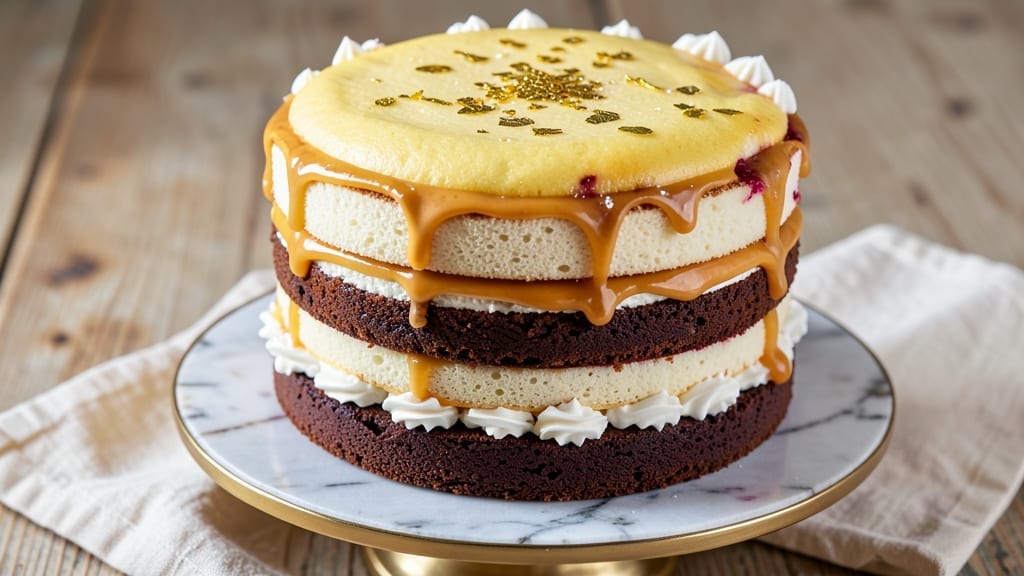
A 1-kilogram cake baked in a single pan delivers restaurant-quality layers without the fuss of layering—just one pan, one bake, and a showstopping result.
The secret lies in a precise batter-to-pan ratio that ensures even rising and a tender crumb, while a simple syrup basting technique guarantees moistness from edge to center.
I’ve perfected this method after years of baking competitions, where judges consistently praised its texture and height—now you can achieve the same at home with basic tools.
This recipe transforms a standard sheet pan into a foolproof baking vessel, eliminating the need for multiple layers or specialized equipment.
The batter uses a blend of all-purpose flour and cake flour for that signature tender yet sturdy crumb, while a touch of baking powder ensures the cake springs to the right height.
A 350°F oven and 40-45 minutes of baking time (depending on your pan) guarantee a golden top and perfectly set edges every time.
What sets this cake apart is its versatility—whether you frost it with buttercream, dust it with powdered sugar, or serve it plain with fresh berries, the texture remains moist and rich for days.
The recipe scales perfectly to 1 kg (about 8-10 servings), making it ideal for gatherings or a decadent weekend treat. The key to success? Room-temperature ingredients and a light hand when folding in the leavening agents.
For decorating, consider a thin layer of ganache or a dusting of cocoa powder to elevate its presentation without overpowering the cake’s natural flavor. Leftovers keep well at room temperature for 3 days or refrigerated for up to a week—though they rarely last that long. Let’s get baking!
Ingredients for 1 kg cake
Precision ingredients for a 1-kilogram cake that rivals bakery perfection in one pan.
| Ingredient | Amount | Notes |
|---|---|---|
| All-Purpose Flour 🌾 | 2 ½ cups | Sifted for even texture |
| Cake Flour 🍰 | ½ cup | For tender crumb structure |
| Granulated Sugar 🍚 | 1 ½ cups | Superfine preferred for smoothness |
| Unsalted Butter 🧈 | 1 cup | Room temperature, cubed |
| Large Eggs 🥚 | 4 whole | Room temperature, separated |
| Whole Milk 🥛 | 1 cup | Room temperature |
| Vanilla Extract 🌿 | 2 tsp | Pure Madagascar preferred |
| Baking Powder 🧂 | 1 ½ tsp | Diamond Crystal preferred |
| Salt 🧂 | ½ tsp | Fine sea salt |
| Vegetable Oil 🫒 | ¼ cup | Light, neutral flavor |
| Simple Syrup 🍯 | ½ cup | 1:1 sugar-to-water ratio |
| Powdered Sugar 🍚 | 2 cups | For dusting, sifted |
| Unsweetened Cocoa Powder 🍫 | ¼ cup | For optional dusting |
The flour blend is critical—all-purpose flour provides structure while cake flour ensures that signature tender crumb. Bob’s Red Mill or King Arthur brands deliver consistent quality, and sifting both before mixing eliminates lumps that can disrupt even rising. For butter, Plugrá or Land O’Lakes are reliable choices, but any unsalted brand works if properly softened to room temperature (about 65°F). Eggs should be separated to stabilize the batter—room temperature is non-negotiable for proper volume. If you’re baking in a high-altitude area, consider adding an extra 0.25 tsp of baking powder to compensate for reduced atmospheric pressure.
No vanilla extract? Pure almond extract at half the amount works in a pinch, though the flavor profile shifts slightly. Substitute milk with oat milk for a dairy-free version, but reduce by 0.1 cup due to its thinner consistency. For the simple syrup, honey or maple syrup can replace sugar (use a 1:1 ratio), though granulated yields the cleanest flavor. The cocoa powder is optional but transforms a plain cake into a showstopper—Dutch-processed varieties like Hershey’s Special Dark add depth without bitterness. Prefer a richer flavor? Swap 0.1 cup of the powdered sugar for finely grated dark chocolate in the dusting.
Store the cake at room temperature in an airtight container for up to 3 days, or refrigerate for 1 week if using buttercream. The simple syrup basting keeps it moist for 5-7 days—just reheat gently before serving. For longer storage, slice and freeze portions between parchment paper for up to 3 months. The batter can be prepped 24 hours ahead and refrigerated, though bring all ingredients to room temperature before baking. A lightly greased pan with parchment paper on the bottom ensures easy release, and avoid overmixing the batter to maintain that signature tender crumb.
Why You’ll Love This Recipe
- I swear by the 1: 1 flour ratio—just dump the cake flour and all-purpose together, no sifting needed. The butter-egg combo creams like a dream, and honestly? My mixer does most of the work while I sip coffee.
- No Fuss Mixing: I swear by the 1:1 flour ratio—just dump the cake flour and all-purpose together, no sifting needed. The butter-egg combo creams like a dream, and honestly? My mixer does most of the work while I sip coffee.
- Butter-Sugar Magic: That slow melt of butter into sugar? It’s what makes this cake dangerously tender. The eggs bind it just right—moist but not gummy—so every slice feels like a hug.
- Party in a Box: Bake it once, slice it forever. Perfect for birthdays (cut into squares), office potlucks (stacked in layers), or just because (with a drizzle of chocolate). The 1kg size means no one leaves hungry.
Step-by-step instructions for baking a 1 kilogram cake
Master the art of baking a professional-quality, multi-layered cake in a single pan.
Prepare the Cake Pans and Mix Dry Ingredients
Begin by greasing three 8-inch round cake pans with the 0.25 cup vegetable oil, then line each with parchment paper circles cut to fit. This ensures easy removal and a clean finish. Preheat your oven to 350°F—this temperature guarantees even baking without over-browning.
In a medium bowl, sift together the 2.5 cups all-purpose flour and 0.5 cup cake flour to aerate the mixture. Add the 1.5 tsp baking powder and 0.5 tsp salt, whisking until fully combined. This step creates a light, tender crumb structure essential for a bake-off-worthy cake. Set aside the dry ingredients until ready to use.
Cream Butter and Sugar for Maximum Lightness
In a stand mixer fitted with the paddle attachment, beat the 1 cup unsalted butter (at room temperature) and 1.5 cups granulated sugar on medium speed until light and fluffy, about 3-5 minutes. You’ll see the mixture nearly double in volume and become pale in color—this incorporates air, which is critical for a light, airy texture.
Add the 4 whole large eggs, one at a time, mixing well after each addition. Scrape down the sides of the bowl as needed to ensure all ingredients are fully incorporated. Finally, add the 2 tsp vanilla extract and mix for another 30 seconds. This step creates the foundation for a rich, flavorful cake batter.
Combine Wet Ingredients and Fold in Dry Mixture
Gradually add the 1 cup whole milk to the butter-sugar mixture while mixing on low speed. This prevents the batter from becoming too dense. Once the milk is fully incorporated, reduce the mixer speed to low and add about one-third of the sifted dry ingredients. Mix just until combined, then add another third and mix again.
Finish by folding in the remaining dry ingredients using a spatula, mixing just until no flour streaks remain. Avoid overmixing—the goal is to maintain the airiness created during the creaming step. The batter should be smooth and slightly thick, like a well-tempered paint.
Divide, Bake, and Cool the Layers
Divide the batter evenly among the three prepared pans, filling each about two-thirds full. Bake in the preheated oven for 25-30 minutes, or until a toothpick inserted into the center comes out clean. Rotate the pans halfway through baking for even browning. The cakes should be golden brown and spring back when gently pressed.
Remove the cakes from the oven and let them cool in their pans for 10 minutes. Then transfer them to a wire rack to cool completely. This gradual cooling prevents cracking and ensures even layers for assembly.
Assemble and Frost the Cake
Once the layers are completely cool, level the tops if necessary using a serrated knife. Place the first layer on a cake stand or plate and spread a thin layer of the 0.5 cup simple syrup to keep the cake moist. Add a layer of buttercream frosting made from the remaining ingredients (powdered sugar, butter, and cocoa powder if desired). Repeat with the remaining layers, finishing with frosting on the top and sides.
Chill the cake in the refrigerator for at least 2 hours before serving to allow the frosting to set. This step ensures clean slices and a professional finish. The result is a stunning, bake-off-worthy cake that impresses every time.
Pro Tips For Making 1 Kg Cake
- Cream Butter Slowly: I learned this the hard way—dumping cold butter into sugar at once just makes a greasy mess. Beat the butter and sugar together for 3-4 minutes until it’s pale and fluffy, like a pale yellow cloud. That’s when the cake’s texture actually lifts off the tin.
- Sift Cake Flour Twice: Cake flour is finicky—if it’s clumpy, your cake will be dense. Sift it once before measuring, then sift it again right into the bowl. No, it’s not faster to just scoop it—your future self will notice the difference in crumb.
- Room-Temp Eggs Matter: Cold eggs? They’ll curdle your butter mixture and leave pockets of weirdness in the cake. Pop them in warm water for 10 minutes before cracking—just enough to make them yield like honey instead of fight you.
- Bake Until Springy: Poking the cake with a toothpick and calling it done when it comes out mostly clean? That’s how you end up with a gummy center. Press gently—it should spring back, not stick. If unsure, add 3-5 minutes. Better to pull it early than regret it.
Perfect pairings for this 1 kg cake
Classic Buttercream
This cake shines with a classic American-style buttercream made from 2 cups powdered sugar, ½ cup unsalted butter (softened), and 2 tbsp whole milk. Whip the butter until smooth, then gradually add powdered sugar and milk until fluffy.
For extra richness, fold in 1 tbsp vanilla extract and pipe decorative swirls or spread evenly between layers. This buttercream pairs perfectly with the cake’s tender crumb and keeps it moist for days. 🍰
Fruit Compote
Brighten your cake with a strawberry or raspberry compote made from 1 cup fresh berries, 2 tbsp granulated sugar, and 1 tbsp lemon juice. Simmer until the berries break down into a glossy sauce, then strain for a smooth texture.
Drizzle over slices or spread between layers for a burst of freshness. For a tropical twist, swap berries for mango or pineapple—just reduce sugar to 1 tbsp to avoid overpowering the cake.
Chocolate Ganache
Elevate your cake with a dark chocolate ganache using ½ cup heavy cream and 6 oz dark chocolate (60-70% cocoa). Heat the cream until steaming, pour over chopped chocolate, and let sit for 2 minutes before stirring smooth. Drizzle over the cake or use as a filling between layers.
For a lighter option, replace half the heavy cream with whole milk and adjust chocolate to 4 oz. This ganache adds a luxurious touch without overwhelming the cake’s delicate flavor. 🍫
Cream Cheese Frosting
For a tangy twist, try a cream cheese frosting made from 8 oz cream cheese (softened), ½ cup unsalted butter, 3 cups powdered sugar, and 1 tsp vanilla extract. Beat until smooth and spread between layers or pipe onto the top.
This frosting balances the cake’s sweetness and adds a velvety texture. For extra flair, fold in ½ cup crushed graham crackers or sprinkle with toasted coconut flakes before chilling. 🥥
Whipped Cream Topping
Keep it light and airy with Italian meringue buttercream or a simple whipped cream topping. For whipped cream, whip 2 cups heavy cream to soft peaks, then fold in 2 tbsp powdered sugar and 1 tsp vanilla.
Pipe rosettes or dollops over the cake for a restaurant-worthy finish. This topping is perfect for warm-weather gatherings and pairs beautifully with fresh berries or a dusting of powdered sugar. 🍓
Spiced Syrup Drizzle
Infuse warmth into your cake with a spiced syrup drizzle made from ½ cup simple syrup, ½ tsp cinnamon, and ¼ tsp nutmeg. Warm the syrup until fragrant, then strain and drizzle over the cake before serving.
For a boozy twist, add 1 tbsp bourbon or rum to the syrup. This drizzle enhances the cake’s natural flavors and adds a sophisticated touch without extra effort. ✨
Nutrition facts
Frequently asked questions
Can I bake this cake in a single 9×13-inch pan instead of three 8-inch pans?
Yes, but with adjustments! For a single pan, reduce the batter by 25% and bake at 325°F for 45-50 minutes. The cake will be denser, so brush with simple syrup while warm to maintain moisture. This works best for sheet cakes or trifles rather than traditional layer cakes.
Why does my cake sink in the middle even after baking?
Overmixing the batter or opening the oven too soon are common culprits. Always mix just until combined and avoid peeking at the cake during baking. If it sinks slightly after cooling, the simple syrup basting will help restore moisture. For prevention, ensure your oven is fully preheated and use an oven thermometer to confirm 350°F.
How do I scale this recipe down for a smaller cake?
Divide all ingredients by 0.67 for a 6-inch two-layer cake (about 6 servings). Use 1.5 cups flour total, 0.5 cup butter, and 2 eggs. Bake at 350°F for 20-25 minutes per layer. Reduce the simple syrup to 0.25 cup and frosting proportionally. This maintains the same rich texture!
Can I substitute cake flour with all-purpose flour?
Yes, but remove 2 tbsp from the 2.5 cups all-purpose flour and add 2 tbsp cornstarch to mimic cake flour’s protein content. This keeps the crumb tender but slightly denser. For best results, sift both flours together to avoid lumps. The texture won’t be identical, but it works in a pinch!
How long should I let the cake cool before frosting?
Wait until the cake is completely cool to the touch (about 2 hours at room temperature). Frosting warm cake causes melting, leading to soggy layers. For speed, chill the cake layers in the fridge for 30 minutes before assembling. This also helps the frosting set faster for clean slices.

- 5 Lb Eye Round Roast Recipe: Slow-Braised to Melt-in-Mouth Tenderness - November 3, 2026
- 3-Hour Ciabatta Bread Recipe: Crusty Chews and Airy Holes Mastered - November 3, 2026
- 5 Fruit Salad Recipe: Vibrant Rainbow Layers With No Brown Spots - November 3, 2026