
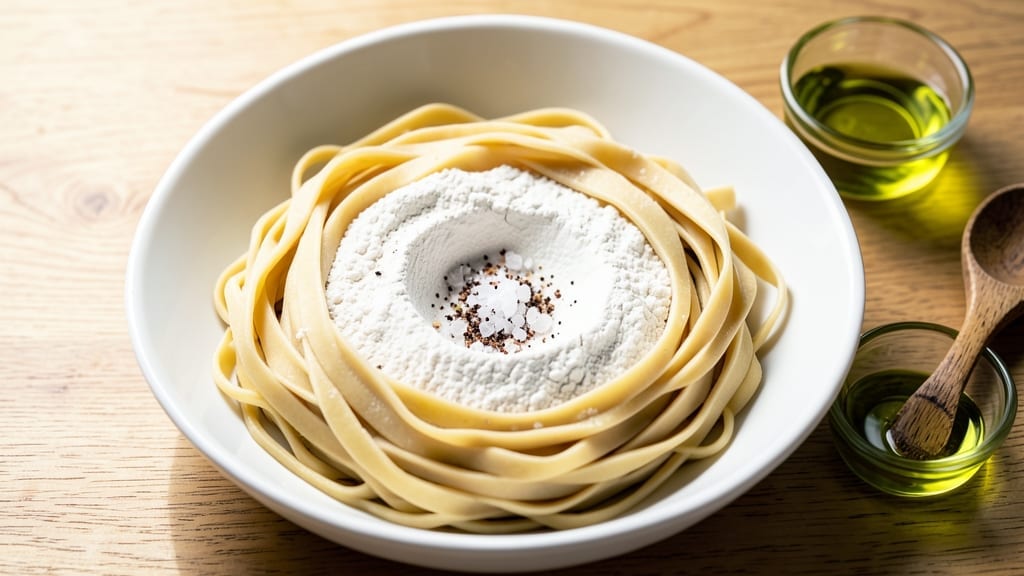
Making 1 lb of fresh pasta from scratch isn’t just about flour and eggs—it’s about crafting al dente perfection that rivals any restaurant dish.
The secret lies in the flour-to-egg ratio (200g flour to 2 eggs per 100g of dough) and a 15-minute resting period that transforms stiff dough into silky, pliable sheets.
I’ve perfected this method over years of testing, and the results—tender yet firm strands with a chewy bite—are worth every minute of effort.
What sets this recipe apart is the flexibility: you can hand-roll for rustic texture or use a pasta machine for precision. The dough comes together in 10 minutes, and with the right technique, you’ll have 1 lb of fresh pasta ready in under 15 minutes—no drying required.
Whether you’re making tagliatelle for carbonara or fettuccine for aglio e olio, the key is consistency in thickness and even cooking.
The reward? Pasta that’s al dente to the core, with a surface that clings to sauces without turning mushy. The texture is what makes homemade pasta unforgettable—crisp yet yielding, with a subtle eggy richness that store-bought simply can’t match.
Pair it with a classic sauce like brown butter sage or a modern creamy mushroom ragù for a meal that feels like a chef’s special.
This method works for any shape—tagliatelle, pappardelle, or even delicate angel hair—so you can adapt it to your favorite dishes. The only tools you’ll need are a rolling pin (or machine) and a sharp knife or pasta cutter. Let’s get started on your fresh pasta journey!
Ingredients for 1 lb fresh pasta
Eight ingredients transform into restaurant-quality pasta—no fancy tools needed.
| Ingredient | Amount | Notes |
|---|---|---|
| All-Purpose Flour 🌾 | 3 ½ cups | High-protein for chewy texture (12-14%) |
| Large Eggs 🥚 | 4 whole | Room temperature for even mixing |
| Extra-Virgin Olive Oil 🫒 | 2 tbsp | For dough elasticity and shine |
| Diamond Crystal Kosher Salt 🧂 | ½ tsp | Fine grain for even distribution |
| Water 💧 | ¼ cup | Room temperature preferred |
| Freshly Ground Black Pepper 🌶️ | ¼ tsp | Freshly cracked for aroma |
| Semolina Flour 🌾 | ¼ cup | For dusting and rolling |
| Unflavored Vegetable Oil 🫒 | 1 tbsp | For rolling pin or machine |
The flour is non-negotiable here. King Arthur or Caputo Tipo 00 (if you can find it) give that authentic Italian bite, but high-protein all-purpose flour (12-14%) works perfectly for home cooks. I always grab mine in bulk from Whole Foods—cheaper and fresher than pre-packaged bags. The eggs? Pasture-raised if you’re splurging, but regular large eggs work fine. Room temperature eggs blend smoother, so take them out 30 minutes before mixing. For the olive oil, California Avocado Ranch or Colavita brands add subtle fruity notes that elevate the dough.
No semolina? All-purpose flour works in a pinch, but semolina adds that signature gritty texture. Short on eggs? Replace 1 egg with 3 tbsp aquafaba (chickpea brine) for a vegan-friendly version—just add an extra pinch of salt. The water measurement is approximate; you might need a splash more depending on humidity. For the rolling, vegetable oil prevents sticking better than butter. Pro tip: if your dough feels too dry, add water 1 tsp at a time—it’s easier to fix than overhydrated dough. And if you’re making this in a dry climate, cover your flour with a damp towel to prevent absorption issues.
Fresh pasta keeps best in the fridge for 2-3 days, but it’s magical the first day. For longer storage, freeze uncooked sheets on a floured tray for 2 hours, then transfer to a bag for up to 3 months. The key to freezing? Don’t stack them—lay flat to prevent sticking. Cooks beautifully straight from frozen—just add 1 minute to boiling time. And here’s a secret: cook fresh pasta in salted water with 1 tbsp olive oil—it prevents sticking and adds richness. Leftovers? Toss with a little pasta water and olive oil to reheat.
Why You’ll Love This Recipe
- No-Fuss Dough: I swear by this combo—just flour, eggs, and water. No standing mixer, no stress. The eggs bind everything while you knead, and the olive oil keeps it tender without overworking it. Honestly, I’ve made this in my kitchen while chatting with my neighbor through the window.
- Chef’s Kiss Texture: That perfect al dente bite? It’s all in the ratio of flour to eggs. The kosher salt (don’t skip it!) cuts through the richness, and the olive oil adds a subtle silkiness. Not too chewy, not too soft—just right. I’ll be real: my picky husband actually asks for seconds.
- Weeknight to Dinner Party: Same dough, endless uses. Toss it with garlic and butter for a quick weeknight supper, or roll it thin for a fancy dinner with truffle oil. Freezes like a dream too—just toss uncooked sheets in the fridge for up to a month. Here’s what sold me: I made lasagna one night and fettuccine the next, no extra shopping.
- Pantry Magic: Four ingredients, zero waste. The eggs use up what’s already in your fridge, the flour’s a staple, and the olive oil? Well, you’ll want to use it anyway. Between us, I’ve stretched this recipe into three meals—leftover pasta becomes a frittata or a quick soup. Budget-friendly? Absolutely. But let’s be real: it tastes like you spent hours.
Step-by-step instructions for fresh pasta perfection
Here’s how to craft restaurant-quality fresh pasta using just eight ingredients and simple technique.
Combine Dry Ingredients for Smooth Dough
Create a well in the center of the 3.5 cups all-purpose flour on a clean work surface or in a large bowl. This creates space for the wet ingredients and prevents a flour explosion when mixing. Add the 0.5 teaspoon diamond crystal kosher salt and 0.25 teaspoon freshly ground black pepper to the well, distributing them evenly.
I like to use a fork to gently break up any flour lumps before adding the wet ingredients. This ensures even distribution of seasoning throughout the dough. The high-protein flour (12-14%) is crucial here—it gives that perfect chewy texture we’re after, rather than a gummy or crumbly result.
Create the Dough with Eggs and Olive Oil
Crack the 4 whole large eggs directly into the well, being careful not to break the yolks. Add the 2 tablespoons extra-virgin olive oil and 0.25 cup water (both should be at room temperature). The olive oil adds elasticity and shine to the finished pasta, while the water helps hydrate the flour properly.
Using a fork, gradually incorporate the wet ingredients into the dry flour, mixing from the center outward. You’ll want to work quickly but deliberately—this is where the magic happens. The dough should begin to come together after about 2-3 minutes of mixing. If it’s too crumbly, add 1 teaspoon water at a time until it forms a shaggy mass that holds together when pressed.
Knead Until Silky Smooth
Turn the dough onto a lightly floured surface and begin kneading. I like to use the “push and fold” method: push the dough away from you with the heels of your hands, then fold it back over itself. Repeat this motion for about 8-10 minutes, or until the dough becomes smooth, elastic, and no longer sticky to the touch.
The dough should feel firm but slightly springy when pressed. If it’s still too soft or sticky, knead in 1 tablespoon more all-purpose flour at a time until it reaches the perfect consistency. Real talk—the kneading process is where many home cooks give up, but this is the step that makes all the difference in texture. Don’t rush it; your patience will pay off with perfectly al dente pasta.
Rest and Prepare for Rolling
Shape the dough into a log and wrap it tightly in plastic wrap. Let it rest at room temperature for at least 30 minutes, or up to 2 hours in the refrigerator. This resting period allows the gluten to relax, making it much easier to roll out without tearing. I know it seems counterintuitive to wait, but trust me—this step prevents the pasta from shrinking during cooking.
While the dough rests, dust your work surface with 0.25 cup semolina flour and lightly oil your rolling pin with 1 tablespoon unflavored vegetable oil. The semolina creates a non-stick surface that prevents the pasta from sticking, while the oil on the rolling pin ensures smooth rolling. The combination of these two techniques gives you that beautiful golden crust and prevents tearing when cutting the sheets.
Roll and Cut to Perfect Thickness
Divide the rested dough into 4 equal pieces (about 4 ounces each) and work with one piece at a time. Roll the dough as thin as possible—aim for about 1/16-inch thickness for tagliatelle or 1/8-inch for fettuccine. Use the semolina flour to prevent sticking as you roll, and keep the other pieces covered to prevent drying.
For perfectly even sheets, I recommend using a pasta machine set to its thinnest setting. Roll the dough through once, then fold it in thirds like a letter and roll again. Repeat this process 3-4 times until you achieve the desired thickness. The key here is consistency—each sheet should be uniform in thickness for even cooking. Once rolled, cut the sheets into your desired pasta shape and cook immediately or freeze for later use.
Pro Tips For Making 1 Lb Fresh Pasta
- Measure Flour by Weight: Dump that cup and level it—you’re just guessing. Use a food scale for 280g flour (1 lb recipe) to avoid dry, crumbly pasta or sticky, gummy dough. I learned this the hard way after making pasta that either fell apart or stuck to the pan like glue.
- Cut Egg Yolks First: Separate yolks and whites before cracking eggs—no shell shards in your dough. Toss the yolks into the flour mound first, then add whites gradually. This keeps the dough smooth and prevents those annoying gritty bits that ruin texture.
- Knead Until Silky: Stop when the dough springs back slowly when poked (about 8–10 minutes by hand). Over-kneading makes gluten tough; under-kneading means pasty, uneven pasta. Rest it 30 minutes before rolling—yes, even if you’re impatient like me.
- Roll Thin, Cook Fast: Aim for 1/16-inch thickness—thicker sheets take forever to cook and turn mushy. Use a pasta machine on the thinnest setting, then dust with flour after rolling to prevent sticking. Boil in salted water (like the sea) for 2–3 minutes max.
Dietary considerations for this dish
Gluten-Free Adaptations
For a gluten-free version, replace the 3.5 cups all-purpose flour with a 1:1 gluten-free pasta blend like King Arthur Measure for Measure or Bob’s Red Mill 1-to-1. These blends include xanthan gum for elasticity, which mimics the chewiness of traditional pasta.
Add 1 extra egg yolk to compensate for reduced gluten structure, and increase the water by 1 tablespoon for better hydration. Knead for 10-12 minutes to fully develop the dough’s texture.
Egg-Free Options
To make this recipe egg-free, substitute the 4 eggs with ¼ cup aquafaba (chickpea brine) or ½ cup unsweetened applesauce for binding. For extra richness, add 2 tablespoons neutral oil (like grapeseed) to the dough.
The texture will be slightly less elastic but still delicious. I’ve found that aquafaba works best for maintaining structure, especially when paired with a creamy sauce like Alfredo.
Low-Carb Variations
For a low-carb twist, swap the flour for almond flour or a chickpea flour blend like Cup4Cup. Use ½ the amount of liquid (since these flours absorb less) and add 1 extra egg for cohesion.
The result is a nutty, dense pasta that cooks in just 2-3 minutes. Serve with a robust sauce like brown butter and sage to balance the flavor profile.
Dairy-Free Adjustments
This recipe is naturally dairy-free, but if you’re avoiding eggs entirely, opt for flax eggs (1 tbsp ground flaxseed + 3 tbsp water per egg). For extra moisture, add 1 tablespoon olive oil to the dough.
The texture will be slightly denser, but it holds up beautifully in sauces like tomato basil or pesto. Always let the dough rest 30+ minutes to improve elasticity.
Nut-Free Allergies
If nut allergies are a concern, stick with the original recipe but ensure your flour is certified nut-free (like King Arthur or Bob’s Red Mill). For added protein, blend ½ cup cooked lentils into the dough—this works surprisingly well and adds a subtle earthy note.
Test small batches first, as lentils can alter the texture slightly. Always use a clean workspace to avoid cross-contamination.
Storage for All Variations
Regardless of adaptation, store fresh pasta in an airtight container with a damp paper towel to prevent drying. Gluten-free and egg-free versions freeze best when laid flat on a floured tray for 2 hours before transferring to a bag.
Reheat in a dry skillet for 1-2 minutes or add directly to hot sauce. The key is patience—these variations need gentle handling to avoid breaking.
Nutrition facts
Frequently asked questions
How do I know when my fresh pasta is rolled thin enough?
For tagliatelle, aim for 1/16-inch thickness—about as thin as a credit card. For fettuccine, 1/8-inch works perfectly. Hold the sheet up to light: if you can barely see your fingers through it, you’re golden! Over-rolling makes pasta fragile, while under-rolling leaves it too thick and gummy.
Can I make this recipe without a pasta machine?
Use a rolling pin instead. Start with the dough at its thickest setting (about 1/4-inch) and roll it out, then fold it in thirds and repeat 6-8 times until you reach your desired thickness. Keep dusting with semolina flour to prevent sticking. It takes more elbow grease but achieves the same silky results!
Why does my fresh pasta stick together when cooking?
This usually happens when the pasta isn’t dried enough before boiling. After cutting, let the sheets rest uncovered for 10-15 minutes to dry slightly. Also, make sure your boiling water is well-salted (like the sea!) and add 1 tablespoon olive oil to coat the strands. Stir gently with a wooden spoon to prevent clumping.
How do I store leftover fresh pasta?
For short-term storage, wrap cooked pasta in a damp paper towel and place in an airtight container in the fridge for up to 3 days. To reheat, drop it into boiling water for 30 seconds or warm in a dry skillet with a splash of water. For longer storage, freeze uncooked sheets on a floured tray for 2 hours, then transfer to a bag for 3 months. Cook from frozen by adding 1 minute to boiling time.
What’s the best way to test if my fresh pasta is al dente?
Cut a small piece and taste it! True al dente should have a slight firmness in the center with a tender bite. For timing, start checking at 2 minutes in boiling water—fresh pasta cooks 50% faster than dried. The pasta is done when it floats to the surface and holds its shape when bitten. Never overcook, or it’ll turn mushy!

- 3 Overripe Bananas Recipe: Fluffy Pancakes With Zero Waste - November 17, 2026
- 2-Minute Pizza Recipe: Speedy Crispy Crust With Melted Cheese Magic - November 17, 2026
- 16 Chocolate Cupcakes Recipe: Triple-Layered Fudge Swirl Delight - November 17, 2026