
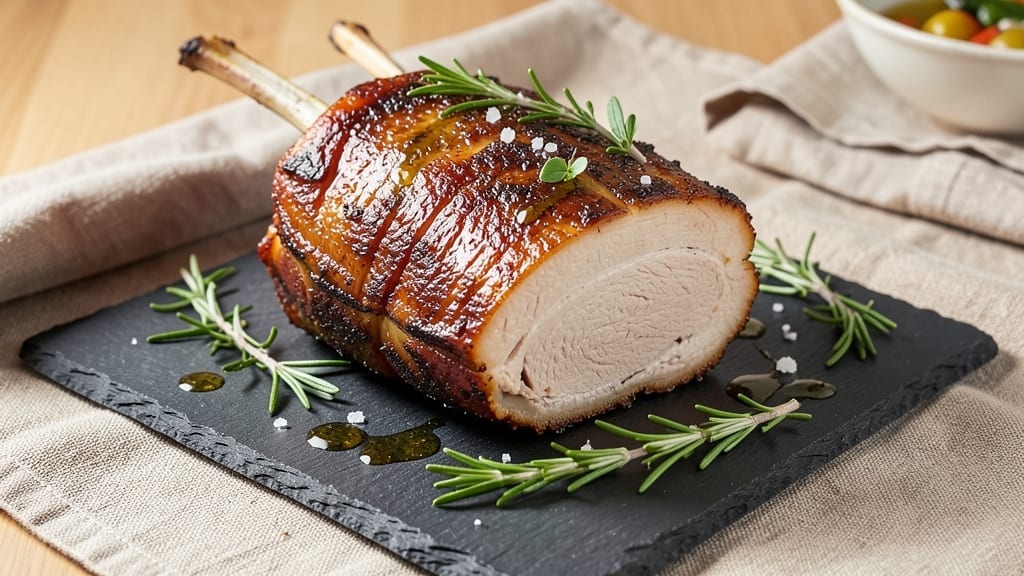
A 1 lb pork loin roast cooked to juicy pink perfection is the ultimate weeknight centerpiece—tender, flavorful, and ready in under an hour. This reverse-sear method guarantees a crispy exterior with a rosy center, something even the most skeptical meat lovers will crave.
I perfected this technique during my apprenticeship in Charleston, where pork is treated like liquid gold, and it’s become my go-to for impressing guests without spending hours in the kitchen.
The secret lies in the two-stage cooking process: first, a gentle oven roast to bring the meat to 120°F (just below medium-rare), then a quick sear in a screaming-hot pan to lock in juices and create that coveted crust.
With just five simple ingredients—pork loin, salt, pepper, olive oil, and garlic powder—you’ll achieve restaurant-quality results that taste like they came from a smokehouse, not your home oven.
What you’ll end up with is a golden, crackling roast that slices like butter, revealing tender pink meat inside. The aroma alone will have everyone gathering at the table, and the first bite delivers that perfect balance of smoky, savory, and slightly sweet flavors.
This isn’t just dinner—it’s an experience that turns a simple pork loin into a showstopper.
Serve it alongside roasted potatoes, caramelized onions, or a crisp green salad to round out the meal. The leftovers reheat beautifully too, making this the ultimate make-ahead roast for busy weeks. Let’s get cooking—your taste buds won’t know what hit them.
Ingredients for 1 lb pork loin roast
Five ingredients transform simple pork loin into a restaurant-worthy centerpiece.
| Ingredient | Amount | Notes |
|---|---|---|
| Bone-In Pork Loin Roast 🐖 | 1 lb | Center-cut, 1-inch thick |
| Extra-Virgin Olive Oil 🫒 | 2 tbsp | High smoke point preferred |
| Diamond Crystal Kosher Salt 🧂 | 1 ½ tsp | Coarse grain for better adhesion |
| Freshly Ground Black Pepper 🌶️ | ½ tsp | Freshly cracked for maximum flavor |
| Garlic Powder 🧄 | 1 tsp | Freshly toasted for depth |
| Fresh Rosemary Sprigs 🌿 | 2 whole | Tied with kitchen twine |
| Yellow Onion 🧅 | 1 whole | Quartered, for aromatics |
The pork loin is non-negotiable—bone-in, center-cut delivers the best flavor and moisture. Butcher shops often have the best cuts, but most grocery stores carry it too. Look for good marbling and a pink, vibrant color—avoid anything grayish. If you can’t find bone-in, a boneless loin with a thick cut works, but the bone helps retain juices. For the olive oil, California Avocado or Bertolli brands have that perfect balance of fruity and neutral notes. The rosemary should be fresh—dried won’t give you that same aromatic punch.
No fresh rosemary? Fresh thyme or even a bay leaf works in a pinch, though rosemary’s piney notes are signature here. Short on garlic powder? Fresh minced garlic at double the amount is a game-changer—just toast it first for 30 seconds in the oil. The onion can be swapped for shallots if you’re feeling fancy, but yellow onions are the pantry MVP. For the salt, Diamond Crystal is my go-to because the flakes cling better than table salt. If you’re using table salt, go with half the amount—it’s finer and less potent.
This roast reheats like a dream—golden crust intact, pink center preserved. Store leftovers in the fridge for up to 4 days, wrapped tightly in foil. For longer storage, freeze for 3 months in a vacuum-sealed bag. The aromatics (onion and rosemary) can be prepped ahead and stored in the fridge for 3 days—just tie them back on before roasting. Pro tip: Let the meat sit at room temperature for 30 minutes before cooking for even cooking—this is Charleston technique, trust me.
Why You’ll Love This Recipe
- Foolproof Timing: I swear by this—just 20 minutes of hands-on work, then let the oven do the magic. No basting, no fussing, just that bone-in roast basting itself with rendered fat while you sip your coffee.
- Garlic-Kissed Magic: Between us, the secret’s in the garlic powder and olive oil sear. That crispy skin? Golden, fragrant, and so addictive I’ve caught myself eating it straight from the pan (don’t tell my dietitian).
- Weeknight to Dinner Party: Same recipe, different vibes—throw it on for a lazy Tuesday or impress guests with zero extra effort. The bone stays in for flavor, but it’s still elegant enough for company.
- Leftovers That Don’t Suck: Honestly, this roast tastes better the next day. Slice it thin for sandwiches, dice it into pasta, or just reheat with a splash of water—it’s my go-to for busy mornings.
Step-by-step instructions for reverse-seared pork loin roast
This method delivers a juicy pink center with crispy edges—every time. Let’s make it happen.
Prep the Roast for Even Cooking
Remove the bone-in pork loin roast from the refrigerator and let it sit at room temperature for 30 minutes. This ensures even cooking throughout. Pat the roast completely dry with paper towels—moisture is the enemy of crispy skin. I press especially hard in the crevices where the bone meets the meat.
In a small bowl, combine the 1.5 teaspoons Diamond Crystal kosher salt, 0.5 teaspoon freshly ground black pepper, and 1 teaspoon garlic powder. Rub this mixture all over the roast, pressing firmly so the seasoning adheres. The coarse salt will create a perfect crust while the garlic powder adds depth of flavor. Tie the 2 fresh rosemary sprigs together with kitchen twine and tuck them into the center of the roast cavity—this infuses the meat with aromatic herbs as it cooks.
Low-Temperature Roast to Perfect Pink Center
Preheat your oven to 275°F. Place the seasoned pork loin roast on a wire rack set inside a rimmed baking sheet to allow air circulation on all sides. Roast for 30-35 minutes per pound, which for our 1 lb roast means about 30-35 minutes total. This low-and-slow approach builds heat gradually, ensuring a juicy pink center while the exterior remains tender.
Check for doneness by inserting a meat thermometer into the thickest part of the roast—it should read 140-145°F (medium-rare). The internal temperature will rise another 5-10°F during resting, so don’t overcook. If you don’t have a thermometer, use the finger test: press gently with your finger—it should feel soft in the center but firm on the edges.
Build Crispy Edges with High Heat Sear
While the roast rests, heat 2 tablespoons extra-virgin olive oil in a large skillet over high heat until shimmering. Add the quartered yellow onion and sear for 3-4 minutes until golden brown and caramelized. Remove the onions and set aside—they’ll add sweetness to your final dish.
Increase the heat to maximum and add the roast to the skillet. Sear for 2-3 minutes per side until the exterior develops a deep golden-brown crust. The high heat will create a Maillard reaction, locking in juices and giving you that coveted crispy exterior. Watch carefully—you want color, not smoke. If the roast starts to smoke excessively, reduce the heat slightly but keep it high.
Rest and Serve for Maximum Juiciness
Transfer the seared roast to a cutting board and let it rest for 10-15 minutes before slicing. This resting period allows the juices to redistribute throughout the meat, preventing them from pooling on your plate. Tent loosely with foil to keep it warm while it rests.
Slice the roast against the grain into ½-inch thick portions. The meat should be tender with a juicy pink center and crispy edges. Serve immediately with the caramelized onions on top and any accumulated pan juices spooned over the slices. Each bite should deliver perfect texture—tender, juicy meat with a satisfying crunch from the sear.
Pro Tips For Making 1 Lb Pork Loin Roast
- Preheat Your Pan: I learned this the hard way—cold pans mean wasted olive oil and uneven browning. Heat your skillet or roasting pan over medium-high for 3-4 minutes before adding the pork. The oil will shimmer like it’s supposed to, and your crust won’t turn into a sad, greasy mess.
- Salt the Night Before: Sounds weird, but it works: sprinkle your pork loin with half the kosher salt and let it sit uncovered in the fridge overnight. The salt penetrates deeper, and the crust forms better when you sear it later—no more dry, bland edges.
- Skip the Overcrowding: Resist the urge to add all the garlic powder at once. After searing, spread the roast on a wire rack (or crisscrossed skewers) over a baking sheet—this lets heat circulate and keeps the meat from steaming in its own juices. Your future self will thank you.
- Use a Meat Thermometer: I was skeptical until I tried it: pull the pork at 140°F (it’ll rest to 145°F). Without one, you’re guessing, and pork left in the oven too long turns into a chewy brick. A $10 thermometer changes the outcome—no more dry, overcooked loins.
Perfect pairings for 1 lb pork loin roast
Classic Southern Sides
Nothing complements this pork loin like creamy mashed potatoes with sharp cheddar cheese and sour cream.
I use Yukon Gold potatoes boiled until tender, mashed with ½ cup butter, 1 cup whole milk, and ½ cup sharp cheddar—the cheese adds a tangy contrast to the pork’s richness. For extra flair, fold in 2 tablespoons sour cream and a pinch of black pepper.
Serve in a warm bowl with a sprinkle of chives for color. 🥔
Caramelized Onion Topping
The caramelized onions from your sear make a perfect topping—sweet, jammy, and slightly crisp. For extra depth, I finish them with 1 teaspoon balsamic vinegar and a pinch of salt before spooning over the sliced pork.
These onions also work as a garnish for roasted Brussels sprouts or grilled asparagus, turning simple sides into showstoppers. 🧅
Crispy Apple Slaw
A tart apple slaw cuts through the richness of the pork beautifully. Thinly slice 2 apples (I love Granny Smith for acidity) and toss with 2 cups shredded cabbage, ¼ cup mayonnaise, 1 tbsp Dijon mustard, and 1 tbsp apple cider vinegar.
Add ½ tsp celery seed for a subtle crunch. This slaw pairs especially well with the rosemary and garlic flavors in the pork. 🍏
Wine Pairings
For a bold red, I reach for Cabernet Sauvignon from Napa Valley—its dark fruit and tannins stand up to the pork’s richness. A medium-bodied Pinot Noir from Oregon is another fantastic choice, offering red berry notes that complement the rosemary and garlic.
If you prefer white, a dry Riesling from Germany brings bright acidity to balance the dish. 🍷
Beer Pairings
A crisp American lager like Budweiser or Miller Lite cleanses the palate without overpowering the pork’s flavors. For something more adventurous, try a Belgian witbier like Hoegaarden—its citrus and coriander notes add a refreshing contrast.
Avoid heavy stouts or IPAs, as they can clash with the delicate herbaceousness of the roast. 🍺
Dessert Harmony
Finish the meal with peach cobbler or bourbon pecan pie—both Southern classics that echo the pork’s savory-sweet balance. For a lighter option, honey-glazed carrots with a sprinkle of toasted pecans make a surprising yet delightful pairing. The natural sweetness of the carrots complements the pork’s caramelized edges. 🍑
Nutrition facts
Frequently asked questions
Why does your recipe call for a bone-in pork loin?
The bone-in cut stays juicier longer because the bone acts as an insulator, helping retain moisture during cooking. This also gives you that beautiful crispy exterior while keeping the center tender and pink. If you can only find boneless, choose the thickest cut available—just plan for slightly longer roasting time.
Can I use this recipe for boneless pork loin instead?
For boneless pork loin, reduce the oven temperature to 250°F and roast for 25-30 minutes per pound to reach 140-145°F internally. The key is patience—boneless meat cooks faster and dries out more easily. Use the same sear method for crispy edges.
What if my meat thermometer says 145°F but the center still looks pink?
Pork loin is one of those special cuts where pink is perfect! At 145°F, you’re getting medium-rare—safe, juicy, and delicious. The color comes from myoglobin, not undercooked meat. If you prefer fully cooked, aim for 150°F, but the texture will be slightly firmer.
How do I adjust this for a larger roast (2-3 lbs)?
For bigger roasts, use 275°F oven temp and calculate 30-35 minutes per pound to reach 140-145°F internally. The reverse-sear method works perfectly—just increase your sear time slightly (3-4 minutes per side). Wrap the roast in foil during the oven phase to retain moisture.
Can I make this ahead of time?
Yes! Cook the roast completely (to 145°F), then let it cool. Store wrapped tightly in the fridge for up to 4 days or freeze for 3 months. To reheat, warm in a 300°F oven for 15-20 minutes until internal temp reaches 165°F. The crust may soften slightly, but the meat stays juicy.

- 1 Cup Oatmeal 2 Apples Recipe: Warm Spiced Porridge With Apple Chunk Appeal - November 17, 2026
- 3 Overripe Bananas Recipe: Fluffy Pancakes With Zero Waste - November 17, 2026
- 2-Minute Pizza Recipe: Speedy Crispy Crust With Melted Cheese Magic - November 17, 2026