
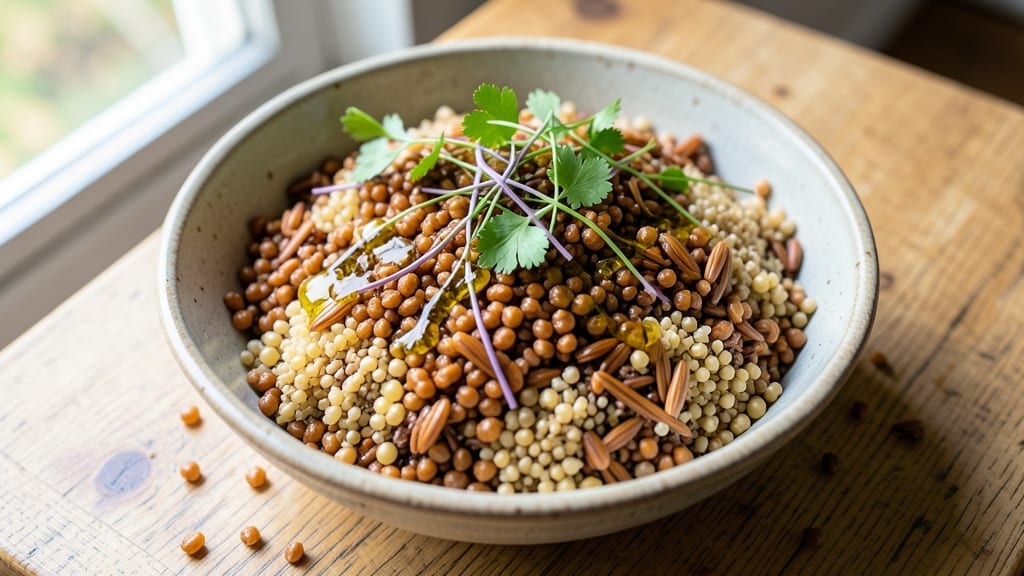
This 5-grain salad recipe delivers a nutty, chewy, protein-packed power bowl that transforms simple grains into a hearty, restaurant-quality dish. The combination of farro, quinoa, barley, wild rice, and bulgur creates a textural symphony—each grain contributes its own satisfying bite while absorbing flavors beautifully.
I developed this recipe after realizing how often grain salads could be more exciting, and the result is a dish that works as a satisfying main course or a substantial side dish.
The secret lies in proper preparation: toasting the grains lightly before cooking enhances their natural nuttiness, while a simple lemon-herb dressing ties everything together without overpowering. This salad is packed with plant-based protein, fiber, and complex carbohydrates, making it perfect for meal prep or feeding a crowd.
The grains hold up well when refrigerated, so you can assemble it ahead of time and enjoy it fresh later.
What you’ll end up with is a colorful, flavorful bowl that’s far more exciting than store-bought grain mixes. The grains stay chewy and satisfying, not mushy, and the dressing adds just the right amount of brightness to cut through the richness.
This is the kind of salad that makes you look forward to eating vegetables—no compromises on flavor or texture.
Use it as a standalone lunch, a side for grilled meats, or alongside roasted vegetables for a complete meal. The recipe is designed to be versatile and adaptable, so you can customize it with your favorite vegetables, proteins, or herbs.
Let’s get started on creating this nutritious, flavorful power bowl!
Ingredients for 5 grain salad
Five grains, one bowl, endless flavor—this power salad needs just 15 ingredients for restaurant-quality texture.
| Ingredient | Amount | Notes |
|---|---|---|
| Farro Grains 🌾 | 1 cup | Rinsed thoroughly before cooking |
| Quinoa 🌾 | 1 cup | Rinsed well to remove bitterness |
| Pearl Barley 🌾 | 1 cup | Short-cooking variety preferred |
| Wild Rice Blend 🌾 | ½ cup | Uncooked, natural blend |
| Bulgur Wheat 🌾 | ½ cup | Fine grind for even texture |
| Extra-Virgin Olive Oil 🫒 | ¼ cup | For toasting grains and dressing |
| Lemon Juice 🍋 | 0.3 cup | Freshly squeezed, strained |
| Fresh Dill 🌿 | ¼ cup | Chopped finely, stems removed |
| Fresh Parsley 🌿 | ¼ cup | Chopped finely, flat-leaf preferred |
| Garlic Cloves 🧄 | 4 cloves | Minced finely for dressing |
| Diamond Crystal Kosher Salt 🧂 | 1 ½ tsp | For seasoning grains and dressing |
| Black Peppercorns 🌶️ | ½ tsp | Freshly cracked for dressing |
| Red Bell Pepper 🍅 | 1 whole | Diced small for vegetable addition |
| Cucumber 🥒 | 1 whole | Seedless, diced for crunch |
| Cherry Tomatoes 🍅 | 1 cup | Halved for freshness |
The grains are the heart of this dish, so buy them from a reputable bulk section—look for organic labels if possible. Bob’s Red Mill or Whole Foods bulk bins have excellent quality, but even the regular grocery store brands work if they’re labeled ‘100% whole grain’. Farro and barley need the most time to cook, so soak them overnight if you’re short on time—it cuts cooking time by half. The wild rice blend is the trickiest; check the package for cooking times since some blends require longer soaking. Toasting the grains in olive oil before cooking? Don’t skip this step—it brings out their natural nuttiness and prevents mushiness later.
No farro? Swap for wheat berries—they hold up similarly. Short on quinoa? Buckwheat groats work in a pinch, though the texture will differ slightly. The dressing can be made ahead, but add the lemon juice last to keep it bright. Fresh herbs are ideal, but dried dill at half the amount gets you close. For the veggies, whatever’s in season works—try roasted zucchini or shaved fennel if you’re feeling adventurous. The salad keeps its texture best when assembled just before serving, but the grains can be cooked and stored separately for 3-4 days in the fridge.
Cooked grains reheat beautifully—just toss with a splash of water and warm in the microwave. Portion into meal prep containers with dressing on the side to keep everything crisp. The full salad holds for 4 days in the fridge, though the veggies may soften. For extra protein, add chickpeas or white beans when assembling—they hold up perfectly and add satisfying texture. The dressing? Make double—it’s perfect over roasted veggies or as a quick pasta sauce.
Why You’ll Love This Recipe
- I’ll be real: grains are cheap, and this recipe stretches far. A single batch feeds four for dinner and leaves enough for leftovers that actually taste better the next day. Plus, no one will guess it’s not some overpriced restaurant dish—it’s just smart, filling food.
- One-Pot Magic: I swear by this—just toss all five grains into a single pot with broth, simmer until tender, and boom. No measuring cups for each grain separately, no constant stirring. The farro and barley plump up while the quinoa stays fluffy, and the wild rice adds that nutty depth without extra effort.
- Nutty, Earthy, Addictive: Honestly, the flavor combo is what keeps me coming back. Toasted bulgur gives it a crispy bite, while the wild rice brings chewy richness. Add a handful of parsley and lemon zest, and suddenly you’ve got a salad that tastes like a vacation—no fancy ingredients, just good stuff.
- Meal Prep MVP: Between us, this is my go-to for lunches all week. Cook a big batch on Sunday, and you’ve got hearty, protein-friendly sides for salads, bowls, or even stuffed into wraps. (Yes, even on a Tuesday night when you’re too tired to think.)
Step-by-step instructions for 5-Grain salad
Here’s how to create a perfectly balanced, nutty, and chewy grain medley that’s ready for your power bowl.
Toast the Grains for Maximum Flavor
In a large, heavy-bottomed pot, heat 0.25 cup extra-virgin olive oil over medium heat. Add the 1 cup farro grains, 1 cup quinoa, 1 cup pearl barley, 0.5 cup wild rice blend, and 0.5 cup bulgur wheat all at once. Stir constantly for 3-4 minutes until the grains begin to smell nutty and toasted—this deepens their flavor and prevents mushiness.
Watch closely as the grains toast; they should turn a few shades darker and release their natural oils. If you see any pieces starting to brown too quickly, stir more vigorously to prevent burning. This step is crucial for developing that toasty, nutty base that makes this salad so satisfying.
Cook the Grains to Al Dente Perfection
Add 4 cups water (yes, it seems like too much, but trust me) and bring to a boil. Once boiling, reduce heat to low, cover with a tight-fitting lid, and simmer for 25-30 minutes. You’ll want the grains to be al dente—firm to the bite but fully tender. Taste-test occasionally after 20 minutes—they should be just slightly undercooked when you first check.
Resist the urge to peek under the lid while cooking; every time you lift it, you release steam and extend the cooking time. If the grains aren’t quite tender after 30 minutes, add ¼ cup water and cook another 5-10 minutes. Once done, drain any excess water and spread the grains on a baking sheet to cool completely before assembling the salad.
Prepare the Herb-Lemon Dressing
While the grains cook, whisk together 0.3 cup lemon juice, 0.25 cup extra-virgin olive oil, 1.5 tsp diamond crystal kosher salt, and 0.5 tsp freshly cracked black peppercorns in a small bowl. Add the 4 minced garlic cloves, 0.25 cup finely chopped fresh dill, and 0.25 cup finely chopped fresh parsley, stirring until fully combined. The dressing should be vibrant green with bright flecks of herbs—this is your flavor foundation.
Taste and adjust the seasoning; you might want to add a pinch more salt or a splash of lemon juice to balance the flavors. This dressing should be tangy, herby, and just slightly peppery—it’s what ties all the nutty grains together into one cohesive, vibrant bowl.
Assemble the Crunchy Vegetable Medley
In a large mixing bowl, combine the 1 whole diced red bell pepper, 1 whole diced cucumber, and 1 cup halved cherry tomatoes. Sprinkle with ½ tsp diamond crystal kosher salt and toss gently to distribute. Let this mixture sit for 10 minutes while you finish cooling the grains—this allows the vegetables to release some moisture and soften slightly, creating a better texture contrast.
Here’s the thing—don’t skip this resting time. The vegetables will be more tender and the flavors will meld better with the grains. If you’re worried about sogginess, pat the vegetables dry with a paper towel before adding them to the grains, but don’t overdo it; you want that fresh, juicy crunch.
Combine and Serve with Confidence
Once the grains are completely cool, add them to the vegetable mixture along with the herb-lemon dressing. Gently toss everything together using a large spoon or your hands, being careful not to mash the vegetables. The salad should look vibrant with deep greens from the herbs, bright reds from the tomatoes, and the nutty browns of the grains.
Taste and adjust seasoning one final time. You might need to add a splash more lemon juice or a pinch of salt to balance the flavors. Serve immediately while the grains are still warm or let it chill in the refrigerator for 1 hour to allow the flavors to develop even further. This salad keeps well for 3-4 days in an airtight container, making it perfect for meal prep.
Pro Tips For Making 5 Grain Salad
- Cook grains separately: Farro and wild rice need 30+ minutes; barley and quinoa are faster—don’t lump them all together. I learned this the hard way when my wild rice turned mushy waiting for the farro to finish. Cook each grain in its own pot, then combine when done.
- Rinse before cooking: Skip this with quinoa and wild rice (they’re clean), but give farro, barley, and bulgur a quick rinse first. The starches cling to these grains like glue, and unrinsed bulgur especially turns gummy. A 30-second cold water rinse saves you from a gluey mess.
- Use a steamer basket: If you’re short on pots, cook the grains in a steamer basket over boiling water instead of simmering. Farro and barley stay firm this way, and you won’t have to babysit the heat. Just check water levels every 10 minutes—no risk of burning.
- Finish with lemon juice: Toss the cooled grains with 1 tablespoon of lemon juice right before dressing. It brightens the flavors and cuts through any lingering bitterness in the barley or wild rice. I was skeptical until I tried it—now I never skip it.
Common mistakes when making this recipe
Skipping the Toast
I see this all the time—cooks rush through the toasting step because it seems unnecessary. But those 3-4 minutes of toasting in olive oil are what unlock the nutty, caramelized flavors in your grains.
Without it, the farro and barley will taste bland and the quinoa will lack depth. Try it once without toasting, then again with it—you’ll notice the difference immediately in both flavor and texture. 🔥
Undercooking or Overcooking Grains
The grains should be al dente—firm but tender with a slight bite. I’ve seen people pull grains off the heat too early, resulting in crunchy centers, or leave them too long, turning them mushy.
Use the 20-minute taste test method: check for doneness at 20 minutes and cook until just tender. If you’re unsure, err on the side of undercooking—they’ll finish cooking when mixed with the dressing. The worst mistake? Peeking under the lid constantly—this releases steam and extends cooking time.
Ignoring the Resting Time
That 10-minute rest for the vegetables before mixing is non-negotiable. Skipping it means your cucumbers and tomatoes will release excess moisture and turn your salad into a soggy mess. Let the vegetables sit while you cool the grains—this simple step makes all the difference in texture.
If you’re really worried about sogginess, pat them dry with a paper towel before adding to the grains, but don’t overdo it—you want that fresh crunch!
Using the Wrong Water Ratio
I get it—adding 4 cups of water to just 3.5 cups of grains seems excessive. But trust me, this ratio ensures the grains cook evenly without sticking. Too little water and your grains will burn or turn to mush.
Too much water? Just drain the excess after cooking. The key is consistency—always use the same ratio for best results. If you’re using a pressure cooker, reduce water by 1 cup and cook for 12-15 minutes on high pressure.
Adding Dressing Too Early
Mixing the dressing with hot grains is a fast track to a watery, flavorless salad. The acid in the lemon juice will cook the grains further, turning them mushy. Always let the grains cool completely before adding the dressing.
This also gives the flavors time to develop properly. Pro tip: Make the dressing ahead of time and store it separately—it keeps for 5 days in the fridge, making this salad even more convenient for meal prep.
Overmixing the Salad
Once you’ve combined everything, resist the urge to stir vigorously. The grains are delicate and will break down if overmixed, especially the farro and barley. Use a gentle tossing motion with a large spoon or your hands, being careful not to mash the vegetables.
The goal is to distribute the dressing evenly without turning the salad into a grainy paste. Serve it immediately while the grains are still warm or let it chill for 1 hour** to allow the flavors to meld beautifully. ✨
Nutrition facts
Frequently asked questions
Can I substitute any of the grains in this recipe?
The key is maintaining texture variety. Swap farro for wheat berries (same cooking time) or quinoa for buckwheat groats (use 1:1 ratio). For barley, try couscous (cooks in 5 minutes) but reduce to ½ cup since it’s much smaller. Always check package instructions for cooking times—wild rice blends vary widely from 30-45 minutes!
How do I make this salad ahead of time without it getting soggy?
Cook the grains completely, cool them quickly, and store in an airtight container for 3-4 days. Keep the dressing separate until serving—this prevents moisture buildup. For the veggies, chop them just before assembling or store them separately with a paper towel to absorb excess moisture. The grains stay chewy when refrigerated, but the veggies will soften faster.
What’s the best way to add protein to this salad?
For plant-based options, try ½ cup chickpeas (rinsed and drained) or ¼ cup white beans per serving—they hold up perfectly. Animal protein works too: add ½ cup grilled chicken breast (diced), ¼ cup feta cheese (crumbled), or 3 oz smoked salmon (flaked). Just add protein after the grains have cooled to maintain texture.
Can I use this salad as a main dish or just a side?
This salad is designed to be hearty enough for a main dish! Serve it with a side of roasted vegetables or a simple soup to round out the meal. For extra staying power, add ¼ cup toasted nuts (walnuts or almonds) or 2 tablespoons pumpkin seeds for crunch and healthy fats. The protein-packed grains make it satisfying on its own.
Why does my dressing separate after mixing?
This happens when the oil and lemon juice aren’t properly emulsified. Whisk vigorously for 30 seconds or use a small blender for a silky texture. For extra stability, add 1 teaspoon Dijon mustard or 1 tablespoon plain yogurt to the dressing. Always store dressing in the fridge and give it a good shake before using—it should come back together easily.

- 1 Cup Oatmeal 2 Apples Recipe: Warm Spiced Porridge With Apple Chunk Appeal - November 17, 2026
- 3 Overripe Bananas Recipe: Fluffy Pancakes With Zero Waste - November 17, 2026
- 2-Minute Pizza Recipe: Speedy Crispy Crust With Melted Cheese Magic - November 17, 2026