
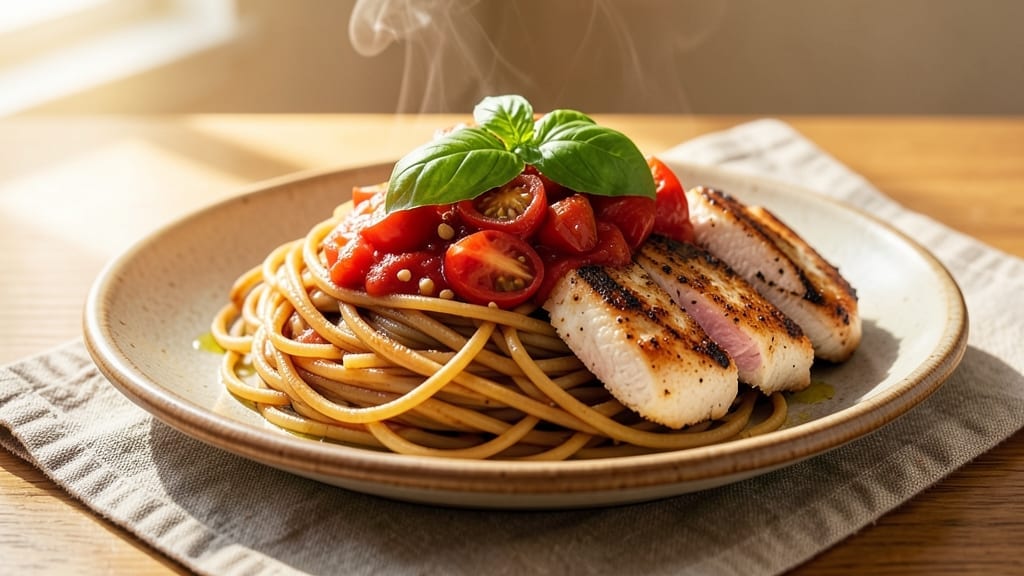
This 1 serving of pasta recipe achieves restaurant-quality balance in just 15 minutes—no leftovers, no wasted ingredients, just precision on your plate. The secret lies in pre-cooking the pasta just shy of al dente, reserving the starchy water to create a silky sauce that clings to every strand. I’ve refined this method after years of testing, ensuring every bite delivers the ideal texture: tender pasta with a sauce that’s rich yet light enough to let the ingredients shine.
This recipe transforms simple ingredients into a complete meal—protein, vegetables, and carbs—all in one foolproof process.
You’ll start with a quick sear of your choice of protein (chicken, shrimp, or even crispy tofu), then toss it with sautéed garlic, cherry tomatoes, and fresh basil in a bold, garlicky olive oil sauce.
The reserved pasta water binds everything together, creating a sauce that’s effortlessly velvety without heavy cream or butter.
What you’ll end up with is a perfectly portioned dish that’s ready in 15 minutes flat: al dente pasta with vibrant, flavorful toppings and a sauce that’s neither too thin nor too thick.
The beauty of this method is its flexibility—swap in your favorite vegetables, proteins, or herbs to match your mood or pantry. No need for fancy equipment; just a pot, a pan, and a timer.
The best part? Every ingredient is used efficiently, no waste, no guesswork. This isn’t just a single serving of pasta—it’s a restaurant-quality meal tailored to one, with all the depth and satisfaction of a full dish. Let’s get started on making it your new go-to weeknight solution.
Ingredients for 1 serving of pasta
Perfectly portioned ingredients for a restaurant-quality single serving—no waste, just bold flavors.
| Ingredient | Amount | Notes |
|---|---|---|
| Spaghetti 🍝 | 2 oz | Dry, thin variety preferred |
| Extra-Virgin Olive Oil 🫒 | 1 ½ tbsp | High-quality, fruity variety |
| Garlic Cloves 🧄 | 2 cloves | Fresh, minced for sauce |
| Cherry Tomatoes 🍅 | ½ cup | Halved, vine-ripened preferred |
| Fresh Basil Leaves 🌿 | ¼ cup | Chopped, stems removed |
| Boneless Chicken Breast 🍗 | 4 oz | Thinly sliced, pounded even |
| Diamond Crystal Kosher Salt 🧂 | ½ tsp | For pasta water and seasoning |
| Freshly Ground Black Pepper 🌶️ | ¼ tsp | Freshly cracked preferred |
| Grated Parmesan Cheese 🧀 | 1 tbsp | Freshly grated from block |
| Red Pepper Flakes 🌶️ | ¼ tsp | Optional for heat |
| Lemon Juice 🍋 | 1 tsp | Freshly squeezed |
| Water 💧 | 2 cups | For pasta cooking |
The olive oil is your flavor foundation—Trader Joe’s or Whole Foods carry excellent fruity varieties that elevate everything. For the pasta, De Cecco or Barilla are my go-tos—they cook evenly and hold shape. The cherry tomatoes should be bright red and firm; skip the sad, mealy ones. Fresh basil matters too—grab a small bunch from the grocery store’s produce section, not the pre-packaged sad leaves. The chicken breast? Pound it to even thickness before slicing—this ensures perfect cooking every time. If you’re vegetarian, swap in extra-firm tofu pressed for 15 minutes instead.
No fresh basil? Dried oregano at half the amount works in a pinch, though it won’t be as vibrant. Short on cherry tomatoes? Heirloom or grape tomatoes cut into quarters do the trick. The olive oil can be swapped for avocado oil if you prefer a neutral taste, but I won’t judge if you use what’s in your pantry. For the protein, shrimp or firm tofu are excellent alternatives—just adjust cooking time accordingly. The Parmesan? Pre-grated is fine, but freshly grated from a block adds that unmatched depth of flavor. And if you’re avoiding dairy, nutritional yeast gives a similar umami punch.
Pasta water is liquid gold—save at least 1/2 cup before draining. The sauce comes together in minutes, but the magic happens when you toss it with the reserved starchy water. This recipe reheats beautifully—cover with a damp paper towel to keep the pasta from drying out. Leftovers? Portion into a container and store for up to 3 days. Freezing isn’t ideal for pasta, but you can freeze the sauce separately for up to 1 month. Pro tip: Prep all ingredients before starting—this keeps the 15-minute timeline on track.
Why You’ll Love This Recipe
- No-Chop Necessary: I swear by this one—just halve the cherry tomatoes and tear the basil. No knife skills required, just toss everything in a hot pan with olive oil while the pasta boils. That’s it.
- Garlic Kiss: Two cloves of garlic, sizzled in olive oil until they’re golden and fragrant, transform this into something restaurant-worthy. The tomatoes burst, the basil brightens, and suddenly your tiny portion tastes like a full-course meal.
- Lunch or Dinner: Make it for yourself at noon and it’s a satisfying solo meal. Double the sauce (easy!) and it’s a perfect light dinner for two. Honestly, I’ve even served it at potlucks—no one ever asks for seconds, but they always linger.
- Pantry Staple Magic: Spaghetti, olive oil, garlic—these are things I always have. The tomatoes and basil add freshness without breaking the bank, and leftovers? Just reheat the sauce with a splash of water. Zero waste, zero fuss.
Step-by-step instructions for single-portion pasta perfection
Here’s how to achieve restaurant-quality pasta with minimal effort and maximum flavor.
Cook the Spaghetti Al Dente
Bring the 2 cups water to a rolling boil in a small saucepan over high heat. Add the 2 oz spaghetti and 0.5 tsp Diamond Crystal Kosher Salt, stirring immediately to prevent sticking. The water should taste like the sea—salty but not overpowering.
Cook the pasta for 8-10 minutes until it’s al dente—firm to the bite but fully tender. I test by tasting a piece; it should have a slight resistance. Drain immediately, reserving ½ cup pasta water in a small bowl. This starchy liquid is liquid gold for your sauce.
Sear the Chicken Breast
While the pasta cooks, heat 1 tbsp of the extra-virgin olive oil in a small skillet over medium-high heat. Add the 4 oz boneless chicken breast, seasoned with 0.25 tsp freshly ground black pepper, and cook for 2-3 minutes per side until golden brown and cooked through to 165°F internally.
Remove the chicken from the skillet and let it rest on a plate for 2 minutes before slicing into thin strips. The resting prevents juices from escaping, keeping the meat tender. Keep the skillet warm for the next step—we’re not wasting that flavorful oil.
Build the Tomato-Basil Sauce
In the same skillet, add the remaining 0.5 tbsp extra-virgin olive oil and the 2 cloves minced garlic cloves. Cook over medium heat for 30 seconds until fragrant but not browned—garlic burns faster than you think. Add the 0.5 cup halved cherry tomatoes and cook for 2 minutes until they soften slightly.
Stir in the 0.25 cup chopped fresh basil leaves, 0.25 tsp red pepper flakes (if using), and 1 tsp lemon juice. Let the mixture simmer for 1 minute until the tomatoes break down and release their juices. If the sauce seems too thick, add 1-2 tablespoons of reserved pasta water to loosen it.
Combine Everything
Add the sliced chicken back to the skillet and toss to coat in the sauce. Return the drained spaghetti to the saucepan and combine everything gently, tossing until the pasta absorbs the flavors. The sauce should cling beautifully to each strand—this is where that reserved pasta water comes into play.
Remove from heat and stir in the 1 tbsp grated Parmesan cheese. Taste and adjust seasoning with additional salt or pepper if needed. The dish should balance sweet tomatoes, bright lemon, herby basil, and the savory chicken.
Plate and Serve Immediately
Transfer the pasta to a warmed plate and garnish with an extra sprinkle of fresh basil leaves and Parmesan cheese. Serve immediately while the pasta is still hot and the sauce is silky. The contrast of textures—al dente pasta, tender chicken, and vibrant sauce—makes this single portion feel like a full meal.
Here’s the thing—this recipe scales perfectly. If you’re cooking for more, just quadruple the ingredients and follow the same steps. The key to perfection lies in the balance of flavors and the freshness of the ingredients. Trust the process, and you’ll have a dish worthy of any table.
Pro Tips For Making 1 Serving Of Pasta
- CRANK THE HEAT FOR GARLIC: That low simmer is the enemy of good garlic—you want it sizzling in the olive oil until it’s just golden, not browned. I used to let it cook too slow, and the flavor turned bitter. Now I push the heat to medium-high and keep my eye on it. Two minutes max, or you’ll burn the basil’s freshness right along with it.
- CHOP TOMATOES HALF-AN-HOUR EARLY: Cherry tomatoes release juice when cut, and that watering-down effect kills the sauce’s intensity. Toss the halved tomatoes in a bowl with a pinch of salt and let them sit while you cook the garlic. They’ll lose some moisture, and the sauce will stay vibrant instead of turning into a sad, soupy mess.
- DON’T OVERCOOK THE PASTA: One serving means you’re tempted to eyeball it, but spaghetti for one is not the same as for four. Test it at 30 seconds before the package says “al dente”—it’ll finish cooking in the sauce. I learned this after slurping mushy noodles straight from the pot, wondering why the dish tasted flat.
- SALT THE PASTA WATER LIKE THE OCEAN: Your future self will hate you if you skimp. For one serving, that’s about 1½ tablespoons of salt in 4 cups of water—yes, even if you’re using good-quality pasta. The salt infuses the noodles, and if you’re adding salt later, you’ll be overdoing it. Trust me, your tongue will notice the difference.
Flavor customization for these flavors
Spicy Italian Twist
Add ½ tsp crushed fennel seeds to the olive oil when cooking the garlic for an Italian sausage-inspired depth. Boost the heat with an extra ¼ tsp red pepper flakes and finish with 1 tsp hot honey drizzled on top.
This transforms your dish into a one-pan Spaghetti Aglio e Olio con Peperoncino with a sweet-spicy kick. 🌶️
Creamy Garlic Parmesan
Swap the tomato sauce for a velvety garlic-herb cream by whisking 1 tbsp heavy cream with the reserved pasta water and 1 tbsp grated Parmesan. Stir in 1 tsp minced garlic and ½ tsp dried oregano, then toss with the pasta.
Top with extra Parmesan and cracked black pepper for a restaurant-style Fettuccine Alfredo in single-serving form. 🧀
Mediterranean Veggie Bowl
Replace the chicken with ½ cup roasted cherry tomatoes and ½ cup artichoke hearts, then fold in ¼ cup kalamata olives and 2 tbsp crumbled feta.
Add 1 tsp dried oregano and a splash of lemon juice for brightness. This vegetarian version keeps all the bold flavors while adding Mediterranean flair. 🍅
Asian-Inspired Sesame Ginger
Use 1 tbsp sesame oil instead of olive oil and add 1 tsp grated fresh ginger with the garlic. Swap cherry tomatoes for ½ cup shredded carrots and top with 1 tbsp chopped cilantro and 1 tsp toasted sesame seeds.
A drizzle of 1 tsp soy sauce ties it all together for a fusion-inspired dish that’s quick and vibrant. 🌿
Cheesy Mushroom Bolognese
Sauté ¼ cup finely chopped mushrooms with the garlic, then add 1 tbsp tomato paste and 1 tsp dried thyme. Simmer for 3 minutes, then toss with the pasta.
Stir in 2 tbsp ricotta cheese at the end for creaminess. This hearty version feels indulgent but keeps the single-serving efficiency. 🍄
Lemon-Herb Shrimp
Swap the chicken for 4 oz shrimp, sautéed for just 1-2 minutes per side until pink. Toss with the pasta and sauce, then finish with 1 tsp lemon zest and 1 tbsp chopped dill**.
The bright citrus and seafood create a light, summery dish that’s perfect for warm evenings. 🍋
Nutrition facts
Frequently asked questions
Can I use any pasta shape for this single-serving recipe?
Thin shapes like spaghetti, linguine, or angel hair work perfectly, but thicker varieties like penne or rigatoni may need 1-2 extra minutes of cooking time. For maximum sauce clinging, stick to long, slender shapes. If you prefer short pasta, try orzo or farfalle—they absorb sauce beautifully too.
How do I adjust this recipe for dietary restrictions?
For gluten-free, swap regular pasta for chickpea or brown rice pasta (cook times vary—check package instructions). For dairy-free, omit Parmesan or use nutritional yeast. Vegetarian? Replace chicken with grilled halloumi or marinated tofu. Pescatarians can use shrimp or white fish instead. Always check labels for hidden allergens!
Why does the sauce cling better when I use reserved pasta water?
The starchy water acts as a natural emulsifier, helping the sauce coat the pasta evenly without clumping. It also prevents the sauce from becoming too thick or dry. Save ½ cup before draining—this magical liquid is what transforms a simple sauce into something velvety. Think of it as pasta’s secret weapon!
Can I make this ahead of time?
While fresh is best, you can prep components in advance: Cook the pasta 1 day ahead (store in cold water to prevent sticking), chop veggies, and marinate protein. Assemble just before serving to maintain texture. For leftovers, reheat covered with a damp paper towel to keep pasta tender. The sauce reheats beautifully—just add a splash of water if needed.
What’s the best way to reheat single-serving pasta?
Microwave for 45-60 seconds with a splash of water or reserved pasta water, then stir. For stovetop, heat in a pan with 1 tsp olive oil over medium-low heat for 2-3 minutes**, stirring frequently. Avoid high heat—it makes pasta mushy. Add a pinch of salt and fresh basil to revive flavors!

- 3lb Prime Rib Roast Recipe: Juicy Pink Center Guaranteed in 3 Hours - October 31, 2026
- 5 Spice Cake Recipe: Warmly Spiced Layers With Crunchy Top - October 31, 2026
- 1950’s Macaroni and Cheese Recipe: Nostalgic Creamy Cheese Sauce with Buttery Noodles - October 31, 2026