
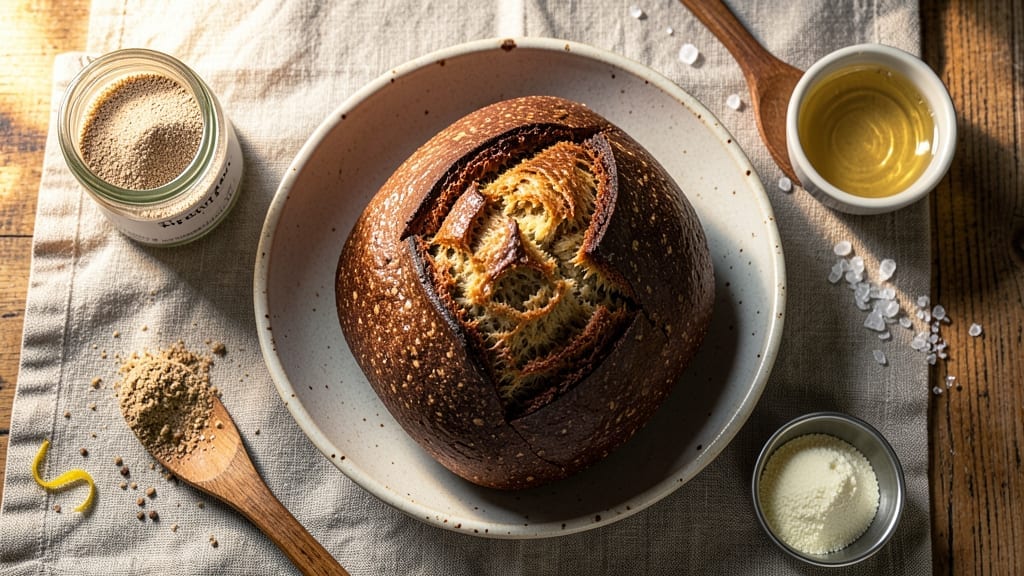
A 100 percent rye bread recipe delivers that signature deep, nutty flavor and dense texture that traditional rye lovers crave. This version skips the wheat flour entirely, relying instead on a long fermentation that develops complex, caramelized notes and a satisfyingly heavy crumb.
The key lies in precise hydration control and patience—two elements that transform simple ingredients into something extraordinary.
What sets this recipe apart is its deep fermentation, which can take up to 24 hours for optimal flavor development. Using commercial yeast (or a starter) ensures reliable results, while careful shaping and scoring create that iconic crackly crust.
The dough’s sticky nature requires practice, but the payoff—a loaf with a dark, crisp exterior and moist, hearty interior—is worth every step.
This bread pairs beautifully with smoked fish, sharp cheeses, or simply slathered with butter. The nutty depth and slightly tangy profile make it versatile enough for sandwiches or as a centerpiece for any table. Once you master this technique, you’ll never settle for store-bought rye again.
Ready to bake? The process is methodical but rewarding—perfect for bakers who appreciate tradition with a modern twist. Let’s get started with the ingredients and steps that will give you that perfectly fermented, crusty loaf every time.
Ingredients for 100 percent rye bread
Precision-milled rye flour and patient fermentation create this iconic, deeply flavorful loaf.
| Ingredient | Amount | Notes |
|---|---|---|
| Dark Rye Flour 🌾 | 4 cups | 100 percent rye, protein content 11-13 percent |
| Active Dry Yeast 🍞 | ¼ tsp | Or 1/4 oz sachet, instant yeast preferred |
| Granulated Sugar 🍚 | ½ tsp | Feeds yeast for activation |
| Warm Water 💧 | 2 ½ cups | 95-105°F for yeast activation |
| Malt Powder 🌾 | 1 tbsp | Optional but enhances fermentation |
| Salt 🧂 | 1 ½ tsp | Diamond Crystal kosher preferred |
| Honey 🍯 | 1 tbsp | Adds subtle sweetness and extensibility |
| Olive Oil 🫒 | 1 tbsp | Extra-virgin for richness |
| Cornmeal 🌽 | ¼ cup | For dusting work surface |
| Sesame Seeds 🌿 | 1 tbsp | Optional for decorative topping |
| Water 💧 | 1 ½ cups | Room temperature for autolyse |
| Rye Flour 🌾 | ½ cup | Reserved for dough development |
The dark rye flour is non-negotiable—look for 100 percent rye with 11-13 percent protein content for optimal gluten development. King Arthur or Bob’s Red Mill brands deliver consistent results, but European rye flours like Pumpernickel offer superior depth. If your local grocery lacks dark rye, specialty stores or online retailers like Amazon Fresh stock high-quality options. The malt powder (optional but recommended) acts as a fermentation catalyst—Briess malt powder extract is ideal for home bakers. Store flours in airtight containers to prevent moisture absorption, which degrades quality over time.
No malt powder? A splash of malt syrup (1/2 tsp) works as a substitute, though texture may differ slightly. Diamond Crystal kosher salt dissolves more easily than table salt—Morton works in a pinch but may require extra mixing. The honey adds subtle sweetness while improving dough extensibility; Manuka honey enhances flavor but isn’t mandatory. For the yeast, Saf-Instant activates faster than active dry yeast—just skip the proofing step. Olive oil should be extra-virgin for richness; California avocado or Spanish Picual varieties excel. If you’re gluten-sensitive, this recipe isn’t suitable, but for traditional rye lovers, these ingredients deliver authentic depth.
Fermented dough keeps best in the fridge for 24 hours before baking—this extends flavor development. Shape the loaf into a round boule for classic presentation, then score deeply with a razor blade for that signature crackly crust. Bake at 425°F for 45-50 minutes until internal temp reaches 205°F. Cool completely on a wire rack before slicing—2-3 hours ensures proper crumb structure. Store wrapped at room temperature for 3-4 days or freeze sliced for up to 3 months. The longer it rests, the more complex the flavor becomes—worth the wait for that restaurant-quality taste.
Why You’ll Love This Recipe
- No-Fuss Mixing: The dough comes together in five minutes—just toss the dark rye flour, yeast, and malt powder with warm water until it’s sticky but manageable. No kneading, no fuss, just a quick stir and let the yeast do its magic.
- Deep, Earthy Richness: That malt powder? It’s the secret weapon—gives it a caramelized sweetness that lingers, while the dark rye adds a robust, slightly tangy bite. Honestly, it’s the kind of bread that makes you slow down and savor every bite.
- Meal Prep Hero: Slice it thick for sandwiches, toast it for breakfast, or pack it for lunches—it stays fresh for five days wrapped in a towel. I make a double batch on Sundays because it’s that reliable.
- Budget-Friendly Staple: A bag of dark rye flour lasts forever, and you only need a pinch of yeast and sugar. Between us, this is the bread that actually feeds you—no wasted crusts or sad leftovers here.
Step-by-step instructions for deep fermented 100 percent rye bread
Mastering this dense, nutty rye loaf requires patience and precision—here’s how to achieve that perfect deep fermentation.
Create the Autolyse and Initial Dough Development
In a large mixing bowl, combine the 4 cups dark rye flour and 1.5 cups room temperature water. Using a wooden spoon or dough whisk, mix vigorously for 2-3 minutes until a shaggy dough forms. The rye flour’s high protein content will create a stiff, elastic dough—this is normal. Let the dough rest for 30 minutes at room temperature. This autolyse phase hydrates the flour and develops gluten structure before yeast activation.
During this rest, the dough should become slightly smoother and more cohesive. If it appears too dry after mixing, add 1 tablespoon water at a time until it just holds together when pressed. The autolyse creates a foundation for better dough extensibility later, preventing the dense rye from becoming too heavy.
Activate Yeast and Build Fermentation
To the rested dough, add the 0.25 teaspoon active dry yeast, 0.5 teaspoon granulated sugar, 1 tablespoon malt powder, 1.5 teaspoons salt, 1 tablespoon honey, and 1 tablespoon olive oil. Mix thoroughly using a dough scraper or your hands until all ingredients are evenly distributed throughout the dough. The malt powder and honey will enhance fermentation while the olive oil adds richness to the final crumb.
Transfer the dough to a lightly oiled mixing bowl, cover with plastic wrap, and let ferment at 75°F for 4-6 hours. You’ll notice the dough gradually rise and develop a slightly sour aroma—this is the sourdough-like development from the rye’s natural acids. The dough should increase by about 25-30% in volume. If your kitchen is cooler, extend fermentation up to 8 hours for deeper flavor development.
Perform the First Set of Stretch and Folds
After the initial fermentation, perform a series of stretch and folds every 30 minutes for 2 hours. Wet your hands with water and gently stretch one side of the dough upward while folding it over itself. Rotate the bowl and repeat this motion in four directions. This technique strengthens the gluten structure that rye flour’s low protein content would otherwise struggle to develop. The dough should become smoother and more elastic with each set.
During these folds, you’ll notice the dough becomes increasingly sticky. If it becomes too difficult to handle, add 1 tablespoon water at a time to maintain workability. The goal is to create surface tension that will support the dough’s expansion during final proofing. After the last set of folds, let the dough rest for 30 minutes before shaping.
Shape and Final Proof
Lightly dust your work surface with 0.25 cup cornmeal and turn out the dough. Gently shape it into a round boule by pulling the edges toward the center while rotating the dough. The surface should be smooth but slightly tacky. Place the shaped dough seam-side up in a well-floured proofing basket or bowl lined with a floured kitchen towel.
Cover the dough and let it proof at 75°F for 8-12 hours, or until it has nearly doubled in size and springs back slowly when pressed. The extended proofing time is crucial for developing the bread’s complex, nutty flavors. For best results, proof overnight in the refrigerator for even deeper fermentation. The dough should be noticeably puffy with a slight jiggle when shaken gently.
Bake for Maximum Crust Development
Preheat your oven to 425°F with a Dutch oven inside for 45 minutes. Remove the hot Dutch oven and carefully transfer the dough to it, seam-side up. Sprinkle the 1 tablespoon sesame seeds evenly over the top. Bake covered for 35 minutes, then remove the lid and bake for an additional 15-20 minutes until the crust is deep golden brown and the internal temperature reaches 205°F.
The bread should have a dense, crackly crust with an open crumb structure. If the top browns too quickly, tent loosely with foil. Let the bread cool completely on a wire rack before slicing—this prevents a gummy texture. The deep fermentation will give you a loaf with exceptional keeping qualities that improve over several days.
Pro Tips For Making 100 Percent Rye Bread
- Bloom the Yeast First: Mix your yeast with just the warm water and sugar first—let it sit for 5-10 minutes until bubbly before adding the flour. I learned this the hard way after making dense, flat loaves because the yeast in dark rye flour needs extra encouragement to activate properly.
- Sift the Rye Twice: Dark rye flour is heavy and packed—sift it into your mixing bowl twice, once before adding yeast and again after. This lightens the texture and prevents a brick-like loaf. (Yes, even if you’re impatient like me.)
- Don’t Over-Knead: Rye dough is sticky and tough—stop mixing once it pulls away from the bowl sides and forms a shaggy mass. Overworking it makes the crumb dense and chewy. Let the gluten relax; rye doesn’t need a workout.
- Steam the Oven: Place a metal tray on the oven rack before preheating, then add a cup of boiling water when you bake. The steam mimics a professional oven’s effect, giving your loaf a crisp crust without burning. (Your future self will thank you.)
Creative variations of 100 percent rye bread
Sourdough Rye Twist
Replace the commercial yeast with a 10% sourdough starter (by weight of flour) for a tangier, more complex flavor. Use 1 cup active starter instead of the yeast and sugar, and reduce the water to 2 cups total to account for the starter’s moisture.
Ferment at 70°F for 12-16 hours—the longer fermentation enhances the rye’s natural acids. This version requires more attention but delivers a flavor profile closer to traditional European rye. 🌱
Seeded Whole Grain Boost
Add ½ cup mixed seeds (sunflower, flax, or pumpkin) to the dough during the autolyse stage for extra crunch and nutrition. Toast the seeds in a dry pan for 3-5 minutes until fragrant, then cool before mixing into the dough.
The seeds distribute evenly during kneading, adding texture and a nutty depth that pairs beautifully with the rye’s natural flavors. Store-bought seed blends work, but fresh, raw seeds yield better results.
Sweet Caramelized Rye
For a dessert-style loaf, incorporate ½ cup brown sugar into the dough and brush the crust with 2 tbsp melted butter mixed with 1 tbsp honey before baking. The caramelization deepens during the final 15 minutes of uncovered baking, creating a sticky, sweet glaze.
This version works well as a breakfast loaf or paired with sharp cheeses like aged Gouda. The sweetness balances the rye’s earthiness perfectly. 🍯
Herb-Infused Rye
Stir 1 tbsp fresh rosemary or thyme (finely chopped) into the dough during the final mixing stage for an aromatic twist. The herbs pair especially well with the rye’s nutty notes and add a subtle piney brightness.
For a stronger flavor, use 1 tsp dried herbs—just remember to adjust the water slightly if the dough feels too dry. This variation shines when served with roasted meats or creamy spreads like herb butter.
Gluten-Free Adaptation
Swap the rye flour for a 1:1 gluten-free rye blend (like Bob’s Red Mill GF Rye Mix) and add 1 tbsp psyllium husk powder to improve structure. Increase the water by 2 tbsp to account for the blend’s dryness, and extend fermentation to 10-12 hours for better flavor development.
While not identical to traditional rye, this version delivers a satisfying texture and depth for those avoiding gluten. 💪
Quick Rise Option
For a faster version, reduce the initial fermentation to 3-4 hours and skip the overnight cold proof. Use 1 tsp rapid-rise yeast (like Saf-Instant) and increase the sugar to 1 tsp** to speed up fermentation.
While the flavor won’t be as deep, this method yields a decent loaf in 8 hours total. Ideal for busy bakers who still want authentic rye without the wait. The trade-off? Less complexity but still impressive results. ⏰
Nutrition facts
Frequently asked questions
Why does my 100% rye dough feel so sticky?
Rye flour has low gluten content and high moisture absorption, which creates an extremely sticky dough. The 2.5 cups of water in this recipe are necessary for proper hydration and fermentation, but the dough should remain manageable with wet hands and a well-floured surface. If it’s too sticky to handle, add 1 tablespoon flour at a time until workable. The stickiness actually helps develop flavor during fermentation!
Can I use whole wheat flour instead of dark rye flour?
Not for a true 100% rye loaf—whole wheat flour has a completely different flavor profile and higher protein content that would alter the texture dramatically. Dark rye flour’s 11-13% protein and natural acids are essential for that signature dense, nutty character. If you’re looking for a wheat-free alternative, try a rye-wheat blend (80/20), but the flavor will differ significantly from pure rye.
How do I know when the dough is properly fermented?
Look for 25-30% volume increase and a slightly jiggly surface when shaken gently. The dough should also develop a slightly sour aroma (like yogurt) and feel noticeably lighter. For best results, use a digital thermometer to maintain 75°F—cooler temps slow fermentation, while warmer temps speed it up. The longer it ferments (up to 24 hours), the more complex the flavor becomes.
Why did my rye bread turn out dense instead of crusty?
This usually happens from underproofing or overbaking. The dough needs 8-12 hours of final proofing to develop proper gas bubbles for an open crumb. Also, ensure your oven reaches 425°F and bake until internal temp hits 205°F. If the crust isn’t crackly enough, try steaming the bread for the first 10 minutes of baking by placing a tray of boiling water in the oven.
Can I make this recipe without a Dutch oven?
Yes! Use a heavy baking sheet lined with parchment paper and place it on the middle rack. For extra crust development, invert a baking stone on top of the dough for the first 20 minutes of baking. Alternatively, bake in a regular loaf pan for a softer crust, but the texture will be less traditional. The key is maintaining high heat (425°F) for proper steam circulation during early baking.

- 3lb Prime Rib Roast Recipe: Juicy Pink Center Guaranteed in 3 Hours - October 31, 2026
- 5 Spice Cake Recipe: Warmly Spiced Layers With Crunchy Top - October 31, 2026
- 1950’s Macaroni and Cheese Recipe: Nostalgic Creamy Cheese Sauce with Buttery Noodles - October 31, 2026