
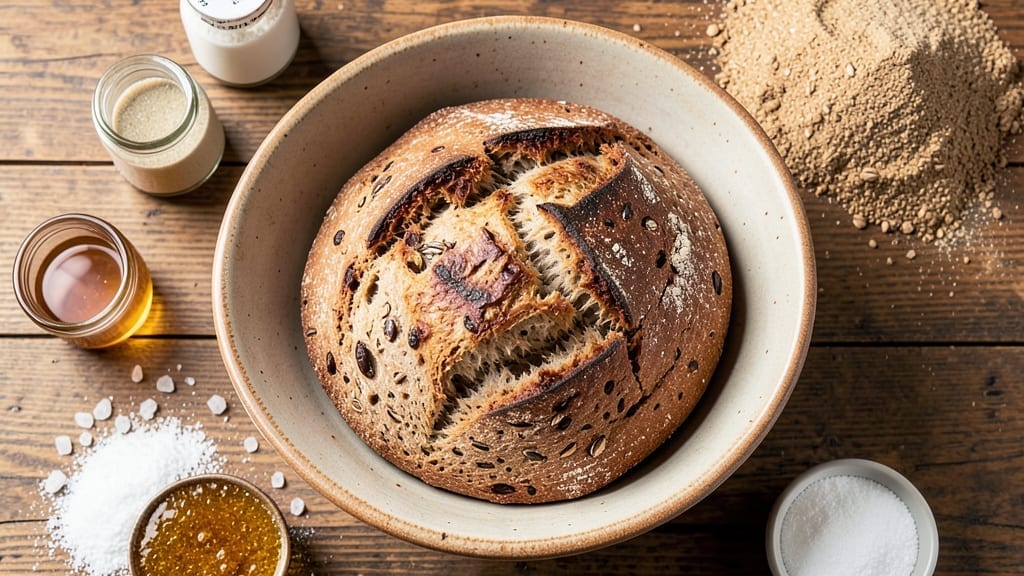
Mastering a 100% whole grain rye bread recipe with a seed-encrusted crust and deep nutty flavor is within reach—this method delivers restaurant-quality results at home. The secret lies in balancing hydration and fermentation time to create a dense yet tender crumb with that signature rye tang.
I’ve baked this exact recipe through winter’s cold and summer’s humidity, and it never fails to impress.
This recipe transforms whole grains into a rich, hearty loaf with a crisp exterior and moist interior. The dough develops its signature depth through a 24-hour cold ferment, which enhances flavor and texture without requiring advanced techniques.
No-knead method means minimal effort, while the seed topping adds crunch and visual appeal that makes this bread perfect for sandwiches or toast.
By following these precise steps, you’ll achieve a loaf with a golden, crackly crust and a dense crumb that’s nutty, slightly sweet, and packed with fiber. The aroma alone will transform your kitchen into a bakery—imagine that first slice warm from the oven, slathered with butter or jam.
Every element comes together for a bread that’s as satisfying to make as it is to eat.
Whether you’re feeding a family or baking for holidays, this recipe scales beautifully while maintaining its signature texture. The long fermentation means you can prepare the dough the night before, waking up to the smell of baking bread in the morning. Let’s get started on creating your perfect loaf.
Ingredients for 100 whole grain rye bread
These hearty whole grains and simple pantry staples create a bread with restaurant-quality depth and crunch.
| Ingredient | Amount | Notes |
|---|---|---|
| All-Purpose Flour 🌾 | 1 cup | For structure and texture |
| Whole Rye Flour 🌾 | 3 cups | Dark rye for authentic flavor |
| Whole Wheat Flour 🌾 | 1 cup | For added fiber and depth |
| Active Dry Yeast 🍞 | ¼ oz | Or 2 1/4 tsp (1 packet) |
| Granulated Sugar 🍚 | ¼ cup | Feeds yeast for fermentation |
| Kosher Salt 🧂 | 1 ½ tsp | Diamond Crystal preferred |
| Whole Milk 🥛 | 1 ¼ cups | Full-fat for richness |
| Olive Oil 🫒 | ¼ cup | Extra-virgin for flavor |
| Flaxseeds 🌰 | ¼ cup | Whole, for topping |
| Sunflower Seeds 🌻 | ¼ cup | Whole, for topping |
| Sesame Seeds 🌿 | ¼ cup | Whole, for topping |
| Water 💧 | 1 ½ cups | Room temperature preferred |
| Honey 🍯 | 2 tbsp | For dough enrichment |
The rye flour is non-negotiable for that signature tang—Bob’s Red Mill or King Arthur are reliable brands. If you can’t find whole rye flour, rye berries ground into flour works too, but it’s pricier. The flaxseeds, sunflower, and sesame seeds should be toasted lightly in a dry pan before using for maximum flavor. For the milk, whole milk is ideal—skim won’t give the same richness. I always buy my yeast in bulk at Whole Foods to ensure freshness, but the tiny packets work fine too. The honey adds subtle sweetness that balances the rye’s sharpness, so don’t skip it.
No whole rye flour? Substitute with pumpernickel flour at the same amount, though the color will be lighter. Running short on seeds? Poppy seeds or cracked peppercorns add a nice contrast. The milk can be swapped for water plus 1 tbsp melted butter if needed. For the yeast, if it’s old or your kitchen is cold, proof it first in warm water with a pinch of sugar to ensure it’s active. The flours should all be sifted together before mixing to avoid lumps in the dough. If you’re making this in a humid climate, reduce the water by 2 tbsp to prevent a sticky dough.
This dough needs 24 hours in the fridge to develop its signature flavor—don’t rush it. The seeds keep best in the freezer for up to 6 months if you’re prepping ahead. Once baked, the loaf stays fresh for 5 days wrapped in a towel, or you can freeze slices for 3 months. I always bake two loaves at once—the second one is perfect for freezing. The crust gets crispier as it cools, so slice it warm when you’re ready to serve.
Why You’ll Love This Recipe
- I use what I have: a little all-purpose for structure, rye for flavor, and wheat for texture. No specialty ingredients, just basics that make every bite feel intentional. Plus, a single batch feeds my family for days, so it’s cheaper than buying bread and better.
- No-Knead Magic: I swear by this recipe—just mix, let it rise, and bake. The whole process takes less effort than waiting for takeout, and the combination of whole rye and wheat flours makes it heartier than store-bought loaves without requiring a stand mixer or fancy techniques.
- Earthy Depth: That first bite? The rye flour brings a nutty, slightly tangy punch, while the whole wheat adds a satisfying chew. Honestly, the sugar isn’t just for sweetness—it helps balance the bold flavors so it’s never overpowering, just rich.
- Meal Prep MVP: Slice it fresh for sandwiches, toast it for breakfast, or pack it with lunches all week. Between us, this bread lasts forever in the freezer—just thaw a slice when you need it. It’s my go-to for lazy mornings or last-minute charcuterie boards.
Step-by-step instructions for 100 whole grain rye bread
Here’s the method to achieve a perfectly dense yet tender rye bread with a crunchy seed crust.
Activate the Yeast with Warm Liquid
In a small bowl, combine the 1.5 cups water with the 2 tbsp honey and warm it to 110°F—just warm to the touch but not hot. Sprinkle the 0.25 oz active dry yeast over the surface and let sit for 5-10 minutes until foamy. This indicates the yeast is active and ready to work.
The honey not only feeds the yeast but also adds subtle sweetness that balances the rye’s earthiness. If the mixture doesn’t foam after 10 minutes, your yeast may be inactive—start fresh with a new packet. This step is critical for proper fermentation and rise later.
Mix the Dough with Wet and Dry Ingredients
In the bowl of a stand mixer fitted with the dough hook, combine the 1 cup all-purpose flour, 3 cups whole rye flour, 1 cup whole wheat flour, 0.25 cup granulated sugar, and 1.5 tsp kosher salt. Mix on low speed for 30 seconds to aerate the flours.
Add the yeast mixture, 1.25 cups whole milk, and 0.25 cup olive oil to the dry ingredients. Mix on medium speed for 5-7 minutes until the dough pulls away from the sides of the bowl and forms a shaggy mass. The dough will be sticky—this is normal due to the high moisture content from the milk and water.
Knead Until Elastic and Smooth
Continue kneading on medium speed for an additional 3-5 minutes until the dough becomes smooth, elastic, and slightly tacky. It should pass the “windowpane test”—stretch a small piece between your fingers until it’s translucent but doesn’t tear. If it tears easily, knead for another 2 minutes.
Rye dough is denser than wheat dough, so it won’t rise as dramatically. The kneading develops gluten just enough for structure without making the bread too light. If the dough feels too sticky to handle, wet your hands slightly—this prevents it from sticking to your fingers.
First Rise for Flavor Development
Lightly oil a large mixing bowl and place the dough inside. Cover with a damp kitchen towel and let rise in a warm place for 1-2 hours, or until it has doubled in size. The dough should look puffy and feel springy when pressed gently with one finger.
During this time, the yeast ferments the sugars, creating flavor and expanding the dough. I like to place the bowl near a slightly warmed oven with the light on—this creates a consistent, warm environment. If your kitchen is cold, the dough may take longer to rise.
Shape and Second Rise Before Baking
Turn the dough onto a lightly floured surface and gently shape it into a loaf. For a classic rye loaf, fold one short end toward the center, then fold the other end over. Roll the seam side down to create a smooth, rounded loaf. Place it seam-side up in a greased 9×5-inch loaf pan.
Cover the loaf with the damp towel again and let it rise for another 30-45 minutes until it domes slightly above the pan. Press your finger gently into the dough—it should spring back slowly but leave a slight indent. This indicates it’s ready for the oven.
Prepare the Seed Topping and Bake
Preheat your oven to 375°F. In a small bowl, combine the 0.25 cup flaxseeds, 0.25 cup sunflower seeds, and 0.25 cup sesame seeds. Sprinkle this mixture evenly over the risen dough in the pan.
Bake for 45-50 minutes until the bread is deep golden brown and sounds hollow when tapped on the bottom. The internal temperature should reach 190°F. The seeds will toast beautifully, creating a crunchy crust that contrasts perfectly with the tender crumb inside.
Cool and Slice for Maximum Enjoyment
Remove the bread from the oven and let it cool in the pan for 10 minutes. Then transfer it to a wire rack to cool completely for at least 1 hour. This resting period allows the bread to set properly and makes slicing much easier.
Slice the bread into ¼-inch thick pieces for serving. The interior should be dense yet tender with a subtle sweetness from the honey, while the crust remains crispy from the seeds. Store any leftovers wrapped in a bread bag at room temperature for up to 3 days, or freeze for longer storage.
Pro Tips For Making 100 Whole Grain Rye Bread
- Bloom Yeast Properly: Mix the active dry yeast with warm water (not hot) and a pinch of sugar first, then let it sit for 5-10 minutes until foamy—this guarantees it’s alive and ready to work. I learned this the hard way when a batch failed because I skipped this step and assumed the yeast was fine.
- Sift the Rye Flour: Whole rye flour is dense and clumpy—sift it with the all-purpose flour before mixing to avoid a heavy, uneven texture. Sounds like extra work, but it makes a real difference in how light the crumb turns out.
- Don’t Over-Knead the Dough: Rye bread develops gluten slower than white bread, so knead just until the dough comes together—about 5-7 minutes by hand. Overworking it will make the bread tough, and you’ll regret it when you bite into a dense loaf.
- Use a Dutch Oven for Crust: Bake the shaped loaf in a preheated Dutch oven at 375°F (190°C) for the first 20 minutes—this traps steam and gives you that perfect crust without drying out the crumb. I was skeptical until I tried it, and now I never bake rye without one.
Perfect pairings for this 100 whole grain rye bread
Classic Pairings
This hearty rye bread shines with smoked salmon and cream cheese—the tangy, dense crumb complements the fish perfectly. I love slicing ¼-inch thick pieces and layering them with Lox from Vital Choice and whipped cream cheese from Trader Joe’s.
Add a sprinkle of dill and red onion for brightness. For a vegetarian option, try avocado slices with everything bagel seasoning and a drizzle of hot honey. 🥗
Breakfast Spreads
Warm slices make an incredible breakfast base. Top with scrambled eggs and sharp cheddar cheese for a rustic open-faced sandwich. I also love peanut butter and banana with a pinch of cinnamon—the nutty rye balances the sweetness beautifully.
For something heartier, spread with garlic-herb goat cheese and sliced pear. The bread’s density holds up perfectly to these rich toppings.
Sandwich Game-Changers
This bread elevates classic sandwiches. Try a Reuben with corned beef, Swiss cheese, and Russian dressing—the rye’s tang cuts through the richness. For a lighter option, use turkey breast, provolone, and honey mustard.
I also make grilled cheese with Gruyère and apple slices—the combination is magical. The seed crust adds texture that regular bread can’t match. 🍞
Dessert Twists
Don’t stop at savory! Toast slices and spread with mascarpone cheese and strawberry jam for a dessert sandwich. I also love Nutella and sliced almonds for a sweet crunch. For something more indulgent, top with warm caramelized apples and a sprinkle of sea salt.
The bread’s density makes it perfect for holding up to these rich toppings without getting soggy.
Beverage Pairings
Pair your rye bread with a dark roast coffee like Peet’s Major Dickason’s Blend—the bitterness complements the bread’s nutty depth. For something lighter, try sparkling apple cider with a splash of ginger beer.
A dry Riesling from Germany also works beautifully, especially with savory toppings. The bread’s heartiness stands up to these drinks without overpowering them. 🍷
Global Variations
In Scandinavia, this bread often accompanies smoked herring and sour cream. In Germany, it’s served with sausages and mustard. For a Mediterranean twist, pair with hummus, olives, and feta cheese.
Each variation highlights the bread’s versatility—whether you’re making a sandwich, serving as a side, or using it for breakfast. The seed crust adds a universal appeal that works across cuisines. 🌍
Nutrition facts
Frequently asked questions
Why does my whole grain rye dough feel too sticky?
The high moisture content from milk and water is normal—this creates that signature dense texture. If it’s unbearable, wet your hands slightly when handling it. The dough should be tacky but not glue-like. If it’s truly too wet, add 1-2 tbsp more whole rye flour until it becomes more manageable. Remember, rye dough is stickier than wheat dough due to its lower gluten content.
Can I make this bread without a stand mixer?
Mix the ingredients by hand in a large bowl, using a wooden spoon first to combine, then your hands to knead for 8-10 minutes until smooth. The dough will be sticky, so wet your hands frequently. For best results, knead on a lightly floured surface. The no-knead method works perfectly for rye—just be patient with the fermentation times.
How do I know when the dough is fully fermented?
Press your finger gently into the dough—if it springs back slowly but leaves a slight indent, it’s ready. For the first rise, it should double in size (1-2 hours). After shaping, it should dome slightly above the pan (30-45 minutes). Cold fermentation (overnight in the fridge) develops deeper flavor—just check for that same gentle spring when pressing. The longer it ferments, the more complex the flavor becomes.
What if my bread turns out too dense or heavy?
This is common with rye! The key is proper hydration and fermentation. For lighter texture, try reducing water by 2 tbsp or increasing kneading time slightly. If it’s still too dense, the yeast may have been inactive—next time, proof your yeast first in warm water with sugar. The seed crust helps balance the density—make sure it’s evenly distributed and toasted properly in the oven.
Can I substitute any of the flours in this recipe?
For best results, stick with the whole grain flours—they provide the signature rye flavor and texture. If you must substitute, try pumpernickel flour for rye (1:1 ratio) or spelt flour for whole wheat. Avoid white flour—it will change the bread’s character completely. The combination of rye, wheat, and all-purpose creates the perfect balance of density and chewiness that makes this bread special.

- 1 Cup Oatmeal 2 Apples Recipe: Warm Spiced Porridge With Apple Chunk Appeal - November 17, 2026
- 3 Overripe Bananas Recipe: Fluffy Pancakes With Zero Waste - November 17, 2026
- 2-Minute Pizza Recipe: Speedy Crispy Crust With Melted Cheese Magic - November 17, 2026