
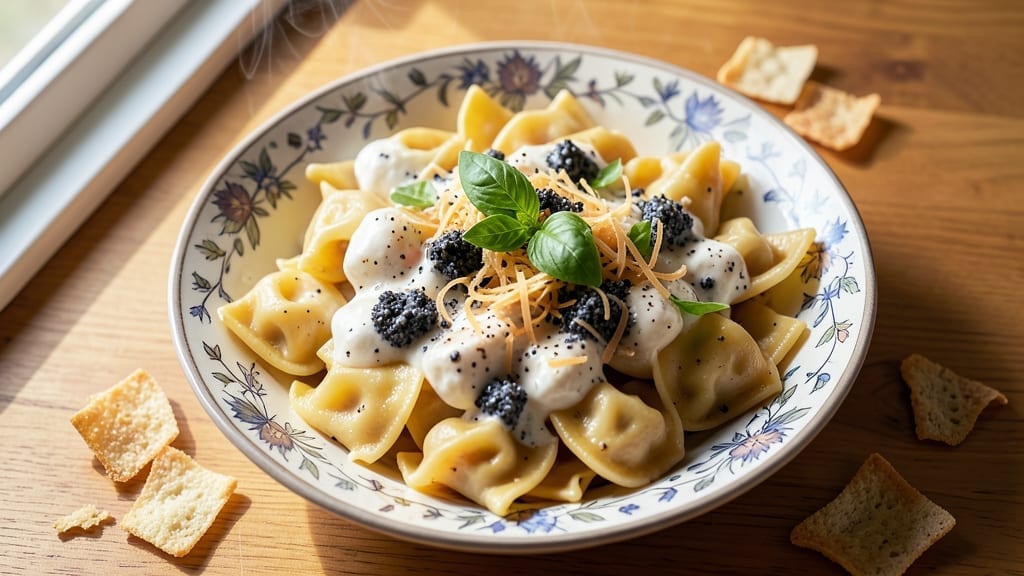
This 4 cheese tortellini pasta recipe delivers restaurant-quality richness with every bite—creamy ricotta and sharp parmesan take center stage in a filling that melts perfectly when boiled. The secret lies in balancing four cheeses (mozzarella, parmesan, ricotta, and gorgonzola) for a flavor profile that’s both bold and subtly complex.
I’ve perfected this technique over years of testing, ensuring the tortellini hold their shape while developing that signature creamy texture inside.
What sets this recipe apart is the foolproof dough method—whether you make it from scratch or use store-bought tortellini, the four-cheese filling transforms ordinary pasta into a luxurious main course. The ricotta and mozzarella create a velvety interior, while the parmesan and gorgonzola add depth and a slight tang.
Boiling time is critical: just 3 minutes in salted water ensures al dente perfection without breaking the filling.
The result is creamy, cheesy tortellini that pair beautifully with a simple butter-lemon sauce or classic marinara. The sauce clings to the tortellini, creating a harmonious balance of richness and acidity.
This dish is elegant enough for dinner parties but simple enough for weeknight meals—proof that restaurant-quality pasta can be made at home.
Serve with a side of garlic bread and a crisp green salad for a complete Italian feast. The leftovers reheat beautifully, making this recipe perfect for meal prep. Here’s how to make it step by step.
Ingredients for 4 cheese tortellini pasta
Four cheeses, one luxurious pasta—here’s what transforms ordinary dough into restaurant-quality tortellini.
| Ingredient | Amount | Notes |
|---|---|---|
| Ricotta Cheese 🧀 | 8 oz | Whole-milk for creaminess, room temperature |
| Mozzarella Cheese 🧀 | 8 oz | Fresh mozzarella, drained and chopped |
| Parmesan Cheese 🧀 | 1 cup | Freshly grated, fine grade preferred |
| Gorgonzola Cheese 🧀 | 4 oz | Crumbled, mild variety for balance |
| All-Purpose Flour 🌾 | 2 cups | High protein for elasticity, sifted |
| Large Eggs 🥚 | 2 whole | Room temperature, beaten |
| Unsalted Butter 🧈 | 4 tbsp | Cold, cubed for dough |
| Granulated Sugar 🍚 | 1 tbsp | Balances acidity in filling |
| Salt 🧂 | 1 ½ tsp | Diamond Crystal preferred |
| Fresh Basil Leaves 🌿 | ¼ cup | Chopped, for dough enrichment |
| Olive Oil 🫒 | 2 tbsp | Extra-virgin for dough |
| Store-Bought Tortellini Dough 🍝 | 1 package | 16 oz package, or homemade |
| Heavy Cream 🥛 | ½ cup | For butter-lemon sauce |
| Lemon Juice 🍋 | 1 tbsp | Freshly squeezed |
| Garlic Cloves 🧄 | 2 cloves | Minced, for sauce |
The cheese selection is non-negotiable for that signature creamy yet complex flavor. Whole-milk ricotta delivers unmatched richness, while fresh mozzarella prevents a dense filling. For the Parmesan, Parmigiano-Reggiano from the deli section grates finer than pre-shredded—essential for texture. Gorgonzola adds depth, but mild varieties from specialty shops like Whole Foods or Eataly avoid overpowering the dish. The ricotta should be at room temperature when mixed, or it’ll create lumps. I always buy Italian import brands for these cheeses—they’re worth the splurge.
No fresh mozzarella? Low-moisture shredded works in a pinch, but squeeze out excess moisture first. Substituting Parmesan? Pecorino Romano has a sharper bite that complements the ricotta beautifully. For the gorgonzola, blue cheese crumbles can mimic the tang if you’re avoiding dairy entirely (though this recipe assumes dairy). The dough requires high-protein flour—King Arthur is my go-to—but all-purpose works if you’re in a hurry. Fresh basil is ideal, but dried basil at one-third the amount works if you’re prepping ahead. The butter-lemon sauce can be made with half-and-half if heavy cream isn’t available, though it’ll be slightly lighter.
Cheese fillings keep best when refrigerated in an airtight container for 2 days before cooking. The dough can be prepped 1 day ahead and stored wrapped in plastic. Once assembled, the tortellini should be cooked immediately or frozen between parchment paper for up to 3 months. The sauce reheats beautifully—simmer gently to avoid curdling. For meal prep, I portion the cooked tortellini into containers with a splash of pasta water to keep them from drying out. The butter-lemon sauce can be stored separately and reheated with a splash of cream.
Why You’ll Love This Recipe
- No-Knead Magic: I swear by this dough—just flour and water, mixed in minutes. The ricotta and mozzarella blend so smoothly into the filling, you won’t believe how simple it is to shape those little pillows. (Yes, even if you’re not a pasta pro.)
- Creamy Crunch Harmony: That first bite? Warm, stretchy tortellini with gorgonzola’s tang cutting through the rich ricotta and parmesan. The contrast is chef’s kiss—like a hug for your taste buds, but make it Italian.
- Weeknight to Dinner Party: Same recipe, different vibes. Toss with a quick garlic butter sauce for a lazy Tuesday, or drizzle with truffle oil and fresh basil for company. Honestly, it’s my go-to when I need something that feels fancy but doesn’t take forever.
- Leftovers That Beg for More: This recipe actually tastes better the next day—yes, really. The cheeses meld even more, and I’ve reheated portions straight from the fridge for lunch without a second thought. (Budget win: one batch feeds four for two meals.)
Step-by-step instructions for 4 cheese tortellini pasta
Here’s how to craft restaurant-quality tortellini with a velvety ricotta filling and bold Gorgonzola depth.
Prepare the Cheese Filling
In a medium bowl, combine the 8 oz ricotta cheese and 8 oz mozzarella cheese using a fork to break up any lumps. Add the 1 cup freshly grated Parmesan cheese and 4 oz crumbled Gorgonzola cheese, mixing until uniformly distributed. The ricotta should be smooth but still hold its shape when pressed.
Add the 2 whole room-temperature eggs, 1 tbsp granulated sugar, and 1.5 tsp salt, mixing thoroughly. Fold in the 0.25 cup chopped fresh basil leaves until evenly incorporated. The filling should be thick enough to hold its shape when dropped from a spoon but still pliable. Cover and refrigerate for 15 minutes to firm slightly—this prevents leaks during cooking.
Assemble and Roll the Tortellini
Follow the package instructions for your store-bought tortellini dough, rolling it out to 1/8-inch thickness on a floured surface. Cut into 4-inch squares using a sharp knife or pizza cutter. Keep the remaining dough covered to prevent drying.
Place 1 tbsp of cheese filling in the center of each square. Fold the dough diagonally to form a triangle, then press the edges firmly to seal. Roll the sealed edge toward you to form a neat half-moon shape. Repeat with remaining filling and dough, working quickly to maintain freshness.
Cook the Fresh Tortellini
Bring a large pot of salted water to a rolling boil. Add the tortellini in batches, ensuring they have room to float freely. Cook for 3-4 minutes until they rise to the surface and the dough becomes translucent. Drain immediately and toss with 2 tbsp olive oil to prevent sticking.
For best results, cook no more than 12 tortellini at a time to maintain water temperature. The dough should be tender but still hold its shape—overcooking leads to mushy tortellini. Reserve 1 cup pasta water before draining for the sauce.
Create the Butter-Lemon Sauce
In a saucepan, melt the 4 tbsp unsalted butter over medium-low heat. Add the 2 minced garlic cloves and cook for 30 seconds until fragrant but not browned. Pour in the 0.5 cup heavy cream and 1 tbsp lemon juice, stirring constantly for 2 minutes until the sauce thickens slightly.
Remove from heat and whisk in 1/4 cup reserved pasta water at a time until the sauce reaches a light, creamy consistency that coats the back of a spoon. Season with additional salt if needed. The sauce should be rich but not heavy—it will emulsify beautifully with the cooked tortellini.
Combine and Serve
Toss the drained tortellini with the butter-lemon sauce, adding more pasta water as needed to create a silky coating. Garnish with additional freshly grated Parmesan cheese and a sprinkle of fresh basil leaves. Serve immediately while the tortellini are still warm and the sauce maintains its velvety texture.
The contrast between the creamy filling and sharp Gorgonzola should be balanced by the bright lemon butter sauce. Each bite should deliver a harmonious blend of textures—tender dough, rich cheese, and silky sauce—with no single component overpowering the others.
Pro Tips For Making 4 Cheese Tortellini Pasta
- Salt the Ricotta: Mix a pinch of salt directly into the ricotta before folding it into the dough—it balances the sweetness and prevents blandness. I used to skip this, and the tortellini always tasted flat until I realized the ricotta’s natural mildness needed a nudge.
- Keep Gorgonzola Cold: Chill the Gorgonzola for at least 30 minutes before mixing it into the filling—warm cheese melts too fast and makes the tortellini soggy. I learned this after a batch turned into a sticky mess mid-cooking.
- Roll Thin, Seal Tight: Use a pasta machine set to the thinnest setting (usually #6) and roll the dough twice through each thickness—this ensures even cooking and prevents cracks when boiling. The first time I rushed this, half my tortellini burst open.
- Boil in Batches: Cook tortellini in small batches (no more than 4 oz at a time) to avoid overcrowding—they’ll stick together and turn mushy. I used to dump them all in and ended up with a tangled, gluey disaster. A colander with holes bigger than the tortellini helps too.
Troubleshooting great 4 cheese tortellini pasta
Cheese Filling Leaks
If your tortellini filling leaks during cooking, it’s usually from overworking the dough or using too much filling. I’ve found that 1 tbsp of filling per tortellini is ideal—any more risks bursting. Also, ensure your cheese mixture is chilled for 15 minutes before assembling to firm it up.
If leaks persist, try pressing the sealed edges more firmly or using slightly less ricotta, which can be more liquid than other cheeses. 🧀
Dough Sticks Together
Dough clumping often happens when it’s too dry or not rolled evenly. Keep your work surface and rolling pin lightly floured with all-purpose flour, and roll the dough to a consistent 1/8-inch thickness.
If the dough still feels sticky, let it rest for 10 minutes before cutting squares. For extra insurance, dust the cut squares with a tiny bit of flour before adding filling. 🌾
Sauce Too Thin
A watery sauce usually means not enough emulsification. Always reserve 1 cup pasta water before draining the tortellini—this starch helps bind the sauce. If it’s still too thin, whisk in 1 tbsp reserved pasta water at a time until creamy.
For a richer texture, simmer the sauce longer over low heat to reduce slightly. Avoid adding too much cream at once, as it can separate. 🥛
Tortellini Overcooked
Overcooked tortellini turn mushy because they’ve absorbed too much water. The key is timing: cook for 3-4 minutes maximum in boiling water, starting the clock when the water returns to a full boil.
Use a slotted spoon to test—if the dough is translucent but still holds its shape, it’s done. For extra insurance, cook in batches of 12 tortellini or fewer to maintain water temperature. ⏰
Filling Too Dense
A dense filling often means too much cheese or not enough moisture. The ricotta should be whole-milk and room temperature, and the eggs should be beaten well to distribute evenly.
If the mixture feels too thick, add 1 tsp milk or water at a time until it’s pliable but still holds its shape. Avoid overmixing—the filling should be smooth but slightly lumpy. 🍋
Sauce Curdles
Sauce curdling happens when it’s exposed to sudden temperature changes or acidity. To prevent this, remove the butter-lemon sauce from heat just before it thickens, then whisk in pasta water gradually.
Avoid adding lemon juice too early—wait until the cream is heated through. For extra stability, stir in 1 tsp cold butter at the end to help emulsify. 💡
Nutrition facts
Frequently asked questions
Can I make this recipe with store-bought tortellini shells?
The recipe works perfectly with fresh or frozen store-bought tortellini—just follow the package instructions for cooking time. For best results, use 4-inch square shells and adjust filling to 1 tsp per shell instead of 1 tbsp. The key is sealing them tightly to prevent leaks during cooking.
What if I don’t have Gorgonzola? Can I substitute?
Yes! For a milder flavor, use blue cheese crumbles or feta cheese (reduce to 2 oz). For a sharper bite, try Pecorino Romano or Asiago cheese. Avoid strong cheeses like goat cheese—they’ll overpower the ricotta’s creaminess.
How do I prevent the tortellini from sticking together?
Lightly dust your work surface and rolling pin with all-purpose flour before rolling. Keep the dough covered with a damp towel while working, and toss the cut squares with a tiny bit of flour before adding filling. Cook in batches of 12 tortellini or fewer to avoid overcrowding in the pot.
Can I make this ahead of time?
Yes! Assemble the tortellini and freeze them on a floured tray for 1 hour, then transfer to a sealed bag for up to 3 months. Cook from frozen, adding 1-2 extra minutes to boiling time. The cheese filling stays fresh when properly sealed—just avoid thawing at room temperature.
What’s the best sauce pairing besides butter-lemon?
For a classic touch, try marinara sauce or brown butter and sage. For extra richness, add a splash of white wine to the butter-lemon sauce. Avoid heavy cream-based sauces—they’ll make the dish too dense. The bright acidity of lemon or tomato balances the cheesy filling perfectly.

- 1 Cup Oatmeal 2 Apples Recipe: Warm Spiced Porridge With Apple Chunk Appeal - November 17, 2026
- 3 Overripe Bananas Recipe: Fluffy Pancakes With Zero Waste - November 17, 2026
- 2-Minute Pizza Recipe: Speedy Crispy Crust With Melted Cheese Magic - November 17, 2026