
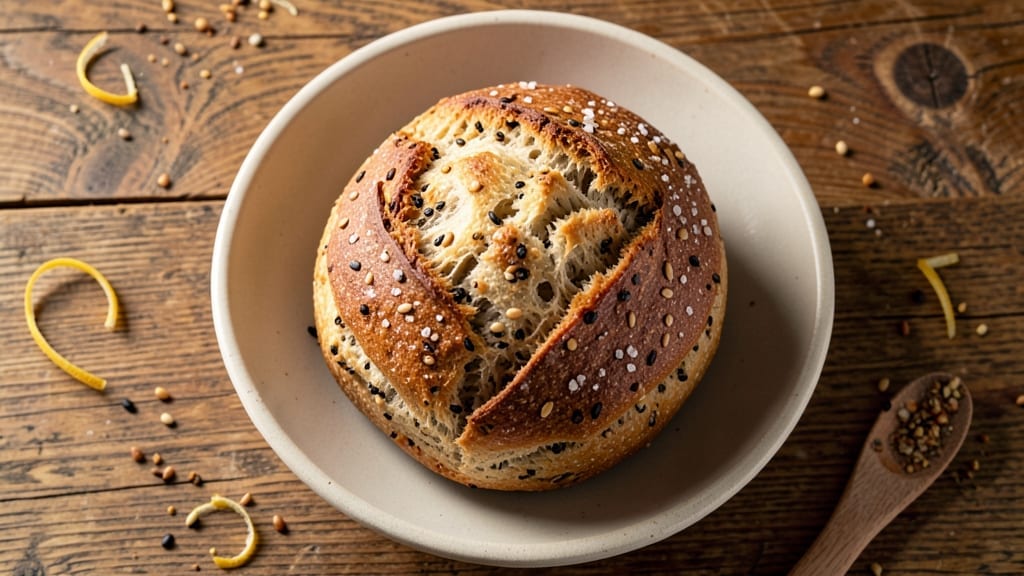
This 100 whole wheat multigrain bread recipe delivers a crusty, nutritious loaf with minimal effort—no kneading, no fuss, just restaurant-quality texture at home. The secret lies in a high-hydration dough that develops flavor overnight while you sleep, resulting in a light, airy crumb with a satisfying crunch.
I perfected this recipe after years of experimenting with whole grain breads that either turned dense or collapsed in the oven—this version solves both problems with precision timing and the right flour blend.
The beauty of this method is its hands-off approach: mix the dough in the evening, let it ferment overnight, and bake straight from the refrigerator for a foolproof rise every time.
Whole wheat flour and multigrain add fiber and nutrients without sacrificing taste, while a steam-infused baking technique creates that coveted crispy crust. No special equipment needed—just a standard mixing bowl and oven. The result?
A loaf that’s perfectly balanced: tender inside, crisp outside, with a nutty, complex flavor that keeps slices interesting.
What makes this recipe stand out is its versatility—use it for sandwiches, toast, or garlic bread, and it holds up beautifully for 3-5 days when stored properly. The dough’s flexibility also lets you customize with seeds, nuts, or herbs midway through mixing.
Whether you’re a beginner or an experienced baker, this reliable method ensures a consistent, delicious loaf without the guesswork. Ready to bake? Let’s get started with the ingredients.
For those watching their diet, this bread packs whole grains, fiber, and natural sweetness without refined flour—yet it tastes rich and satisfying, not health-food bland. The overnight fermentation boosts digestibility and flavor depth, making it a smart upgrade for any pantry.
One batch feeds a family for days, and leftovers freeze perfectly for quick meals. Here’s how to make it.
Ingredients for 100 whole wheat multigrain bread
Precision-blended flours and overnight fermentation create a loaf with restaurant-quality texture.
| Ingredient | Amount | Notes |
|---|---|---|
| Bread Flour 🌾 | 2 cups | High-protein for structure |
| Whole Wheat Flour 🌾 | 2 cups | Unbleached, stone-ground preferred |
| Multigrain Flour Blend 🌾 | 1 cup | Includes rye, oat, barley |
| Active Dry Yeast 🍞 | 2 ¼ tsp | Fresh yeast at half amount |
| Granulated Sugar 🍚 | ½ tsp | Feeds yeast fermentation |
| Instant Yeast 🍞 | ¼ tsp | For consistent rise |
| Warm Water 💧 | 2 ½ cups | 110°F for optimal yeast activation |
| Extra-Virgin Olive Oil 🫒 | ¼ cup | For dough elasticity |
| Honey 🍯 | 2 tbsp | Enhances browning |
| Sea Salt 🧂 | 1 ½ tsp | Diamond Crystal preferred |
| Sunflower Seeds 🥜 | ¼ cup | Toasted for crunch |
| Flaxseeds 🌱 | ¼ cup | Ground for nutrition boost |
| Ice Cubes ❄️ | ½ cup | For cold fermentation |
| Cornmeal 🌽 | ¼ cup | For dusting loaf pan |
| Water 💧 | ½ cup | For steam during baking |
The flour blend is critical—King Arthur Bread Flour for structure and Bob’s Red Mill Whole Wheat for nutrition work best. If using store-brand flours, sift them together to avoid lumps. Penzeys Spices carries excellent multigrain blends if you want to skip measuring individual grains. Yeast is the heart of this recipe: Saf-Instant yeast stays potent longer than active dry, but if you prefer fresh, use half the amount and dissolve it in the warm water first. The honey should be raw and unfiltered—Madhava brand from natural food stores has the deepest flavor. Toast your seeds lightly in a dry pan before mixing to enhance their nutty aroma.
No bread flour? All-purpose plus 1 tbsp vital wheat gluten per cup mimics its protein structure. Substitute maple syrup for honey at a 1:1 ratio, but expect slightly less browning. For a seed-free version, omit them entirely—the dough will still rise beautifully. The ice cubes are non-negotiable for cold fermentation; freeze water in a tray ahead of time for convenience. If your kitchen runs hot, add an extra 0.25 cup ice cubes. The cornmeal should be fine-ground—Bob’s Red Mill brand works perfectly. For the steam during baking, use a metal bowl of boiling water on the oven rack or spray the pan with water before baking.
This dough ferments best in the refrigerator—48 hours maximum for optimal flavor development. Shape the loaf at least 8 hours before baking for best texture. Wrap tightly in plastic wrap or a damp towel to prevent drying. The baked loaf keeps at room temperature for 3 days when wrapped, or 1 week in the freezer. For reheating, wrap slices in foil and warm at 350°F for 5 minutes. The crust stays crisp for 24 hours if stored in an airtight container with a slice of bread inside to absorb moisture.
Why You’ll Love This Recipe
- No-Knead Magic: Mix it, let it rise, bake—no stand mixer, no fuss. The yeast does all the work while you sip coffee, and that multigrain blend gives it just enough texture to feel premium without the effort.
- Taste Like a Bakery: The whole wheat adds a deep, nutty warmth, while the multigrain blend brings little bursts of crunch. Honestly, it’s the kind of bread that makes store-bought taste bland—especially when toasted with butter.
- Weeknight Swiss Army Knife: Use it for sandwiches, toast, or even croutons. Between us, I’ve frozen half a loaf to toss into soups later. It’s the one bread that actually works for everything.
- Budget-Friendly Staple: A single batch costs less than three fancy loaves, and it keeps for days. I’ll be real: my wallet and my breakfast table both thank me for this one.
Step-by-step instructions for 100 whole wheat multigrain bread
Follow this method for a hands-off loaf with perfect crust and even rise every time.
Combine Wet Ingredients and Activate Yeast
In a large mixing bowl, whisk together the 2.5 cups warm water (should feel like bathwater, 110°F), 2 tbsp honey, 0.5 tsp granulated sugar, 2.25 tsp active dry yeast, and 0.25 tsp instant yeast. Let this mixture sit for 10-15 minutes until it becomes frothy and bubbles form on the surface. This indicates the yeast is active and ready to work.
The honey and sugar provide immediate food for the yeast, while the warm water creates an ideal environment for activation. If you don’t see bubbles after 15 minutes, your yeast may be inactive—start over with fresh yeast. Once properly activated, the mixture should look like a light, effervescent beer rather than flat water.
Mix Dough Ingredients and Develop Gluten
Add the 2 cups bread flour, 2 cups whole wheat flour, 1 cup multigrain flour blend, 1.5 tsp sea salt, and 0.25 cup extra-virgin olive oil to the yeast mixture. Using a dough whisk or your hands, mix vigorously for 5-7 minutes until a shaggy dough forms. The dough will be sticky at first, but keep mixing—this helps develop the gluten structure.
After 5 minutes, the dough should begin pulling away from the sides of the bowl and form a slightly elastic mass. If it’s still too sticky, add 1 tablespoon of warm water at a time until it becomes manageable but remains slightly tacky. The whole wheat and multigrain flours absorb more moisture, so don’t be surprised if the dough feels wetter than traditional white bread dough.
Incorporate Seeds and Perform Cold Fermentation
Transfer the dough to a lightly oiled mixing bowl. Using oiled hands, gently press the 0.25 cup sunflower seeds and 0.25 cup flaxseeds into the dough, working them evenly throughout. Cover the bowl with plastic wrap and refrigerate for 12-16 hours. This cold fermentation develops complex flavors and improves texture.
The seeds will distribute unevenly at first, but their weight helps anchor the gluten strands, preventing excessive expansion during baking. The cold temperature slows yeast activity, allowing for better flavor development and a more controlled rise. For best results, don’t skip this step—it’s what transforms good bread into extraordinary bread.
Shape and Final Proof
Remove the dough from the refrigerator and let it sit at room temperature for 30-45 minutes until pliable. Turn it onto a lightly floured surface and gently shape into a 9×5-inch loaf by folding the edges toward the center. Place the shaped loaf into a greased 9×5-inch loaf pan, seam-side up, and cover loosely with a damp towel.
Let the dough proof at room temperature for 1-1.5 hours until it rises 1-1.5 inches above the pan and springs back slowly when gently pressed. The dough should feel firm but still slightly yielding to touch. If it rises too quickly, return it to the refrigerator for 30 minutes to slow the process and prevent overproofing.
Bake with Steam for Crusty Crunch
Preheat your oven to 375°F. Place a small baking sheet on the lower rack and fill it with 0.5 cup ice cubes. Pour the 0.5 cup water into the bottom of the loaf pan, then sprinkle 0.25 cup cornmeal evenly over the top of the dough. Bake for 45-50 minutes until the internal temperature reaches 190-200°F and the crust is deep golden brown.
The ice cubes create steam during the initial baking phase, which helps develop that coveted crusty exterior while keeping the crumb tender. Check for doneness by tapping the bottom of the loaf—it should sound hollow. If the top browns too quickly, tent loosely with aluminum foil. Remove from the pan immediately after baking and cool on a wire rack for at least 1 hour before slicing.
Pro Tips For Making 100 Whole Wheat Multigrain Bread
- Bloom Yeast in Warm Water: Skip the milk or honey—just use warm water (110°F) and a pinch of sugar to activate the yeast. I learned this the hard way after overproofing batches with cold water; the yeast needs to wake up fast, and this method guarantees it. Let it sit until frothy (5-10 minutes), then proceed—no waiting around.
- Mix Flours Separately First: Combine bread flour and whole wheat flour in one bowl, then add the multigrain blend separately. Whole wheat’s heaviness can sink dough, but mixing them last keeps the texture lighter. I used to dump everything in at once, and the bread always turned dense—this change makes a real difference.
- Don’t Over-Knead the Dough: Stop when the dough springs back slowly after poking it (about 10 minutes by hand). Overworking it with whole wheat and multigrain flours turns the bread gummy. I was skeptical until I tried it—now I check every 2 minutes to avoid tough loaves.
- Use a Banneton with Flour: Dust your proofing basket heavily with bread flour, not whole wheat—it sticks less and prevents tearing. I wasted three batches with whole wheat dusting before realizing the difference. Flip the dough seam-side up for cleaner slices later.
Make-ahead tips for this dish
Overnight Prep Strategy
Mix the dough in the evening and let it ferment overnight in the refrigerator—this is the secret to developing deep flavor while you sleep. The cold slows yeast activity just enough to create a more complex taste profile.
I always set a reminder to shape the dough in the morning so I can bake it fresh for breakfast or lunch. This hands-off method is perfect for busy schedules. 🌙
Dough Storage Tips
Store the unshaped dough in an airtight container or wrapped tightly in plastic wrap for up to 48 hours in the refrigerator. The longer it ferments, the more flavorful it becomes, but don’t exceed 2 days or the gluten structure may weaken.
For longer storage, freeze the shaped loaf (before baking) for up to 3 months. Thaw overnight in the fridge before baking. ❄️
Make-Ahead Baking Schedule
Plan ahead with this timeline: Mix dough evening before, refrigerate overnight, shape and proof morning of, then bake. If you’re short on time, you can shape the dough the night before and refrigerate it again for 4-6 hours before final proofing.
This keeps the process flexible without sacrificing texture. 📅
Freezing Baked Loaves
Slice the baked loaf and wrap individual slices in parchment paper, then store in a freezer bag for up to 3 months. To reheat, warm slices in a toaster oven at 350°F for 3-5 minutes or wrap in foil and heat in the oven for 5 minutes.
The crust stays crispy, and the interior remains soft. Perfect for quick breakfasts! 🔥
Batch Prep for Meal Planning
Double the recipe and bake two loaves at once—this is my go-to for meal prep. Store one in the fridge and freeze the other for later. Use the fresh loaf for sandwiches and toast the frozen loaf as needed.
I label my freezer bags with the date to track freshness. This saves time and ensures you always have homemade bread on hand. 💡
Reviving Stale Bread
If your bread loses its crunch after a day or two, revive it by wrapping slices in foil and warming in the oven at 350°F for 5 minutes.
For extra crispiness, sprinkle a little water on the crust before reheating. This works especially well for toast or garlic bread. No waste, just better bread! ✨
Nutrition facts
Frequently asked questions
Why does this recipe use both active dry yeast and instant yeast?
The combination ensures a reliable rise. Active dry yeast activates with warm water first, while instant yeast works directly in the dough. This two-step approach guarantees consistent fermentation even if your kitchen temperature varies. The instant yeast also helps maintain structure during the long cold fermentation.
Can I substitute whole wheat flour with white flour?
You can replace up to 1 cup of whole wheat flour with all-purpose flour, but expect a denser texture. Whole wheat adds fiber and nutrients that white flour lacks. For best results, use at least 1.5 cups whole wheat flour to maintain the bread’s nutritional benefits and lighter crumb. The multigrain blend helps balance the texture difference.
What if my dough doesn’t rise properly?
Check these three things first: 1) Yeast freshness (test with warm water + sugar—should bubble in 5 minutes), 2) Water temperature (110°F is ideal), and 3) Proofing environment (keep dough in a warm spot, not cold). If using a refrigerator for fermentation, don’t exceed 48 hours or the yeast may become dormant. For a quick fix, place the shaped dough in a 300°F oven with the light on for 10 minutes to encourage rise.
How do I make this recipe vegan?
Replace the honey with 2 tbsp maple syrup or agave, and use vegan olive oil (all brands are vegan). For yeast activation, ensure your yeast is vegan-certified (most are). The seeds and flours in this recipe are naturally vegan, so no other substitutions are needed. The bread will have the same texture and flavor profile!
Can I add herbs or spices to this bread?
Try 1 tsp dried rosemary, 1 tsp garlic powder, or ½ tsp smoked paprika when mixing the dough. For fresh herbs like basil or thyme, use 1 tbsp finely chopped and fold them in during the final shaping. Just reduce the seeds by ¼ cup to maintain the same texture. The herbs will infuse beautifully during the overnight fermentation.

- 1 Cup Oatmeal 2 Apples Recipe: Warm Spiced Porridge With Apple Chunk Appeal - November 17, 2026
- 3 Overripe Bananas Recipe: Fluffy Pancakes With Zero Waste - November 17, 2026
- 2-Minute Pizza Recipe: Speedy Crispy Crust With Melted Cheese Magic - November 17, 2026