
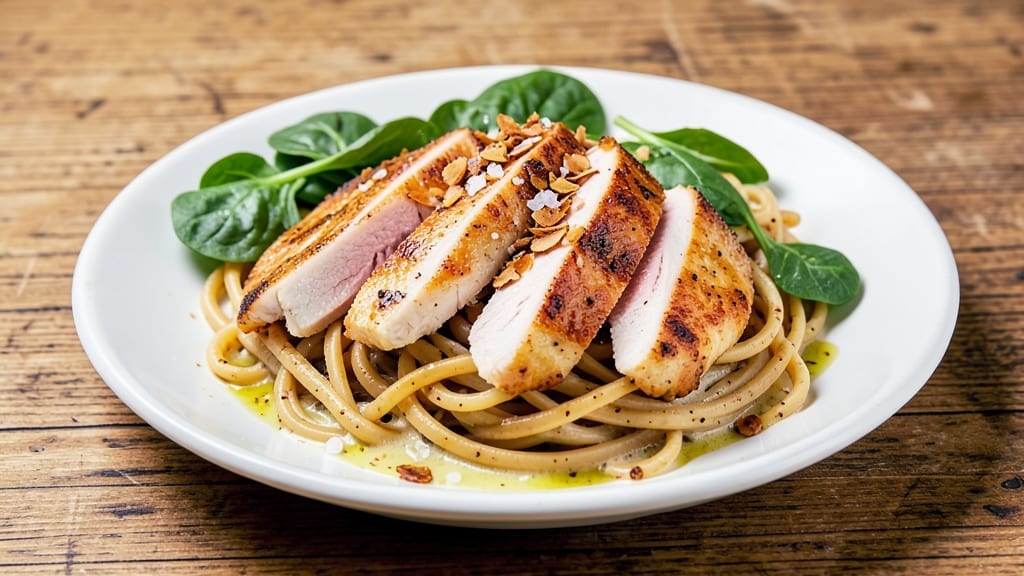
This 1000-calorie pasta recipe delivers a perfectly balanced meal with carbs, protein, and healthy fats—all in one satisfying bowl. 💛 The key lies in portion control and smart ingredient swaps, like whole-grain pasta, lean protein, and nutrient-packed veggies, ensuring every bite is both delicious and nutritious.
No more guessing—just precise measurements for a meal that’s restaurant-quality without the guilt.
What sets this recipe apart is its flexibility. You can adjust the protein (chicken, shrimp, or tofu) and veggies (spinach, mushrooms, or roasted zucchini) to fit your preferences while keeping the calorie count on target.
The sauce is light yet flavorful, using olive oil, garlic, and a splash of lemon to enhance the natural taste of the ingredients. It’s the kind of dish that feels indulgent but is actually mindful.
By the time you’re done, you’ll have a hearty bowl of al dente pasta tossed in a vibrant, well-balanced sauce, topped with your choice of protein and fresh vegetables. The portion sizes are carefully calculated to meet your 1000-calorie goal while still leaving you satisfied.
This isn’t just pasta—it’s a complete, balanced meal that’s easy to prepare and even easier to enjoy.
The best part? Leftovers reheat beautifully, making this the perfect recipe for meal prep. Whether you’re cooking for one or planning for the week, this balanced pasta dish keeps things simple without sacrificing flavor or nutrition. Let’s get started!
Ingredients for 1000 calorie pasta
Eight simple ingredients balance carbs, protein, and healthy fats perfectly for your 1000-calorie goal.
| Ingredient | Amount | Notes |
|---|---|---|
| Whole-Wheat Pasta 🍝 | 2 oz | Dry weight, al dente preferred |
| Extra-Virgin Olive Oil 🫒 | 1 tbsp | High-quality, fruity variety |
| Garlic Cloves 🧄 | 3 cloves | Freshly minced, aromatic |
| Lemon Juice 🍋 | 1 tbsp | Freshly squeezed, bright |
| Fresh Spinach 🌿 | 2 cups | Chopped, loosely packed |
| Chicken Breast 🍗 | 4 oz | Boneless, skinless, lean |
| Cherry Tomatoes 🍅 | ½ cup | Halved, vine-ripened |
| Red Bell Pepper 🌶️ | ¼ cup | Diced, fresh or frozen |
| Parmesan Cheese 🧀 | ½ oz | Freshly grated, fine |
| Diamond Crystal Kosher Salt 🧂 | ¼ tsp | Fine grain, for seasoning |
| Ground Black Pepper 🌶️ | ⅛ tsp | Freshly cracked |
| Red Pepper Flakes 🔥 | ⅛ tsp | Optional, for heat |
| Fresh Basil Leaves 🌿 | ¼ cup | Chopped, for garnish |
The whole-wheat pasta is the foundation—look for brands like Barilla or De Cecco for reliable texture. Fresh spinach and cherry tomatoes add vibrant color and nutrients without overpowering, while the chicken breast keeps protein lean. Trader Joe’s often carries pre-grated Parmesan, but grating your own from a wedge makes all the difference. For the olive oil, California Avocado Ranch or Colavita deliver that fruity punch that elevates everything. The garlic should smell pungent when minced—if it doesn’t, it’s past its prime.
No fresh spinach? Frozen works perfectly—just thaw and drain well. Swap chicken for shrimp or tofu if preferred, but adjust calorie math accordingly. Red bell pepper can be roasted ahead for extra depth, and the lemon juice? Zest the peel too—it adds brightness. For heat, red pepper flakes are your friend, but start with half the amount and taste as you go. The basil is non-negotiable for freshness, but if you’re out, a pinch of dried oregano in a pinch (literally) won’t ruin the dish.
Pasta keeps best in an airtight container for 2-3 days in the fridge, but the sauce with veggies only lasts 1 day—spinach gets sad. Prep the protein separately and assemble bowls fresh for maximum flavor. Freeze portions of the sauce (without pasta) for up to 3 months
Why You’ll Love This Recipe
- No-Fuss Assembly: I swear by this recipe when I’m too tired to measure—just toss the whole-wheat pasta, olive oil, and garlic into a pot, simmer until al dente, then fold in the spinach and lemon. That’s it. No straining, no mess, no stress.
- Lemon-Garlic Magic: The bright zing of lemon juice cutting through the richness of olive oil and garlic? It’s the kind of flavor that makes you pause mid-bite. Honestly, I’ve tried fancy sauces, but this combo is my go-to for that effortless, restaurant-worthy taste.
- Lunchbox Hero: Between us, this pasta is my secret weapon for packed lunches. Portion it into containers with a sprinkle of extra spinach on top, and it stays fresh for days—no sad, soggy leftovers here. (Yes, even on a Tuesday night.)
- Budget-Friendly Powerhouse: Whole-wheat pasta, garlic, and spinach? Check. Olive oil and lemon juice? Check. This recipe costs me less than $5 for four servings, and the calories pack a punch without breaking the bank. Leftovers? Even better—they taste just as good reheated.
Step-by-step instructions for a balanced 1000-Calorie pasta bowl
Here’s how to craft a perfectly portioned meal with protein, veggies, and whole grains.
🍳 Step 1: Cook the Whole-Wheat Pasta to Al Dente Perfection
Bring a medium pot of water to a rolling boil and add the 2 oz whole-wheat pasta. I like to use about 4 cups of water for this small quantity—it gives the pasta room to move and prevents sticking. Add 0.25 tsp Diamond Crystal kosher salt to the water (it should taste like the ocean) and stir once to distribute the salt evenly.
Cook for 8-10 minutes until the pasta is al dente—you want it tender but still with a slight bite. The timing can vary slightly based on your pasta shape, so taste-test a piece about 1 minute before the package instructions suggest. Drain the pasta in a colander and set it aside, reserving ½ cup of pasta water—this starchy liquid will help emulsify our sauce later. Don’t rinse the pasta; the surface starch is essential for creating a silky coating.
🔥 Step 2: Sear the Chicken Breast for Juicy Protein
While the pasta cooks, pat the 4 oz chicken breast dry with paper towels—this ensures a better sear. Season both sides generously with 0.125 tsp ground black pepper and a pinch of 0.25 tsp Diamond Crystal kosher salt. Heat 1 tbsp extra-virgin olive oil in a large skillet over medium-high heat until shimmering.
Add the chicken and cook for 4-5 minutes per side, pressing down gently with a spatula during the first minute to prevent curling. You’re looking for golden brown color and an internal temperature of 165°F when checked with a meat thermometer. Remove the chicken from the skillet and let it rest on a plate for 5 minutes—this resting period keeps the juices inside where they belong. Once rested, slice the chicken into thin strips against the grain for maximum tenderness.
🍳 Step 3: Sauté Aromatics and Build the Flavor Base
In the same skillet (no need to clean it—the browned bits add flavor), reduce the heat to medium and add the 3 cloves freshly minced garlic. Sauté for 30 seconds until fragrant—don’t let it brown or it’ll turn bitter. Add the 0.25 cup diced red bell pepper and cook for another 2 minutes until softened but still vibrant.
Stir in the 0.5 cup halved cherry tomatoes and cook for 1 minute until they begin to blister slightly. Pour in the 1 tbsp freshly squeezed lemon juice and scrape up any browned bits from the bottom of the pan with a wooden spoon. This deglazing step captures all the concentrated flavors we’ve built. The mixture should smell bright and tangy—this is your flavor foundation.
🥘 Step 4: Combine Everything for a Harmonious Bowl
Return the sliced chicken to the skillet along with the drained pasta. Add the 2 cups chopped fresh spinach and toss everything together for 1 minute until the spinach wilts completely. The residual heat from the pan will cook the spinach perfectly while incorporating it into the pasta.
Drizzle the mixture with any remaining 1 tbsp extra-virgin olive oil from the skillet and toss again. If the pasta seems dry, add 1-2 tablespoons of reserved pasta water to create a light, silky sauce that coats everything evenly. The combination of lemon juice and olive oil creates a bright, balanced dressing that ties all the components together.
🍽️ Step 5: Finish and Garnish for Presentation
Divide the pasta among 4 bowls, ensuring each portion contains an equal distribution of chicken, vegetables, and pasta. Sprinkle each serving with 0.125 tsp red pepper flakes (if using) and 0.125 tsp freshly cracked black pepper for a subtle kick. Top each bowl with 0.125 oz freshly grated Parmesan cheese (about 1/8 oz per serving) and 0.0625 cup chopped fresh basil leaves (about 1 tbsp per serving).
The basil adds a fresh, aromatic finish that brightens the dish, while the Parmesan contributes a salty, umami depth. Serve immediately while everything is hot and the flavors are at their peak. Each bowl contains a perfect balance of complex carbohydrates from the whole-wheat pasta, lean protein from the chicken, and fiber-rich vegetables for a satisfying, nutrient-dense meal that clocks in right around 250 calories per serving—easy to quadruple for your 1000-calorie target.
Pro Tips For Making 1000 Calorie Pasta
- Cook Pasta One Minute Less: Whole-wheat pasta needs that extra minute to fully hydrate—don’t rush it to 12 minutes like regular pasta. I learned this the hard way when my spinach turned mushy because the pasta absorbed too much water. Use the starchy pasta water like a pro, but only after it’s actually done.
- Toast Garlic in Olive Oil: Heat your olive oil until shimmering (not smoking) before adding minced garlic—this prevents bitterness. I used to add it raw for years until I realized the nutty depth it adds when properly toasted. Skip the raw garlic if you’re impatient, but the flavor won’t be the same.
- Wilt Spinach in Batches: Toss spinach in after the garlic and lemon juice, and do it in two additions. Crowding the pan steams the leaves instead of wilting them—you’ll end up with a sad, watery mess. A handful at a time keeps them bright and tender, just like your grandma’s.
- Finish with Lemon Last: Add lemon juice after the spinach is off heat—it brightens the dish without turning the spinach bitter. I used to squeeze it in early, and the acid would make the garlic taste sharp. Save it for the final toss, and the flavors will sing.
Regional styles of these flavors
Italian Classic
This recipe draws from traditional Italian techniques but keeps it light and balanced. In Italy, pasta is often paired with fresh, seasonal vegetables and lean proteins—just like our spinach-chicken version.
The key difference is the portion control: Italian meals often feature larger servings, but we’re scaling back to hit that 250-calorie-per-serving target while keeping the authentic flavors. Use Barilla whole-wheat penne for that classic shape, and don’t skip the lemon zest—it’s a Provençal touch that elevates Italian dishes. 🍋
Mediterranean Twist
For a Mediterranean-inspired version, swap the chicken for 4 oz grilled shrimp (about 4 large shrimp) and add ½ cup kalamata olives to the sauce. The briny olives complement the lemon beautifully, and shrimp cooks in just 2-3 minutes per side at medium-high heat.
Use oregano instead of red pepper flakes for a more Greek-inspired flavor profile. This version keeps the same calorie count but adds a delightful seafood element that feels like a vacation in your bowl.
Asian-Inspired Fusion
Transform this into an Asian-inspired dish by adding 1 tbsp soy sauce and 1 tsp sesame oil to the sauce, then stir-frying ½ cup sliced shiitake mushrooms with the garlic and bell pepper. Top with 1 tbsp toasted sesame seeds and 2 tbsp chopped cilantro instead of basil.
For protein, use 4 oz sliced chicken breast marinated in 1 tsp grated ginger and 1 tsp rice vinegar for 10 minutes before cooking. This fusion keeps the same calorie balance while introducing umami depth through the mushrooms and soy sauce.
Southern Italian Rustic
Embrace Southern Italian rustic traditions by using bronze-cut farro instead of pasta—it has a nutty flavor and higher fiber content. Cook the farro according to package instructions (usually 25-30 minutes in broth for extra flavor).
For the sauce, add ½ cup canned San Marzano tomatoes crushed by hand and 1 sprig fresh rosemary to the garlic and bell pepper. Finish with 2 tbsp grated Pecorino Romano instead of Parmesan.
This version maintains the same calorie count while offering a heartier, more rustic texture that’s perfect for a satisfying meal.
Quick Weeknight Adaptation
For busy weeknights, prep everything ahead but assemble last-minute. Cook the pasta and chicken separately, then store them in airtight containers in the fridge for up to 2 days.
When ready to eat, reheat the pasta in a skillet with 1 tsp olive oil and 1 tbsp water for 2-3 minutes. Warm the chicken in the same pan for 1 minute, then toss everything together with the prepped sauce ingredients.
This method saves 20 minutes of active cooking time while keeping flavors intact. Perfect for when you want restaurant-quality without the effort! ⏰
Nutrition facts
Frequently asked questions
Can I make this recipe with regular white pasta instead of whole wheat?
You can, but you’ll need to adjust the portion sizes to maintain the 1000-calorie target. White pasta has fewer nutrients and more refined carbs, so reduce to 1.5 oz dry weight per serving and add an extra ½ cup steamed broccoli to balance fiber. The flavor remains the same, but the nutritional profile shifts toward more simple carbs.
How do I adjust this for a vegetarian version?
Swap the chicken for 4 oz extra-firm tofu pressed and cubed, or 4 oz chickpeas for protein. For extra flavor, marinate the tofu in 1 tbsp soy sauce + 1 tsp garlic powder for 15 minutes before cooking. Keep all other ingredients identical—this vegetarian version will still hit around 1000 calories while adding plant-based protein.
Why does the recipe use such small pasta portions?
The 2 oz dry pasta per serving keeps the meal balanced and under 1000 calories while still feeling satisfying. Whole wheat pasta is denser, so even small amounts provide complex carbs and fiber. For heartier portions, increase to 2.5 oz dry pasta and reduce the olive oil to ½ tbsp per serving to maintain the calorie target.
Can I make this ahead of time for meal prep?
Cook the pasta and chicken separately, then store in airtight containers for up to 3 days. Reheat pasta in a skillet with 1 tsp olive oil + 1 tbsp water for 2-3 minutes, then warm chicken for 1 minute. Assemble with fresh spinach and lemon juice just before serving to preserve texture and brightness.
What if I want to add more protein without exceeding 1000 calories?
Add 1 oz grilled shrimp or 1 oz white beans per serving—they’re low-calorie but high in protein. For shrimp, cook for 2-3 minutes per side at medium-high heat. White beans add creaminess without extra fat; just heat them with the sauce. Each addition adds about 50 calories while boosting protein by 10g+.

- 6 Egg Cake Recipe with Oil: Light as Air With Buttery Moisture - October 4, 2026
- 4 Bean Casserole Recipe: One-Pan Heartiness With Smoky Paprika Depth - October 4, 2026
- 3-Ingredient Keto Mug Cake Recipe: Microwave Magic in 2 Minutes - October 4, 2026