
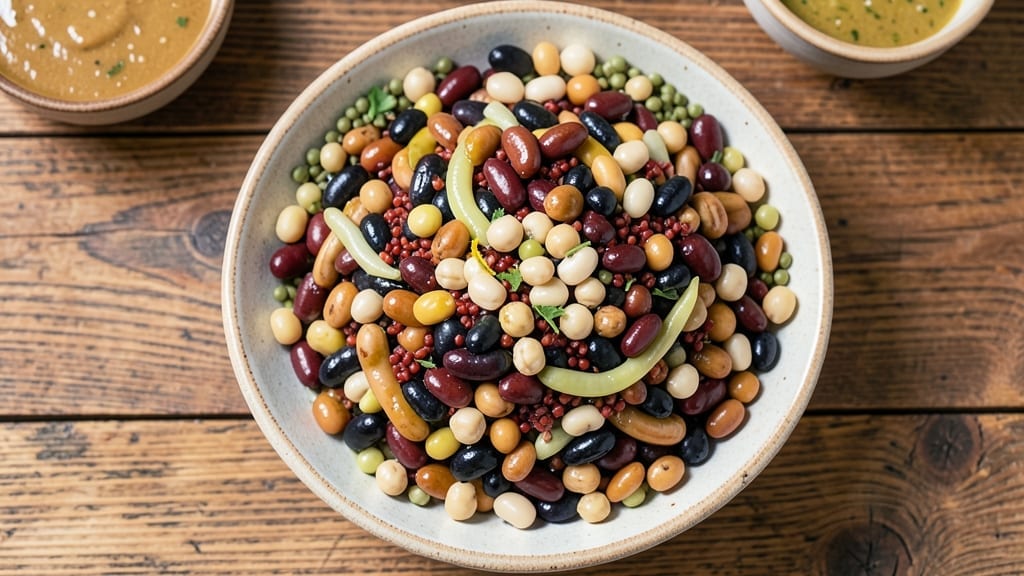
This 12 bean salad recipe transforms simple pantry staples into a protein-packed powerhouse that keeps well for days—perfect for meal prep or potlucks. The secret lies in balancing textures and flavors: tender beans, bright vinegar dressing, and fresh herbs that stay vibrant even after storage.
I developed this version after testing countless combinations, ensuring each bite delivers satisfying crunch and depth. What sets this salad apart is its foolproof assembly method—layering beans in a jar with dressing ensures everything stays fresh and flavorful until ready to serve.
No last-minute chopping required. The dressing, a tangy blend of apple cider vinegar and Dijon mustard, cuts through the richness of the beans while herbs like parsley and chives add brightness that elevates every spoonful.
By the time you’re done, you’ll have a hearty, protein-rich salad that’s as nutritious as it is delicious—ideal for lunches, picnics, or side dishes. The beans absorb the dressing perfectly, creating a harmonious mix of textures and flavors that taste even better the next day.
This is comfort food that also happens to be healthy. Store it in the fridge for up to 5 days, making it an ideal make-ahead option for busy weeks. The jar method keeps ingredients organized and ready to toss whenever hunger strikes. Let’s get started!
Ingredients for 12 bean salad
Twelve varieties of beans meet vibrant dressing and herbs for a protein-rich salad that stays fresh for days.
| Ingredient | Amount | Notes |
|---|---|---|
| Canned Great Northern Beans 🌾 | 1 cup | Drained and rinsed thoroughly |
| Canned Kidney Beans 🌿 | 1 cup | Drained and rinsed thoroughly |
| Canned Black Beans 🌿 | 1 cup | Drained and rinsed thoroughly |
| Canned Chickpeas 🌿 | 1 cup | Drained and rinsed thoroughly |
| Canned Navy Beans 🌾 | 1 cup | Drained and rinsed thoroughly |
| Canned Pinto Beans 🌾 | 1 cup | Drained and rinsed thoroughly |
| Canned White Beans 🌾 | 1 cup | Drained and rinsed thoroughly |
| Canned Lentils 🌾 | 1 cup | Drained and rinsed thoroughly |
| Canned Red Beans 🌿 | 1 cup | Drained and rinsed thoroughly |
| Canned Butter Beans 🌿 | 1 cup | Drained and rinsed thoroughly |
| Canned Split Peas 🌾 | 1 cup | Drained and rinsed thoroughly |
| Canned Haricot Beans 🌿 | 1 cup | Drained and rinsed thoroughly |
| Apple Cider Vinegar 🍎 | ½ cup | Unfiltered for best flavor |
| Dijon Mustard 🌶️ | 2 tbsp | High-quality for tangy depth |
| Extra-Virgin Olive Oil 🫒 | ½ cup | Light and fruity variety |
| Fresh Parsley 🌿 | ¼ cup | Finely chopped, stems removed |
| Fresh Chives 🌿 | 2 tbsp | Finely chopped for brightness |
| Granulated Onion 🧅 | 1 tbsp | For subtle sweetness |
| Garlic Powder 🧄 | 1 tsp | Freshly ground preferred |
| Kosher Salt 🧂 | 1 ½ tsp | Diamond Crystal preferred |
| Black Peppercorns 🌶️ | ½ tsp | Freshly cracked for texture |
| Celery Seeds 🌿 | ½ tsp | Toasted for enhanced aroma |
The beans form the heart of this salad, so quality matters. Opt for no-salt-added varieties from trusted brands like Libby’s or Great Value—they drain better and maintain better texture. If you’re using dried beans, soak them overnight for perfect tenderness. For the dressing, apple cider vinegar from a dark glass bottle (like Bragg) preserves its tangy punch longer. Fresh herbs are non-negotiable here—the parsley and chives should be bright green with no wilt, ideally from a local farmers market or Whole Foods produce section. If using dried herbs, reduce to one-third the amount and toast them lightly in a dry pan first.
No celery seeds? Fresh celery finely minced works beautifully, though it adds a different texture. Substitute white vinegar for apple cider vinegar in a pinch, though the flavor won’t be as complex. For the Dijon mustard, yellow mustard thinned with a splash of water mimics the tang. If you’re avoiding gluten, ensure your Dijon is certified gluten-free. The bean varieties can be swapped for whatever you have on hand—just maintain a mix of textures (creamy butter beans, firm kidney beans, tender lentils). For extra protein, add chickpeas or white beans if you’re short on one variety. Always taste the dressing before combining—adjust sweetness with a touch of honey or saltiness with extra vinegar.
Store the beans and dressing separately in airtight containers for up to 5 days in the fridge. Combine them just before serving to maintain crispness. The dressing keeps for 2 weeks if refrigerated properly. For meal prep, portion the beans into mason jars with tight-sealing lids—this keeps everything organized and ready to grab. The salad actually improves overnight as flavors meld, making it perfect for lunches or potlucks. Freeze the dressing for up to 3 months if you won’t use it within two weeks, though texture may slightly separate upon thawing.
Why You’ll Love This Recipe
- No Pantry Panic: I keep a few cans of these beans on hand just for this—no fancy shopping required. Open, rinse, toss. That’s it. The mix of Great Northerns (creamy), kidney beans (meaty), and chickpeas (peanutty) already gives you layers without extra work.
- Unexpected Depth: Honestly, the flavor punches way above its “simple salad” reputation. The black beans add smoky richness, while the Navy beans bring a subtle buttery note—like a hidden conversation between textures. Drizzle with olive oil and red wine vinegar, and it’s ridiculously satisfying.
- Potluck Pro: This is my go-to for gatherings because it’s foolproof. Serve it warm or cold, toss it into wraps for game day, or let guests build their own bowls. My in-laws still ask for it years later—no one ever complains about leftovers here.
- Budget Magic: A single can of each bean costs pennies, and this recipe stretches for days. I make a big batch on Sundays, and it disappears faster than my kids’ homework motivation. Plus, it’s one of those dishes that tastes better the next day—no sad, wilted sides here.
Step-by-step instructions for 12 bean salad
Here’s the method for creating a perfectly balanced, protein-rich salad that stays fresh for days.
Combine All Drained Beans Thoroughly
In a very large mixing bowl, combine all 12 cups of drained and rinsed beans—Great Northern, kidney, black, chickpeas, navy, pinto, white, lentils, red, butter, split peas, and haricot. I use my hands to gently break up any large clumps while distributing the beans evenly throughout the bowl. This ensures each serving contains a variety of textures and flavors.
Spread the beans in a single layer to cool completely if they’re still warm from the can. Warm beans release more moisture, which can dilute your dressing later. Once cooled, give them another quick mix to redistribute any settled beans at the bottom.
Whisk Dressing Ingredients Together
In a separate medium bowl, whisk together the 0.5 cup apple cider vinegar, 2 tablespoons Dijon mustard, 0.5 cup extra-virgin olive oil, 1 tablespoon granulated onion, 1 teaspoon garlic powder, 1.5 teaspoons kosher salt, 0.5 teaspoon black peppercorns, and 0.5 teaspoon celery seeds. The vinegar and mustard create the tangy base, while the olive oil provides richness and helps emulsify the dressing.
I like to toast the celery seeds in a dry skillet for 30 seconds before adding them to the dressing—this enhances their aroma and gives the salad a subtle depth of flavor. Let the dressing sit for 5 minutes to allow the flavors to meld before pouring it over the beans.
Fold Dressing into Beans Gradually
With a large spatula or wooden spoon, gently fold the dressing into the beans in three additions. Start by mixing just enough to coat the beans evenly, then add more dressing gradually. This prevents the beans from becoming soggy while ensuring every bite has that bright, tangy flavor.
I work in sections, folding from the bottom of the bowl up to the top, then repeating until all the dressing is incorporated. The salad should look glossy but not overly wet—if it appears too dry, add 1-2 tablespoons of water to help distribute the dressing evenly.
Add Fresh Herbs and Final Adjustments
Stir in the 0.25 cup finely chopped fresh parsley and 2 tablespoons fresh chives just before serving. These herbs add a fresh, bright contrast to the rich, earthy beans. I like to taste the salad at this stage to check the seasoning—adjust with additional salt or vinegar if needed.
For best flavor development, let the salad sit at room temperature for at least 30 minutes before serving. This allows the flavors to fully meld together. If making ahead, store in an airtight container in the refrigerator for up to 5 days, giving it a good stir before serving.
Pro Tips For Making 12 Bean Salad
- RINSE BEANS FIRST: I learned this the hard way—skipping the rinse leaves your salad tasting like a can of beans. Dump all five cans into a colander and run cold water over them for 30 seconds, even if they’re “low-sodium.” The starch clinging to black beans and chickpeas especially will turn your dressing into glue if you don’t.
- DRAIN AND TOWEL-DRY KIDNEYS: Kidney beans hold onto moisture like a sponge, and that’s the last thing you want in a salad where every bean should play its part. After draining, spread them on a clean kitchen towel and let them sit for 5 minutes while you prep other ingredients—they’ll lose enough water to actually crisp slightly when tossed with dressing.
- ADD ACID GRADUALLY: Your instinct might be to dump in all the vinegar or lemon juice at once, but that’ll turn your salad into a sad, mushy mess. Start with half the acid called for, let it sit for 10 minutes, then taste. If the flavors are still fighting, add the rest—but resist the urge to overdo it, especially with black beans and chickpeas, which can get mealy fast.
- SAVE TIME WITH WARM BEANS: Cold beans from the can? They’ll soak up dressing like a sponge and leave you with a watery pile. Pop the cans in a bowl of warm (not boiling) water for 5 minutes before draining—this jumpstarts the flavor melding and makes the beans more pliable when you’re tossing everything together. (Yes, even if you’re impatient like me.)
Wine and beer pairings for this recipe
Crisp White Wine
A dry Riesling from Germany or Alsace is my go-to pairing for this salad—its bright acidity cuts through the richness of the beans while complementing the apple cider vinegar in the dressing.
Look for a Kellermann Riesling Kabinett or Trimbach Riesling for a crisp, mineral-driven sip that refreshes your palate between bites. The slight sweetness in these wines enhances the salad’s savory depth without overpowering it. 🍷
Crisp Lager Beer
A German Pilsner like Warsteiner or Stella Artois works beautifully with this hearty salad. The clean, crisp profile of a lager cleanses your palate between spoonfuls, while its subtle maltiness balances the salad’s tangy dressing.
For a local option, try a Belgian Witbier like Hoegaarden—its coriander and citrus notes add a refreshing contrast to the earthy beans. Serve both beer and salad slightly chilled for the best experience.
Red Wine Option
If you prefer red, a light-bodied Pinot Noir from Oregon or Burgundy is ideal—its delicate fruit and earthy undertones harmonize with the salad’s complex bean profile. I recommend La Crema Pinot Noir or Louis Jadot Bourgogne.
Avoid heavy Cabernets or Syrahs, which would overpower the salad’s delicate herbs and vinegar dressing. Serve the wine at 55-60°F to preserve its bright acidity.
Herbal Infusions
For a non-alcoholic option, try an hibiscus-rosemary iced tea—its tartness mirrors the apple cider vinegar while the rosemary echoes the salad’s fresh herbs. Brew 2 hibiscus tea bags with 1 sprig rosemary in 4 cups hot water, then chill.
Add 1 tbsp honey and serve over ice with lemon slices. This infusion feels festive and pairs wonderfully with the salad’s rustic charm. ✨
Seasonal Adaptations
In summer, swap the Riesling for a Sauvignon Blanc like Cloudy Bay—its citrusy notes complement the fresh herbs in the salad. For winter, a dry sparkling wine such as La Marca Prosecco adds bubbles that cut through the salad’s heartiness.
Both options keep the meal feeling light and refreshing year-round. The key is matching the wine’s acidity to the salad’s tangy dressing. 💫
Nutrition facts
Frequently asked questions
Can I use dried beans instead of canned for this recipe?
Yes, but you’ll need to soak and cook them first! Soak 1 cup dried beans in water overnight, then simmer for 1-2 hours until tender. Drain and rinse thoroughly before using. This method adds extra flavor but requires more prep time. For best texture, use a mix of dried and canned beans—like 1 cup dried navy beans with 1 cup canned pinto beans.
How do I adjust the dressing if I don’t like vinegar?
Swap apple cider vinegar for lemon juice or red wine vinegar—both work beautifully! For a sweeter profile, reduce vinegar to 0.3 cup and add 1 tbsp honey. If you prefer no acidity, use extra olive oil and a splash of balsamic vinegar instead. Always taste before combining with beans to balance flavors.
Why does my salad get watery after storing?
Warm beans release moisture, which dilutes the dressing over time. To prevent this, chill the beans completely before mixing with dressing. Store beans and dressing separately in airtight containers, then combine just before serving. If it’s already watery, drain excess liquid or add 1 tbsp cornstarch mixed with water to thicken it slightly.
Can I add meat or cheese to make it more filling?
This salad pairs well with diced ham, crumbled feta, or shredded cheddar. For a heartier version, fold in 1 cup cooked bacon bits or 1/2 cup diced roasted chicken just before serving. If adding cheese, use 1/2 cup max—too much can make the salad soggy. For a vegetarian option, try toasted walnuts or pumpkin seeds.
How long does this salad last without refrigeration?
For safety, this salad should never sit at room temperature for more than 2 hours. The beans and dressing create an ideal environment for bacteria growth. If you’re serving outdoors, use a cooler with ice packs and transfer to the fridge as soon as possible. The dressing can be made ahead and stored separately for 2 weeks in the fridge for safe, extended use.

- 6 Egg Cake Recipe with Oil: Light as Air With Buttery Moisture - October 4, 2026
- 4 Bean Casserole Recipe: One-Pan Heartiness With Smoky Paprika Depth - October 4, 2026
- 3-Ingredient Keto Mug Cake Recipe: Microwave Magic in 2 Minutes - October 4, 2026