
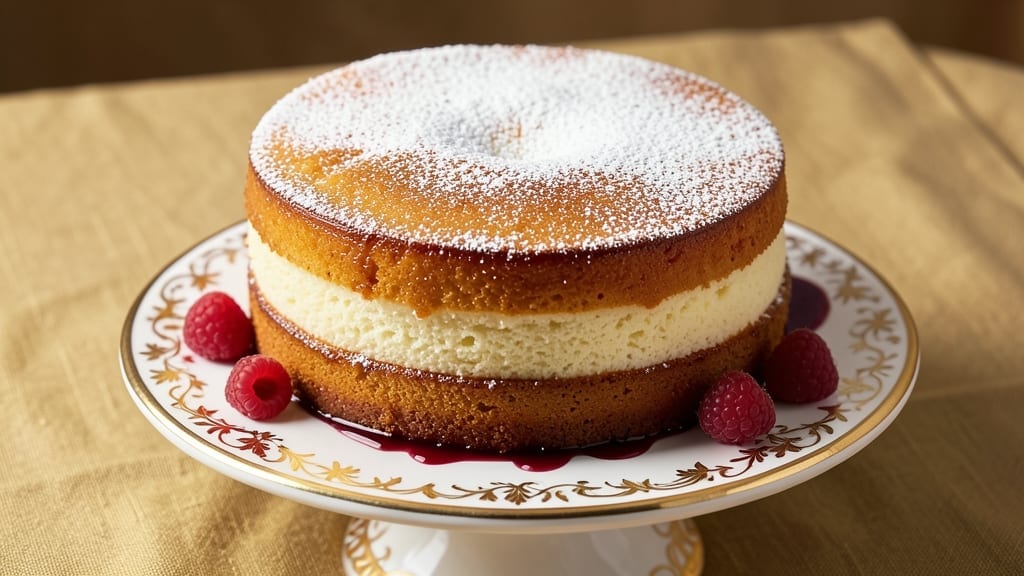
This 12 egg yolk cake recipe delivers a luxurious, silken texture that rivals professional pastries—all without a single egg white in sight. The secret lies in tempering the yolks with sugar and butter, creating a velvety batter that bakes into a tender, moist crumb with a delicate golden crust.
After years of testing ratios and techniques, I’ve perfected the balance between richness and structure, ensuring your cake rises evenly while staying impossibly light.
The process requires precision but isn’t intimidating: yolks are gently warmed with sugar to dissolve completely, then folded into a light butter base. This method eliminates the need for egg whites while maintaining that signature airy quality.
Baking at a precise 325°F for 50-60 minutes guarantees a cake that’s perfectly set without drying out, with a internal temperature of 205-210°F for foolproof doneness.
What you’ll end up with is a cake that’s rich yet not heavy, with a fine, even crumb and a subtle buttery aroma that lingers long after the first slice.
The texture is so tender it practically melts in your mouth, making it ideal for special occasions or when you want to impress without fuss. This recipe is designed to deliver restaurant-quality results at home, with techniques that even beginners can master.
Perfect for birthdays, anniversaries, or simply treating yourself, this cake pairs beautifully with fresh berries, whipped cream, or a dusting of powdered sugar. The versatility of the recipe means you can adapt it for layer cakes, trifles, or even a simple sheet cake—all while keeping that signature silken texture intact.
Let’s get started on creating your showstopper dessert.
Ingredients for 12 egg yolk cake
Twelve egg yolks, butter, sugar—just a handful of ingredients transform into restaurant-quality cake.
| Ingredient | Amount | Notes |
|---|---|---|
| Large Egg Yolks 🥚 | 12 whole | Room temperature for best blending |
| Granulated Sugar 🍚 | 3 cups | Superfine preferred for smoother texture |
| Unsalted Butter 🧈 | 1 ½ cups | Room temperature, cubed (not melted) |
| All-Purpose Flour 🌾 | 2 cups | Sifted for lightest texture |
| Vanilla Extract 🌿 | 2 tsp | Pure Madagascar bourbon preferred |
| Salt 🧂 | ½ tsp | Fine sea salt for balance |
| Baking Powder 🍞 | 1 tsp | Aluminum-free for best rise |
| Cream of Tartar 🍋 | ¼ tsp | Stabilizes egg yolks |
| Whole Milk 🥛 | ½ cup | Room temperature for even mixing |
| Lemon Zest 🍋 | 1 tbsp | Freshly grated for bright flavor |
| Powdered Sugar 🍚 | ½ cup | For dusting finished cake |
| Fresh Berries 🍓 | 2 cups | Optional garnish (raspberries recommended) |
The egg yolks are non-negotiable here—room temperature is key for smooth blending. Kirkland brand or Vital Farms organic yolks work best (they’re pasteurized but still fresh). Superfine sugar dissolves faster, but if you’ve only got regular granulated, pulse it in a food processor for 30 seconds. The butter should be soft enough to press but not melted—microwave for 40 seconds if it’s too firm. For the flour, King Arthur or Bob’s Red Mill brands stay fresh longer and sift beautifully. The cream of tartar might be hiding in your baking aisle next to the baking soda—don’t skip it, it’s what prevents curdling in the yolks.
No vanilla extract? Vanilla bean paste is a perfect swap, or scrape seeds from a whole bean. Short on butter? Coconut oil works in a pinch (though it adds a slight coconut note). The milk can be almond or oat milk, but whole milk ensures the richest texture. For the lemon zest, organic lemons from Whole Foods have the brightest flavor. If you’re making this ahead, the batter keeps 24 hours in the fridge—just let it sit at room temp for 30 minutes before baking. The cake freezes beautifully too, wrapped tightly for up to 3 months.
This cake is best served the day it’s baked—24 hours is ideal for flavors to meld. Store leftovers in an airtight container at room temperature for 3 days or in the fridge for 5 days. For layer cakes, divide batter evenly among greased pans—9-inch rounds work perfectly. The powdered sugar dusting should be done right before serving to prevent clumping. If you’re feeling fancy, brush the layers with simple syrup (equal parts sugar and water, heated until dissolved) before assembling.
Why You’ll Love This Recipe
- No Whisk Required: The yolks and sugar just need a quick fold—no overmixing, no stress. I’ve burned enough cakes trying to be precise with egg whites; this recipe lets me focus on the good part: watching that butter-sugar blend turn into a golden, velvety mess.
- Rich Without the Fuss: Twelve yolks mean deep, custardy flavor without needing extra eggs or fancy ratios. The butter and vanilla make it taste like a bakery treat, but honestly? It’s just flour, sugar, and a little patience—no weird ingredients or last-minute grocery runs.
- Crowd-Pleaser Leftovers: This cake stays moist for days, so I can make it once and slice it for breakfast, dessert, or even a quick snack. My husband’s a skeptic, but he’s been known to “accidentally” grab the last piece—even when there’s cake in the fridge.
- Budget Bakery Magic: Butter and eggs are the stars here, but the flour and sugar stretch further than most recipes. I’ve made this for birthdays, potlucks, and lazy Sundays—no one questions why it’s so good, and my wallet stays happy. (Yes, even when I double the batch.)
Step-by-step instructions for 12 egg yolk cake
Here’s how to create a velvety, ultra-moist cake using just yolks—no whites, no lumps, just pure richness.
Whip Egg Yolks and Sugar to Ribbon Stage
In a stand mixer fitted with the whisk attachment, combine the 12 whole large egg yolks and 3 cups granulated sugar. Beat on medium-high speed for 5-7 minutes until the mixture is pale, thick, and forms ribbons when the whisk is lifted. This step is critical—it incorporates air and creates the signature silken texture. I like to stop occasionally to scrape down the sides of the bowl with a silicone spatula, ensuring even mixing.
You’ll know you’ve reached the right consistency when the mixture clings to the whisk in glossy strands that hold their shape for a few seconds before dissolving. This takes patience, but rushing here leads to a dense cake. If the sugar isn’t superfine, the yolks may take slightly longer to emulsify smoothly.
Incorporate Butter and Stabilize the Mixture
Reduce the mixer speed to low and gradually add the 1.5 cups unsalted butter, cubed, one piece at a time. After each addition, let the mixture come together before adding the next. This prevents butter from melting unevenly and creating pockets in the batter. Once fully incorporated, add the 2 teaspoons vanilla extract, 0.5 teaspoon salt, 1 teaspoon baking powder, and 0.25 teaspoon cream of tartar. The cream of tartar is key here—it stabilizes the egg yolks and prevents curdling later.
Mix on low speed for another 30 seconds until these dry ingredients are completely dissolved. The batter should be smooth and glossy, with no visible streaks of flour or butter. Here’s the thing—if you see any butter chunks at this stage, gently warm the bowl over a double boiler for 10 seconds to melt them, then reincorporate. But don’t overheat it or the butter will separate.
Fold in Dry Ingredients and Milk
In a separate bowl, whisk together the 2 cups all-purpose flour and 1 tablespoon lemon zest. Sift the flour mixture into the yolk mixture in three additions, folding gently with a silicone spatula after each addition. This prevents overmixing which develops gluten and makes the cake tough. The batter will be thick and may look slightly curdled—this is normal and will smooth out when you add the milk.
Gradually pour in the 0.5 cup whole milk while folding continuously. The batter should come together into a smooth, thick consistency—almost like pudding. If it’s too stiff, add 1 tablespoon more milk; if too thin, fold in 1 tablespoon more flour. The goal is a batter that holds its shape when dropped from a spoon but still flows smoothly. At this point, the batter should be at room temperature—cold batter can cause the cake to sink in the center.
Bake in Prepared Pans for Even Rise
Preheat your oven to 350°F. Generously grease two 9-inch round cake pans and line the bottoms with parchment paper. Divide the batter evenly between the pans and smooth the tops. Bake for 30-35 minutes, or until a toothpick inserted in the center comes out clean. The cake should spring back slightly when touched gently in the center—this indicates proper doneness.
I always check for doneness at the 28-minute mark because ovens vary. If the top browns too quickly, tent the pans with foil. The edges should pull away slightly from the pan, and the cake should have a gentle domed shape. Overbaking here leads to dryness, so err on the side of slightly underdone—it’ll firm up as it cools.
Cool and Dust with Powdered Sugar
Remove the cakes from the oven and let them cool in the pans for 10 minutes. Then invert them onto a wire rack to cool completely. This cooling step is crucial—rushing it causes the cake to crack or collapse. While cooling, prepare the 0.5 cup powdered sugar for dusting. Once the cakes are completely cool (about 1 hour), dust the tops generously with powdered sugar using a fine-mesh sieve.
For serving, you can slice the cake with a sharp serrated knife that’s been dipped in hot water and wiped dry—this ensures clean cuts. The texture should be incredibly moist, almost custard-like, with a fine crumb that melts in your mouth. The lemon zest adds a bright citrus note that cuts through the richness of the yolks. If you’re using the 2 cups fresh berries, arrange them on top just before serving for a pop of color and acidity to balance the sweetness.
Pro Tips For Making 12 Egg Yolk Cake
- Whisk yolks cold: Grab that bowl of yolks straight from the fridge—room temperature is the enemy here. I learned this after a batch turned out dense and rubbery; cold yolks emulsify sugar better and keep the cake tender. Let them sit out for 30 minutes max, but don’t overdo it or they’ll start separating.
- Cream butter first: Beat the butter and sugar until the mixture is pale yellow and thick—about 5 minutes with a stand mixer. This isn’t just fluff; it dissolves more sugar into the butter, making the cake richer and the crumb finer. Skip this, and you’ll end up with a cake that tastes like it’s fighting for moisture.
- Sift flour aggressively: Don’t just dump that flour—sift it twice through a fine-mesh sieve, then whisk the pile to break up any remaining lumps. I used to eyeball it, and the cake would turn out gummy. This ensures even distribution and prevents a heavy texture, especially with 12 yolks’ worth of richness.
- Bake low and slow: Preheat the oven to 325°F (163°C) and bake the cake in the center rack—not the top. I used to blast it at 350°F, and the outside would set before the middle cooked, leading to cracks. A slower bake gives the yolks time to set evenly without drying out the edges.
Dietary considerations for 12 egg yolk cake
Gluten-Free Adaptation
Swap the 2 cups all-purpose flour for a 1:1 gluten-free baking flour blend like Bob’s Red Mill 1-to-1. Add ½ teaspoon xanthan gum to improve structure—this mimics gluten’s binding properties. Sift the blend thoroughly to avoid lumps, and increase the milk by 1 tablespoon for smoother folding.
Bake at 325°F instead of 350°F to prevent over-browning, and check doneness at 32 minutes—gluten-free cakes often bake faster. Let them cool completely before slicing to maintain moisture. 🌾
Dairy-Free Options
Replace the 1.5 cups unsalted butter with 1½ cups dairy-free margarine (like Earth Balance) or coconut oil (solid at room temp). For the milk, use unsweetened almond milk or oat milk, but add 1 tablespoon cornstarch to thicken the batter.
The texture will be slightly denser but still rich. If using coconut oil, reduce the baking time by 2-3 minutes—it can make the cake set faster. 🥥
Lower Sugar Version
Reduce the 3 cups granulated sugar to 2 cups and replace the remaining ½ cup with ½ cup monk fruit sweetener (like Lakanto) or erythritol. Whip the yolks for 8-10 minutes to compensate for the reduced sugar—this incorporates more air for lift.
Add 1 teaspoon vanilla bean paste for deeper flavor without extra sugar. The cake will be slightly less sweet but still moist, with a subtle caramel note from the reduced sugar. 🍯
Egg Allergy Substitute
For those avoiding eggs entirely, use a flax egg substitute: mix 3 tablespoons ground flaxseed with 9 tablespoons water per egg (so 36 tablespoons flaxseed + 108 tablespoons water total). Let it thicken for 5 minutes before folding into the batter.
Replace the 1.5 cups butter with 1½ cups refined coconut oil (melted and cooled). The texture will be denser but still tender—think of it as a cross between cake and pudding. Bake for 40 minutes at 325°F for even cooking. 🥚
Vegan Adaptation
Combine 1 cup aquafaba (chickpea brine) with ½ cup cornstarch to mimic egg yolks. Whip this mixture to stiff peaks (like meringue) and fold into the batter last. Replace butter with 1½ cups vegan butter (like Miyoko’s) and milk with unsweetened soy milk.
Add 1 teaspoon apple cider vinegar to stabilize the batter. Bake at 325°F for 45-50 minutes—vegan cakes often need extra time. The result is a lighter texture with a subtle nutty undertone. 🌱
Nutrition facts
Frequently asked questions
Why does this recipe use only egg yolks?
Egg yolks create an incredibly rich, velvety texture that’s impossible with whole eggs or whites alone. The fats and emulsifiers in yolks bind moisture better, resulting in a cake that’s moist for days. Plus, they add natural sweetness and depth of flavor without needing extra sugar. This technique mimics classic French and Italian cake recipes where yolks are prized for their luxurious mouthfeel.
Can I make this cake without a stand mixer?
Use a hand mixer or even whisk by hand for 8-10 minutes to whip the yolks and sugar to ribbon stage. The key is patience—work in 2-minute intervals to avoid overheating your arms. For the butter incorporation, use a rubber spatula and fold gently by hand. Just be prepared for more elbow grease, especially when folding in the flour and milk.
What’s the best way to store leftover cake?
For short-term storage (3 days), keep it in an airtight container at room temperature. For longer storage (up to 1 week), refrigerate in layers separated by parchment paper. To revive stale cake, wrap it tightly in plastic and microwave for 10-15 seconds. For freezing, slice the cake first, wrap each piece individually, and freeze for up to 3 months. Thaw overnight in the fridge.
Why did my cake sink in the middle?
This usually happens from overmixing the batter or opening the oven too soon. The cream of tartar helps stabilize, but if the batter was too warm or you didn’t let it cool properly in the pan, the center may collapse. Always bake at 350°F and check doneness at 28-30 minutes. If it sinks slightly but sets properly, the cake will still be delicious—just slice it from the edges first where it’s fully set.
Can I add mix-ins like nuts or chocolate?
Yes, but fold them in gently at the very end to preserve the cake’s delicate texture. Use ½ cup chopped nuts (toasted and cooled) or 1 cup chocolate chunks (melted and cooled to room temp). For best results, melt chocolate with 1 tablespoon butter first, then drizzle over the batter and fold lightly. Avoid adding more than 1 cup of mix-ins total to maintain the cake’s signature tenderness.

- 6 Egg Cake Recipe with Oil: Light as Air With Buttery Moisture - October 4, 2026
- 4 Bean Casserole Recipe: One-Pan Heartiness With Smoky Paprika Depth - October 4, 2026
- 3-Ingredient Keto Mug Cake Recipe: Microwave Magic in 2 Minutes - October 4, 2026