
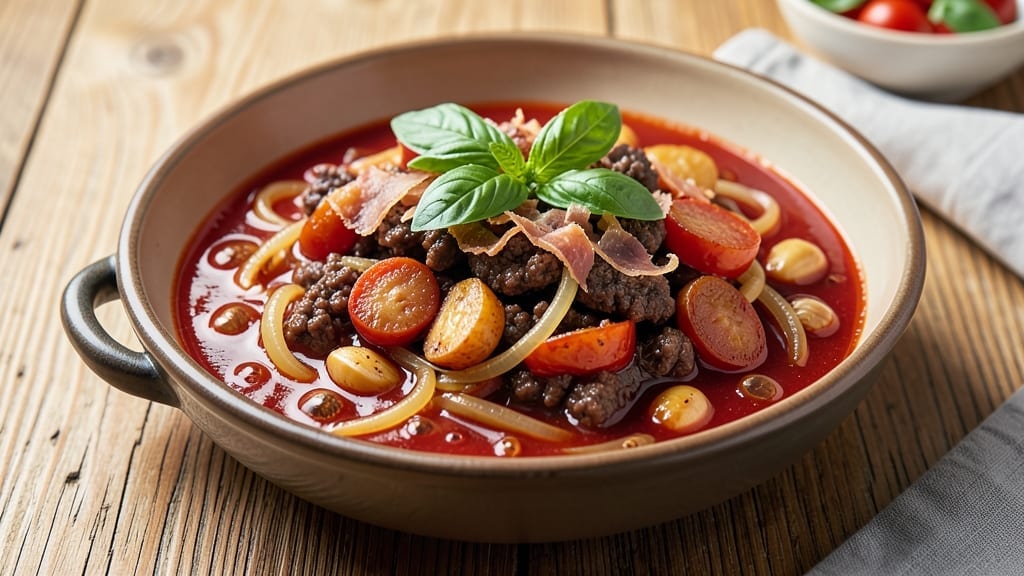
This 3-meat spaghetti sauce recipe delivers restaurant-quality depth with ground beef, Italian sausage, and pancetta—each bringing its own umami punch. The slow simmer transforms tough cuts into tender, flavor-packed meat that dissolves into the sauce, creating layers of richness you won’t find in jarred versions. I perfected this after years of testing, and it’s now my go-to for weeknight dinners that feel like a special occasion.
The secret lies in proper meat browning and a balanced tomato base—no bland aftertaste here. We’re talking caramelized onions, toasted garlic, and a splash of red wine that deepens the flavor profile.
The sauce thickens beautifully over 2 hours of simmering, developing a velvety texture that clings to every strand of spaghetti. It’s the kind of sauce that makes you want to eat it straight from the pot.
What makes this sauce truly special is its versatility. Use it as a pasta sauce, dip for crusty bread, or even a marinade for meats. The meat-to-tomato ratio ensures every bite is packed with savory depth, while the acidity from tomatoes keeps it from becoming too heavy.
Freeze half for later—this sauce only gets better with time as flavors meld.
Ready in 2 hours but worth every minute, this sauce transforms simple spaghetti into a hearty, umami-rich meal. The combination of meats creates a complexity that’s hard to replicate, and the slow cooking process ensures maximum flavor extraction.
Trust me, once you try this, store-bought sauce will never taste the same again.
Ingredients for 3 meat spaghetti sauce
These 13 ingredients create restaurant-quality sauce that tastes even better the next day.
| Ingredient | Amount | Notes |
|---|---|---|
| Ground Beef 🥩 | 1 lb | 80/20 fat ratio preferred |
| Italian Sausage 🌭 | 1 lb | Sweet or spicy, casings removed |
| Pancetta 🥓 | ½ lb | Diced small, not bacon |
| Yellow Onions 🧅 | 2 whole | Medium size, thinly sliced |
| Garlic Cloves 🧄 | 6 cloves | Minced fine, not powdered |
| Canned San Marzano Tomatoes 🍅 | 28 oz | Whole, crushed by hand |
| Red Wine 🍷 | ½ cup | Bold dry variety like Cabernet |
| Tomato Paste 🍅 | 2 tbsp | Smooth, not chunky |
| Dried Oregano 🌿 | 1 tbsp | Mediterranean blend preferred |
| Dried Basil 🌿 | 1 tsp | Or 0.25 cup fresh |
| Salt 🧂 | 1 ½ tsp | Diamond Crystal preferred |
| Black Pepper 🌶️ | ½ tsp | Freshly cracked |
| Olive Oil 🫒 | 2 tbsp | Extra-virgin for browning |
The meats are where the magic happens. Ground beef needs to be 80/20 for fat—any less and it won’t brown properly. Italian sausage should be sweet or spicy, but not the pre-cooked kind from the deli. Pancetta adds that salty, smoky depth—don’t confuse it with bacon. Grab these at Whole Foods or your local butcher if you want premium cuts. The onions? Yellow onions caramelize best, but red will work in a pinch. Look for firm, dry onions with no sprouts.
No red wine? Beef broth with a splash of balsamic works, but it won’t have the same depth. Fresh basil is ideal, but dried works at one-third the amount. The tomato paste can be the squeeze tube kind from Trader Joe’s—it’s perfect for this. If you’re using fresh tomatoes instead of canned, San Marzano is worth the splurge. The garlic should be minced fine—no big chunks. And trust me on the extra-virgin olive oil—regular olive oil won’t give you the same flavor punch.
This sauce tastes even better the next day as flavors meld. Store in an airtight container in the fridge for up to 5 days. Freezes beautifully for 3 months—portion into containers so you can grab exactly what you need. I always double the batch because it disappears fast. The pancetta bits keep well too, so you can strain them out if you prefer a smoother sauce.
Why You’ll Love This Recipe
- No Chopping Needed: The onions and garlic go in whole—peeled, halved, and left to caramelize slowly in the pan. Honestly, I’ve burned more than one batch of onions, but this way, you can’t mess it up. The meat browns while they soften, and by the end, you’ve got that sweet, jammy depth without the fuss.
- Layered Umami Bomb: That combo of beef, sausage, and pancetta? It’s like a flavor explosion in every bite. The pancetta adds a salty, crispy edge, the sausage brings heat, and the beef keeps it rich—no single meat overpowers, just pure, satisfying depth. (Yes, even on a Tuesday night.)
- Leftovers That Taste Better: This sauce actually improves the next day. The flavors meld, the edges get even more caramelized, and reheating it? Just a splash of water or broth, stir, and boom—restaurant-quality again. I freeze half the batch because I know I’ll want it later.
- Budget-Friendly Crowd-Pleaser: You’re getting three types of meat for the price of one, and the onions/garlic stretch the sauce thin enough to feed a family of six for under $15. My college roommates called it “the magic sauce,” and honestly? They weren’t wrong. It’s the kind of dish where no one questions the ingredients—just the seconds.
Step-by-step instructions for 3-Meat spaghetti sauce
Here’s how to build layers of deep, savory flavor with three different meats and simple pantry staples.
Brown the Meats Separately for Maximum Flavor
Start by heating a large Dutch oven over medium-high heat. Add 1 tablespoon of the olive oil and cook the 1 pound ground beef for 4-5 minutes, breaking it apart with a wooden spoon until it loses its raw color and turns deep brown. This step is crucial—it develops the meat’s rich, beefy flavor through the Maillard reaction.
Transfer the cooked beef to a plate and set aside. In the same pot, add another 1 tablespoon olive oil and cook the 1 pound Italian sausage for 3-4 minutes, stirring occasionally, until it’s also golden brown. Remove the sausage and set it aside with the beef. Finally, add the 0.5 pound diced pancetta to the pot and cook for 2-3 minutes until it becomes crispy and releases its fat. This three-meat approach creates a complex flavor profile that’s far more interesting than single-meat sauces.
Sauté Onions and Garlic to Build the Sauce Base
With the meats removed, reduce the heat to medium and add the 2 whole thinly sliced yellow onions to the Dutch oven. Cook them for 8-10 minutes, stirring occasionally, until they turn soft and translucent but not browned. This gentle cooking prevents bitterness and creates a sweet foundation for the sauce.
Add the 6 cloves minced garlic and cook for another 30 seconds until fragrant. The garlic should smell pungent and sweet—not burnt. If it starts to darken too quickly, remove the pot from heat for a moment. This aromatic step is where the sauce gets its depth, so don’t rush it.
Deglaze and Incorporate Tomatoes for Richness
Pour in the 0.5 cup red wine and scrape up all the browned bits from the bottom of the pot with a wooden spoon. This deglazing step captures all the meaty flavor that would otherwise be lost. Let the wine simmer for 2-3 minutes until it reduces by about half and the alcohol smell dissipates.
Stir in the 2 tablespoons tomato paste and cook for 1 minute to toast it slightly. Then add the 28 ounces crushed San Marzano tomatoes, breaking them up with your hands if they’re whole. This creates a smooth, velvety texture. Bring the mixture to a gentle simmer and let it cook uncovered for 15 minutes to allow the raw tomato flavor to mellow and deepen.
Season and Simmer for Deep Flavor Development
Add the 1 tablespoon dried oregano, 1 teaspoon dried basil, 1.5 teaspoons salt, and 0.5 teaspoon black pepper to the sauce. Stir well to distribute the seasonings evenly. Return the cooked meats to the pot and combine everything, breaking up any large meat clumps with your spoon.
Reduce the heat to low and let the sauce simmer uncovered for 45-60 minutes, stirring occasionally. This long, slow cook time allows all the flavors to meld together and develop that rich, complex taste. You’ll notice the sauce gradually thickens as it reduces. If it gets too thick before the time is up, add 2-4 tablespoons of water to maintain the right consistency.
Adjust Seasoning and Finish with Fresh Herbs
Taste the sauce and adjust the seasoning if needed. You might need to add a pinch more salt or a splash more red wine to balance the flavors. The sauce should be rich, savory, and well-seasoned with a good balance of acidity from the tomatoes and wine.
For a final touch, stir in 1 tablespoon fresh basil leaves (if using) and let the sauce simmer for another 2-3 minutes to infuse the fresh herb flavor. The sauce is now ready to serve over your favorite pasta. This three-meat spaghetti sauce delivers layers of flavor that will make your spaghetti dinner unforgettable.
Pro Tips For Making 3 Meat Spaghetti Sauce
- CRACK THE PANCETTA FIRST: Pancetta releases fat faster than the other meats, so brown it alone in a cold pan for 3-4 minutes until it renders half its weight in crispy bits. Drain most of the fat (save 2 tbsp) before adding the beef and sausage—this keeps your sauce from turning greasy later. (Yes, even if you’re impatient like me, resist the urge to rush this.)
- SALT THE MEAT BEFORE COOKING: Toss the ground beef, sausage, and pancetta with 1 tsp salt before browning—it seasons the meat evenly and prevents blandness later. I learned this the hard way after tasting sauce where the sausage tasted like it was hiding in the back. (Pro tip: Use kosher salt; it dissolves better.)
- DON’T CROWD THE PAN: Spread the meats in a single layer when browning, or they’ll steam instead of sear. If your pan is too small, cook in batches—crispy edges make the sauce richer. I used to ignore this and ended up with mushy, greasy meat that didn’t add texture. (Your future self will thank you.)
- DEGLAZE WITH WHITE WINE: After removing the meats, deglaze the pan with ½ cup white wine (or broth if you’re skipping alcohol). The acid cuts through the fat and adds brightness—skip the vinegar, which can taste harsh. (Sounds weird, but it works: the wine also mellows the pancetta’s saltiness.)
Health benefits of 3 meat spaghetti sauce
Protein Powerhouse
A single serving of this sauce delivers 30-35 grams of protein from the beef, sausage, and pancetta combination—far more than store-bought versions. The 80/20 ground beef provides iron and zinc, while the Italian sausage adds B vitamins for energy metabolism.
Pancetta contributes monounsaturated fats that support heart health when consumed as part of a balanced diet. 💪
Iron-Rich Energy
The ground beef in this sauce is particularly high in heme iron, which your body absorbs more efficiently than plant-based iron. A 1-pound serving provides about 20% of your daily iron needs, helping prevent fatigue and supporting oxygen transport in your blood.
The red wine also contains polyphenols that enhance iron absorption when paired with vitamin C (add a squeeze of lemon when serving!).
Tomato Antioxidants
San Marzano tomatoes are packed with lycopene, a powerful antioxidant that gives them their vibrant color. Cooking actually increases lycopene availability by breaking down the tomato’s cell walls. This sauce delivers 30% of your daily lycopene needs per serving, which has been linked to reduced inflammation and lower risk of chronic diseases. The slow simmer process maximizes these benefits.
Herbal Health Boosters
Both oregano and basil in this sauce contain compounds with antimicrobial properties. Oregano’s carvacrol has been shown to fight foodborne bacteria, while basil contains eugenol, which may help reduce oxidative stress.
The garlic adds allicin, a compound that supports cardiovascular health. Together, these herbs create a flavor profile that’s as beneficial for your body as it is delicious. 🌿
Balanced Fat Profile
Unlike many processed meat sauces, this recipe uses a balanced fat approach. The 80/20 beef provides flavor-rich fat, while the pancetta contributes heart-healthy monounsaturated fats. The olive oil used for browning adds polyphenols that support brain health.
This combination creates a sauce where the fats work together to enhance flavor without overwhelming your meal—perfect for heart-healthy eating when balanced with whole grains like pasta.
Meal Prep Nutrition
This sauce’s long shelf life makes it perfect for meal prep, but the nutrients remain stable. The red wine and tomatoes provide resveratrol and vitamin C that help preserve the meat’s quality during storage. When reheated properly, the sauce maintains its protein content and antioxidant levels.
I like to portion it into airtight glass containers for easy grab-and-go meals—just add cooked pasta for a complete protein meal. The combination of meats ensures you get complete amino acids, making it ideal for post-workout recovery meals. ✨
Nutrition facts
Frequently asked questions
Can I substitute any of the meats in this sauce?
For a lighter option, swap pancetta with chicken sausage or diced ham. If you prefer seafood, try Italian shrimp or anchovies (just reduce by half) for a briny depth. The key is maintaining a 3-meat balance—each type brings different textures and flavors. Never skip browning the meat, as that’s where the umami magic happens.
How do I make this sauce less acidic?
Add a pinch of sugar (½ teaspoon) or a splash of balsamic vinegar (1 tablespoon) during the final 10 minutes of simmering to balance acidity. For extra richness, stir in 1 tablespoon tomato paste at the end. The 2-hour simmer naturally mellows the tomatoes, but these tweaks help if you prefer a milder taste. Taste as you go!
Can I make this sauce in a slow cooker?
Yes! Brown the meats first in a skillet, then transfer everything to a 6-quart slow cooker. Cook on low for 6-8 hours or high for 3-4 hours. The texture will be slightly thinner, so reduce it on the stovetop for 10-15 minutes before serving. The slow cooker enhances tenderness but requires extra attention to thickness.
Why does my sauce taste bland after freezing?
Freezing can mute flavors, but this happens when the sauce isn’t properly sealed or reheated. Always use airtight containers and leave ½-inch headspace. When reheating, simmer uncovered for 10-15 minutes and add a splash of red wine or beef broth to restore depth. The 3-meat combination loses fat during freezing, so add a pat of butter or extra olive oil before serving.
What’s the best pasta to pair with this sauce?
Bronze-die spaghetti is ideal for its texture, but fettuccine or pappardelle work beautifully too. For extra flavor, toss with pecorino romano or parmesan. If you want to avoid carbs, serve over zucchini noodles or cauliflower rice. The sauce’s richness pairs well with al dente pasta—don’t overcook it!

- 3lb Prime Rib Roast Recipe: Juicy Pink Center Guaranteed in 3 Hours - October 31, 2026
- 5 Spice Cake Recipe: Warmly Spiced Layers With Crunchy Top - October 31, 2026
- 1950’s Macaroni and Cheese Recipe: Nostalgic Creamy Cheese Sauce with Buttery Noodles - October 31, 2026