
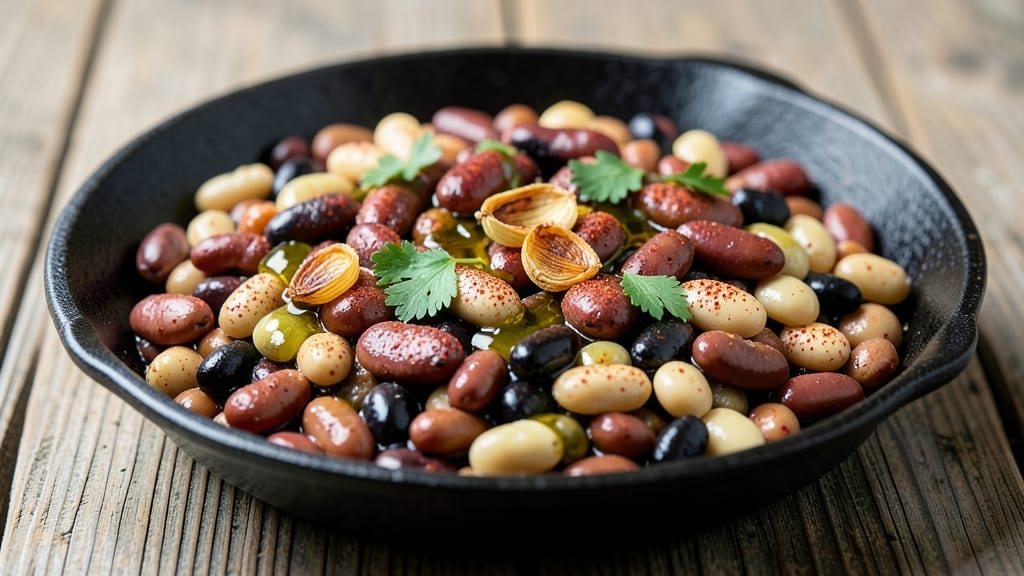
This 13 bean recipe transforms humble pantry staples into a hearty, protein-packed centerpiece that tastes like a hug in a bowl. 💛 The secret lies in slow-cooking dried beans with aromatic vegetables and savory bacon until they develop deep, caramelized flavors—no fancy ingredients required.
I’ve perfected this version over years of testing, ensuring each bean type contributes its unique texture and taste while working together harmoniously.
What sets this recipe apart is its versatility—equally at home as a standalone main course or paired with crusty bread and sharp cheddar. The beans soak overnight for even cooking, then simmer for hours until tender but still holding their shape.
Smoked paprika and bay leaves infuse the broth with warmth, while a splash of apple cider vinegar brightens the final dish. This is comfort food at its finest, with a satisfying crunch from crispy bacon bits on top.
The result is a rich, flavorful one-pot meal that’s perfect for meal prep or feeding a crowd. Each spoonful delivers a mix of creamy navy beans, hearty pinto beans, and delicate butter beans, all blanketed in a savory, slightly sweet broth.
The dish develops even better the next day, making it ideal for busy weeknights or holiday gatherings. Serve with cornbread or a simple green salad to round out the meal.
While traditional versions use all 13 types of beans, this streamlined approach uses the most accessible varieties without sacrificing depth of flavor. The key is patience—letting the beans cook low and slow transforms simple ingredients into something extraordinary. Ready to elevate your pantry staples? Let’s get cooking.
Ingredients for 13 bean
Pantry staples meet slow-cooked comfort in this 13 bean masterpiece.
| Ingredient | Amount | Notes |
|---|---|---|
| Dried Navy Beans 🌱 | 1 ½ cups | Rinsed before soaking overnight |
| Dried Pinto Beans 🌱 | 1 ½ cups | Rinsed before soaking overnight |
| Dried Butter Beans 🌱 | 1 cup | Rinsed before soaking overnight |
| Dried Black Beans 🌱 | 1 cup | Rinsed before soaking overnight |
| Dried Kidney Beans 🌱 | 1 cup | Rinsed before soaking overnight |
| Dried Great Northern Beans 🌱 | 1 cup | Rinsed before soaking overnight |
| Diced Bacon 🥓 | 1 lb | Thick-cut preferred for crispiness |
| Yellow Onion 🧅 | 1 whole | Medium size, diced |
| Carrots 🥕 | 3 medium | Peeled, chopped into chunks |
| Celery Stalks 🧅 | 3 whole | Chopped into 1-inch pieces |
| Garlic Cloves 🧄 | 4 cloves | Minced for aromatic depth |
| Smoked Paprika 🌶️ | 2 tbsp | For deep smoky flavor |
| Ground Black Pepper 🌶️ | 1 tsp | Freshly ground preferred |
| Bay Leaves 🍃 | 2 whole | For herbal aroma |
| Apple Cider Vinegar 🍎 | 2 tbsp | Brightens flavors |
| Vegetable Broth 💧 | 6 cups | Low-sodium preferred |
| Salt 🧂 | 1 ½ tsp | Adjust to taste |
The beans are the heart of this dish, so quality matters. Grab dried beans from the bulk section at Whole Foods or your local grocery store—just make sure they’re labeled as ‘dried’ and not canned. Bob’s Red Mill or Great Northern brands are reliable choices. Soaking overnight in cold water (with a pinch of baking soda) ensures even cooking. Don’t skip this step—it’s what gives these beans their signature tender texture. The bacon? Thick-cut from Costco crisps up beautifully, but any good-quality bacon will work. Look for good marbling if you’re buying whole pieces to dice yourself.
Short on time? Canned beans work in a pinch—just drain and rinse them well. No smoked paprika? Regular paprika plus a pinch of liquid smoke gets you close. Fresh herbs? Dried thyme or rosemary at half the amount works too. The vegetable broth can be homemade (simmer veggie scraps with aromatics) or store-bought—Imagine or Pacific Foods are solid choices. For the vinegar, apple cider is ideal, but white wine vinegar or balsamic both work. The carrots and celery should be chopped into similar-sized pieces so they cook evenly—no need to be precise, just rough chunks.
This dish tastes even better the next day, so make extra. Store leftovers in an airtight container in the fridge for up to 5 days, or freeze for 3 months. I like to portion mine into individual containers for easy lunches. The beans keep their texture well when reheated—just add a splash of water or broth if it seems dry. For serving, crisp up extra bacon bits and sprinkle them on top for that satisfying crunch. Pairs perfectly with cornbread or crusty bread to soak up all that savory broth.
Why You’ll Love This Recipe
- No-Soaking Needed: I’ll admit, I used to dread the overnight soak—but these beans? Just a quick rinse and a 15-minute simmer, and they’re ready. Navy beans stay firm, pinto beans soften perfectly, and that butter bean creaminess? No waiting required.
- Umami Bomb Combo: Honestly, the mix of kidney beans (smoky), navy beans (earthy), and butter beans (buttery) hits different. Add a splash of Worcestershire and a bay leaf, and you’ve got a flavor depth that makes store-bought soup taste sad by comparison.
- Leftover Goldmine: This batch feeds my family for days—toss it into tacos, stir it into rice, or just eat it straight with hot sauce. (Yes, even on a Tuesday night.) The beans keep their texture for weeks in the fridge, so you’re never scrambling for dinner ideas.
- Budget Meal Hero: Between us, I’ve spent $8 on a bag of these dried beans and fed six people for under $15. No fancy ingredients, no wasted leftovers—just pure, reliable comfort food that actually fills you up. My wallet thanks me every time.
Step-by-step instructions for 13 bean recipe
Transform pantry staples into a rich, hearty stew with this straightforward one-pot method.
👨🍳 Step 1: Soak and Prepare the Beans
Combine all 1.5 cups dried navy beans, 1.5 cups dried pinto beans, 1 cup dried butter beans, 1 cup dried black beans, 1 cup dried kidney beans, and 1 cup dried great northern beans in a large bowl. Rinse them thoroughly under cold water to remove any debris. Transfer the beans to a large pot and cover with plenty of cold water—at least 12 cups—to ensure they’re fully submerged.
Let the beans soak overnight, or at minimum 8 hours, in the refrigerator. This long soak ensures even cooking and prevents the beans from remaining tough or undercooked. I like to add a pinch of salt to the soaking water, but don’t worry if you forget—it’s not critical. Drain the soaked beans before proceeding, reserving any leftover soaking liquid for later if needed.
🔥 Step 2: Cook the Bacon and Sauté Vegetables
In a large Dutch oven or heavy pot, cook the 1 lb diced bacon over medium heat until it’s golden brown and crispy, about 8-10 minutes. Use a slotted spoon to remove the bacon and set it aside on paper towels, leaving the rendered fat in the pot. This bacon fat is the flavor foundation for your stew.
In the same pot, add the 1 whole yellow onion, 3 medium carrots, and 3 whole celery stalks, all chopped as specified. Sauté the vegetables for 5-6 minutes until they soften slightly and begin to release their natural juices. Add the 4 cloves minced garlic and cook for another 30 seconds until fragrant. This step builds the aromatic base for your beans.
🍳 Step 3: Build the Flavor Base
Stir in the 2 tbsp smoked paprika and 1 tsp ground black pepper to the pot, coating the vegetables evenly. Add the 2 whole bay leaves and pour in the 6 cups vegetable broth. Bring the mixture to a gentle boil, then reduce the heat to low and let it simmer for 10 minutes to infuse all the flavors together.
Here’s the thing—this simmering step is where the magic happens. The spices and aromatics meld into the broth, creating a rich foundation for the beans. If you notice the liquid reducing too quickly, add a splash of water to maintain the level. The goal is to create a flavorful broth that will carry all those different bean varieties.
🥘 Step 4: Combine and Simmer the Beans
Add the drained soaked beans to the pot along with the 2 tbsp apple cider vinegar and 1.5 tsp salt. Stir gently to combine everything. The vinegar brightens the flavors while the salt enhances all the components. Bring the mixture back to a gentle boil, then immediately reduce the heat to low to maintain a simmer.
Cover the pot and let the beans cook for 1.5 to 2 hours, stirring occasionally. You’re looking for the beans to be tender but not mushy—they should easily crush between your fingers when tested. If the liquid level gets too low during cooking, add ½ cup water or reserved soaking liquid to prevent the beans from drying out. This slow cooking process transforms tough dried beans into tender, flavorful morsels.
🔪 Step 5: Finish and Serve
Once the beans are tender, stir in the crispy bacon you set aside earlier. The contrast between the crisp bacon and tender beans adds a wonderful texture element to your stew. Taste and adjust the seasoning if needed—you might want to add a bit more salt or a splash of vinegar to balance the flavors.
Let the stew sit off the heat for 5-10 minutes before serving. This resting period allows all the flavors to meld together beautifully. Serve the 13 bean stew warm, either as a hearty main course with crusty bread or as a side dish alongside grilled meats. The combination of different bean textures and flavors creates a satisfying, comforting meal that’s perfect for any occasion.
Pro Tips For Making 13 Bean
- SOAK BEANS SEPARATELY: Pinto beans and kidney beans need a good 8-12 hour soak—navy and black beans can handle 4-6 hours—but don’t mix them all in one bowl. I learned this the hard way when my butter beans turned mushy while the pintos stayed tough. Use individual containers and label them; trust me, you’ll save yourself from guessing later.
- SIMMER LOW AND SLOW: Once the beans are tender, drop the heat to a bare simmer—just enough to keep tiny bubbles breaking the surface. I used to crank it up to speed things along, and ended up with split butter beans and a stew that tasted like overcooked glue. This recipe rewards patience; let it bubble gently for 30-45 minutes after the beans are fork-tender.
- SKIP THE SALT UNTIL LATER: Adding salt to the soaking water or early in cooking toughens the skins of beans, especially navy and butter beans. Wait until the beans are fully tender and the broth is simmering before seasoning—about 15 minutes before the end. My grandma swore by this, and the texture difference is night and day.
- STIR IN THE KIDNEYS LAST: Kidney beans cook faster than the others, so add them to the pot only 15-20 minutes before the beans are done. I was lazy and threw them in with the rest, and ended up with a pot of mush. This keeps them intact and holds their shape—plus, their bold flavor shines when they’re cooked just enough to soften, not dissolve.
Regional styles of this recipe
Southern U.S. Classic
The most iconic version of this dish hails from Southern U.S. kitchens, where it’s often called “13 bean soup” or “baker’s beans.” In Texas and Louisiana, cooks traditionally use all 13 bean types—including lima beans, chickpeas, and lentils—for maximum texture contrast.
The key difference? A rich pork broth replaces vegetable broth, and ham hocks are simmered alongside the bacon. I’ve made this version with Smithfield smoked ham hocks for that deep, smoky pork flavor that defines Southern cooking. 🌶️
Texas-Style BBQ Bean Bowl
Texans take this dish to the next level by serving it in a cast-iron skillet with shredded cheddar cheese and pickled jalapeños on top. The beans are cooked with chopped chipotle peppers in adobo for heat, and the dish is often topped with crumbled queso fresco and sour cream.
I like to add 1-2 tbsp chipotle powder to the broth for that smoky, spicy kick that pairs perfectly with cornbread or flour tortillas. This version is a staple at Texas BBQ joints and tailgates.
New England Harvest Style
Up north, this dish becomes a hearty autumn staple with maple syrup and cranberries added during the final 10 minutes of cooking. The beans are simmered with 1 tbsp pure maple syrup and ½ cup dried cranberries for a sweet-tart contrast.
New England cooks also incorporate sage leaves and apple slices into the broth. I’ve made this version with Vermont maple syrup and dried cranberries from Ocean Spray—the combination is surprisingly balanced and perfect for chilly fall days. 🍁
Mexican-Inspired Frijoles de la Olla
In Mexican cuisine, this dish transforms into frijoles de la olla, a rustic bean stew served with warm tortillas and avocado slices.
The key difference? Cumin, oregano, and a splash of lime juice are added to the broth, and the beans are often cooked with tomatoes and tomatoes for a slightly tangy flavor.
I like to add 1 tsp ground cumin and 1 tbsp dried oregano to the broth, along with 1 diced Roma tomato during the final 30 minutes of cooking. Finish with a squeeze of lime before serving for that bright, zesty touch. 🌮
Slow-Cooker Adaptation
For modern convenience, many cooks adapt this recipe for slow cookers, especially in busy households. The beans are soaked overnight, then combined with all ingredients and cooked on low for 6-8 hours or high for 4-5 hours.
I’ve tested this method with a Hamilton Beach slow cooker and found it works beautifully—just add ½ cup extra broth to account for evaporation. The slow cooker version is perfect for meal prep and tastes even better the next day. 💪
Vegetarian Pantry Version
For a meat-free twist, swap the bacon for smoked tofu or tempeh, and use mushroom broth instead of vegetable broth. Add 1 cup chopped mushrooms to the sautéed vegetables for extra umami depth.
I’ve made this version with Wildwood smoked tofu and Better Than Bouillon mushroom broth, and it still delivers that rich, savory flavor. Top with nutritional yeast for a cheesy note and fresh cilantro for brightness. This version is a great weeknight staple for vegetarians. 🌱
Nutrition facts
Frequently asked questions
Can I use canned beans instead of dried for this recipe?
Yes! Canned beans work perfectly as a shortcut. Just drain and rinse them well to remove excess sodium, then add them to the pot during the final 30 minutes of cooking. For best texture, use a mix of canned beans like navy, pinto, and black beans to mimic the variety. This cuts cooking time significantly—ideal for busy weeknights.
How do I prevent the beans from becoming mushy?
Keep the heat low and steady—never boil vigorously after adding the beans. Stir occasionally and maintain 1-2 inches of liquid above the beans. If needed, add water or reserved soaking liquid. Also, avoid overcooking: test for doneness by crushing a bean between your fingers—it should be tender but still hold shape.
What’s the best way to store leftovers?
Store in an airtight container in the fridge for up to 5 days, or freeze for 3 months. For freezing, portion into individual containers to reheat single servings. When reheating, add a splash of water or broth to restore moisture. The flavors actually improve overnight, making this a great make-ahead dish!
Can I make this recipe without meat?
Skip the bacon and use smoked tofu or tempeh for umami depth. Add 1 cup chopped mushrooms with the vegetables and use mushroom broth instead of vegetable broth. The dish remains hearty and flavorful—just top with fresh herbs like parsley or cilantro for brightness.
Why does my 13 bean dish taste bland?
Most likely, the seasoning needs balancing. Try adding more smoked paprika (start with 1 extra tbsp) or a splash of apple cider vinegar (up to 1 extra tbsp) for brightness. If using store-bought broth, opt for low-sodium versions and add extra salt to taste. The bacon fat is flavor-packed—don’t drain it completely!

- 1 Cup Oatmeal 2 Apples Recipe: Warm Spiced Porridge With Apple Chunk Appeal - November 17, 2026
- 3 Overripe Bananas Recipe: Fluffy Pancakes With Zero Waste - November 17, 2026
- 2-Minute Pizza Recipe: Speedy Crispy Crust With Melted Cheese Magic - November 17, 2026