
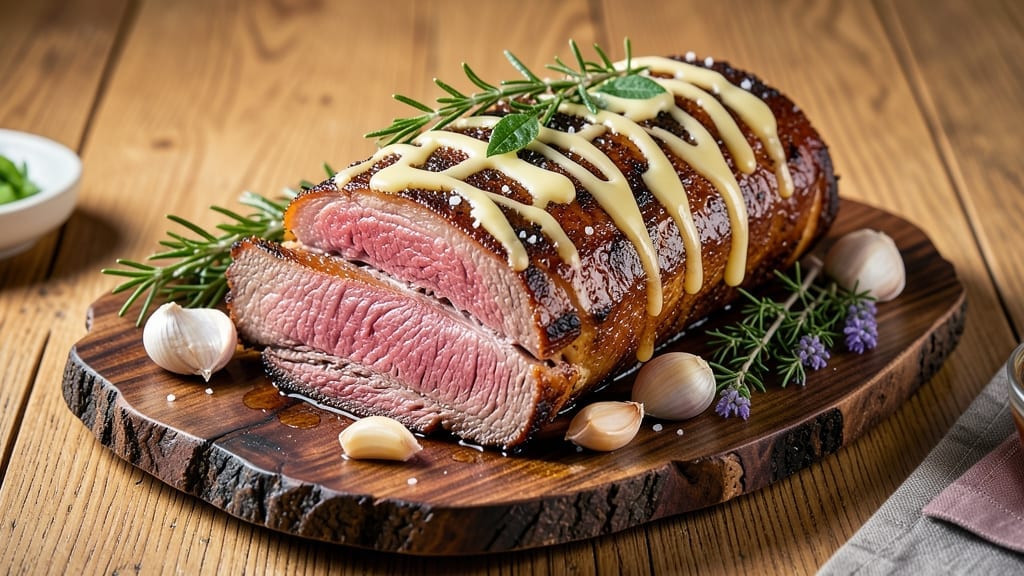
A 13-pound prime rib roast delivers the kind of showstopping centerpiece that makes every holiday table unforgettable. 🔥 The secret to mastering this cut lies in precise temperature control, a well-seasoned crust, and patience—especially when dealing with a roast this large.
What sets this recipe apart is the herb-crusted exterior that locks in flavor while keeping the interior dangerously tender, just shy of medium-rare.
This method ensures a juicy pink core without compromising the crust, using a combination of high heat and careful monitoring. The roast begins at a lower temperature to gently cook the center, then finishes with a broiler blast to create that perfect caramelized bark.
For a roast this size, resting time becomes critical—skipping it risks a dry slice, so we’ll emphasize the full 45-minute rest to let juices redistribute evenly.
By the time you carve into this roast, you’ll reveal a glistening, golden crust that gives way to perfectly pink, buttery meat inside. The herb crust adds layers of aromatic depth, while the internal temperature stays consistent at 125°F for medium-rare.
This isn’t just dinner—it’s an experience that transforms a simple meal into a memorable event.
Pair it with classic sides like roasted garlic mashed potatoes or a crisp green salad to balance the richness. The key to success lies in the details: using a meat thermometer, avoiding overcrowding the pan, and letting the roast rest before slicing.
Let’s get started on creating your perfect prime rib masterpiece.
Ingredients for 13 lb prime rib roast
The secret to this showstopping prime rib lies in these 13 carefully chosen ingredients—where quality meets technique for a perfect holiday centerpiece.
| Ingredient | Amount | Notes |
|---|---|---|
| Prime Rib Roast (Bone-In) 🥩 | 13 lb | Center-cut, 1-inch thick cap |
| Unsalted Butter (Room Temperature) 🧈 | ¾ cup | Cold for crust, softened for mixing |
| Fresh Rosemary 🌿 | ½ cup | Finely chopped, stems removed |
| Fresh Thyme 🌿 | ¼ cup | Leaves only, stems discarded |
| Fresh Garlic 🧄 | 10 cloves | Minced, for herb paste |
| Coarse Kosher Salt 🧂 | ½ cup | Diamond Crystal preferred |
| Freshly Ground Black Pepper 🌶️ | 2 tbsp | Freshly cracked |
| All-Purpose Flour 🌾 | ¼ cup | For crust adhesion |
| Extra-Virgin Olive Oil 🫒 | 2 tbsp | For crust richness |
| Beef Tallow (Optional) 🧈 | ¼ cup | For ultra-rich crust |
| Red Wine (Dry) 🍷 | ½ cup | Cabernet Sauvignon preferred |
| Beef Bone Broth 🍲 | 1 cup | For basting |
| Fresh Parsley 🌿 | ¼ cup | Chopped, for garnish |
The prime rib roast is non-negotiable—look for a center-cut, bone-in piece with a thick cap (at least 1-inch) for maximum flavor and juiciness. Costco or Whole Foods are your best bets for a 13-pound roast, but check with your butcher for dry-aged options if available. The herbs (rosemary, thyme, garlic) should be fresh and fragrant—no wilted stems or sad grocery store bundles. For the crust, unsalted butter is key (it has more fat content than salted), but if you want extra richness, beef tallow takes it to the next level. The Diamond Crystal kosher salt is crucial—it dissolves better than table salt and enhances flavor without overpowering. Pro tip: if your butcher won’t trim the fat cap, do it yourself—it’s where all the flavor hides.
No fresh rosemary? Dried works at half the amount, but trust me—fresh is worth the hunt. Running low on butter? Olive oil or duck fat works in a pinch, though the flavor will differ slightly. The red wine can be swapped for beef broth if you’re avoiding alcohol, but the depth of flavor is hard to match. For the bone broth, homemade is ideal, but Store brand or Pacific Foods work fine. The flour is just for adhesion—don’t skip it, but don’t overdo it either. And if you’re feeling fancy, a splash of Worcestershire sauce in the herb paste adds umami magic. The parsley is purely decorative, but it brightens up the plate—skip it if you’re serving family-style.
This roast needs 24 hours of fridge time before cooking to come to room temperature gradually—critical for even cooking. Store the herbs in damp paper towels in a sealed container to keep them fresh. The butter and tallow should be kept in the fridge until ready to use, and the garlic can be peeled ahead and stored in the freezer for up to 6 months. Once cooked, the roast reheats beautifully—wrap tightly in foil and baste with pan juices in a 350°F oven for 30 minutes. Leftovers keep for 3-4 days in the fridge, but honestly? You’ll eat it all before then. For a crowd, portion into individual slices and freeze extras for later—just reheat with a splash of broth.
Why You’ll Love This Recipe
- Foolproof Prep: I swear by this method—just sear the bone-in roast, slap on a thick garlic-butter paste with rosemary and thyme, and let the oven do the work. No fancy basting, no stressing over timing.
- Butter-Basted Magic: That crispy crust? Pure gold. The room-temperature butter melts into the meat as it roasts, locking in flavor while the bone renders juices that baste the surface. Honestly, the first bite makes every prep step worth it.
- Leftovers That Win: This recipe feeds a crowd but gives you days of effortless meals—shred for sandwiches, dice for hash, or slice thin for prime rib tacos. My kids still ask for seconds on the third day.
- Sunday Dinner Ready: No one expects a 13-pound roast on a Tuesday, but this is my go-to for holidays, game days, or when I’m feeling fancy. The aromas alone make the kitchen feel like a restaurant—without the stress.
Step-by-step instructions for herb-crusted prime rib roast
Here’s how to transform a massive prime rib into a showstopping centerpiece with perfect crust and juicy pink perfection.
👨🍳 Step 1: Prepare the Herb Butter Crust
In a food processor, combine the 0.75 cup unsalted butter (room temperature), 0.5 cup fresh rosemary, 0.25 cup fresh thyme, 10 cloves fresh garlic, 0.5 cup coarse kosher salt, and 2 tbsp freshly ground black pepper. Pulse until it forms a thick, chunky paste with visible herb flecks. Here’s the thing—this mixture should be cold enough to hold its shape when pressed but soft enough to spread. If it’s too warm, chill it for 15 minutes before proceeding.
Spread this herb butter mixture evenly over the entire surface of the 13 lb prime rib roast (bone-in), including the fat cap. Press it firmly into the meat so it adheres well. The reason we do this now is that the butter will render during cooking, creating that golden, crackly crust we’re after. Don’t skip this step—it’s what makes the difference between good and extraordinary.
🔥 Step 2: Sear the Prime Rib for Maximum Flavor
Preheat your oven to 450°F. Place the seasoned prime rib on a rack set inside a roasting pan, fat side up. Let it sit at room temperature for 30 minutes before cooking—this ensures even doneness throughout. Here’s where it gets good: heat a large oven-safe skillet over high heat and add 2 tbsp extra-virgin olive oil and 0.25 cup beef tallow (optional).
When the oil shimmers, carefully transfer the prime rib to the skillet and sear for 8-10 minutes on each side until deeply browned. You’ll see those beautiful Maillard reactions happening—this is where all the deep, complex flavors develop. If you’re using a cast iron skillet, you can even finish the cooking in it. The key is patience—don’t rush this searing step or you’ll end up with an uneven crust.
🥘 Step 3: Roast Low and Slow for Juicy Perfection
Transfer the seared prime rib to the preheated oven and roast for 1 hour at 450°F. After this initial blast, reduce the heat to 325°F and continue roasting for 2-2.5 hours or until the internal temperature reaches 115-120°F for medium-rare (this is where we want it for that perfect pink center). Here’s the secret: I like to use a meat thermometer with an instant-read feature to check the temperature in the thickest part of the roast, avoiding the bone.
During the last 30 minutes of cooking, pour 0.5 cup red wine (dry) and 1 cup beef bone broth into the roasting pan. This creates a flavorful pan sauce that will baste the meat as it cooks. The wine and broth also help keep the meat moist and add another layer of depth to the overall flavor profile. Don’t skip basting—it makes all the difference in the final texture.
⏰ Step 4: Rest and Slice for Maximum Juiciness
Once the prime rib reaches the desired internal temperature, remove it from the oven and transfer it to a cutting board. Here’s where many people make a mistake—don’t slice it immediately. Instead, tent loosely with foil and let it rest for at least 30 minutes (I prefer 45 minutes for a 13 lb roast). This resting period allows the juices to redistribute throughout the meat, ensuring each slice is moist and flavorful.
While it rests, skim any fat from the pan juices and reduce them over medium heat until slightly thickened. This makes a perfect sauce to drizzle over the sliced prime rib. When ready to serve, slice the prime rib against the grain into 1-inch thick portions. Garnish with 0.25 cup fresh parsley for a pop of color and freshness. Each slice should be juicy, tender, and bursting with that herb-infused flavor we worked so hard to create.
Pro Tips For Making 13 Lb Prime Rib Roast
- SEAR THE FAT SIDE FIRST: That shiny fat cap isn’t just for looks—it renders into flavor gold. Flip the roast fat-side down first and sear it until it’s deep golden, almost crisp in spots. I learned this the hard way when I rushed and ended up with a bland crust. Let the fat melt slowly into the pan, then baste the meat with that rendered goodness—it’s the difference between “good” and “showstopper.”
- SALT THE ROAST 24 HOURS EARLY: Don’t treat this like a steak—prime rib needs time to absorb salt deep into the muscle. Sprinkle kosher salt generously (about 1.5 teaspoons per pound) and let it sit uncovered in the fridge. I used to skip this, and the seasoning always felt superficial. The salt breaks down the proteins just enough to guarantee juicy, well-seasoned meat all the way through.
- USE A MEAT THERMOMETER—NOT GUESSWORK: That bone-in roast lies to you. For medium-rare (the sweet spot for prime rib), pull it at 115°F internal temp—yes, it’ll rise to 120°F while resting. I’ve seen people cut into it too early because it looks done, only to find it gray and dry. Let it rest 20 minutes under foil before slicing, or you’ll regret it.
- MAKE THE BUTTER BASTE AHEAD: Room-temperature butter is a pain to soften last-minute. Mix your butter, rosemary, thyme, and minced garlic into a paste the night before and refrigerate it. When you’re ready to baste, just scoop it out and let it sit at room temp for 10 minutes—no stress. I used to scramble to soften butter during searing, and it always ended up grainy. This shortcut keeps the basting smooth and flavorful every time.
Make-ahead tips for 13 lb prime rib roast
Prep Ahead Timeline
Start your prime rib prep 2 days ahead for a stress-free cooking day. On Day 1, trim excess fat from the roast (leave a ¼-inch layer for flavor) and pat it dry with paper towels.
Store it uncovered on a wire rack in the fridge to dry-brine overnight—this creates a better crust. The next day, 12 hours before cooking, make the herb butter crust and store it in an airtight container in the fridge.
This keeps the herbs fresh and the butter cold for perfect spreading. 📅
Herb Butter Prep
Chop all your herbs 1 day ahead and store them in sealed containers with damp paper towels. This prevents wilting and keeps them vibrant. The garlic can be minced and stored in the freezer for up to 6 months—just thaw it before mixing with butter.
For the herb butter, combine everything in a food processor 24 hours before cooking and store it in the fridge. The flavors meld beautifully overnight, and the butter stays cold enough to work with. Pro tip: Press plastic wrap directly onto the surface to prevent drying. 🌿
Roast Prep Day
On the day of cooking, take the prime rib out of the fridge 2 hours before roasting to bring it to room temperature. This ensures even cooking and prevents cold spots. While it comes to temperature, preheat your oven and prepare your roasting pan with a rack.
Keep the herb butter at room temperature for 10 minutes before spreading—it should be soft enough to spread but not melted. This is your last chance to adjust seasoning if needed. 🔥
Leftovers Strategy
Slice any remaining prime rib after it’s fully cooled and store it in an airtight container with a splash of beef broth to keep it moist. Reheat slices in a skillet over medium heat for 2-3 minutes per side until warmed through.
For a crowd, portion slices into individual containers and freeze extras for up to 3 months. To reheat from frozen, thaw overnight in the fridge, then warm in the oven at 300°F for 20 minutes with a drizzle of pan sauce. 💫
Sauce Prep Ahead
Make the pan sauce 1 day before serving by reducing the roasting pan juices (after skimming fat) to a thick consistency. Store it in the fridge and reheat gently before serving. For extra richness, whisk in 1 tbsp cold butter at the end.
This sauce keeps well for 4 days in the fridge and freezes beautifully for up to 3 months. A quick tip: Add a pinch of Worcestershire sauce to the reheated sauce for a deeper umami kick. 🍲
Serving Prep
Set up your serving station 30 minutes before guests arrive**. Arrange sliced prime rib on a large platter with the pan sauce in a gravy boat. Keep extra sauce warm in a small pot on the stove.
For presentation, garnish with fresh parsley and serve with classic sides like roasted potatoes and a crisp salad. If serving family-style, use a meat slicer or sharp carving knife to make clean, even slices. 🍽️
Nutrition facts
Frequently asked questions
How do I know when my 13 lb prime rib is fully cooked?
Use a meat thermometer to check the internal temperature in the thickest part of the roast (avoiding the bone). For medium-rare, aim for 115-120°F—this ensures a juicy pink center. A 13 lb roast will take 3-4 hours total at 325°F after the initial sear. Never rely on time alone—temperature is your best guide to perfection.
Can I cook a 13 lb prime rib in a regular oven without a broiler?
Skip the broiler step by simply increasing the oven temperature to 475°F for the last 10-15 minutes to create a crust. Monitor closely to avoid overcooking. The key is patience—let the roast rest 45 minutes before slicing, even without a broiler. The crust will still form beautifully with this method.
What’s the best way to reheat leftover prime rib?
Slice the prime rib after it’s fully cooled, then reheat individual portions in a skillet over medium heat for 2-3 minutes per side until warmed through. For larger quantities, wrap slices in foil with a splash of beef broth and reheat at 300°F for 20 minutes. Never microwave—it turns the meat rubbery.
How much wine and broth should I use for basting?
Use 0.5 cup dry red wine (like Cabernet Sauvignon) and 1 cup beef bone broth for basting during the last 30 minutes of cooking. This creates a flavorful pan sauce while keeping the meat moist. If you prefer less alcohol, substitute with extra broth—just reduce it longer to achieve the same consistency.
What if my prime rib crust isn’t crispy enough?
For a better crust, ensure your herb butter is cold but spreadable, and sear the roast at high heat until deeply browned. If the crust still lacks crunch, finish with a 5-minute broiler blast at the end (watch closely to avoid burning). The fat cap should remain intact—trim excess fat beforehand to maximize flavor concentration.

- 3lb Prime Rib Roast Recipe: Juicy Pink Center Guaranteed in 3 Hours - October 31, 2026
- 5 Spice Cake Recipe: Warmly Spiced Layers With Crunchy Top - October 31, 2026
- 1950’s Macaroni and Cheese Recipe: Nostalgic Creamy Cheese Sauce with Buttery Noodles - October 31, 2026