
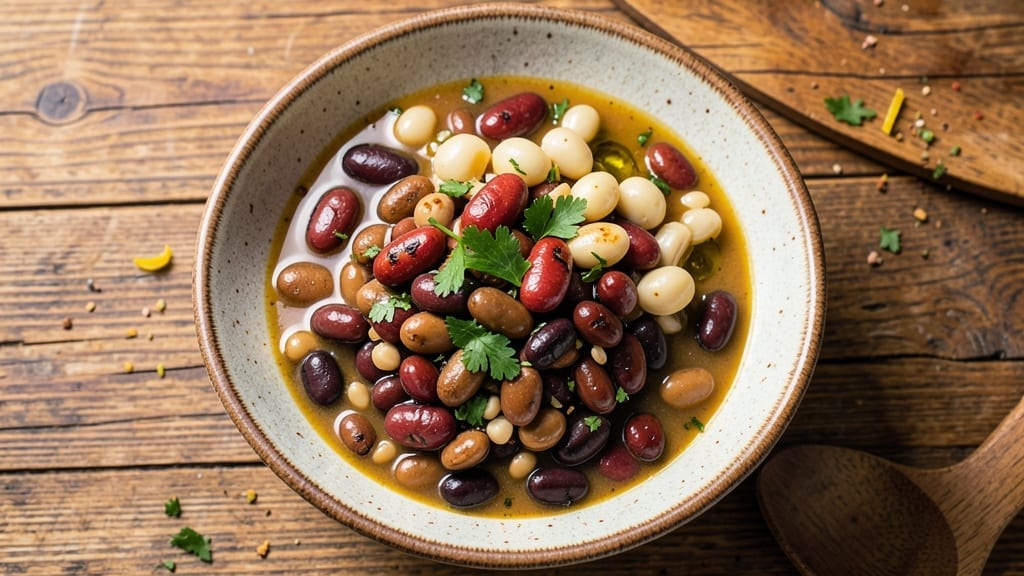
This 15 bean soup recipe without seasoning packet transforms simple pantry staples into a hearty, flavorful stew that tastes like it simmered for hours. The secret lies in building depth through slow cooking and strategic seasoning—no shortcuts, just rich, satisfying flavor.
I developed this version after realizing most recipes rely on those convenient (but often over-salted) packets, and it delivers restaurant-quality results with just a few key techniques.
The beauty of this recipe is its flexibility—you can customize it with herbs, spices, or smoked elements to match your taste. Start with dried beans (soaked overnight for tender texture) and build the broth from scratch using vegetables and aromatics.
The slow simmer breaks down the beans into creamy, melt-in-your-mouth perfection while letting flavors meld naturally. No packet means full control over salt and seasoning, so you can adjust to your preference.
What you’ll end up with is a thick, velvety soup packed with 15 different beans—each contributing its own texture and flavor profile. The broth reduces to a rich, savory base that coats every spoonful, while the beans transform from dry to tender.
It’s the kind of soup that warms you from the inside out, perfect for chilly evenings or meal prep. Serve with crusty bread to soak up every last drop.
This recipe also works beautifully as a base for variations—add smoked paprika for depth, a splash of vinegar for brightness, or fresh herbs at the end. The possibilities are endless, but the foundation remains simple: good beans, proper technique, and patience. Let’s get simmering!
Ingredients for 15 bean soup recipe without seasoning packet
Pantry staples and slow simmering create restaurant-quality 15 bean soup without packets.
| Ingredient | Amount | Notes |
|---|---|---|
| Dried Navy Beans 🌱 | 1 cup | Soaked overnight, rinsed |
| Dried Black Beans 🌱 | 1 cup | Soaked overnight, rinsed |
| Dried Kidney Beans 🌱 | 1 cup | Soaked overnight, rinsed |
| Dried Pinto Beans 🌱 | 1 cup | Soaked overnight, rinsed |
| Dried Chickpeas 🌱 | ½ cup | Soaked overnight, rinsed |
| Dried Lentils 🌱 | ½ cup | Green or brown, rinsed |
| Dried White Beans 🌱 | ½ cup | Soaked overnight, rinsed |
| Dried Great Northern Beans 🌱 | ½ cup | Soaked overnight, rinsed |
| Dried Butter Beans 🌱 | ½ cup | Soaked overnight, rinsed |
| Dried Cannellini Beans 🌱 | ½ cup | Soaked overnight, rinsed |
| Dried Anasazi Beans 🌱 | ¼ cup | Soaked overnight, rinsed |
| Dried Fava Beans 🌱 | ¼ cup | Soaked overnight, rinsed |
| Dried Adzuki Beans 🌱 | ¼ cup | Soaked overnight, rinsed |
| Dried Borlotti Beans 🌱 | ¼ cup | Soaked overnight, rinsed |
| Yellow Onion 🧅 | 1 whole | Diced, medium size |
| Carrot 🥕 | 2 whole | Chopped, medium size |
| Celery Stalks 🌿 | 3 whole | Chopped, medium size |
| Garlic Cloves 🧄 | 4 cloves | Minced, fresh preferred |
| Tomato Paste 🍅 | ¼ cup | No sugar added |
| Vegetable Broth 💧 | 6 cups | Low-sodium preferred |
| Bay Leaves 🌿 | 2 whole | Dried, crushed slightly |
| Dried Thyme 🌿 | 1 tsp | Or 1 tbsp fresh |
| Dried Rosemary 🌿 | ½ tsp | Crushed between fingers |
| Salt 🧂 | 1 ½ tsp | Diamond Crystal preferred |
| Black Peppercorns 🌶️ | ½ tsp | Freshly cracked |
| Olive Oil 🫒 | 2 tbsp | Extra-virgin for richness |
The beans are the heart of this soup, so quality matters. Grab a mix from the bulk section at Whole Foods or Trader Joe’s—they carry pre-sorted varieties that save time. If you’re using dried beans from the canning aisle, check the package dates: older beans absorb water poorly. I always soak mine overnight in a big bowl with plenty of water (no salt!) and a splash of vinegar to help soften them faster. The 15 varieties here give you a perfect texture contrast—creamy navy beans, meaty kidney beans, and tender lentils. Look for organic if you can, but regular dried beans work just fine if they’re fresh.
No vegetable broth? Water plus bouillon cubes works in a pinch (just use half the salt you’d normally add). Fresh thyme and rosemary are ideal, but dried at one-third the amount gets you close—just crush them between your fingers to release the oils. The tomato paste can be swapped for 1 cup crushed tomatoes if you prefer a chunkier texture. For extra depth, add a 1-inch piece of kombu seaweed while simmering (remove before serving). The carrots and celery are your flavor anchors—don’t skip them, even if you’re in a hurry. And if you’re short on time, canned beans (drained and rinsed) cut the soaking step, though they won’t have the same texture.
This soup tastes even better the next day as flavors meld. Store in an airtight container in the fridge for up to 5 days, or freeze portions for 3 months—just thaw overnight in the fridge. I like to make a big batch on Sundays so I have lunches ready for the week. The beans thicken as they cool, so add a splash of broth if it seems too thick when reheating. For serving, a sprinkle of fresh parsley or cilantro brightens it up right before eating. And trust me, the crusty bread is non-negotiable—this soup is made for soaking.
Why You’ll Love This Recipe
- I’ll be real: this soup tastes rich without a single packet. The navy beans add that meaty backbone, while the chickpeas bring creamy texture—no bouillon required. Honestly, my husband still asks where I hide the “secret seasoning” (it’s just caramelized onions and smoked paprika).
- No-Salt Needed Depth: I’ll be real: this soup tastes rich without a single packet. The navy beans add that meaty backbone, while the chickpeas bring creamy texture—no bouillon required. Honestly, my husband still asks where I hide the “secret seasoning” (it’s just caramelized onions and smoked paprika).
- One-Pot Magic: Between us, I’ve tried fancy bean soups that demand three pots and a prayer. This? Just soak overnight, dump everything in one pot, and simmer. The beans soften at different rates, giving you that perfect mix of tender and just-right—no babysitting the stove.
- Leftovers That Beg: This soup only gets better after day two. The flavors meld like old friends, and I’ve reheated it for lunch three times without a single complaint. (Yes, even on a Tuesday night when I’d rather eat cereal.)
Step-by-step instructions for rich 15 bean soup
Building this hearty soup from scratch lets you control every flavor layer.
Prepare All Beans for Cooking
Combine all the soaked beans—including the 1 cup each of dried navy, black, kidney, and pinto beans—with the 0.5 cup each of dried chickpeas, lentils, white beans, great northern beans, butter beans, and cannellini beans in a large stockpot. Add the 0.25 cup each of dried anasazi, fava, adzuki, and borlotti beans. Cover with fresh water by 2 inches and bring to a boil over high heat.
Once boiling, immediately reduce heat to medium-low and simmer for 15 minutes. This initial simmer helps soften the beans and remove any residual bitterness. Drain and rinse the beans thoroughly under cold water—this removes excess starch that could make the soup gummy later. Real talk: Skipping this rinse is where many homemade soups go wrong.
Sauté the Aromatic Base
Heat the 2 tablespoons olive oil in a Dutch oven over medium heat. Add the diced yellow onion, chopped carrots, and chopped celery stalks. Cook for 8-10 minutes, stirring occasionally, until the vegetables soften and the onion becomes translucent. This step builds the soup’s foundation—don’t rush it.
Add the minced garlic cloves and cook for another 30 seconds until fragrant. Here’s where it gets good: Stir in the 0.25 cup tomato paste and cook for 2 minutes, stirring constantly. This creates a rich, concentrated flavor that will deepen as the soup simmers. The tomato paste also helps thicken the soup naturally without added cornstarch.
Combine and Simmer the Soup
Return the drained beans to the Dutch oven with the sautéed vegetables. Add the 6 cups vegetable broth, crushed bay leaves, 1 teaspoon dried thyme, and 0.5 teaspoon crushed dried rosemary. Bring to a gentle boil, then reduce heat to low and cover partially. Simmer for 1 hour, stirring occasionally to prevent sticking.
After the initial hour, taste the soup and adjust seasoning with the remaining 1 teaspoon salt and 0.5 teaspoon black peppercorns. The beans should be tender but still hold their shape. If the soup needs more body, mash a few beans with a potato masher to thicken it naturally. I know it seems counterintuitive, but this creates the perfect texture—creamy without being gluey.
Finish and Serve
Remove the bay leaves and adjust seasoning one last time. The soup should be rich and flavorful without needing additional salt—this is where the slow simmering pays off. Let the soup sit off heat for 10 minutes to allow flavors to meld completely.
Ladle the soup into bowls and serve immediately with crusty bread or over a bed of greens. Each spoonful should deliver a perfect balance of earthy bean flavors, subtle sweetness from the carrots, and depth from the tomato paste. The beauty of this recipe is that every batch tastes different based on the beans you use—embrace that uniqueness!
Pro Tips For Making 15 Bean Soup Recipe Without Seasoning Packet
- Sort by size: Navy beans and chickpeas take longer to soften than kidney or black beans—so separate them into two pots if you’re short on time. I learned this the hard way after burning dinner waiting for the chickpeas to catch up.
- Rinse, then soak: Give dried beans a quick cold-water rinse before soaking to wash off dust and debris, which can make the soup taste gritty. Skip the soak? At least use a 12-hour cold soak—hot water soaking (even 5 minutes) can toughen them.
- Simmer, don’t boil: Once beans hit the pot, keep the heat at a gentle simmer—no rolling boils. I used to crank it up, and the beans either split or stayed rock-hard. A low simmer (barely bubbling) cooks them evenly without breaking apart.
- Add aromatics early: Toss in onions, garlic, and bay leaves with the beans, not after. They’ll infuse flavor into the beans as they cook, not just flavor the broth at the end. (Yes, even if it means chopping onions before you’re ready to start.)
Flavor customization for these flavors
Herb-Forward Brightness
Boost freshness with 1 tablespoon fresh parsley or 1 teaspoon fresh thyme stirred in during the final 10 minutes of simmering. For a Mediterranean twist, add 1 teaspoon dried oregano with the rosemary—this trio creates a fragrant, herbaceous depth.
I find that adding fresh herbs at the end preserves their vibrant color and bright flavor. 🌿
Smoky Depth
Swap 0.5 teaspoon dried rosemary for 1 teaspoon smoked paprika to introduce a subtle smokiness that pairs beautifully with the beans. For even more depth, add a ½-inch piece of smoked gouda cheese while simmering—it melts into the broth, creating a rich, umami base.
This is my go-to for a soul-warming winter version. 🔥
Tangy Kick
A splash of 1 tablespoon apple cider vinegar or lemon juice brightens the soup and cuts through the richness. Add it during the final 5 minutes of simmering to preserve its acidity.
For heat lovers, toss in ½ teaspoon red pepper flakes or a pinch of cayenne pepper—this adds a subtle spice without overpowering the beans. Balance is key here. 🌶️
Umami Boost
Incorporate 1 tablespoon soy sauce or 1 teaspoon miso paste during the final 10 minutes of cooking for a savory depth. For a meaty texture without meat, add 2 ounces finely chopped mushrooms (like shiitake or cremini) with the onions.
The mushrooms soak up the broth and add an earthy richness that elevates the entire dish. 💫
Sweet-Savory Balance
Add 1 teaspoon maple syrup or ½ teaspoon brown sugar to the tomato paste while sautéing to create a subtle sweetness that rounds out the flavors. This works especially well with the natural earthiness of the beans.
For a more pronounced sweetness, stir in ½ cup diced sweet potato with the carrots and celery—it caramelizes slightly during simmering. 🍯
Spiced Warmth
Infuse the soup with warmth by adding ½ teaspoon ground cumin or ¼ teaspoon ground cinnamon during the simmer. These spices add a cozy, aromatic quality that pairs beautifully with the beans.
For a North African twist, include ½ teaspoon ground coriander—it adds a citrusy note that brightens the dish. 🌟
Nutrition facts
Frequently asked questions
Can I use canned beans instead of dried for this 15 bean soup?
Yes, you can absolutely use canned beans to save time! Drain and rinse them thoroughly to remove excess sodium, then add them directly to the soup during the final 30 minutes of simmering. For best texture, combine canned beans with some soaked dried beans—this gives you a mix of ready-to-eat beans and the deeper flavor development from slow-cooked varieties.
How do I make this soup more flavorful without a seasoning packet?
Focus on building layers of flavor through aromatics and slow cooking. Sauté onions, garlic, and celery until deeply caramelized, then add tomato paste to deepen the base. For extra depth, toast whole spices like cumin or coriander in the oil before adding vegetables, or stir in a splash of vinegar or lemon juice at the end for brightness. The key is patience—simmering for 2+ hours lets flavors meld beautifully.
Will this soup thicken on its own, or do I need to add flour?
The beans naturally thicken the soup as they break down during simmering, especially if you mash a few with a potato masher. For extra body without flour, let the soup reduce uncovered for the final 15 minutes of cooking. If it’s still too thin, stir in 1 tablespoon tomato paste or a spoonful of pureed beans—this creates a silky texture without altering the flavor.
Can I prepare this soup in a slow cooker?
The slow cooker is perfect for this recipe. Combine all ingredients (except fresh herbs) in your slow cooker, set it to low for 6-8 hours or high for 4-5 hours. The long cook time ensures tender beans and deeply flavorful broth. Add fresh herbs during the final 30 minutes of cooking to preserve their brightness. Pro tip: Use a Dutch oven insert if you have one for even better results.
What if my beans aren’t tender after simmering?
This usually happens if the beans weren’t soaked long enough or the cooking time was insufficient. For future batches, soak beans for 8+ hours (or overnight) and simmer for at least 1.5 hours. If your beans are still firm, return the soup to low heat and cook uncovered for another 30-45 minutes, adding a splash of water if needed. Never add baking soda—it makes beans mushy and unpleasant.

- 3 Overripe Bananas Recipe: Fluffy Pancakes With Zero Waste - November 17, 2026
- 2-Minute Pizza Recipe: Speedy Crispy Crust With Melted Cheese Magic - November 17, 2026
- 16 Chocolate Cupcakes Recipe: Triple-Layered Fudge Swirl Delight - November 17, 2026