
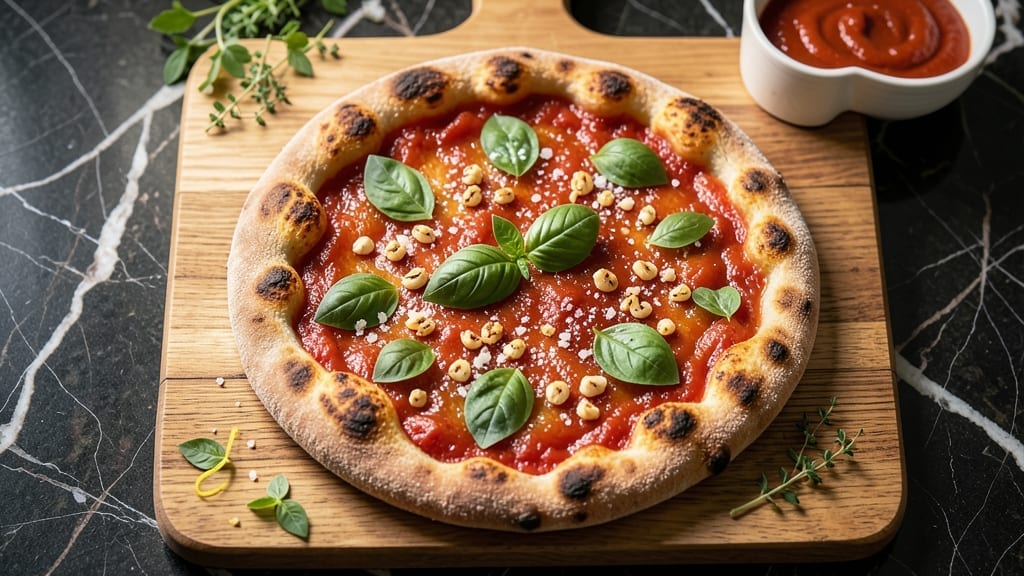
This 1727-style pizza recipe brings ancient Neapolitan tradition to your kitchen with a dough so tender it melts in your mouth and cheese blisters that burst with every bite. 🌟 The secret lies in a slow-fermented dough—inspired by 18th-century techniques—that develops deep flavor while maintaining that signature chewy-yet-light texture.
Unlike modern quick-rise doughs, this version relies on patience, transforming simple ingredients into something extraordinary through time and heat.
The dough starts with just four ingredients: high-gluten flour, water, salt, and a small amount of yeast, all mixed and left to ferment for 24 hours at room temperature.
This long fermentation creates a complex flavor profile and a structure that holds up perfectly under toppings while still yielding that iconic Neapolitan fold. The sauce is equally simple—just San Marzano tomatoes, garlic, and basil—but the slow cooking process intensifies their natural sweetness into something rich and velvety.
When it’s time to bake, the magic happens in a hot oven (or cast-iron skillet) where the crust puffs dramatically before collapsing into a crispy, airy base. The cheese—traditionally a blend of mozzarella and fior di latte—forms those coveted blisters that ooze with golden, stretchy goodness.
Each slice delivers layers of flavor: the tangy acidity of the sauce, the creamy pull of the cheese, and the subtle sweetness of the dough, all balanced in one perfect bite.
Perfect for history buffs and pizza lovers alike, this recipe bridges centuries of tradition with modern convenience. The dough can be prepped ahead and stored in the fridge, so you’re never more than 15 minutes away from a taste of 18th-century Naples.
Whether you’re recreating a slice of history or simply craving the best pizza you’ve ever made, this method delivers results that taste like they came straight from a wood-fired oven in Italy.
Ingredients for 1727 pizza
Four dough ingredients, six sauce components, and two cheeses that transform into wood-fired perfection.
| Ingredient | Amount | Notes |
|---|---|---|
| High-Gluten Pizza Flour 🌾 | 3 ½ cups | King Arthur or Caputo preferred |
| Room-Temperature Water 💧 | 1 ½ cups | Filtered preferred, ~70°F |
| Fine Sea Salt 🧂 | 1 tsp | Diamond Crystal preferred |
| Active Dry Yeast 🍞 | ¼ tsp | Fresh yeast at half amount |
| San Marzano Tomatoes 🍅 | 14 oz | Canned, whole peeled tomatoes |
| Garlic Cloves 🧄 | 3 cloves | Fresh, peeled, minced |
| Fresh Basil Leaves 🌿 | ¼ cup | Packed, stems removed |
| Extra-Virgin Olive Oil 🫒 | ¼ cup | Italian preferred, fruity |
| Fresh Mozzarella 🧀 | 8 oz | Bocconcini or whole ball |
| Fior Di Latte Cheese 🧀 | 4 oz | Fresh, torn into pieces |
| Dried Oregano 🍃 | 1 tsp | Italian preferred |
| Ground Black Pepper 🌶️ | ½ tsp | Freshly cracked |
The flour is non-negotiable—King Arthur or Caputo high-gluten flour gives that authentic Neapolitan chew. Whole Foods or Italian specialty stores carry Caputo, while King Arthur is widely available. For the yeast, fresh yeast from Trader Joe’s works beautifully if you prefer it over active dry. The San Marzano tomatoes? No shortcuts here—the sweetness and acidity balance perfectly. If you can’t find them, San Marzano-brand canned tomatoes at Italian markets are your next best bet. The fior di latte cheese is the true luxury ingredient—look for it at specialty cheese shops or order online if your local store doesn’t carry it.
No fresh basil? Dried works at one-third the amount, but it won’t have that same bright punch. The mozzarella can be the fresh bocconcini type or a whole ball—never pre-shredded, as it gets waterlogged. Short on fior di latte? Fresh mozzarella plus a sprinkle of Parmigiano-Reggiano mimics that creamy, slightly tangy profile. The olive oil should be Italian, fruity, and extra-virgin—none of that cheap grocery store stuff. For the dough, room-temperature water is critical—too cold and it won’t activate properly. Use a thermometer if you’re unsure—aim for about 70°F.
The dough ferments best in a glass bowl covered with a damp towel—keeps it from drying out. Store the fermented dough in the fridge for up to 3 days wrapped tightly in plastic. The sauce can be made 2 days ahead and stored in the fridge. Cheeses should be used within 48 hours of opening for peak freshness. For the ultimate experience, preheat your oven to 500°F with a pizza stone or cast-iron skillet inside—that’s where the magic happens.
Why You’ll Love This Recipe
- No-Yeast Struggle: I’ve made pizza dough fail on me—too sticky, too dense, or just sad. This recipe skips the guesswork: high-gluten flour and room-temp water mix like magic, no kneading required. Just toss, rest, and roll. (Yes, even on a Tuesday night when I’m exhausted.)
- San Marzano Magic: That first bite of sweet, juicy San Marzano sauce on a perfectly chewy crust? It’s the kind of flavor that makes you pause mid-slice. The acidity cuts through the richness, and the tomatoes shine without needing fancy toppings.
- Lunchbox Hero: Between us, this pizza is my go-to for meal prep. Bake a big batch, let it cool, and slice it into squares—no reheating needed. Pack it in a container, and suddenly you’ve got a lunch that feels like a cheat day. (My kids still ask for it even after school lunches.)
- Budget-Friendly Crust: High-gluten flour stretches further than all-purpose, and a single can of San Marzano tomatoes covers multiple pizzas. You’re not just saving money—you’re getting a restaurant-quality crust for pennies. Not the prettiest, but the taste makes up for it every time.
Step-by-step instructions for authentic 1727-Style Neapolitan pizza
This historic recipe brings 18th-century Naples to your kitchen—crispy crust, bubbling cheese blisters, and perfect balance.
👨🍳 Step 1: Create the Signature Dough
In a large bowl, combine the 3.5 cups high-gluten pizza flour and 1 tsp fine sea salt. Make a well in the center and add the 1.5 cups room-temperature water and 0.25 tsp active dry yeast. Mix vigorously with a wooden spoon until a shaggy dough forms—it’ll look messy, but that’s perfect.
Transfer the dough to a lightly floured surface and knead for 8-10 minutes until smooth and elastic. The dough should feel slightly tacky but not sticky. Wrap tightly in plastic wrap and let rest at room temperature for 1 hour, then refrigerate for at least 8 hours (overnight is ideal). This long fermentation develops the signature open crumb structure and complex flavor.
🍳 Step 2: Prepare the Historic Tomato Sauce
Crush the 14 oz San Marzano tomatoes by hand in a bowl (don’t use a blender—this preserves texture). In a small saucepan, combine the crushed tomatoes with 3 minced garlic cloves, 1 tsp dried oregano, and 0.5 tsp ground black pepper. Simmer over medium-low heat for 15-20 minutes until reduced by half and thickened. The sauce should coat the back of a spoon with a velvety consistency.
Remove from heat and stir in 0.25 cup extra-virgin olive oil and 0.25 cup chopped fresh basil leaves. Let cool completely before using—this prevents the dough from steaming instead of browning. The oil creates that signature 1727-style richness that modern pizzas often lack.
🥘 Step 3: Assemble Like a Neapolitan Master
Preheat your pizza stone or steel in the oven at 750°F for at least 1 hour (or use a cast-iron skillet over high heat on the stovetop). Divide the chilled dough into 4 equal portions and roll each into a 12-inch round, keeping the edges slightly thicker than the center. This creates the classic Neapolitan “cornicione” (raised edge).
Spread 2-3 tablespoons of the cooled tomato sauce on each dough round, leaving a ½-inch border uncovered. Scatter 2 oz fresh mozzarella and 1 oz fior di latte cheese on each pizza, tearing the fior di latte into irregular pieces for authentic texture. The fior di latte creates those legendary cheese blisters that burst with every bite.
🔥 Step 4: Cook for Perfect Crisp and Cheese Blisters
Transfer the assembled pizzas to your preheated stone or skillet. Bake for 90-120 seconds until the crust is deep golden brown with blackened spots and the cheese forms large, bubbling blisters. Rotate the pizza halfway if using a skillet to ensure even browning. The edges should puff dramatically while the center remains slightly soft—this is the 1727 signature texture.
Remove from heat and let rest for 2 minutes before slicing. The residual heat will finish cooking the center while the cheese continues to blister. Serve immediately with a sprinkle of freshly cracked black pepper and extra basil leaves. Each slice should offer a perfect balance of crisp crust, tender cheese, and vibrant tomato sauce—just like they made in Naples in 1727.
Pro Tips For Making 1727 Pizza
- Measure Water by Weight: High-gluten flour absorbs water like a sponge—too much, and your dough gets gummy; too little, and it’s tough. Use a scale for the water (about 60% of flour weight) and adjust by 5g increments. I learned this the hard way after tossing out three batches where the dough either stuck to my hands or collapsed under toppings.
- Proof Yeast in Warm Water: Active dry yeast wakes up faster in water that’s 105–110°F (not boiling). Mix it with a pinch of sugar first—yeast chugs that like it’s a sugar rush—and let it foam for 5–10 minutes before adding flour. Skipping this step means waiting longer for the dough to rise, and nobody has time for that.
- San Marzano Tomatoes Need a Drain: Crush or chop those tomatoes before adding them to the sauce—whole chunks turn to mush under heat. Drain them first if they’re watery (San Marzano tomatoes are juicy), then simmer the pulp with salt and a splash of olive oil. Trust me, your sauce will be smoother and brighter.
- Stretch Dough Like Taffy: High-gluten dough resists stretching, so don’t fight it. Work it in stages: fold the dough over itself a few times, let it rest 10 minutes, then stretch again. Think of it like pulling taffy—gentle pressure, not brute force. I used to yank it like a sad pizza pull, and the crust would tear every time.
Serving suggestions for 1727 pizza
Classic Pairings
Serve this historic pizza with a crisp Italian white wine like Vermentino or Frascati—their bright acidity cuts through the rich cheese and tomato sauce beautifully.
I love a chilled glass of Pinot Grigio from Alto Adige for its citrus notes that complement the basil and garlic in the sauce. 🍷
Side Dish Harmony
A simple arugula salad with lemon vinaigrette adds a peppery contrast that refreshes your palate after each cheesy bite. Toss 4 cups baby arugula with 2 tbsp extra-virgin olive oil and 1 tbsp fresh lemon juice, then finish with a pinch of flaky sea salt.
The acidity balances the pizza’s richness perfectly.
Beverage Alternatives
For non-wine drinkers, a sparkling water with lemon or San Pellegrino cleanses the palate without overpowering flavors. I also recommend a light Italian lager like Peroni—its subtle hop bitterness pairs surprisingly well with the pizza’s creamy cheese and tangy sauce.
Garnish Like a Pro
Finish each slice with a sprinkle of freshly cracked black pepper and a few basil leaves torn by hand. For extra drama, drizzle with a few drops of high-quality balsamic glaze (I use Colavita brand) to add a sweet-tart contrast.
The visual pop makes it feel like a true Neapolitan experience. ✨
Family-Style Serving
This pizza is best served family-style on a large wooden board or slate platter. Arrange slices overlapping slightly with the crust edges facing outward for an inviting presentation.
Add a small bowl of marinara sauce on the side for dipping—it’s a nod to traditional Neapolitan pizza culture where sauce was often served separately.
Make-Ahead Presentation
If prepping ahead, assemble the pizzas (without cheese) and refrigerate on parchment paper. When ready to bake, add cheese and cook as directed. For a rustic touch, serve with crusty Italian bread on the side—tear pieces to sop up any remaining sauce.
The bread also adds a nice textural contrast to the crispy pizza crust. 💛
Nutrition facts
Frequently asked questions
Why does this 1727-style pizza use such a long fermentation time?
The 24-hour fermentation creates a dough with complex flavors and an open crumb structure that’s impossible with quick-rise methods. This 18th-century technique mimics traditional Neapolitan practices where dough was often left to ferment slowly at room temperature. The result is a crust that’s both crispy and airy with a deep, slightly tangy flavor profile. This patience pays off in every bite!
Can I make this pizza without a pizza stone or oven?
Use a cast-iron skillet on your stovetop over maximum heat for 3-4 minutes per side. For a wood-fired experience, build a small fire in a grill or even a campfire—just monitor closely to avoid burning. The key is getting the surface as hot as possible to achieve those signature blisters. A heavy baking sheet works too, though results may be slightly less dramatic.
What’s the secret to getting those perfect cheese blisters?
The blisters come from using fior di latte cheese (or fresh mozzarella) and baking at 750°F+ for just 90-120 seconds. The high heat creates steam inside the cheese pockets while the exterior browns. Tear the cheese into irregular pieces and leave space between them—this allows air to circulate and creates more blistering opportunities. Don’t overcrowd the pizza or the cheese won’t blister properly!
How do I store leftover dough or pizza?
Store the fermented dough in the fridge for up to 3 days wrapped tightly in plastic. For leftovers, let the pizza cool completely, then wrap in foil and refrigerate for 3-4 days. To reheat, bake at 350°F for 5-7 minutes until the cheese is bubbly again. The crust won’t be as crispy as fresh, but the flavors remain delicious. The sauce can be frozen for 1 month if needed.
What’s the difference between this and regular Neapolitan pizza?
This 1727-style version uses a longer fermentation (24 hours vs traditional 8-12 hours) and includes extra olive oil in the sauce for richness. The cheese blend (fior di latte + mozzarella) creates more dramatic blisters, and the dough has a slightly thicker edge. While modern Neapolitan pizza focuses on simplicity, this historic version incorporates techniques that evolved over centuries to create a more flavorful, texturally complex crust.

- 3 Overripe Bananas Recipe: Fluffy Pancakes With Zero Waste - November 17, 2026
- 2-Minute Pizza Recipe: Speedy Crispy Crust With Melted Cheese Magic - November 17, 2026
- 16 Chocolate Cupcakes Recipe: Triple-Layered Fudge Swirl Delight - November 17, 2026