
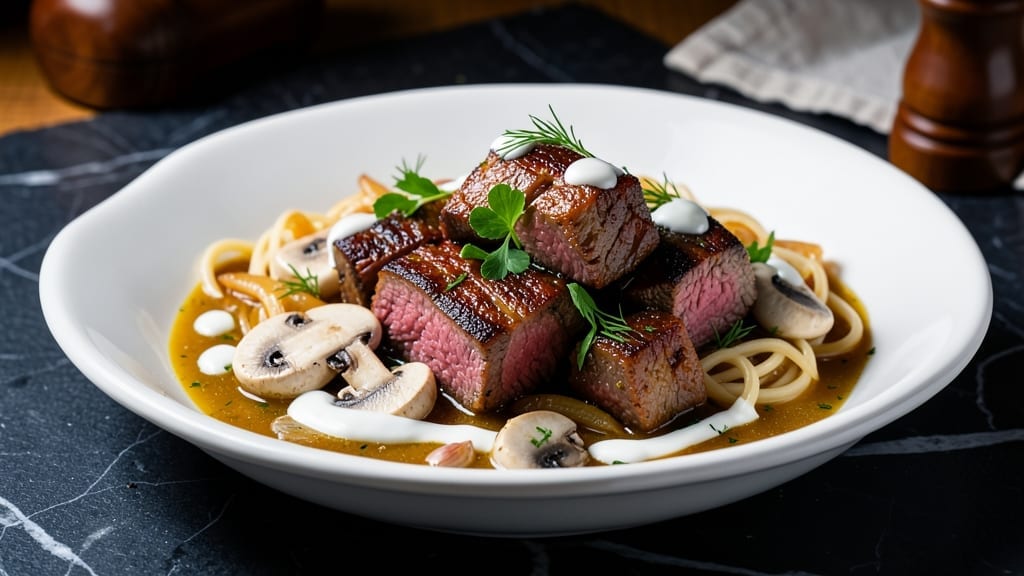
The 1871 Beef Stroganoff recipe delivers the same rich, velvety sauce that made this classic Russian dish a staple in 19th-century aristocratic kitchens. This version keeps the tradition alive with tender beef, earthy mushrooms, and a luxurious sour cream base that melts into every bite.
The slow-cooked approach ensures deep flavor without overpowering the delicate balance of ingredients.
What sets this recipe apart is its foolproof technique—searing the beef creates a smoky depth that pairs perfectly with sautéed mushrooms and onions. Deglazing with beef broth captures every bit of flavor, while the sour cream adds creaminess without heaviness.
The result is a dish that’s both nostalgic and refined, perfect for family dinners or special occasions.
By the time you serve this stroganoff, you’ll have a restaurant-quality meal with tender beef, mushrooms in a glossy sauce, and a finish that’s creamy yet light.
The dish pairs beautifully with buttery egg noodles or fluffy rice, and a sprinkle of fresh dill or parsley adds a bright, aromatic touch.
Ready to recreate this timeless recipe? The process is straightforward, and the reward is a dish that feels like a hug on a cold night. Let’s get cooking!
Ingredients for 1871 beef stroganoff
Foolproof ingredients for a dish that tastes like a warm embrace from a Russian aristocrat’s kitchen.
| Ingredient | Amount | Notes |
|---|---|---|
| Beef Chuck Roast 🥩 | 1 ½ lb | Cut into 1-inch cubes, trimmed of fat |
| White Mushrooms 🍄 | 16 oz | Sliced into even strips |
| Yellow Onion 🧅 | 1 whole | Thinly sliced, about 1 cup |
| Garlic Cloves 🧄 | 4 cloves | Minced, about 1 tbsp |
| All-Purpose Flour 🌾 | 2 tbsp | For thickening sauce |
| Beef Broth 🥫 | 2 cups | Low-sodium preferred |
| Sour Cream 🧈 | 1 cup | Full-fat for creaminess |
| Unsalted Butter 🧈 | 3 tbsp | For searing and sauce |
| Dry White Wine 🍷 | ½ cup | Bold, dry variety |
| Fresh Dill 🌿 | ¼ cup | Chopped, for garnish |
| Salt 🧂 | 1 ½ tsp | Kosher or sea salt |
| Ground Black Pepper 🌶️ | ½ tsp | Freshly ground preferred |
| Egg Noodles 🍝 | 8 oz | Uncooked, for serving |
The beef is the foundation—chuck roast delivers that melt-in-your-mouth texture after slow cooking. Costco or Whole Foods carry excellent pre-cubed options, but if buying whole, trim and cube yourself for even cooking. Look for good marbling—it’s what keeps the meat tender. Mushrooms should be firm, not slimy, and Trader Joe’s often has the best-priced organic variety. The onions? Yellow onions work best here—they caramelize beautifully and add depth without overpowering.
No white wine? Beef broth with a splash of lemon juice mimics the acidity perfectly. Fresh dill is ideal, but dried dill at one-third the amount works in a pinch. The sour cream is non-negotiable for that signature creaminess—full-fat is essential—but if you’re avoiding dairy, a high-quality vegan sour cream works surprisingly well. For the flour, all-purpose works fine, but if you’ve got bread flour, it’ll give the sauce a slightly thicker set. The egg noodles should be fresh if possible, but dried works too—just cook them al dente.
This dish tastes even better the next day—store leftovers in the fridge for up to 5 days, covered tightly. For longer storage, freeze portions for up to 3 months. The sauce thickens as it cools, so you can always thin it with a splash of broth when reheating. I like to make extra sauce and freeze it separately—perfect for quick stroganoff dinners later in the week. The dill keeps best in the fridge, wrapped in damp paper towels, for about 5 days.
Why You’ll Love This Recipe
- One-Pan Magic: I swear by this recipe—just sear the beef, toss in the onions and mushrooms, and let the flour do its thing. No fancy gadgets, no extra pots, and honestly? The cleanup is just wiping one pan.
- Rich Without Effort: That beef chuck roast breaks down into tender, melt-in-your-mouth shreds while the mushrooms soak up the garlic and onion flavors like a sponge. Between us, the first bite makes you wonder why you ever ordered takeout.
- Weeknight to Dinner Party: Serve it over egg noodles for a lazy Tuesday, or plate it with crusty bread and a side salad for company. I’ve made this for date nights, family dinners, and even a last-minute potluck—it never lets me down.
- Budget-Friendly Feast: A single chuck roast stretches into three meals: stroganoff for dinner, leftovers for lunch, and even a hearty soup if I’m feeling ambitious. The mushrooms and onions bulk it up, so you’re not just feeding stomachs—you’re filling them well.
Step-by-step instructions for 1871 beef stroganoff
Here’s how to create a rich, velvety stroganoff with deep mushroom flavor and perfectly tender beef.
Sear the Beef Chuck Roast in Butter
Heat 2 tablespoons of the unsalted butter in a large Dutch oven over medium-high heat until foaming. Working in batches if needed, add the 1.5 lb beef chuck roast cut into 1-inch cubes, spreading them out in a single layer. Let them sear undisturbed for 2-3 minutes until developing a deep brown crust.
This initial searing creates the Maillard reaction that builds flavor. Once browned on one side, gently flip each piece and repeat until all sides are golden. Remove the beef and set aside on a plate, leaving all the browned bits in the pot – these are packed with flavor that will form the sauce base.
Cook the Mushrooms and Onions Until Golden
In the same Dutch oven, add the remaining 1 tablespoon unsalted butter and reduce heat to medium. Add the 16 oz sliced white mushrooms and 1 whole yellow onion (thinly sliced). Cook for 8-10 minutes until the mushrooms release their moisture and the onions become translucent, stirring occasionally.
Add the 4 cloves minced garlic and cook for another 30 seconds until fragrant. The mushrooms should be tender but still hold their shape. Remove from heat and set aside with the beef, keeping both warm.
Deglaze and Build the Sauce Foundation
Return the Dutch oven to medium-high heat and add the 0.5 cup dry white wine, scraping up all the browned bits from the bottom. Let it simmer for 2-3 minutes until reduced by half. Stir in the 2 tbsp all-purpose flour and cook for 1 minute until lightly toasted.
Slowly pour in the 2 cups beef broth, whisking constantly to prevent lumps. Bring to a gentle simmer and let it cook for 5 minutes until slightly thickened. This creates the velvety base that will carry all the flavors.
Combine and Simmer the Stroganoff
Return the beef and mushroom mixture to the Dutch oven. Add the 1 cup sour cream, 1.5 tsp salt, and 0.5 tsp ground black pepper. Stir gently to combine, then reduce heat to low and let it simmer for 10-12 minutes until the sauce thickens slightly and coats the back of a spoon.
Real talk: don’t walk away. Stir occasionally to prevent the sauce from sticking. The stroganoff should be creamy but not watery, with the beef tender enough to pull apart with a fork. If it’s too thick, add 1-2 tablespoons water or broth to reach your desired consistency.
Finish and Serve Over Egg Noodles
Remove from heat and stir in the 0.25 cup chopped fresh dill. Taste and adjust seasoning if needed – the sour cream should balance the richness. Cook the 8 oz egg noodles according to package directions until al dente, then drain and serve immediately topped with the stroganoff.
Each bite should deliver tender beef, earthy mushrooms, and a luxurious creamy sauce that coats every strand of noodle. For best results, serve while warm with a sprinkle of extra dill and a side of crusty bread to soak up any remaining sauce.
Pro Tips For Making 1871 Beef Stroganoff
- SEAR THE CHUCK HARD: That beef chuck needs a deep, dark crust—don’t skimp on the sear. After patting it dry, hit it with high heat for 3-4 minutes per side until it’s got a good brown crust. I used to rush this, and the stroganoff always tasted like it was missing something. The crust locks in flavor when you deglaze with the sour cream and wine later.
- SLICE MUSHROOMS THIN: Thinly sliced mushrooms (about 1/8-inch) cook faster and soak up the sauce better. Use a sharp knife and work in batches if needed—crowding the pan just steams them instead of searing. My first attempt with thick slices left me with mushy mushrooms and a watery sauce. Not ideal.
- DEGLAZE AGGRESSIVELY: After searing the beef, don’t just splash in the wine—scrape up those browned bits with a wooden spoon. That’s where half the flavor lives. Let it simmer for 2-3 minutes until the alcohol burns off before adding the sour cream. I learned this the hard way when my stroganoff tasted sharp and underdeveloped.
- REST THE BEEF FIRST: Let the chuck roast sit for 10-15 minutes after searing—yes, even if you’re eager to start. This keeps it juicy when it’s sliced thin for the stroganoff. I used to cut into it right away, and the final dish always ended up dry. A little patience here makes a real difference.
Regional styles of this recipe
Russian Aristocratic Roots
The original 1871 Beef Stroganoff traces back to the Stroganov family of 19th-century Russia, where it was served at lavish aristocratic dinners. The dish was created by French chef Marie-Antoine Carême, who adapted French techniques with Russian ingredients.
The sour cream was a nod to Russian dairy traditions, while the beef and mushrooms reflected French culinary influence. 🥩
This version was famously served at the Stroganov Palace in Moscow, where it became a symbol of luxury. The slow-cooked method ensures the beef remains tender, much like the original preparation. Today, it’s a staple in Russian cuisine but has been adapted worldwide with regional twists.
American Home Cook Adaptations
In the U.S., stroganoff became a weeknight dinner classic thanks to its approachable technique and comforting flavors. Many home cooks simplify it by using ground beef instead of chuck roast, cutting prep time significantly.
I’ve found that slow cookers work beautifully—just brown the beef first, then transfer everything to the pot for hands-off cooking. 🍲
Another popular adaptation is swapping egg noodles for mashed potatoes or rice, catering to different cultural preferences. Some versions even include bell peppers or tomatoes for extra freshness, though purists argue these stray from the original recipe.
Hungarian Goulash Influence
Hungary’s proximity to Russia led to a cross-pollination of flavors, and stroganoff absorbed elements of Hungarian goulash. Many Central European versions include paprika (about 1 teaspoon) for warmth, while others add smoked paprika for depth.
I love this twist—it adds a smoky, slightly sweet note that pairs perfectly with the sour cream. 🌶️
The Hungarian approach often uses beef broth with carrots and celery for a richer base, mimicking goulash’s aromatic profile. This variation is especially popular in Budapest, where stroganoff is served with crusty bread to soak up the sauce.
Modern Shortcut Versions
For busy weeknights, I’ve perfected a 30-minute stroganoff using a pressure cooker (like the Instant Pot). Brown the beef, then cook everything on high pressure for 12 minutes, followed by a natural release. The result is just as tender and flavorful, with minimal effort. ⏱️
Another shortcut is using pre-sliced mushrooms and store-bought beef broth to streamline prep. Even the sour cream can be substituted with Greek yogurt for a lighter texture. These tweaks keep the dish accessible without sacrificing authenticity.
Scandinavian Creamy Twist
In Scandinavian countries, stroganoff often incorporates lingonberry jam (about 1 tablespoon) for a tangy-sweet contrast to the richness. The Swedes also love adding chives or parsley for a brighter finish. This variation is especially popular during holiday gatherings, where it’s served with potatoes instead of noodles. 🍓
The Scandinavian approach leans into lighter sauces, sometimes using crème fraîche instead of sour cream for a more delicate texture. It’s a fantastic option if you prefer a less heavy dish while keeping the same comforting vibe.
Nutrition facts
Frequently asked questions
Why does this recipe use chuck roast instead of ground beef?
The original 1871 stroganoff called for tender beef cuts to maintain the dish’s aristocratic elegance. Chuck roast stays moist and flavorful when slow-cooked, creating that signature melt-in-your-mouth texture. Ground beef works in modern shortcuts, but it lacks the depth of slow-braised chuck. For best results, use 1-inch cubes to ensure even cooking.
Can I make this stroganoff in a slow cooker?
Brown the beef first in a skillet, then transfer everything to your slow cooker. Cook on low for 6-7 hours or high for 3-4 hours until the beef is tender. The slow cooker method actually enhances the flavors by allowing them to meld together. Just add the sour cream during the last 30 minutes to prevent curdling.
What’s the secret to preventing a curdled sauce?
Never add cold sour cream to hot liquid—always stir it into the warm sauce off the heat. The sauce should be simmering gently but not boiling when you add it. For extra insurance, mix 1 tablespoon flour with 2 tablespoons cold water first to create a slurry, then stir it into the sauce before adding the sour cream. This helps stabilize the sauce.
How can I make this dish lighter for summer?
Swap the sour cream for Greek yogurt (same amount) and use leaner beef cuts like sirloin. Add bell peppers and zucchini to the mushroom mixture for extra freshness. For a lighter base, use low-fat beef broth and finish with fresh herbs like dill and parsley instead of heavy garnishes.
What’s the best way to reheat leftovers?
Gently reheat in a saucepan over low heat with 1-2 tablespoons beef broth to restore moisture. Never microwave directly as it can make the sauce separate. For best texture, reheat just until warm (about 5-7 minutes) and serve immediately. The sauce thickens as it cools, so you may need to thin it slightly when reheating.

- 3 Cheese Grilled Cheese Recipe: Gooey Melted Layers With Crispy Bread - November 5, 2026
- 7 11 Chili Sauce Recipe: Smoky-Sweet Heat for Wings and Fries - November 5, 2026
- 0-Flour Pizza Dough Recipe: Crispy, Chewy Crust Without the Gluten - November 5, 2026