
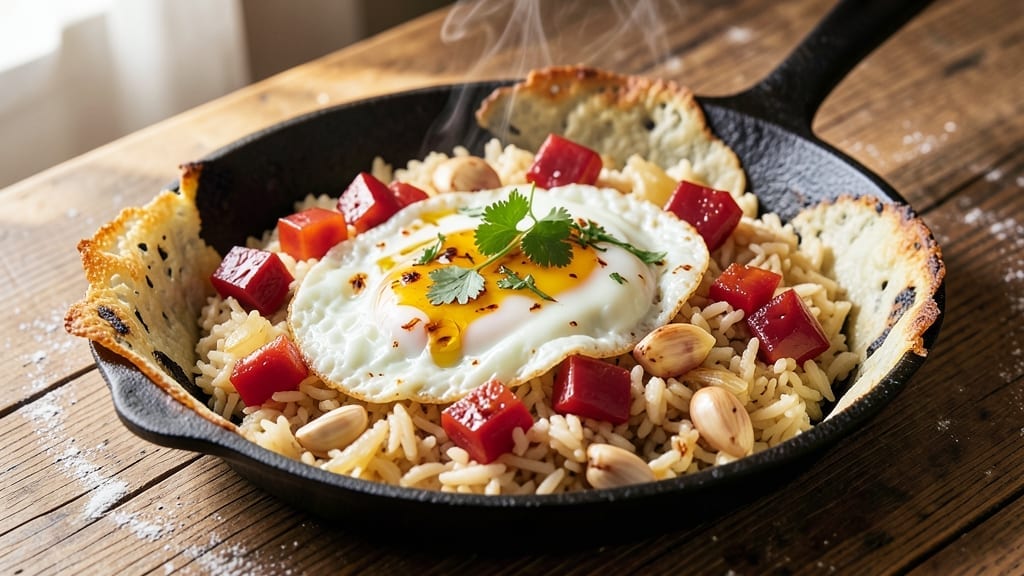
This 1960s Spanish rice recipe brings the rich, aromatic tradition of paella-inspired cooking to your kitchen with just one pot. The secret lies in the slow infusion of saffron and sofrito—a classic Spanish base of tomatoes, onions, garlic, and peppers—that transforms simple rice into a fragrant, golden dish.
I first discovered this method while researching mid-century Spanish home cooking, where one-pot meals were both practical and deeply flavorful.
The beauty of this recipe is its simplicity: rice sautéed until toasted, then simmered in warm broth until tender and fluffy. Traditional versions often included ground meat or chorizo, but the rice itself is the star—infused with warm spices and saffron for that signature golden hue.
It’s the kind of dish that feels like a hug from a Spanish abuela, perfect for family gatherings or lazy weeknight dinners.
What makes this version special is the one-pot technique, which keeps everything simple while delivering restaurant-quality results. The rice cooks evenly, absorbing the rich flavors of the sofrito and saffron, creating a dish that’s both comforting and elegant.
The aroma alone will transport you to a 1960s Spanish kitchen, where meals were made with love and patience.
Serve it as a main course with grilled fish or chicken, or as a side with roasted vegetables. The leftovers reheat beautifully, making it ideal for meal prep. Here’s how to bring this timeless tradition to your table.
Ingredients for 1960s spanish rice
One-pot magic with saffron threads and sofrito—simple ingredients for a dish that tastes like Spanish tradition.
| Ingredient | Amount | Notes |
|---|---|---|
| Long-Grain White Rice 🍚 | 1 ½ cups | Uncooked, rinsed thoroughly |
| Saffron Threads 🌼 | ¼ tsp | High-quality, crushed gently |
| Extra-Virgin Olive Oil 🫒 | ½ cup | Spanish variety preferred |
| Yellow Onion 🧅 | 1 whole | Medium, finely diced |
| Garlic Cloves 🧄 | 4 cloves | Fresh, minced finely |
| Red Bell Pepper 🌶️ | 1 whole | Medium, diced small |
| Canned Tomato Sauce 🍅 | 1 cup | San Marzano preferred |
| Chicken Broth 💧 | 3 cups | Low-sodium, warm |
| Bay Leaves 🍃 | 2 whole | Fresh, dried works too |
| Ground Cumin 🌿 | ½ tsp | Toasted for depth |
| Smoked Paprika 🌶️ | 1 tsp | Sweet or hot variety |
| Salt 🧂 | 1 ½ tsp | Diamond Crystal preferred |
| Fresh Lemon Juice 🍋 | 2 tbsp | Freshly squeezed |
| Fresh Parsley 🌿 | ¼ cup | Chopped, for garnish |
Saffron is the star here, so splurge on the good stuff—those tiny threads should be bright orange, not dusty. La Boqueria Market in Barcelona sells the best, but any reputable spice shop will have quality saffron. The sofrito base—onion, garlic, bell pepper—needs to be cooked low and slow until it’s practically a paste. Don’t rush this step. I always grab my bell peppers from Whole Foods when they’re on sale—they’re sweeter and more flavorful than the average grocery store. For the rice, Bomba or Calasparra varieties are traditional, but long-grain white works perfectly in a pinch.
No saffron? Turmeric at one-third the amount gives color, but no saffron flavor—don’t skip it if you can find it. Short on bell pepper? Roasted red pepper from a jar works in a squeeze, but fresh is better. The tomato sauce can be homemade (simmer canned tomatoes with garlic and olive oil), but San Marzano is worth the investment. For the broth, low-sodium is key—you’ll be adding salt later. The cumin and paprika? Toast them in a dry pan for 30 seconds before adding to the pot—this brings out their aroma. Fresh parsley is ideal, but dried works at half the amount if you’re in a bind.
This rice keeps beautifully—3-4 days in the fridge, 3 months frozen. The flavors actually deepen overnight, so make extra. I always portion mine into glass containers with a splash of olive oil on top to keep it fresh. Reheat gently with a splash of water or broth—microwaving dries it out. The saffron-infused rice reheats even better than the day it’s made, which is why I make double batches for the week.
Why You’ll Love This Recipe
- One-Pan Magic: I swear by this for nights when I’d rather not wash a million dishes. Sauté the onions and garlic in olive oil, toss in the rice, add the saffron-infused broth—boom—20 minutes later, golden, fragrant rice with zero extra pots.
- Saffron Secret Weapon: That tiny pinch of saffron threads? It transforms basic rice into something luxurious. The aroma alone makes my kitchen smell like a Spanish tapas bar, and the flavor? Rich, nutty, and just a little earthy—like sunshine in a grain.
- Weeknight Workhorse: Between us, this rice pairs with everything—grilled chicken, shrimp, even just a charred veggie plate. I make a big batch on Sundays and use it all week, from lunches to dinner leftovers. Honestly, it’s the only side dish I don’t dread repeating.
- Budget Luxury: Long-grain rice and onions won’t break the bank, but the saffron makes it feel special. I stretch a single batch into three meals, and the leftovers reheat like a dream. Not the prettiest, but the taste makes up for it—every time.
Step-by-step instructions for 1960s Spanish rice
This one-pot method delivers authentic Spanish rice with saffron’s golden hue and smoky depth.
Bloom the Saffron and Sauté the Aromatics
In a large, heavy-bottomed skillet, gently toast the 0.25 tsp saffron threads over low heat for 30 seconds until fragrant. This awakens the saffron’s natural aroma without burning it. Immediately add the 0.5 cup extra-virgin olive oil and set the skillet over medium heat.
Add the finely diced yellow onion and cook for 5 minutes until softened but not browned. Stir in the minced garlic cloves and cook for another 30 seconds until the garlic releases its aroma but doesn’t turn golden. Here’s where the magic begins—this foundational step builds the flavor base for the entire dish. Keep the heat steady to prevent burning the delicate garlic.
Develop the Base with Peppers and Spices
Add the diced red bell pepper to the skillet and cook for 4-5 minutes until softened and slightly caramelized. The peppers should release their sweetness and blend seamlessly with the onions and garlic. Stir in the 0.5 tsp ground cumin and 1 tsp smoked paprika, toasting for 30 seconds to deepen their flavors through gentle roasting.
This is the moment that matters: the spices should be incorporated completely, creating a cohesive aromatic paste. If you notice any raw spice flecks, give it another 10 seconds of stirring. The result should be a rich, earthy base that forms the heart of your Spanish rice. Real talk: don’t rush this step—properly developed spices make all the difference in authentic flavor.
Add Rice and Toast Until Nuttier
Increase the heat to medium-high and add the 1.5 cups long-grain white rice, stirring constantly for 2-3 minutes until the grains become translucent at the edges. This toasting step, called “sofrito” in Spanish cooking, creates a nuttier flavor and prevents the rice from becoming mushy. You’ll see the rice begin to separate slightly from the oil—this is your visual cue that it’s ready for the next step.
Here’s the thing—if the rice starts to brown too quickly, reduce the heat slightly. You want toasted rice, not burnt. The goal is to develop flavor without cooking the rice through. Once the rice is properly toasted, add the 1 cup canned tomato sauce and stir to combine completely, coating each grain with the vibrant sauce.
Build the One-Pot Masterpiece
Pour in the 3 cups warm chicken broth and add the 2 whole bay leaves. Stir in the 1.5 tsp salt, bringing everything to a gentle simmer. The liquid should just cover the rice—if it looks too shallow, add 2-3 tablespoons water. Once simmering, reduce heat to low, cover the skillet with a tight-fitting lid, and cook for 18-20 minutes without disturbing it.
This is where patience pays off. The rice will absorb the liquid gradually, developing that perfect texture we’re after. Don’t peek or stir—the steam needs to circulate freely to create evenly cooked grains. After 18 minutes, check the rice: it should be tender with just a slight bite remaining. If it’s not quite there, cook for another 2 minutes before checking again.
Finish with Brightness and Garnish
Once the rice is perfectly tender, remove the skillet from heat and stir in the 2 tbsp fresh lemon juice. This final touch brightens all the flavors and cuts through the richness of the saffron and spices. Let the rice sit off heat for 5 minutes to allow the lemon to fully integrate and the flavors to meld.
Before serving, remove and discard the bay leaves. Stir in the 0.25 cup chopped fresh parsley and taste, adjusting seasoning if needed. The finished rice should have a vibrant golden color from the saffron, with each grain distinct yet clinging together slightly. Serve immediately with your favorite grilled protein or as a standalone dish—this Spanish rice truly stands on its own.
Pro Tips For Making 1960s Spanish Rice
- Toast the Onions Right: I learned this the hard way—cooking the onions too fast turns them mushy and dulls the flavor. Sauté them over medium heat for 8-10 minutes until they’re deep golden and caramelized, stirring often. That’s where the sweetness comes from, and it’s the foundation of the dish.
- Bloom the Saffron: Don’t just toss saffron threads into the pot—soak them in a splash of warm water or broth for 5-10 minutes first. This unlocks their color and aroma, which is the whole point of using it. If you skip this, you’re missing half the magic.
- Use a Heavy Pot: A thin, flimsy pot won’t distribute heat evenly, and you’ll end up with unevenly cooked rice. A heavy-bottomed Dutch oven or stainless steel pot keeps the temperature steady, so the rice cooks through without burning. Trust me, your rice will thank you.
- Stir Once, Then Stop: After adding the rice, stir it into the onions just once to coat the grains. Then leave it alone—no poking or prodding. Over-stirring releases starch too early, making the rice gummy. Let it cook undisturbed for the first 5 minutes, then stir gently again.
Best sauces and condiments for this 1960s spanish rice
Saffron-Infused Tomato Sauce
Elevate your Spanish rice with a saffron-infused tomato sauce—simmer 1 cup San Marzano tomato sauce with 0.25 tsp saffron threads and 1 minced garlic clove over low heat for 10 minutes.
The saffron dissolves beautifully, adding its signature golden hue and floral aroma to the sauce. Use this instead of plain tomato sauce in Step 3 for an extra layer of depth. 🌼
Garlic Aioli Drizzle
Brighten each bite with a garlic aioli drizzle—whisk 3 tbsp mayonnaise with 1 minced garlic clove, 1 tsp lemon juice, and a pinch of salt. Drizzle lightly over the finished rice just before serving.
The creamy contrast balances the smoky paprika and saffron perfectly. I like to use Duke’s mayonnaise for its rich, tangy flavor. 🧄
Smoked Paprika Oil
Infuse 0.5 cup extra-virgin olive oil with 1 tsp smoked paprika and 1 tsp ground cumin by gently heating for 5 minutes over low heat. Strain and drizzle over the rice before serving for an extra smoky kick.
This technique adds a restaurant-quality finish without overpowering the dish. Store any leftover infused oil in an airtight container for up to 2 weeks in the fridge. 🌶️
Lemon-Herb Vinaigrette
For a refreshing contrast, mix 2 tbsp fresh lemon juice, 3 tbsp olive oil, 1 tbsp chopped parsley, and ½ tsp salt. Drizzle lightly over the rice or serve on the side for dipping.
The acidity cuts through the richness, making each bite feel fresh. This works especially well if you’re serving the rice as a standalone dish. ✨
Spicy Chorizo Crumbles
Add ½ cup diced Spanish chorizo to the sofrito in Step 2, cooking until crispy. The chorizo’s smoky, spicy flavor transforms the rice into a heartier, more robust dish.
I recommend La Querencia chorizo for its authentic, slightly sweet heat. For a vegetarian version, swap in smoked tofu crumbles seasoned with ½ tsp smoked paprika. 🔥
Nutrition facts
Frequently asked questions
Why does this recipe use saffron instead of turmeric?
Saffron delivers that signature golden hue and delicate floral aroma that turmeric can’t match. While turmeric works in a pinch (use one-third the amount), it lacks saffron’s complex flavor profile. The 1960s Spanish kitchen valued saffron for its ability to elevate simple rice into something special—worth the investment for authentic results.
Can I make this Spanish rice without chicken broth?
Use vegetable broth for a vegetarian version or beef broth for deeper richness. Just ensure it’s low-sodium—you’ll be adding salt later. The key is warm broth (not boiling) to help the rice absorb flavors evenly during cooking.
What’s the secret to perfectly toasted rice?
Keep the heat at medium-high and stir constantly for 2-3 minutes until the grains become translucent at the edges. The goal is to develop a nuttier flavor without burning. If it starts browning too quickly, reduce the heat slightly—this prevents burnt spots while still building that essential toasted base.
How do I prevent the rice from becoming mushy?
Never lift the lid while cooking! The steam needs to circulate freely for 18-20 minutes without interruption. Also, use long-grain white rice (like Bomba or Calasparra) and measure it precisely—overcrowding the pot causes mushiness.
Can I add meat to this traditional Spanish rice?
Yes! The 1960s version often included ground chorizo or seasoned ground beef. Brown ½ cup meat with the onions and garlic in Step 1, then proceed with the recipe. For a vegetarian option, swap in sautéed mushrooms or diced bell peppers for texture.

- 3lb Prime Rib Roast Recipe: Juicy Pink Center Guaranteed in 3 Hours - October 31, 2026
- 5 Spice Cake Recipe: Warmly Spiced Layers With Crunchy Top - October 31, 2026
- 1950’s Macaroni and Cheese Recipe: Nostalgic Creamy Cheese Sauce with Buttery Noodles - October 31, 2026