
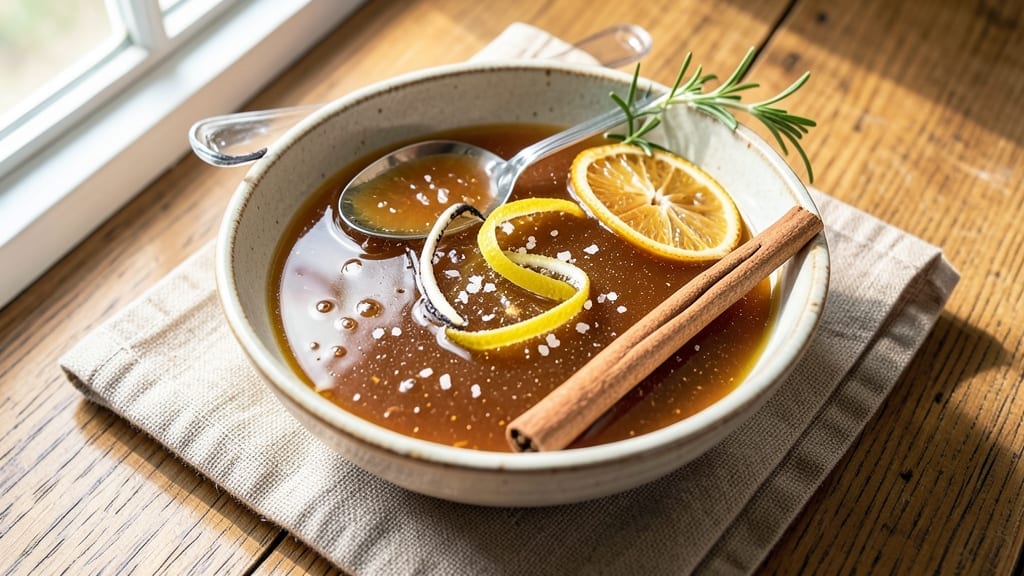
A 2:1 sugar syrup recipe is the secret weapon behind perfectly balanced cocktails, silky desserts, and restaurant-quality drinks. This simple ratio—two parts sugar to one part water—dissolves completely for a smooth, pour-ready syrup that enhances flavors without overpowering them.
I’ve refined this method over years of mixology and baking, and it’s become my go-to for everything from classic Old Fashioneds to homemade sodas.
The beauty of this syrup lies in its versatility and ease. With just 5 minutes of active time and 30 minutes of resting, you’ll have a foolproof base that’s ready to elevate any recipe.
The key is gentle heat and patience—no boiling required—to ensure a crystal-clear, flavor-packed syrup that keeps indefinitely in the fridge. Whether you’re shaking up a cocktail or drizzling over pancakes, the results are consistently perfect.
What sets this recipe apart is its adaptability. Start with the classic version, then experiment with citrus peels, herbs, or spices for flavored variations. Store it in a clean glass jar, and you’ll always have a bar-quality ingredient on hand.
The syrup’s smooth pour and neutral sweetness make it ideal for both professional and home kitchens, proving that simple techniques deliver restaurant-quality results.
For long-term storage, sterilize your jar and keep it refrigerated for up to 6 months—no preservatives needed. This syrup is the foundation for cocktails, iced teas, and even glaze for pastries, making it a game-changer for any cook or mixer. Ready to master it? Let’s get started.
Ingredients for 2 1 sugar syrup
Two simple ingredients transform into the perfect cocktail companion—smooth, clear, and endlessly versatile.
| Ingredient | Amount | Notes |
|---|---|---|
| Granulated White Sugar 🍚 | 2 cups | Fine grain for faster dissolving |
| Water 💧 | 1 cup | Filtered for clarity |
| Lemon Juice 🍋 | 1 tbsp | Freshly squeezed for brightness |
| Cinnamon Sticks 🌿 | 2 whole | Optional for infusion flavor |
| Orange Peel 🍊 | 1 strip | Thinly sliced for citrus aroma |
| Vanilla Bean 🌸 | 1 whole | Split lengthwise for infusion |
| Salt 🧂 | ¼ tsp | Diamond Crystal preferred |
| Heavy Cream 🥛 | ¼ cup | Optional for richer texture |
The sugar-to-water ratio is non-negotiable here—2 cups sugar to 1 cup water guarantees a perfectly balanced syrup that won’t crystallize. Domino or C&H sugar dissolves fastest, but any fine granulated sugar works. For the water, filtered or distilled prevents cloudiness, though tap works in a pinch. The lemon juice isn’t just for flavor—it acts as a natural preservative, extending shelf life. I always grab Florida or California lemons from the grocery store—they’re consistently juicy. If you’re feeling fancy, organic citrus from the farmers market adds an extra layer of aroma, but conventional is totally fine.
No lemon juice? White vinegar or apple cider vinegar at half the amount keeps the syrup stable, though flavor will differ. The cinnamon sticks, orange peel, and vanilla bean are all optional but transform this into a flavored syrup powerhouse. Want more spice? Add a pinch of cayenne or a star anise pod. The heavy cream is purely for texture—skip it for a lighter syrup or use it to create a creamy cocktail variation. For storage, I use a sterilized glass jar with an airtight lid, but any clean container works. Just make sure it’s non-reactive—no metal lids that could rust.
This syrup keeps indefinitely in the fridge—yes, really. I’ve had batches last over a year without spoiling. For flavored variations, infuse the hot syrup with herbs like rosemary or basil or spices like cardamom or clove—just strain before using. The syrup’s smooth pour makes it ideal for cocktails, but it’s also perfect for glazing donuts or sweetening iced tea. I keep a small batch on hand at all times—it’s the one pantry staple I never skip.
Why You’ll Love This Recipe
- Five-Minute Simmer: I swear, this syrup comes together faster than I can boil water. Just sugar, water, and a splash of lemon juice—no fancy techniques, no waiting around. The cinnamon sticks and orange peel infuse while you stir, so it’s basically hands-off magic.
- Bright & Warm: That first sip of syrup—zesty lemon cutting through the sweetness, with cinnamon’s cozy kick and orange peel’s floral note? It’s like a hug for your taste buds. Honestly, I drizzle it over yogurt just to eat it straight from the spoon.
- Pantry Staple Power: Between us, this syrup is my secret weapon for breakfast, desserts, or even cocktails. Use it to glaze pancakes, sweeten iced tea, or stir into oatmeal—no extra shopping needed. The leftovers? They last weeks in the fridge, so I’m never without it.
- Budget-Friendly Luxury: White sugar and water are dirt cheap, but this syrup tastes like something from a fancy bakery. I’ll be real: I make a big batch and freeze half, so I always have a gourmet touch ready without breaking the bank. (Yes, even on a Tuesday night.)
Step-by-step instructions for ultra-smooth 2:1 sugar syrup
Here’s how to craft the perfect cocktail syrup with a flawless pour and balanced sweetness.
Combine Sugar and Water for Initial Dissolving
In a medium saucepan, add the 2 cups granulated white sugar and 1 cup water. I like to use a heavy-bottomed pan for even heat distribution—this prevents scorching. Place the saucepan over medium-high heat and bring the mixture to a gentle boil, stirring occasionally with a wooden spoon to help the sugar dissolve.
Watch closely as the sugar begins to incorporate. You’ll know it’s dissolving properly when the mixture becomes clear and the sugar granules disappear completely. This should take about 3-4 minutes. If you see any sugar settling at the bottom, give it a quick stir to ensure full integration. The goal is a smooth, homogeneous base for your syrup.
Infuse with Aromatics and Acid
Once the sugar is fully dissolved, reduce the heat to medium-low and add the 1 tbsp lemon juice, 2 whole cinnamon sticks, 1 strip orange peel, and the split vanilla bean. Gently stir to combine. The lemon juice adds brightness that balances the sweetness, while the cinnamon, orange peel, and vanilla bean create a complex aromatic profile.
Let the mixture simmer for 10-12 minutes. You’ll notice the liquid turning a beautiful golden hue as the flavors meld together. The cinnamon and orange peel will release their oils into the syrup, giving it depth. The vanilla bean will infuse its signature floral notes. Keep the heat low to prevent the syrup from boiling too vigorously—this ensures the delicate flavors aren’t lost to evaporation.
Season and Finish the Syrup
After the infusion, remove the saucepan from heat and let it cool slightly for 2-3 minutes. This prevents the syrup from cooking further when you add the remaining ingredients. Stir in the 0.25 tsp salt and 0.25 cup heavy cream (if using). The salt enhances the flavors, while the cream adds a luxurious richness that elevates the syrup for cocktails like White Russians or creamy tiki drinks.
Give the mixture one final stir to ensure everything is evenly distributed. The syrup should now have a velvety texture and a rich, aromatic scent. If you’re not using the heavy cream, skip this step—your syrup will still be delicious, just slightly lighter in body.
Strain and Bottle for Storage
Strain the syrup through a fine-mesh sieve into a clean glass bottle or jar, pressing gently on the solids to extract all the infused flavors. Discard the cinnamon sticks, orange peel, and vanilla bean pod—they’ve done their job. Let the syrup cool completely to room temperature before sealing the bottle. This step is crucial for preventing condensation and mold growth.
The finished syrup should have a glossy, syrupy consistency with a smooth pour. It’s ready to use immediately, but it will continue to develop flavor as it sits. Store it in the refrigerator for up to 2 weeks or freeze it for up to 3 months for longer shelf life. When ready to use, give the bottle a gentle shake to redistribute any settled ingredients.
Pro Tips For Making 2 1 Sugar Syrup
- Simmer Slow and Steady: That 2:1 ratio isn’t just about measurements—it’s about patience. Bring the syrup to a gentle boil first, then drop to a low simmer (think tiny bubbles, not rolling chaos). I used to rush it, and the syrup either crystallized or tasted flat. Let it bubble quietly for at least 15 minutes—your aromatics need time to infuse properly.
- Zest, Don’t Peel: Skip the full orange peel if you’re short on time, but do use the zest—it’s where the magic lives. Finely grate the outer layer (no pith!) and add it early with the cinnamon sticks. If you’re using whole peel, cut it into thin strips so it releases flavor instead of floating like a decorative afterthought.
- Strain Like Your Syrup’s Future Depends on It: Don’t just pour through a slotted spoon and call it done. Use a fine-mesh sieve or cheesecloth to catch every last bit of cinnamon and zest—those tiny particles make the difference between “good” and “wow.” I learned this after serving syrup with visible specks; trust me, it’s worth the extra 30 seconds.
- Acid First, Then Sugar: Add the lemon juice before the sugar hits the heat. Sugar burns easily, and if you dump it in raw, you’ll risk scorching before the mixture even comes together. Stir the citrus in first, then sprinkle the sugar in slowly—this keeps the temperature stable and prevents bitter notes. (Yes, even if you’re impatient like me.)
Flavor customization for this recipe
Citrus Variations
Swap the lemon for lime juice (same amount) to create a tart, zesty syrup perfect for margaritas or mojitos. For a grapefruit twist, use 1 tbsp grapefruit juice and add ½ tsp orange bitters during infusion—this adds a bitter-sweet complexity that pairs beautifully with gin cocktails.
I also love a yuzu-infused version (if you can find it) for its floral, slightly tart profile. 🍋
Spiced Infusions
For a Mexican-inspired syrup, add 1 tsp ground cumin and ½ tsp smoked paprika while simmering—this works amazingly in palomas or spicy margaritas.
A chai-inspired variation calls for 1 cinnamon stick, 2 cloves, 1 cardamom pod, and ½ tsp ginger—simmer for 15 minutes to extract deep, warm spices.
For a holiday twist, infuse with star anise and black peppercorns for a sophisticated syrup that shines in eggnog or mulled wine. 🌶️
Herbal and Floral Twists
Transform your syrup with rosemary—add 2 sprigs during infusion for an earthy, piney note that pairs perfectly with gin or bourbon. For a lavender-infused version, steep 1 tbsp dried culinary lavender in the hot syrup for 10 minutes, then strain.
A hibiscus twist involves simmering ¼ cup dried hibiscus flowers for 15 minutes—this creates a tart, cranberry-like syrup ideal for iced teas or sangria. 🌿
Creamy and Rich Variations
For a caramelized version, reduce the strained syrup by half in a saucepan over low heat, stirring constantly until it reaches 235°F (soft-ball stage). This creates a thick, glossy glaze perfect for drizzling over pancakes or French toast.
A coffee-infused syrup calls for 1 tbsp instant espresso powder dissolved in the hot syrup—strain and use in affogatos or espresso martinis. For a toasted coconut twist, simmer 1 tbsp toasted coconut flakes in the syrup for 5 minutes, then strain. 🥛
Seasonal Adaptations
In summer, infuse with fresh mint leaves and muddled strawberries for a fruity, refreshing syrup. For fall, add cinnamon, nutmeg, and a splash of apple cider—this works brilliantly in apple cider cocktails.
A winter variation includes cranberry juice and orange zest, perfect for festive drinks. In spring, try elderflower syrup by steeping 1 tbsp dried elderflowers for 10 minutes—strain and use in light, floral cocktails. ✨
Nutrition facts
Frequently asked questions
Can I use brown sugar instead of white sugar for this syrup?
Brown sugar works beautifully and adds a subtle caramel-like depth to your syrup. Just use the same 2:1 ratio (2 cups brown sugar to 1 cup water) and expect a slightly thicker, molasses-infused flavor. It’s perfect for spiced cocktails or glazes. The syrup may darken slightly but will still dissolve completely with gentle heat.
How do I fix grainy syrup or undissolved sugar?
If your syrup turns grainy, it means the sugar didn’t fully dissolve. To fix it, place the saucepan back over low heat and stir gently until smooth. For stubborn crystals, add 1 tsp lemon juice or vinegar—the acidity helps break down the sugar. If all else fails, strain the syrup through a fine-mesh sieve to remove any remaining grains. Prevention tip: Always use medium-high heat initially and stir frequently.
What’s the best way to store flavored syrups long-term?
For maximum shelf life, sterilize your glass jar by running it through a 200°F oven for 10 minutes or washing with hot, soapy water. Store the syrup in the fridge for up to 6 months—the acidity (from lemon juice or vinegar) acts as a natural preservative. For flavored variations, add ½ tsp citric acid per cup of syrup to extend freshness. Freeze for up to 3 months if you won’t use it within 2 weeks.
Can I make this syrup without heat?
Yes, but it requires more time and patience. Combine 2 cups sugar and 1 cup water in a jar, seal tightly, and shake vigorously for 5-10 minutes until fully dissolved. For faster results, place the jar in a warm oven (150°F) for 30 minutes
How much syrup should I add to cocktails?
Start with ½ to ¾ oz per cocktail and adjust to taste. For example, a classic Old Fashioned uses 1 oz of simple syrup, while a margarita might need only ½ oz. The 2:1 ratio gives a balanced sweetness—too much can make drinks cloying. Pro tip: Use a bar spoon for precise measurements. For non-alcoholic drinks, reduce to ¼ oz per serving to prevent over-sweetening.

- 3lb Prime Rib Roast Recipe: Juicy Pink Center Guaranteed in 3 Hours - October 31, 2026
- 5 Spice Cake Recipe: Warmly Spiced Layers With Crunchy Top - October 31, 2026
- 1950’s Macaroni and Cheese Recipe: Nostalgic Creamy Cheese Sauce with Buttery Noodles - October 31, 2026