
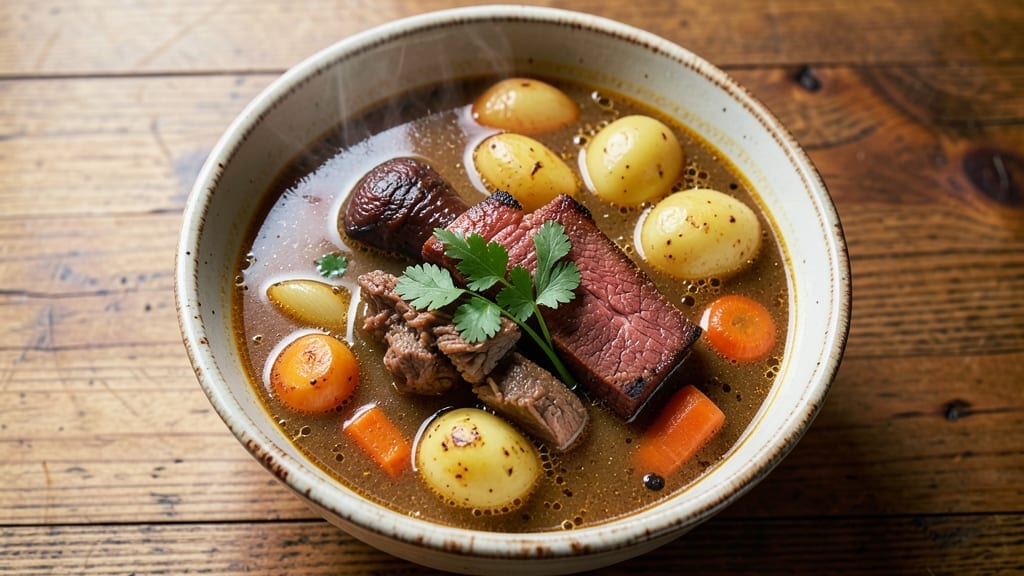
This 2 by 4 soup recipe delivers the soul-warming, meaty richness of classic Southern comfort food in one satisfying pot. 💛 The name comes from the traditional 2 pounds of beef and 4 pounds of potatoes that form its heart, simmered with ham hocks and corned beef until the meat falls apart and flavors meld into perfect harmony.
What makes this dish special is its ability to transform simple ingredients into a deeply satisfying meal that feeds a crowd with minimal effort.
The beauty of this recipe lies in its foolproof technique—no fancy skills required, just patience and a large pot. You’ll start by browning the meats for deep flavor, then simmer everything together until the potatoes are tender and the broth is rich enough to coat a spoon.
The result is a hearty stew with tender beef, creamy potatoes, and a broth so flavorful it tastes like a hug in a bowl.
By the time you’re done, you’ll have a restaurant-quality soup that’s perfect for cold evenings or family gatherings. The aromas alone—smoky ham, caramelizing onions, and simmering spices—will have everyone gathering around the table.
This is the kind of dish that gets passed down through generations, and now it’s yours to make.
Serve with crusty bread to soak up every last drop of that savory broth, or pair it with a simple green salad for balance. The leftovers taste even better the next day, making this an ideal meal for busy weeks.
Let’s get started on creating this Southern classic in your own kitchen.
Ingredients for 2 by 4 soup
Two pounds of beef, four pounds of potatoes, and a few simple pantry staples create this legendary Southern stew.
| Ingredient | Amount | Notes |
|---|---|---|
| Chuck Roast 🥩 | 2 lb | Cut into 1-inch cubes |
| Ham Hocks 🍖 | 2 whole | Smoked preferred for depth |
| Corned Beef Brisket 🥩 | 1 ½ lb | Pre-cooked, sliced thin |
| Yellow Onions 🧅 | 3 whole | Chopped, medium dice |
| Yellow Potatoes 🥔 | 4 lb | Russet or Yukon Gold |
| Carrots 🥕 | 4 whole | Peeled, cut into chunks |
| Celery Stalks 🌿 | 4 whole | Chopped, including leaves |
| Garlic Cloves 🧄 | 6 cloves | Minced, fresh preferred |
| Tomato Paste 🍅 | ½ cup | Squeeze tube works |
| Beef Broth 💧 | 6 cups | Homemade or quality store-bought |
| Bay Leaves 🍃 | 2 whole | Fresh or dried |
| Black Peppercorns 🌶️ | 1 tbsp | Whole, crushed |
| Salt 🧂 | 2 tsp | Kosher or sea salt |
| Dried Thyme 🌿 | 1 tbsp | Or 1 tbsp fresh |
| Olive Oil 🫒 | ¼ cup | For browning meats |
The beef is the backbone of this soup—chuck roast delivers that signature fall-apart texture when cooked low and slow. Most grocery stores carry it pre-cubed, but if you’re buying a whole roast, ask the butcher to cut it into 1-inch pieces for even cooking. Ham hocks from the deli section add that unmistakable smoky depth, though smoked paprika can substitute if needed. For the corned beef, look for pre-cooked brisket at the meat counter—it dissolves into the broth beautifully. The onions, carrots, and celery should be fresh and crisp—no wilted or bruised veggies here. If you’re short on time, baby carrots and pre-chopped celery from the salad bar work just fine.
No beef broth on hand? Chicken broth with a splash of Worcestershire sauce gets you close, though purists will notice the difference. The tomato paste can be swapped for crushed tomatoes (use 1 cup), but paste gives that concentrated umami punch. Fresh thyme is ideal, but dried thyme at one-third the amount works in a pinch. For the potatoes, Yukon Golds stay creamier than Russets, but both work. If you’re prepping ahead, you can chop all the veggies and store them in the fridge for up to 2 days—just keep them dry to prevent sogginess. The ham hocks can be pre-cooked and stored in their juices for up to 3 days before adding to the pot.
This soup tastes even better the next day as the flavors meld together. It keeps well in the fridge for up to 5 days, though I recommend reheating it in small batches to maintain creaminess. For freezing, portion it into airtight containers with a layer of broth on top to prevent a skin from forming. Thaws beautifully in the fridge overnight. Leftovers make fantastic lunches—just reheat with a splash of water or broth to restore moisture. The broth alone is so rich you might find yourself drinking it straight from the pot (no judgment here).
Why You’ll Love This Recipe
- One-Pot Magic: I swear by this recipe because it’s literally dump-and-simmer. Chuck roast, ham hocks, and corned beef brisket go straight into the pot with onions and potatoes—no fancy prep, no chopping like a fine-dining chef. The hardest part is deciding when to turn it off.
- Deep, Smoky Richness: That combo of ham hocks and corned beef? It’s like a slow-cooked hug in a bowl. The chuck roast melts into tender shreds while the brisket adds a salty, savory depth, and the potatoes soak up all the flavor like little flavor sponges.
- Weeknight Workhorse: Between us, this is my go-to when I need to feed a crowd but don’t want to slave over the stove. It’s hearty enough for game day, cozy enough for a sick-day recovery, and even my picky-eating teen gobbles it up—no questions asked.
Step-by-step instructions for 2 by 4 soup
Here’s how to build this rich, slow-cooked masterpiece using every ingredient to maximum effect.
🔥 Step 1: Brown the Meats for Maximum Flavor
Heat a large Dutch oven over medium-high heat and add the 0.25 cup olive oil. Working in batches, add the 2 lb chuck roast cut into cubes and the 2 whole ham hocks, leaving space between pieces. Let them brown undisturbed for 5-6 minutes until deeply golden on all sides.
This browning creates the Maillard reaction that builds the soup’s deep, meaty flavor. Don’t crowd the pan—if needed, work in two batches. Once browned, transfer the meats to a plate. In the same pot, add the 1.5 lb corned beef brisket slices and brown for 2-3 minutes per side until lightly caramelized. Remove and set aside with the other meats.
👨🍳 Step 2: Sauté the Vegetable Base
In the same Dutch oven, add the chopped 3 whole yellow onions, 4 whole carrots, and 4 whole celery stalks. Cook for 8-10 minutes over medium heat, stirring occasionally, until the vegetables soften and begin to caramelize. You’ll smell the sweet, aromatic base forming—this is where the soup gets its depth.
Add the 6 cloves minced garlic and cook for 30 seconds until fragrant. Immediately stir in the 0.5 cup tomato paste and cook for another 1 minute to blend with the vegetables. This creates a rich, umami-packed foundation for the stew.
🥘 Step 3: Build the Stew Base
Pour in the 6 cups beef broth, scraping up any browned bits from the bottom of the pot. Return all the browned meats to the pot, along with the 4 lb yellow potatoes cut into chunks. Add the 2 whole bay leaves, 1 tbsp crushed black peppercorns, 2 tsp salt, and 1 tbsp dried thyme.
Bring the mixture to a gentle boil, then reduce heat to low and cover partially. Let it simmer for 2 hours without stirring, allowing the flavors to meld and the potatoes to become tender. The soup should develop a rich, caramelized color and aromatic steam that fills your kitchen.
⏰ Step 4: Finish and Adjust Seasoning
After 2 hours, remove the 2 whole bay leaves and check the seasoning. Taste the broth and adjust with additional salt or black peppercorns if needed. The potatoes should be fork-tender with no resistance. If they’re not quite done, continue simmering for another 15-20 minutes until perfectly tender.
For the final touch, skim off any excess fat that has risen to the surface. The soup should have a velvety texture with chunks of meat and vegetables throughout. Serve immediately with crusty bread to soak up every last bit of that hearty, comforting broth.
Pro Tips For Making 2 By 4 Soup
- Brown the Meat First: Chuck roast and corned beef brisket won’t release their deep flavor unless they hit a hot pan first. Sear them in batches—no crowding—until they’re a rich, caramelized brown. Skip this, and your soup will taste like it’s missing something.
- Trim the Fat Early: Ham hocks are fatty, and that’s good—but too much grease makes the soup greasy. Trim off the thickest layers of fat before adding them to the pot. I used to ignore this, and the soup would sit like oil on top.
- Parboil the Potatoes: Toss the yellow potatoes in boiling water for 5 minutes before adding them to the soup. This keeps them from turning to mush while simmering. I learned this the hard way when I ended up with a gluey mess.
- Simmer, Don’t Boil: A rolling boil breaks down the meat too fast and makes the broth cloudy. Keep the heat low enough for just a few bubbles at the edges—this keeps the soup rich and the meat tender. Patience here makes all the difference.
Troubleshooting perfect results
Broth Too Thin?
If your soup ends up watery, don’t panic—simmering reduces the liquid naturally. For immediate fixes, mash ½ cup of the cooked potatoes directly in the pot to thicken the broth.
Alternatively, mix 2 tbsp cornstarch with 2 tbsp cold water, stir into the soup, and simmer for 5 minutes until thickened. 💫
Meat Not Tender?
If the beef remains tough after simmering, it likely didn’t cook long enough. Return the pot to low heat, cover, and cook for an additional 30-45 minutes, stirring occasionally.
For extra tenderness, add 1 cup hot water to maintain moisture and prevent drying. I’ve found that chuck roast needs patience—don’t rush it!
Vegetables Overcooked?
Potatoes and carrots can turn mushy if left too long. Check their doneness after 1 hour 45 minutes of simmering. If they’re nearly done but the meat needs more time, transfer the veggies to a bowl and keep them warm while the meat finishes cooking.
Reheat the veggies separately in the broth for 5 minutes before serving.
Broth Too Salty?
Over-salting is common with cured meats like ham hocks. To fix it, add 1 cup hot water to dilute the broth, then simmer uncovered for 10 minutes to reduce and concentrate the flavors.
If that’s not enough, stir in 1 small diced potato (peeled) and simmer for 15 minutes—it will absorb excess salt while adding natural starch.
Fat Floating on Top?
Skimming fat is optional but recommended for a cleaner presentation. Use a slotted spoon or fat separator spoon to remove excess fat after simmering. For a quicker method, chill the soup in the fridge overnight—the fat will solidify on top, making it easy to scoop off.
Save the fat for future cooking or discard as preferred.
Potatoes Still Hard?
If potatoes remain undercooked, they likely need more time or a higher heat setting. Increase the simmer to medium-low (not boiling) and cook for an additional 20-30 minutes. For stubborn potatoes, pierce them with a fork before adding to the pot—this helps them absorb flavors faster. 🥔
Nutrition facts
Frequently asked questions
What gives 2 by 4 soup its signature name?
The name comes from the traditional Southern ratio of 2 pounds of beef to 4 pounds of potatoes—the core ingredients that define this hearty stew. The beef provides rich, tender meat while the potatoes create a creamy, satisfying texture that makes it a true comfort food. This classic proportion creates the perfect balance of meaty flavor and starchy satisfaction.
Can I make this soup in a slow cooker?
Brown the meats and sauté the vegetables as directed, then transfer everything to your slow cooker. Add the broth and spices, then cook on low for 6-8 hours or high for 3-4 hours. The slow cooker’s gentle heat will make the meat incredibly tender with minimal effort. Just remember to remove the bay leaves before serving.
What’s the best way to store leftovers?
Let the soup cool completely, then transfer it to airtight containers with a layer of broth on top to prevent a skin from forming. It keeps well in the fridge for 4-5 days and freezes beautifully for up to 3 months. For reheating, warm on the stovetop over medium-low heat or in the microwave with a splash of water to restore creaminess.
Are there vegetarian alternatives for this recipe?
While this is traditionally a meat-heavy dish, you can create a vegetarian version by replacing the beef with extra-firm tofu or mushrooms for umami depth. Swap ham hocks for smoked paprika and use vegetable broth instead of beef. The potatoes and carrots will still provide that satisfying heartiness, though the flavor profile will be lighter.
How can I make this soup extra flavorful?
For deeper flavor, add 1 tbsp soy sauce or 1 tsp smoked paprika when browning the meats. A splash of red wine (about ½ cup) when deglazing the pot adds complexity. Don’t forget to taste and adjust seasoning at the end—sometimes a pinch of cayenne pepper or a dash of MSG can elevate the broth to restaurant-quality levels.

- 6 Egg Cake Recipe with Oil: Light as Air With Buttery Moisture - October 4, 2026
- 4 Bean Casserole Recipe: One-Pan Heartiness With Smoky Paprika Depth - October 4, 2026
- 3-Ingredient Keto Mug Cake Recipe: Microwave Magic in 2 Minutes - October 4, 2026