
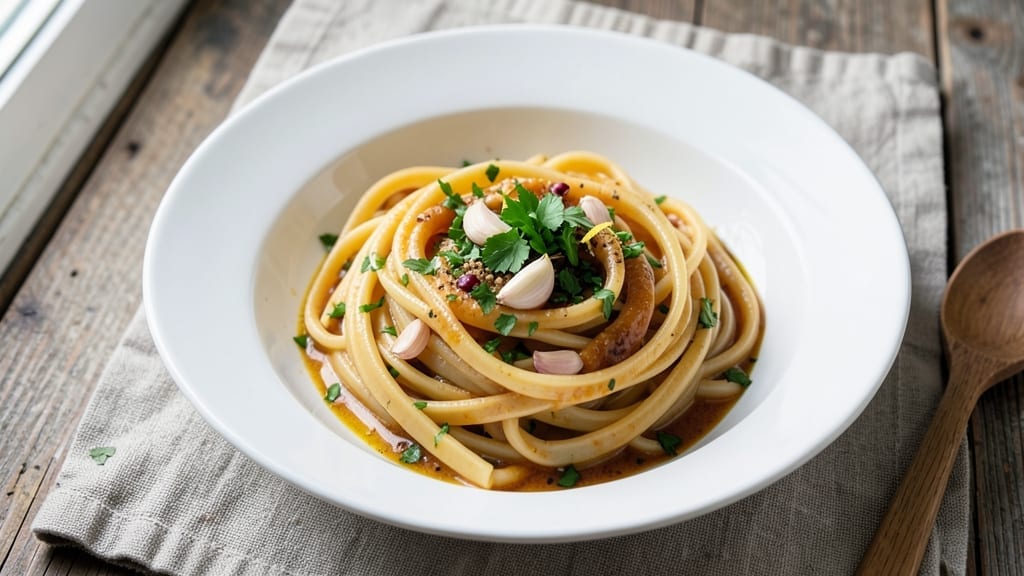
This 2-egg pasta recipe delivers restaurant-quality Italian flavors with just two eggs and simple pantry staples—perfect for weeknight dinners when you want something satisfying without the fuss.
The secret lies in balancing the minimal ingredients: high-protein eggs create a sturdy dough that holds up beautifully, while a touch of olive oil keeps it tender.
I developed this recipe after realizing most homemade pasta recipes called for at least four eggs, and it’s been my go-to ever since for quick yet impressive meals.
The process is straightforward but follows classic Italian technique: mix the dough by hand, let it rest for 15 minutes to relax the gluten, then roll it thin for that signature al dente texture.
You can pair it with any sauce—my favorite is a quick garlic olive oil (aglio e olio) or a simple marinara—but the pasta itself shines even plain, dusted with fresh parsley.
The beauty of this recipe is its adaptability: use it for dinner tonight or prep ahead for a homemade pasta night.
What you’ll end up with is light yet hearty pasta that’s crisp when tossed with sauce, with a delicate, silky bite that’s impossible to resist. The dough is foolproof, even for beginners, and the entire process—from mixing to boiling—takes just 20 minutes.
Whether you’re feeding a family or treating yourself, this recipe proves you don’t need complicated ingredients to make something extraordinary.
For extra flair, garnish with toasted pine nuts or a sprinkle of parmesan, and serve with a side salad or roasted vegetables. The possibilities are endless, but the foundation—two eggs, a little flour, and patience—is all you truly need. Let’s get cooking!
Ingredients for 2 egg pasta
Two eggs, flour, and olive oil—this minimalist lineup creates restaurant-quality pasta in record time.
| Ingredient | Amount | Notes |
|---|---|---|
| Large Eggs 🥚 | 2 whole | Room temperature, high-protein preferred |
| All-Purpose Flour 🌾 | 1 ½ cups | Plus 2 tbsp extra for dusting |
| Extra-Virgin Olive Oil 🫒 | 1 tbsp | High-quality, fruity variety |
| Diamond Crystal Kosher Salt 🧂 | ½ tsp | Fine grain preferred |
| Fresh Parsley 🌿 | ¼ cup | Chopped, for garnish (optional) |
| Garlic Cloves 🧄 | 2 cloves | Minced, for optional garlic oil |
| Pine Nuts 🥜 | ¼ cup | Toasted, for garnish (optional) |
| Parmesan Cheese 🧀 | ¼ cup | Freshly grated, for garnish (optional) |
| Water 💧 | 1 tbsp | For dough hydration adjustment |
The eggs are non-negotiable here—room temperature ensures even mixing, and high-protein varieties like pasture-raised give the dough extra structure. King Arthur or Caputo flour are my go-tos for that authentic Italian texture, but any all-purpose works in a pinch. The olive oil isn’t just flavor—it keeps the dough tender while preventing cracking. I always grab California extra-virgin from the store’s olive oil aisle, as it’s more affordable than specialty bottles but still high-quality. If you’re feeling fancy, add a pinch of semolina flour to your work surface for extra grip when rolling.
No eggs? Flax eggs (2 tbsp ground flaxseed + 6 tbsp water) work in a bind, though the texture will be slightly denser. Short on flour? Whole wheat flour at 50% replacement adds nuttiness but may require extra water. The optional garlic oil (just olive oil + minced garlic) transforms this into aglio e olio—no extra ingredients needed. For the garnishes: Pine nuts from Trader Joe’s are the most budget-friendly, while Parmigiano-Reggiano is worth the splurge for that authentic umami punch. Skip them all if you prefer the pasta plain—it’s still delicious.
This dough is best used immediately, but you can wrap it tightly in plastic and refrigerate for up to 24 hours before rolling. For longer storage, freeze the dough between parchment paper for up to 1 month. The pasta itself cooks in 2-3 minutes—set a timer and test frequently. Leftovers? Toss with a little olive oil to prevent sticking, and store for 2 days in the fridge. Freezing cooked pasta? Blanch first, then freeze on a tray before bagging for 3 months.
Why You’ll Love This Recipe
- Pantry-Friendly Magic: I swear by this recipe when I forget to buy fresh ingredients—just eggs, flour, and olive oil. The salt and parsley finish it off, but honestly? You could even skip the parsley if you’re in a pinch, and it’d still taste like something you’d pay for at a trattoria.
- Rich Without the Fuss: Two eggs give this pasta a luxurious, tender bite that store-bought can’t match. The olive oil keeps it silky, and the salt? It’s not just seasoning—it’s the secret to that just-cooked brightness that makes you want to eat it straight from the pot.
- Weeknight Workhorse: This pasta reheats like a dream—toss it with marinara, pesto, or even butter and garlic for a different meal the next day. I make a big batch on Sundays and freeze half; by Wednesday, it’s my lifesaver when I’m too tired to cook.
- Budget Breakthrough: For less than $2, I feed four people a meal that feels special. No fancy ingredients, no waste—just pure, simple pasta that tastes like you put in effort. Between us, that’s the kind of recipe that makes you look like a cooking hero without trying.
Step-by-step instructions for a light two-egg pasta
This quick method delivers tender, elastic pasta with just two eggs—no mixer needed.
Combine Eggs, Olive Oil, and Salt
In a large bowl, crack the 2 whole Large Eggs into the center and add the 1 tbsp Extra-Virgin Olive Oil and 0.5 tsp Diamond Crystal Kosher Salt. Using a fork, gently whisk until the yolks and whites are fully blended and the mixture takes on a pale yellow hue. The oil helps prevent the dough from becoming too sticky, while the salt ensures balanced flavor from the start.
Here’s the thing—don’t overmix. You’re looking for a smooth but slightly thick consistency, almost like a thick custard. If the mixture feels too loose, add 1 tbsp Water one drop at a time until it holds together when pressed between your fingers. The dough should be pliable but not wet.
Gradually Incorporate the Flour
Add the 1.5 cups All-Purpose Flour to the bowl all at once. Using a wooden spoon or your hands, gently fold the flour into the egg mixture from the center outward, working quickly to prevent gluten from developing too much. The goal is to create a shaggy, uneven mass that still clumps together when pressed.
Once the flour is mostly incorporated, turn the dough out onto a lightly floured surface. Knead it for 3-4 minutes until smooth and elastic. You’ll know it’s ready when it springs back slightly when poked and no longer sticks to your fingers. If the dough feels too dry, add 1 tsp Water at a time; if it’s too sticky, sprinkle in 1 tbsp Flour and continue kneading.
Rest the Dough for Optimal Texture
Shape the dough into a ball and wrap it tightly in plastic wrap. Let it rest at room temperature for at least 30 minutes—this step is crucial. Resting allows the gluten to relax, which prevents the pasta from becoming tough or shrinking during cooking. If you’re short on time, you can rest it for 15 minutes, but the longer it rests, the better the final texture.
While the dough rests, dust your work surface with 2 tbsp extra Flour (from the ingredients list) to prevent sticking. This extra flour ensures your pasta sheets slide smoothly without tearing. Preheat your oven to 350°F and line a baking sheet with parchment paper—this will be your drying rack later.
Roll and Cut the Pasta
Divide the rested dough into 4 equal pieces and work with one piece at a time, keeping the others covered with a damp towel to prevent drying. Using a rolling pin, roll the dough as thin as possible—aim for 1/16-inch thickness. If it resists, let it rest for 5 minutes before rolling again. The thinner you roll it, the quicker it’ll cook and the more delicate the texture.
Transfer the rolled sheet to the parchment-lined baking sheet. Use a sharp knife or pasta cutter to slice the dough into your desired shape—tagliatelle, fettuccine, or even spaghetti strips. As you cut, gently lift and fold the pasta onto itself to create neat stacks. Repeat with the remaining dough, keeping the cut pasta covered to prevent drying.
Cook and Finish with Garnishes
Bring a large pot of salted water to a rolling boil. Add the pasta in batches, ensuring there’s enough water to prevent sticking. Cook for 2-3 minutes until al dente—it should float to the surface and hold its shape when bitten. Reserve 1 cup of pasta water before draining, as it helps emulsify any sauce later.
Toss the cooked pasta with a splash of the reserved water and a drizzle of Extra-Virgin Olive Oil to prevent sticking. For serving, garnish with the 0.25 cup Fresh Parsley, 0.25 cup Pine Nuts, and 0.25 cup Parmesan Cheese. If you’re feeling adventurous, infuse the olive oil with the 2 cloves Garlic Cloves (minced) while cooking the pasta for an extra layer of flavor. Serve immediately with your favorite light sauce or a sprinkle of red pepper flakes for heat.
Pro Tips For Making 2 Egg Pasta
- Measure Flour by Weight: That kitchen scale isn’t just for show—2 egg pasta relies on the perfect flour-to-egg ratio. Scooping from the bag packs in air, which means your dough will be too dry and tough. Weigh 200 grams of flour (about 1¾ cups) for consistent results every time. I used to eyeball it, and my pasta always ended up either gummy or crumbly.
- Use Room-Temp Eggs: Cold eggs mix unevenly, leaving streaks in your dough that turn into weird textures when cooked. Take them out of the fridge 30 minutes before mixing—just long enough to warm up. Trust me, your pasta will hold together better, and the texture will be silky, not grainy.
- Knead Just Until Smooth: Overworking the dough develops too much gluten, making your pasta tough and chewy. Stop as soon as it springs back when poked (about 8-10 minutes by hand). I learned this after making a batch that tasted like shoe leather—now I time it and rest more.
- Rest Dough 30 Minutes: Skipping the rest makes rolling and cutting a nightmare. Wrap the dough in plastic and let it chill—this relaxes the gluten so it doesn’t shrink while cooking. I know, waiting feels like torture, but your pasta will hold its shape perfectly, no matter how thin you roll it.
Best sauces and condiments for this 2 egg pasta
Garlic Olive Oil
This is my go-to sauce for this two-egg pasta—it’s effortless yet packed with flavor. Heat 2 tbsp Extra-Virgin Olive Oil in a pan over medium-low heat, then add 2 minced Garlic Cloves and cook until fragrant but not browned (1-2 minutes).
Toss the cooked pasta directly in the pan with the garlic oil, adding a splash of pasta water to emulsify. Finish with 0.25 cup chopped Fresh Parsley and a pinch of Diamond Crystal Kosher Salt. The garlic infuses the oil beautifully, creating a silky, aromatic coating. 🧄
Classic Marinara
For a brighter, tomato-based sauce, simmer 1 cup crushed San Marzano tomatoes with 1 tsp dried oregano, ½ tsp red pepper flakes, and 1 clove minced Garlic over medium heat for 10 minutes. Blend until smooth, then toss with the cooked pasta.
Add a drizzle of pasta water to loosen the sauce. Top with extra parsley and a sprinkle of Parmesan Cheese for a restaurant-worthy finish. This sauce pairs perfectly with the delicate texture of the two-egg pasta. 🍅
Lemon Butter Sauce
Brighten up your pasta with this zesty option. Melt 2 tbsp unsalted butter in a pan, then whisk in 1 tbsp fresh lemon juice and 1 tbsp chopped Fresh Parsley. Toss with the cooked pasta and finish with ¼ tsp black pepper and a pinch of salt.
The acidity cuts through the richness of the eggs in the pasta, creating a refreshing contrast. This sauce is especially great for a light summer meal. 🍋
Creamy Parmesan
For a richer option, stir ¼ cup freshly grated Parmesan Cheese into 2 tbsp warm pasta water until smooth. Toss with the cooked pasta and finish with a drizzle of Extra-Virgin Olive Oil. The sauce clings beautifully to the pasta, adding a velvety texture.
If you prefer it lighter, reduce the cheese to 2 tbsp and add a splash of pasta water to thin it out. This sauce is a crowd-pleaser for those who love cheesy pasta. 🧀
Spicy Chili Oil
Add a kick to your pasta with this bold sauce. Heat 2 tbsp Extra-Virgin Olive Oil in a pan, then add 1 tsp crushed red pepper flakes and 1 tsp gochujang (Korean chili paste). Cook for 30 seconds until fragrant, then toss with the pasta.
Finish with 1 tbsp chopped Fresh Parsley and a squeeze of lemon. The heat balances the mild flavor of the two-egg pasta, making it a standout dish. 🌶️
Nutrition facts
Frequently asked questions
Can I substitute whole wheat flour for the all-purpose flour?
Yes, but with adjustments! Replace half of the all-purpose flour with whole wheat for added nutrition. You’ll need 1-2 extra tbsp water since whole wheat absorbs more moisture. The texture will be slightly denser but still delicious. For best results, rest the dough for 45 minutes instead of 30 minutes to help it relax.
Why does my pasta dough crack when rolling?
Dough cracks when it’s too dry or hasn’t rested long enough. First, ensure your dough rests for the full 30 minutes (or 15 minutes minimum). If it’s still cracking, add 1 tsp water at a time while kneading. For extra insurance, dust your rolling surface with semolina flour instead of all-purpose—it prevents sticking better. Work quickly and keep the dough covered with a damp towel while rolling.
How do I make this dough without a rolling pin?
No problem! Use a wine bottle, heavy glass, or even a pasta machine attachment. Roll the dough between two sheets of parchment paper for easier handling. For a rustic look, press the dough through a colander or use a fork to create ridged strands. The key is patience—press firmly but evenly to maintain 1/16-inch thickness.
Can I make this pasta ahead of time?
Shape the pasta and let it dry on a floured surface for 1-2 hours until firm. Store in an airtight container for up to 3 days at room temperature. For longer storage, freeze the dried pasta on a tray first (to prevent sticking), then transfer to a bag for up to 1 month. Cook from frozen—just add 30 seconds to the boiling time.
What’s the best sauce for this light pasta?
This delicate pasta shines with light, oil-based sauces. Try garlic olive oil (infused with minced garlic and parsley) or a lemon butter sauce for brightness. For tomato lovers, a simple marinara with pasta water works perfectly. Avoid heavy creamy sauces—they can overwhelm the subtle egg flavor. The key is balance: let the pasta’s natural taste shine through!

- 5 Lb Eye Round Roast Recipe: Slow-Braised to Melt-in-Mouth Tenderness - November 3, 2026
- 3-Hour Ciabatta Bread Recipe: Crusty Chews and Airy Holes Mastered - November 3, 2026
- 5 Fruit Salad Recipe: Vibrant Rainbow Layers With No Brown Spots - November 3, 2026