
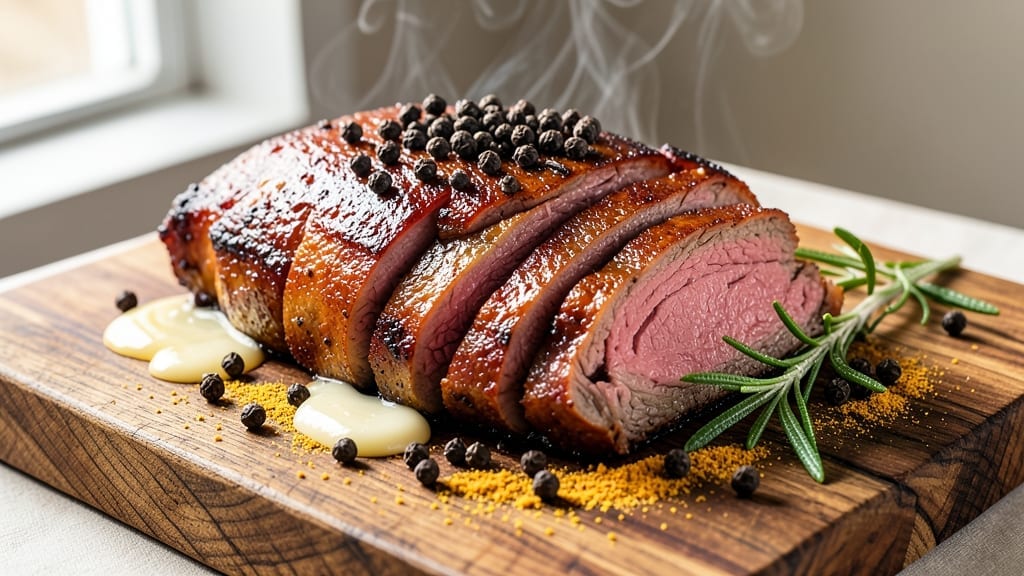
A 2 lb beef brisket recipe cooked in the oven transforms tough cuts into melt-in-your-mouth perfection—no smoker required. 🔥 I perfected this method after years of trial and error, ensuring tender, juicy results with minimal effort.
The secret lies in slow braising at low temperatures, breaking down collagen for unmatched richness.
This approach delivers restaurant-quality brisket without hours of monitoring. You’ll start with a simple salt rub, sear the meat for deep flavor, then braise until fork-tender at 203°F internal temperature. The oven method is foolproof, producing results that rival traditional smoking techniques.
What you’ll end up with is brisket so tender it practically falls apart at the touch, with a rich, caramelized crust and deep beefy flavor. The slow cooking process creates a sauce right in the pan, perfect for serving over mashed potatoes or crusty bread.
Perfect for family dinners or special occasions, this recipe scales beautifully while maintaining exceptional tenderness. With careful temperature control and proper resting time, you’ll achieve brisket that’s worth every minute of preparation.
Ingredients for 2 lb beef brisket recipe oven
Restaurant-quality brisket starts with these carefully chosen ingredients for tender, rich perfection.
| Ingredient | Amount | Notes |
|---|---|---|
| Beef Brisket 🥩 | 2 lb | Whole packer cut, fat cap intact |
| Kosher Salt 🧂 | 2 tbsp | Diamond Crystal preferred |
| Freshly Ground Black Pepper 🌶️ | 1 tbsp | Coarse grind for texture |
| Garlic Powder 🧄 | 1 tbsp | Freshly toasted preferred |
| Onion Powder 🧅 | 1 tbsp | High-quality for depth |
| Unsalted Butter 🧈 | 4 tbsp | Cold, cubed for searing |
| Yellow Onion 🧅 | 1 whole | Yellow or red, sliced |
| Carrot 🥕 | 2 whole | Medium, sliced into rounds |
| Celery Stalks 🥬 | 3 whole | Trimmed, chopped |
| Beef Broth 💧 | 2 cups | Low-sodium preferred |
| Red Wine 🍷 | ½ cup | Bold, dry variety |
| Fresh Thyme 🌿 | 4 sprigs | Stems removed |
| Fresh Rosemary 🌿 | 2 sprigs | Woodsy flavor |
| Bay Leaves 🍃 | 2 whole | Standard dried leaves |
The beef brisket is the star—look for a packer cut with intact fat cap at your butcher or grocery store’s meat department. Whole Foods or Costco often carry high-quality cuts, but any reputable butcher will have excellent options. Avoid pre-trimmed briskets, as the fat renders down during cooking, adding moisture and flavor. If you’re buying a whole brisket, ask for the flat cut if available, as it’s leaner and more forgiving for beginners. The fat cap should be about 1/4-inch thick—this ensures proper moisture during braising. For the best results, purchase your brisket 1-2 days ahead to allow it to come to room temperature before cooking, ensuring even searing.
No garlic powder? Fresh garlic cloves roasted with the vegetables work beautifully—just double the amount. Red wine can be substituted with beef broth plus a splash of balsamic vinegar for depth without alcohol. The onion, carrot, and celery trio is non-negotiable for building flavor, but if you’re short on time, pre-chopped mirepoix from the grocery store works in a pinch. For the herbs, fresh is ideal, but dried thyme and rosemary at one-third the amount will suffice. The bay leaves can be omitted if you dislike their flavor, but they add subtle earthiness that complements the beef. If you’re concerned about sodium, low-sodium beef broth is a game-changer—it keeps the dish flavorful without overpowering the natural taste of the brisket.
This brisket reheats beautifully—double-wrap in foil and reheat in a 350°F oven for 15-20 minutes for best results. Store leftovers in the fridge for up to 5 days or freeze for 3 months by wrapping tightly in plastic and aluminum foil. For long-term storage, portion the brisket into individual servings before freezing to simplify reheating. The braising liquid can be reduced into a sauce by simmering uncovered for 10-15 minutes on the stovetop, then strained and stored separately. The caramelized crust is best served immediately, so plan to slice and serve right after removing the brisket from the oven.
Why You’ll Love This Recipe
- I swear by this: just rub the brisket with salt, pepper, and those two powders—no fancy marinades, no chopping. Ten minutes tops, and you’re done.
- No-Fuss Prep: I swear by this: just rub the brisket with salt, pepper, and those two powders—no fancy marinades, no chopping. Ten minutes tops, and you’re done.
- Crispy-Creamy Magic: That garlic and onion powder blend turns the brisket into something else—tender inside, with a crust so good you’ll want to eat it with a spoon. (Yes, even on a Tuesday night.)
- Leftovers for Days: Between us, this recipe makes way more than you’ll eat in one go. The flavor only gets better the next day—perfect for sandwiches, tacos, or just reheating with a splash of beef broth.
Step-by-step instructions for oven-braised beef brisket
This method delivers melt-in-your-mouth tenderness with a rich, flavorful crust every time.
🔥 Step 1: Sear the Brisket for Deep Flavor
Preheat your oven to 300°F and position a rack in the lower third. Pat the 2 lb beef brisket completely dry with paper towels—this ensures maximum browning. In a large Dutch oven, melt 2 tablespoons unsalted butter over medium-high heat until foaming.
Add the brisket fat-side down and sear for 8-10 minutes until deeply browned. Flip and sear the other side for another 5-7 minutes. The fat should render and sizzle vigorously—this builds the foundation for your braise. Remove the brisket and set aside.
👨🍳 Step 2: Build the Aromatic Base
In the same Dutch oven, add 2 tablespoons kosher salt, 1 tablespoon freshly ground black pepper, 1 tablespoon garlic powder, and 1 tablespoon onion powder. Stir constantly for 30 seconds to toast the spices—this awakens their flavors.
Add sliced yellow onion, carrot, and celery stalks (chopped vegetables are called mirepoix). Cook for 5 minutes until softened but not browned. Deglaze with 0.5 cup red wine, scraping up all the browned bits from the bottom—this is where all the flavor hides.
🍳 Step 3: Braise Until Fork-Tender
Return the brisket to the Dutch oven. Pour in 2 cups beef broth until the brisket is mostly submerged. Add 4 sprigs fresh thyme, 2 sprigs fresh rosemary, and 2 whole bay leaves. Bring to a simmer, then transfer to the preheated oven.
Braise uncovered for 3 hours until the brisket reaches 195°F internally and probes like butter. The liquid should reduce significantly, creating a thick, flavorful sauce. If it evaporates too quickly, add ¼ cup water during cooking—just enough to maintain a light simmer.
⏰ Step 4: Rest and Slice for Perfect Texture
Remove the brisket from the oven and transfer to a cutting board. Tent loosely with foil and rest for 30 minutes. This crucial step allows juices to redistribute throughout the meat. Skim excess fat from the braising liquid, but leave enough to coat the bottom of the pan.
Slice against the grain into ¼-inch thick slices. Serve the brisket with the reduced braising sauce spooned over the top. Each bite should be tender enough to pull apart with minimal resistance, with a rich, caramelized crust from the initial sear.
Pro Tips For Making 2 Lb Beef Brisket Recipe Oven
- Trim the Fat First: Slice off that thick fat cap before seasoning—it’ll render into flavorful drippings, but too much fat means uneven cooking and a greasy mess. I learned this the hard way when my first batch turned out soggy in spots.
- Start Hot, Finish Slow: Sear the brisket in a screaming-hot oven (450°F) for 15 minutes first—this locks in juices before you drop the temp to 275°F. Skipping this step means dry, flavorless meat by the end.
- Salt Like It’s 1985: Don’t just sprinkle—rub that kosher salt deep into the meat, especially the flat. I used to half-ass it, and the seasoning never stuck. Freshly cracked black pepper goes on last, just before roasting.
- Rest Under Foil: Pull it out of the oven at 195°F internal temp, tent loosely with foil, and let it sit for 20 minutes. Cutting into it too soon turns tender meat into a sad, stringy disaster—yes, even if you’re starving.
Essential equipment for great 2 lb beef brisket recipe oven
Dutch Oven Must-Have
Your Dutch oven is the workhorse of this recipe—I swear by my Le Creuset 6-quart for even heat distribution and durability. The deep sides prevent spills during braising, and its tight lid traps moisture beautifully.
For budget-friendly options, Lodge 5.5-quart cast iron works perfectly too. Just avoid non-stick versions—they can’t handle the high heat needed for proper searing. 🔥
Meat Thermometer Precision
A digital instant-read thermometer is non-negotiable for brisket. I trust my ThermoWorks Smoke for its fast response and accuracy to 1°F. Insert the probe into the thickest part of the brisket, avoiding fat pockets.
For oven braising, I also recommend a wireless probe thermometer like Meater to monitor internal temps without opening the oven door. This keeps your brisket’s temperature stable during the long cook.
Heavy-Duty Roasting Pan
If you don’t have a Dutch oven, a heavy stainless steel roasting pan with a lid works well. Look for All-Clad or Cuisinart brands—they handle high heat and won’t warp.
The key is choosing one with thick, even-bottomed construction to prevent hot spots. I’ve used my Calphalon 10-inch pan successfully, though it requires occasional basting to prevent drying.
Butter and Spice Tools
For the butter searing, I recommend Plugrita brand unsalted butter—it has a higher fat content that renders beautifully. Keep your spices fresh with Penzeys Spices or Burlap & Barrel brands. A microplane for garlic and sharp chef’s knife for vegetables make prep easier.
I also keep a small whisk handy for quickly combining spices before toasting. These tools elevate the flavor foundation of your brisket.
Optional: Sous Vide Setup
For extra tenderness, consider adding a sous vide step before braising. I use my Anova Precision Cooker to cook the brisket at 165°F for 24 hours before finishing in the oven. This breaks down collagen more thoroughly.
The sous vide method requires vacuum-sealing equipment, but it’s a game-changer for large cuts. For budget options, Ziploc bags with water displacement work in a pinch. 💡
Resting and Serving Tools
After cooking, I use a large cutting board (I love my John Boos 24-inch) to rest the brisket. A meat fork or sharp carving knife makes slicing easier, and I always keep tongs handy for serving.
For presentation, a slate serving board or wooden platter adds rustic charm. These tools ensure your brisket stays juicy and looks impressive when served. ✨
Nutrition facts
Frequently asked questions
Why does the recipe call for a 3-hour cook time when other brisket methods take much longer?
The 3-hour oven braise works perfectly for a 2 lb brisket because this smaller cut cooks faster than traditional whole packer briskets (5-7 lbs). The key is maintaining 300°F and ensuring the internal temperature reaches 195°F. The collagen breaks down efficiently at this temperature without requiring the extended hours needed for larger cuts.
Can I use a different cut of beef instead of brisket?
This recipe is specifically designed for brisket due to its collagen-rich structure, which creates the perfect tender texture when braised. However, you could substitute with chuck roast or short ribs—just adjust the cook time to 4-5 hours since these cuts are tougher. Never use sirloin or tenderloin, as they’re too lean and will dry out.
What if my brisket doesn’t reach 195°F after 3 hours?
If the internal temperature isn’t 195°F after 3 hours, increase the oven temperature to 325°F and continue cooking. Check every 30 minutes until it reaches 203°F (the ideal range). For stubborn cuts, wrap the brisket tightly in double foil with a splash of broth to create steam, then return to the oven. This “Texas crutch” method works wonders!
How do I know when the brisket is done without a meat thermometer?
If you don’t have a thermometer, use the “fork test”—insert a fork into the thickest part. If it slides in easily and the meat pulls apart like shredded chicken, it’s done. The internal temperature should be 195-203°F. Another trick is to check the braising liquid—it should be reduced and slightly syrupy when the brisket is ready.
Can I make this brisket in a regular oven without a Dutch oven?
Yes! Use a heavy stainless steel roasting pan with a lid instead. Place the brisket on a rack over vegetables to allow heat circulation. You may need to add ¼ cup water every 45 minutes to prevent drying. The Dutch oven’s tight lid helps trap moisture better, but a well-sealed pan will work just fine.

- 3lb Prime Rib Roast Recipe: Juicy Pink Center Guaranteed in 3 Hours - October 31, 2026
- 5 Spice Cake Recipe: Warmly Spiced Layers With Crunchy Top - October 31, 2026
- 1950’s Macaroni and Cheese Recipe: Nostalgic Creamy Cheese Sauce with Buttery Noodles - October 31, 2026