
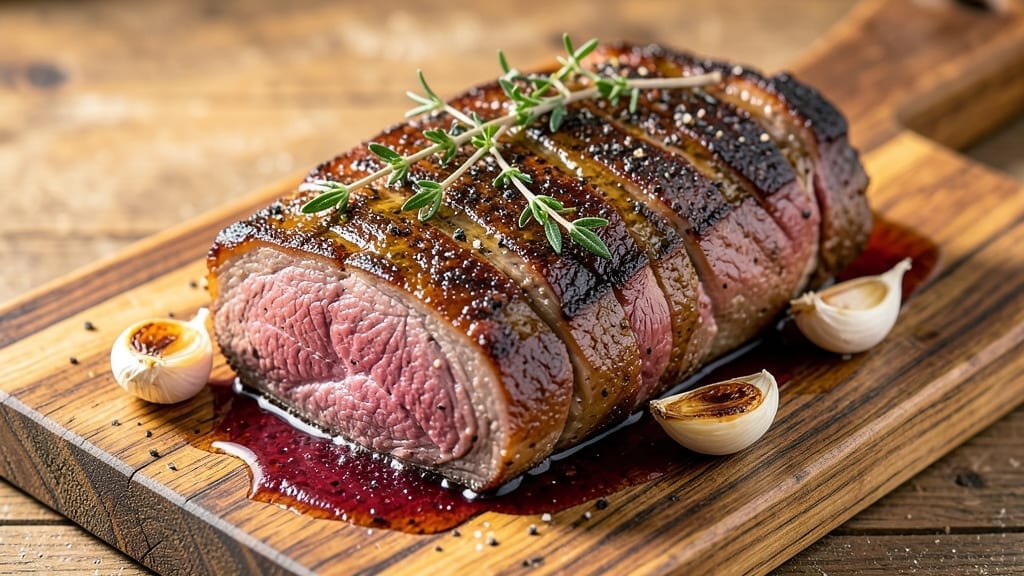
A 2-lb ribeye roast delivers restaurant-quality results with a bold, beefy crust and a juicy pink heart that melts in your mouth. This recipe transforms a budget-friendly cut into a showstopping centerpiece that impresses without requiring fancy techniques.
The secret lies in proper seasoning, precise roasting, and knowing exactly when to pull it from the oven.
Unlike steaks, ribeye roasts need careful attention to achieve even doneness throughout. We’ll use a simple dry-brine method to enhance tenderness, then roast at a controlled temperature to ensure a perfect medium-rare finish.
The crust develops through proper searing, while the interior remains succulent and pink—just how you want it. This approach works for family dinners or special occasions without demanding hours in the kitchen.
What you’ll end up with is a beautifully seared roast with a rich, beefy aroma that fills your home. The crust will be deep mahogany and slightly crisp, while the interior stays tender and juicy.
Sliced against the grain, each bite delivers maximum flavor and texture. The roast pairs perfectly with classic sides like roasted potatoes, creamy mashed sweet potatoes, or a fresh garden salad.
This recipe includes professional tips for carving and resting the meat to maintain juiciness. Whether you’re feeding a family or hosting a dinner party, this 2-lb ribeye roast delivers restaurant-quality results at home. Let’s get started with the full instructions.
Ingredients for 2 lb ribeye roast
Nothing beats a perfectly seared ribeye roast with a juicy pink center and bold crust—here’s what you’ll need.
| Ingredient | Amount | Notes |
|---|---|---|
| Ribeye Roast 🥩 | 2 lb | Center-cut, bone-in preferred |
| Kosher Salt 🧂 | 1 ½ tbsp | Diamond Crystal preferred |
| Freshly Ground Black Pepper 🌶️ | 1 ½ tsp | Freshly cracked for bold flavor |
| Garlic Cloves 🧄 | 6 cloves | Smashed, skin-on for intensity |
| Fresh Thyme Leaves 🌿 | ½ cup | Stems removed, loosely packed |
| Extra-Virgin Olive Oil 🫒 | 2 tbsp | High-quality, fruity variety |
| Yellow Onion 🧅 | 1 whole | Thinly sliced, charred for depth |
| Fresh Rosemary 🌿 | 2 sprigs | Woody stems removed |
| Unsalted Butter 🧈 | ½ cup | Cold, cubed for basting |
| Beef Tallow or Duck Fat 🍳 | 2 tbsp | For extra crust development |
| Red Wine 🍷 | ½ cup | Bold Cabernet Sauvignon |
| Beef Bone Broth 🍲 | ½ cup | Homemade or high-quality store-bought |
| Fresh Parsley 🌿 | ¼ cup | Chopped, for garnish |
The ribeye roast is the star, so center-cut and bone-in is ideal—it delivers that signature marbling and flavor. Costco or Whole Foods usually carry excellent quality, but any reputable butcher will have a great cut. Look for bright red color and good fat coverage. The garlic and thyme? Fresh is non-negotiable here—dried just won’t give the same depth. I like to buy my garlic in bulk from Penzeys for consistent quality, and fresh thyme from the grocery store’s produce section. Pro tip: smash those garlic cloves instead of mincing—the skins add flavor as they cook.
No beef tallow? Duck fat or extra olive oil works just fine for the crust. Running short on red wine? Beef broth with a splash of balsamic mimics the depth perfectly. The bone broth can be swapped for white wine if you prefer, but the umami from beef broth is hard to beat. Fresh rosemary? Dried works at one-third the amount, but honestly, the fresh stuff transforms this dish. For the onion, charring it before adding to the pan gives that smoky sweetness that takes the roast to the next level—don’t skip this step if you can help it. And if you’re feeling fancy, a truffle oil finish adds a gourmet touch.
This roast is best made fresh, but if you’re prepping ahead, dry-brine the meat overnight for maximum tenderness. The seared crust loses its magic if reheated, so serve immediately after roasting. Leftovers? Slice thinly against the grain and reheat in a skillet with a splash of broth to restore juiciness. Keeps for 3-4 days in the fridge, but honestly, it’s so good fresh that you’ll likely devour it all in one sitting. For a crowd, double the recipe—just increase the oven time proportionally.
Why You’ll Love This Recipe
- Minimal Prep Required: I swear by this—just season the roast, pop it in the oven, and walk away. No fancy marinades, no chopping mountains of veggies, just salt, pepper, and garlic cloves smashed into the fat. That’s it. Honestly, I’ve made it after a long day when I didn’t even want to think about dinner.
- Rich, Buttery Magic: The ribeye’s natural fat renders into pure flavor, and the thyme? It turns this into something restaurant-worthy without trying. That crispy crust with the tender, juicy center—it’s the kind of bite that makes people pause mid-conversation. (Yes, even on a Tuesday night.)
- Leftovers That Don’t Suck: This roast actually improves the next day—sliced thin for sandwiches, diced into pasta, or shredded for tacos. I’ll be real: my kids beg for the “dinner leftovers” version, and I never have to force them to eat meat. Win.
- Weeknight Crowd-Pleaser: Whether it’s a last-minute dinner for four or a potluck side, this roast delivers. Cook it once, serve it twice—no one will complain. Between us, I’ve even brought it to BBQs where the smoky meats couldn’t compete. That’s saying something.
Step-by-step instructions for perfectly crispy ribeye roast
This method delivers a restaurant-quality crust with a juicy pink center every time.
Prepare the Roast for Maximum Flavor Development
Remove the 2 lb ribeye roast from the refrigerator and pat it dry completely with paper towels—this is critical for achieving that coveted crust. I like to work in a well-ventilated area as the beef will release moisture during this process. Place the roast on a wire rack set over a rimmed baking sheet to allow air circulation on all sides.
In a small bowl, combine the 1.5 tbsp kosher salt and 1.5 tsp freshly ground black pepper. Rub this generously over the entire surface of the roast, pressing the seasoning into the meat. Don’t be shy—this bold seasoning creates the flavor foundation. Let the seasoned roast sit at room temperature for 30 minutes while you prepare the aromatics.
Build Deep Flavor with Aromatics and Wine Reduction
Heat the 2 tbsp extra-virgin olive oil in a large oven-safe skillet over medium heat. Add the 1 whole yellow onion and cook for 5-6 minutes until the onions begin to soften and develop color. Add the 6 smashed garlic cloves and 2 sprigs fresh rosemary, stirring for 30 seconds until fragrant.
Pour in the 0.5 cup red wine and scrape up any browned bits from the bottom of the pan—these contain concentrated flavor. Simmer for 3-4 minutes until the wine reduces by half. Remove from heat and set aside, keeping the skillet warm.
Create the Perfect Crust with Butter and Fat
Return the seasoned roast to the skillet with the wine reduction. Place it fat-side up and cook over medium-high heat for 5 minutes to render some of the natural beef fat. Remove the roast and set it aside.
Add the 0.5 cup cold unsalted butter and 2 tbsp beef tallow or duck fat to the skillet. Melt completely, then return the roast to the skillet, spooning the melted butter and fat mixture generously over the surface. This creates the perfect environment for that beautiful crust to form.
Roast to Juicy Perfection with Bone Broth Basting
Transfer the skillet to a preheated 425°F oven. Roast for 20 minutes, then remove the roast and add the 0.5 cup beef bone broth to the skillet. Spoon the broth over the roast, then return it to the oven. Continue roasting for another 15-20 minutes, basting with the pan juices every 5 minutes.
You’ll know it’s done when the internal temperature reaches 125-130°F for medium-rare (use a meat thermometer inserted into the thickest part). The crust should be deep mahogany brown with crispy edges. Remove from oven and let rest for 15 minutes before carving.
Garnish and Serve with Fresh Herbs
Transfer the roast to a cutting board and tent loosely with foil. Let it rest for 15 minutes while you prepare the garnish. In a small bowl, combine the 0.5 cup fresh thyme leaves and 0.25 cup chopped fresh parsley. Sprinkle this herb mixture generously over the sliced roast.
Slice against the grain into ½-inch thick pieces and serve immediately. The result should be a perfect balance of a deep, flavorful crust with a juicy pink center that practically melts in your mouth. Each bite should deliver rich beefy flavor with herbal notes from the thyme and rosemary.
Pro Tips For Making 2 Lb Ribeye Roast
- CRANK THE HEAT FIRST: Start your ribeye roast over searing heat—cast iron or stainless steel—until it hits a deep brown crust. I used to take it slow, but that’s how you end up with a mealy center instead of that perfect caramelized exterior that locks in flavor.
- SMASH THAT GARLIC: Don’t just slice the cloves—smash them with the flat side of your knife first. This releases more oil and flavor into the pan when they sizzle. (Yes, it looks like overkill, but your roast will taste like it’s been kissed by a French chef.)
- SALT BEFORE SEARING: Generously coat the roast with kosher salt at least an hour before cooking—or even the night before. This lets the salt penetrate the meat, not just sit on top. I learned this the hard way when my first attempt tasted bland no matter how much I peppered it afterward.
- REST UNDER FOIL: After pulling the roast from the oven, tent it loosely with foil and let it sit for 10 minutes. Skipping this step means slicing into a juicy mess that drips all over your cutting board. (Your guests won’t see it, but you’ll know the difference.)
Wine and beer pairings for this 2 lb ribeye roast
Bold Red Wines
The rich, deep flavors of a bold Cabernet Sauvignon from Napa Valley or Tuscany’s Chianti Classico mirror the ribeye’s intensity perfectly. Look for wines with 14-15% alcohol and noticeable tannins—they’ll stand up to the beef’s richness.
I love a 2018 Caymus Vineyards Cabernet for its velvety texture and dark fruit notes that complement the roast’s crust. 🍷
Earthy Syrah
A Northern Rhône Syrah like Guigal Côte-Rôtie brings smoky, spicy complexity that pairs beautifully with the roasted aromatics. The peppery notes in Syrah enhance the ribeye’s natural beefy flavors while the wine’s acidity cuts through the richness. For a more affordable option, try a Crozes-Hermitage from the same region.
Malbec Magic
Argentinian Malbec from Mendoza delivers jammy blackberry flavors and velvety tannins that work exceptionally well with ribeye’s marbling. A 2019 Catena Zapata Malbec offers great value while providing the bold structure needed. The wine’s dark fruit character enhances the roast’s crust without overpowering it.
Beer Pairings
For beer lovers, a dark amber ale with caramel and toasted malt notes works wonderfully. Try a Deschutes Mirror Pond or Allagash Dark Ale—both have enough body to complement the beef while their malt sweetness balances the crust’s intensity. The hop bitterness helps cleanse your palate between rich bites.
Crisp White Contrast
If you prefer white wine, a bold Chardonnay from Burgundy or a oaked California Chardonnay like Kendall-Jackson Vintner’s Reserve offers surprising harmony. The wine’s buttery notes complement the roast’s fat content while its acidity refreshes your palate.
For a lighter option, try a dry Riesling from Germany with its citrus notes cutting through the beef’s richness.
After-Dinner Port
Finish your meal with a tawny Port like Graham’s 10-Year-Old—its nutty, caramelized flavors provide a perfect sweet contrast to the savory roast. The wine’s age brings complexity that enhances the meal’s overall experience. Serve at room temperature for best results. 🍷✨
Nutrition facts
Frequently asked questions
What’s the best internal temperature for medium-rare ribeye roast?
For a 2 lb ribeye roast, aim for 125-130°F internal temperature when removed from the oven. This ensures a perfectly pink center with a juicy, tender texture. Remember, the meat will continue cooking slightly while resting, so pull it out just before reaching your target temperature.
Can I cook a ribeye roast without a meat thermometer?
You can estimate doneness by using the touch test: press gently with your finger. For medium-rare, the meat should feel slightly springy but still soft. However, a meat thermometer is the most reliable method—especially for roasts where even cooking is crucial. The 125-130°F range is your best guide.
How do I carve a ribeye roast properly?
Always slice against the grain (perpendicular to the muscle fibers) into ½-inch thick pieces. This creates a more tender bite. Start at one end and work your way across, keeping the knife parallel to the cutting board. A sharp carving knife makes this much easier—never force the blade through the meat.
Why does my ribeye roast turn out dry?
Overcooking is the most common cause—ribeye roasts are delicate and cook quickly. Use a meat thermometer and remove at 125-130°F for medium-rare. Another issue is cutting too soon: always let the roast rest for 15 minutes before carving. This allows juices to redistribute throughout the meat.
Can I make this recipe with a bone-in or boneless roast?
This recipe works best with a bone-in ribeye roast as the bone helps retain moisture and adds flavor. However, you can use boneless if needed—just reduce the oven temperature by 25°F and increase cooking time by 10-15 minutes to prevent overcooking. The crust may be slightly less crisp without the bone’s natural fat rendering.

- 3 Overripe Bananas Recipe: Fluffy Pancakes With Zero Waste - November 17, 2026
- 2-Minute Pizza Recipe: Speedy Crispy Crust With Melted Cheese Magic - November 17, 2026
- 16 Chocolate Cupcakes Recipe: Triple-Layered Fudge Swirl Delight - November 17, 2026