
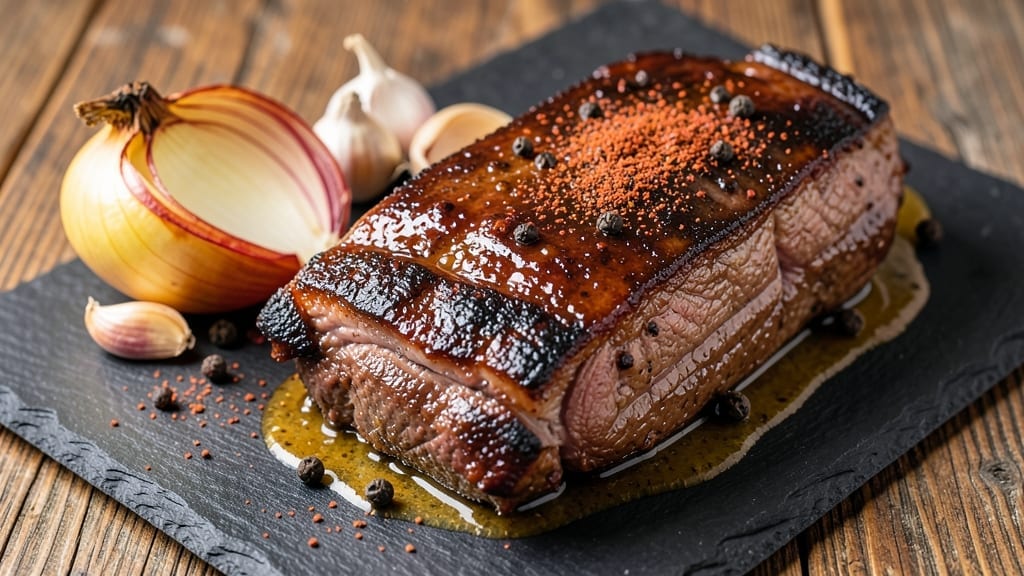
Mastering a 2-pound beef brisket transforms weeknight dinners into showstopping centerpieces—juicy, tender, and packed with smoky depth that lingers long after the last bite.
The key lies in patience: slow cooking breaks down tough fibers into melt-in-your-mouth perfection, while a simple dry rub and careful temperature control ensure restaurant-quality results without the fuss. This recipe delivers a foolproof method for achieving that ideal balance of bark and tenderness, even in a home kitchen.
What sets this brisket apart is the precision of the low-and-slow technique—no guesswork, just consistent heat and timing. You’ll work with a 2-pound cut (the perfect size for 4-6 servings), trimming excess fat for better bark while retaining enough to keep the meat moist.
The secret weapon? A 250°F oven or smoker that cooks the brisket slowly, allowing collagen to render into rich, flavorful juices that transform the meat into something extraordinary.
By the time you pull it from the heat, you’ll have a brisket with a crispy, caramelized exterior and a center so tender it nearly falls apart at the touch. The internal temperature should reach 195–203°F—this is where the magic happens, as the connective tissue fully breaks down.
Resting the meat for 30 minutes ensures every slice stays juicy, and slicing against the grain guarantees that first bite of pure, unadulterated satisfaction.
Serve with classic sides like creamy mashed potatoes, buttery cornbread, or a tangy coleslaw to soak up every drop of that smoky, savory sauce. This brisket isn’t just a meal—it’s an experience, and once you master it, you’ll never settle for anything less.
Let’s get started on creating your own crowd-pleasing masterpiece.
Ingredients for 2 pound beef brisket
Six simple ingredients transform a tough cut into melt-in-your-mouth perfection—no fancy tools needed.
| Ingredient | Amount | Notes |
|---|---|---|
| Beef Brisket 🥩 | 2 lb | Whole packer cut, fat cap intact |
| Yellow Onion 🧅 | 1 whole | Yellow, medium size, sliced |
| Garlic Cloves 🧄 | 8 cloves | Fresh, peeled, smashed |
| Kosher Salt 🧂 | 1 ½ tbsp | Diamond Crystal preferred |
| Black Peppercorns 🌶️ | 1 ½ tsp | Freshly cracked |
| Smoked Paprika 🌶️ | 1 tbsp | High-quality smoked |
| Ground Cumin 🌿 | 1 tsp | Toasted for depth |
| Brown Sugar 🍯 | 1 tbsp | Light or dark |
| Apple Cider Vinegar 🍎 | 2 tbsp | For tenderizing |
| Beef Tallow or Olive Oil 🫒 | 2 tbsp | For fat cap rendering |
| Fresh Thyme Leaves 🌿 | ¼ cup | Or 1 tsp dried |
| Fresh Rosemary Sprigs 🌿 | 2 sprigs | For aroma infusion |
| Beef Broth 💧 | 1 cup | Low-sodium preferred |
| Wood Chips (Optional) 🌳 | 1 cup | Hickory or oak preferred |
The brisket is where it all begins, and quality matters here. Look for a 2-pound packer cut with a good fat cap—this keeps the meat moist during cooking. Costco or local butchers often carry the best cuts, but the grocery store works too. Trim any silverskin or excess fat from the sides, but leave the fat cap intact—it renders down into flavorful juices. For the rub, Penzeys or local spice shops have the best smoked paprika, but the regular grocery store stuff works fine if it’s fresh. The key is to keep everything dry when applying the rub—moisture is the enemy of bark formation.
No smoked paprika? Substitute 1 tsp regular paprika plus ½ tsp liquid smoke—it won’t be identical, but it gets you close. Fresh thyme and rosemary are ideal, but dried works at one-third the amount. The apple cider vinegar might seem odd, but it tenderizes the meat beautifully—substitute lemon juice in a pinch. For the wood chips, if you don’t have a smoker, soak them in water for 30 minutes before using in your oven. The beef broth can be swapped for water, but the low-sodium kind ensures you’re not over-salting your brisket. And if you’re short on time, pre-mix your dry rub and store it in an airtight container for up to 3 months.
Prep the brisket the night before for best results—trim, rub, and refrigerate uncovered for 12-24 hours. This dry-brining step ensures maximum bark formation. The rub keeps for 2 weeks in an airtight container, and the wood chips can be reused 2-3 times if stored properly. Once cooked, the brisket reheats beautifully—wrap tightly in foil and warm in a 275°F oven for 30 minutes. For leftovers, store in the fridge for 4-5 days or freeze for up to 3 months. Slice against the grain for that signature tender texture, and save any extra drippings for gravy.
Why You’ll Love This Recipe
- Four-Ingredient Magic: I swear by this—just brisket, onion, garlic, and salt. That’s it. The onion caramelizes into sweetness while the garlic cloves turn golden and fragrant. Honestly, it’s the kind of recipe where you realize you’ve been overcomplicating things.
- Weeknight Crowd-Pleaser: Between us, this is my go-to for game day or when friends show up unannounced. The brisket stays juicy, the crust gets crispy, and everyone asks for seconds. (Yes, even the picky eaters.)
- Leftovers That Don’t Suck: I make this on Sunday, and by Wednesday, I’m still eating it—sliced thin in sandwiches, chopped into tacos, or just reheated with a sprinkle of pepper. No sad, dry meat here; it’s always tender, always worth it.
- Budget Beef Bonanza: A two-pound brisket stretches across meals without breaking the bank. The salt and pepper do all the heavy lifting, so you’re not drowning in spices. I’ll be real: this is how I feed my family well without stressing over grocery bills.
Step-by-step instructions for perfectly smoked brisket
Here’s how to transform a tough cut into melt-in-your-mouth perfection with deep smoky flavor.
Prepare and Season the Brisket
Start by trimming the fat cap of the 2 lb beef brisket down to about ¼ inch thickness using a sharp boning knife. Leave the fat cap intact on the sides – this will render and baste the meat during cooking. Pat the entire surface completely dry with paper towels, including the cavity, to ensure maximum crispiness.
In a small bowl, combine the 1.5 tbsp kosher salt, 1.5 tsp freshly cracked black peppercorns, 1 tbsp smoked paprika, 1 tsp toasted ground cumin, 1 tbsp brown sugar, and 2 tbsp apple cider vinegar. Mix well to create a balanced rub with both sweet and smoky notes. Generously apply this mixture to all surfaces of the brisket, pressing it into the meat so it adheres well. Place the seasoned brisket on a wire rack set over a baking sheet and refrigerate uncovered for 1 hour to allow the rub to penetrate deeply.
Set Up Your Smoker
While the brisket seasons, prepare your smoker by adding the 1 cup wood chips (hickory or oak preferred) to the smoke box. Light them according to your smoker’s instructions and let them burn until you see clean, blue smoke – this typically takes about 10-15 minutes. Set your smoker to maintain a temperature of 225°F. This low-and-slow approach is key to achieving tender, juicy meat without drying it out.
Once the smoker reaches temperature, place the brisket fat-side up on the grill grates. The fat cap will render and baste the meat as it cooks, creating that beautiful bark we’re after. Position the brisket away from direct heat sources to ensure even cooking. Resist the urge to open the smoker during the first 2 hours – each time you peek, you lose valuable heat and moisture.
Smoke Until Probe-Tender
Smoke the brisket for 6-8 hours, or until the internal temperature reaches 165-170°F. This is when you’ll hit “the stall” – a period where the temperature stops rising as moisture evaporates from the meat. Don’t be alarmed; this is completely normal and actually helps develop that incredible bark. During this time, you’ll want to add 1 cup beef broth to a disposable pan placed on the smoker grates to help maintain moisture levels.
At the stall, wrap the brisket tightly in butcher paper (not aluminum foil) and return it to the smoker. This “Texas crutch” technique helps push through the stall while preserving that beautiful bark. Continue smoking until the internal temperature reaches 200-205°F and a meat probe slides in like butter with no resistance. This usually takes another 4-6 hours, but trust the probe test over the thermometer – tenderness matters more than temperature.
Rest and Slice
Once probe-tender, remove the brisket from the smoker and let it rest in the butcher paper for at least 1 hour (I prefer 2 hours wrapped in towels in a cooler). This resting period is crucial as it allows the juices to redistribute throughout the meat. During this time, you can prepare your serving plates and any accompaniments.
Unwrap the brisket and locate the grain direction – you’ll see lines running through the meat. Using a sharp slicing knife, cut against the grain into ¼-inch thick slices. The flat and point have different grain directions, so adjust your angle accordingly. Serve immediately while still warm, with each slice offering that perfect balance of tender meat, smoky bark, and rich juices.
Pro Tips For Making 2 Pound Beef Brisket
- Trim the Fat First: Slice off that thick layer of fat from the brisket’s point end before cooking—it’s the only way to guarantee even browning and crisp edges. I used to skip this, and half my brisket would turn into greasy mush while the other half stayed tough.
- Sear in Batches: A 2-pound brisket won’t fit flat in most pans, so work in two rounds: sear the thickest side first until deeply browned, then flip and repeat. Crowding the pan steams instead of crisps, and nobody wants soggy onions clinging to their meat.
- Salt the Onions Too: Toss those sliced onions with a pinch of kosher salt while you prep—they’ll caramelize faster and add a subtle depth that just salted garlic can’t match. (Yes, even if you’re impatient like me.)
- Probe the Flat, Not the Thick: The point end reads hotter, so check doneness in the thinner flat section—it’s the last to tenderize. Aim for 195°F there, and resist the urge to pull it early, even if the point looks perfect. Patience here makes all the difference.
Serving suggestions for this dish
Classic BBQ Spread
Serve your brisket with a homemade BBQ sauce drizzled generously over each slice. I love using a vinegar-based sauce with 1 cup ketchup, ½ cup apple cider vinegar, ¼ cup brown sugar, 1 tbsp smoked paprika, and 1 tsp garlic powder.
Simmer for 15 minutes until thickened, then brush lightly on warm slices. 🌶️
Sides That Soak Up Flavor
Creamy coleslaw made with 2 cups shredded cabbage, ½ cup mayonnaise, 1 tbsp apple cider vinegar, and 1 tsp celery seed cuts through the richness beautifully. For a heartier option, serve with buttery cornbread—its crumbly texture contrasts perfectly with tender brisket. 🥗
Smoky Gravy Perfection
Save any drippings from the brisket and transform them into a rich gravy by whisking in 1 cup beef broth and 1 tbsp cornstarch until thickened. Strain for smoothness, then drizzle over sliced brisket or use as a dipping sauce. The smoky depth ties everything together beautifully. 💫
Fresh Contrast Elements
Add a crisp apple slaw with thinly sliced Granny Smith apples, shredded carrots, and a light honey-Dijon dressing to balance the richness. For a protein boost, serve with pickled jalapeños or quick-pickled red onions—the tangy crunch elevates every bite. ✨
Bread Basket Essentials
No brisket meal is complete without warm dinner rolls or crusty sourdough to sop up those delicious juices. Brush rolls with garlic butter before serving, or offer tortilla chips for a casual twist. Keep them nearby for easy grabbing. 🍞
Dessert Pairings
End the meal with peach cobbler or bourbon pecan pie—both complement the smoky flavors without overpowering them. A scoop of vanilla bean ice cream adds a creamy contrast that cleanses the palate. 🍐
Nutrition facts
Frequently asked questions
Can I cook a 2-pound brisket in an oven instead of a smoker?
Use a 250°F oven with a water pan on the bottom rack for moisture. Place your seasoned brisket on a wire rack over a baking sheet, then place a disposable pan with 1 cup beef broth on the lower rack. Cook for 5-6 hours until it reaches 200-205°F, wrapping in butcher paper at 165°F to push through the stall. The bark won’t be as smoky, but the tenderness will be just as perfect.
What’s the difference between the flat and point cuts of brisket?
The flat is leaner and more uniform, while the point has more fat and connective tissue. For a 2-pound brisket, you’ll often get both connected. The point stays more tender but can dry out faster, so it benefits most from the low-and-slow method. Always slice against the grain—both cuts have different grain directions!
Why does my brisket turn out tough?
Most likely, you didn’t cook it long enough or didn’t reach 200°F internal temp. The stall (where temp plateaus) is normal—wrap it in butcher paper to push through. Also, check your thermometer accuracy and ensure you’re slicing against the grain. If it’s still tough, try cooking to 205°F next time.
How do I store leftovers?
Store sliced brisket in an airtight container in the fridge for 4-5 days or freeze for up to 3 months. For reheating, wrap slices in foil and warm in a 275°F oven for 20-30 minutes. Leftovers reheat best when they’re still juicy—don’t let them dry out! For longer storage, freeze the whole brisket before slicing.
Can I use a different wood chip flavor?
While hickory or oak are traditional, pecan adds sweetness or cherry for fruitier notes. Avoid pine—it’s too strong. Soak chips for 30 minutes before using in an oven. The flavor difference is subtle but can complement your rub beautifully. Experiment with small batches first!

- 3lb Prime Rib Roast Recipe: Juicy Pink Center Guaranteed in 3 Hours - October 31, 2026
- 5 Spice Cake Recipe: Warmly Spiced Layers With Crunchy Top - October 31, 2026
- 1950’s Macaroni and Cheese Recipe: Nostalgic Creamy Cheese Sauce with Buttery Noodles - October 31, 2026