
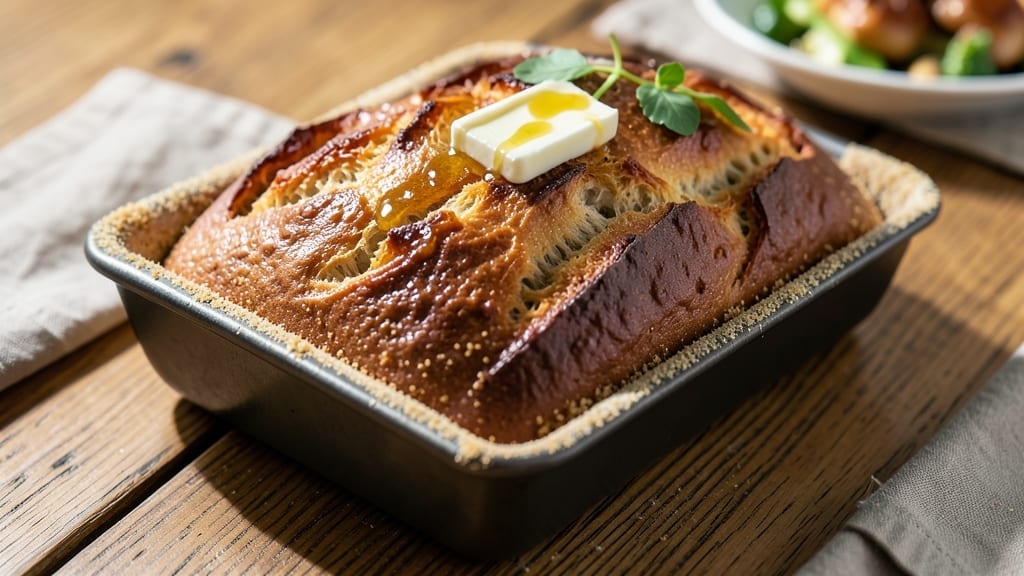
A 2-pound loaf bread machine recipe delivers the perfect balance of crispy crust and tender crumb—no bakery skills required. This method transforms simple ingredients into a hearty, artisanal-style loaf with minimal effort, using your bread machine’s precise kneading and baking cycles.
The secret lies in the right flour blend and hydration ratio, which create that coveted texture without overworking the dough.
What sets this recipe apart is its foolproof approach for consistent results every time. Whether you’re a beginner or an experienced baker, the bread machine handles the heavy lifting—kneading, rising, and baking—while you focus on measuring ingredients accurately.
The dough cycle ensures proper gluten development, and the bake cycle locks in that golden crust and soft interior.
By the end of the cycle, you’ll have a 2-pound loaf with a crisp exterior and airy, even crumb—ideal for sandwiches, toast, or serving with soups. The recipe includes adjustments for crust color and texture, so you can customize it to your preference.
Perfect for meal prep or gifting, this loaf proves that homemade bread can be both restaurant-quality and effortless.
Ready to bake? Here’s everything you need to achieve that professional-looking loaf without the guesswork. Let’s get started with the ingredients and settings that make all the difference.
Ingredients for 2 pound loaf bread machine
Precision measurements and quality ingredients create a restaurant-quality loaf in your bread machine.
| Ingredient | Amount | Notes |
|---|---|---|
| Bread Flour 🌾 | 3 ½ cups | High-protein for optimal gluten development |
| All-Purpose Flour 🌾 | ½ cup | Balances structure and tenderness |
| Granulated Sugar 🍚 | ⅛ cup | Enhances browning and crust texture |
| Instant Yeast 🍞 | 2 ¼ tsp | Ensures reliable fermentation |
| Salt 🧂 | 1 ½ tsp | Diamond Crystal preferred for accuracy |
| Unsalted Butter 🧈 | ½ cup | Cold, cubed for even distribution |
| Whole Milk 🥛 | 1 cup | Room temperature for optimal hydration |
| Large Eggs 🥚 | 1 whole | Room temperature for even mixing |
| Water 💧 | ½ cup | Room temperature for consistent results |
| Cornmeal 🌽 | 2 tbsp | For dusting bread machine pan |
| Coarse Sugar 🍚 | 2 tbsp | Optional for enhanced crust crunch |
| Sesame Seeds 🌻 | 1 tbsp | Optional for decorative topping |
The flour blend is where the magic happens. King Arthur Bread Flour delivers the protein needed for that perfect chew, while Gold Medal All-Purpose adds tenderness. Store these in airtight containers away from light—they lose potency over time. For the yeast, Saf-Instant is my go-to because it activates immediately without proofing. The butter should be cold when measured—this creates pockets of steam during baking for that coveted crust. If you’re in a rush, Land O’Lakes unsalted butter from the grocery store works perfectly fine, just make sure it’s been chilled for at least 30 minutes before measuring.
No bread flour? All-purpose plus 1 tbsp vital wheat gluten per cup works in a pinch. Whole milk unavailable? Warm water with 1 tbsp melted butter mimics the same fat content. The coarse sugar topping isn’t mandatory but creates that beautiful caramelized crust. Trader Joe’s carries excellent coarse sugar at a reasonable price. For the sesame seeds, Kosher brand from the bulk section stays fresher longer. If you’re making multiple loaves, consider investing in a digital kitchen scale—it’s far more accurate than volume measurements for yeast and salt, which are critical for consistent results.
Store flour blends in airtight containers in a cool, dark pantry for up to 6 months. Yeast should be refrigerated and used within 3 months of opening. The butter can be kept in the fridge for 3 months beyond the printed date if properly stored. For the bread itself, wrap in a clean kitchen towel and store at room temperature for 2 days or freeze for 3 months. The towel prevents staling better than plastic. To revive stale bread, sprinkle with water and toast—it’s like new.
Why You’ll Love This Recipe
- Set-and-Forget Magic: I dump the ingredients—bread flour, all-purpose, sugar, yeast, salt—into the machine and walk away. No kneading, no waiting by the stove, just pure hands-off baking while I handle the rest of dinner.
- Sweet-Savory Balance: That touch of granulated sugar in the dough? It’s what turns this into something special—not too sweet, just enough to make every slice feel like a little treat. The yeast does its work, and you end up with a loaf that’s light but sturdy.
- Weeknight Hero: Between us, this is my go-to for sandwiches, toast, or even French toast. A single loaf lasts me three days, and the best part? I can make it while I’m scrolling through emails or waiting for the coffee to brew.
- Budget-Friendly Staple: Bread flour and all-purpose are cheap, and this recipe stretches every ingredient. I’ve made this for breakfast, lunch, and dinner without breaking the bank—plus, the leftovers freeze perfectly for lazy mornings.
Step-by-step instructions for crusty crunch and soft crumb bread machine loaf
This method delivers bakery-style perfection with minimal effort—just follow these precise steps.
Prepare the Bread Machine Pan and Ingredients
Lightly grease your bread machine pan with nonstick spray, then dust the bottom thoroughly with the 2 tablespoons of cornmeal. This creates a nonstick barrier that prevents sticking and promotes even browning. Use a pastry brush for even distribution—cornmeal should form a thin, even layer.
In a medium bowl, combine the 3.5 cups bread flour, 0.5 cup all-purpose flour, 0.125 cup granulated sugar, 2.25 teaspoons instant yeast, and 1.5 teaspoons salt. Whisk briefly to distribute the yeast and salt evenly through the dry ingredients. This step ensures uniform fermentation and flavor throughout the loaf.
Mix Wet Ingredients and Combine
In a separate bowl, melt the 0.5 cup unsalted butter in the microwave in 20-second intervals, stirring between each interval, until completely liquid but not hot to the touch. Add the 1 cup room-temperature whole milk and 1 whole large egg, whisking until fully emulsified. The mixture should be smooth with no visible butter chunks.
Create a well in the center of your dry ingredients and pour in the wet mixture. Using a wooden spoon, gently fold everything together until just combined—you should still see some flour streaks. Overmixing develops gluten prematurely, which can result in a dense loaf. The dough should be shaggy but hold together when pressed.
Load Dough into Bread Machine and Set Cycle
Transfer the dough to the prepared bread machine pan, pressing it down gently to fill the pan completely. Sprinkle the 2 tablespoons coarse sugar evenly over the top for enhanced browning and crunch. This step creates that coveted caramelized crust while maintaining a soft interior.
Add the 1 tablespoon sesame seeds on top, pressing them lightly into the dough surface. This decorative element not only looks beautiful but also adds subtle nutty flavor. Select the “Basic White Bread” setting on your machine (most machines have this preset) and start the cycle. The machine will automatically handle kneading, rising, and baking.
Monitor and Finish with Optional Steam
During the final 15 minutes of the baking cycle, place a metal bowl filled with 1 cup hot water on the oven rack below the bread machine pan. This creates steam that enhances browning and develops that professional bakery crust. The loaf should be deep golden brown with a crisp exterior and a hollow sound when tapped on the bottom.
Remove the bread from the machine immediately and transfer it to a wire rack to cool for at least 30 minutes before slicing. This resting period allows the gluten to relax and prevents a gummy interior. The internal temperature should drop to 100°F before slicing for optimal texture.
Pro Tips For Making 2 Pound Loaf Bread Machine
- WEIGH YOUR FLOUR: I learned this the hard way—scooping flour from the bag packs it down, adding way more than you think. Use a scale for the bread flour and all-purpose flour mix; that 2-pound loaf recipe is very sensitive to even 10 grams extra.
- USE WARM WATER: Cold water kills yeast before it wakes up. Fill your measuring cup with water, microwave it for 30 seconds, then let it sit until it’s warm to the touch (about 100°F). Your bread will rise faster and more evenly—no more sad, flat loaves.
- SALT THE YEAST: Skip the yeast packet’s salt—this recipe already has its own. Sprinkle the yeast directly into the flour first, then add the water. The salt in the recipe will handle flavor balance; mixing it with the yeast can slow activation.
- KNEAD LESS, REST MORE: Bread machines do most of the work, but don’t skip the 5-minute knead cycle. If your machine has a “dough” setting, let it run—it builds gluten better than you can by hand. Over-kneading? Your loaf will turn gummy. Trust the machine.
Perfect pairings for this recipe
Buttery Spreads
Nothing complements fresh bread like a rich, creamy spread. I reach for Kirkland Signature cultured butter—its tangy depth pairs perfectly with the sweetness of this loaf. For something lighter, try Trader Joe’s almond butter with a drizzle of honey for a sweet-savory contrast. 🧈
Sweet Toppings
This crusty loaf handles sweet toppings beautifully. Warm local honey with a pinch of sea salt creates a simple but elegant finish. For something more indulgent, spread Nutella on toasted slices and top with sliced strawberries.
The coarse sugar topping on the bread caramelizes during baking, adding natural sweetness that enhances any spread.
Savory Pairings
For a savory twist, try sharp cheddar slices or smoked gouda with a smear of Dijon mustard. The sesame seeds on top add a nutty crunch that balances the richness. Another favorite is prosciutto-wrapped asparagus—the salty meat pairs wonderfully with the bread’s crisp exterior and soft interior. 🧀
Soup Companions
This hearty loaf is perfect for serving with soups. A steaming bowl of roasted tomato basil soup with a side of this bread is a match made in heaven. For something heartier, pair it with creamy potato leek soup—the bread’s crust soaks up the broth beautifully.
Store-bought soups like Amy’s Organic Vegetarian Chili also work well, especially if you add a sprinkle of fresh cilantro on top.
Breakfast Pairings
Transform your breakfast with this loaf. Toast thick slices and top with scrambled eggs, crispy bacon, and a sprinkle of fresh chives. The sesame seeds add a subtle crunch that elevates the dish.
For a sweeter morning, try Greek yogurt with granola and a drizzle of maple syrup—the bread’s crust adds a satisfying crunch to balance the creamy yogurt. 🍳
Wine and Coffee
Enhance your bread experience with a beverage pairing. A bold red wine like Cabernet Sauvignon complements the richness of the butter and crust, while a crisp Sauvignon Blanc cuts through the bread’s heartiness.
For coffee lovers, a dark roast with a hint of cinnamon brings out the bread’s caramelized notes. A small espresso shot before slicing the bread also adds a delightful contrast in flavors. ☕
Nutrition facts
Frequently asked questions
Can I use this recipe in any bread machine size?
This recipe is specifically designed for a 2-pound loaf, which typically fits in most standard bread machine pans (around 2.5-3 quart capacity). If your machine has a smaller pan, reduce the flour by 0.5 cup and adjust the milk to 0.75 cup—this maintains proper dough consistency. Always check your manual for pan size recommendations. For larger machines, you can double the recipe, but split it into two separate pans for even baking.
Why does my bread turn out dense instead of crusty?
Dense bread usually results from overmixing the dough or insufficient kneading time. Use the bread machine’s dough cycle first (if available) to develop gluten properly, then transfer to the bake cycle. Also, ensure your yeast is fresh (test it in warm water—it should foam within 5-10 minutes) and that your ingredients are at room temperature. Cold ingredients slow fermentation, leading to a heavier crumb.
How do I get an extra-crispy crust like bakery bread?
For a bakery-style crust, try these pro tips: Sprinkle 1 tablespoon water over the dough before baking, then add the coarse sugar. During the last 10 minutes of baking, place a metal bowl of boiling water on the oven rack below the pan to create steam. For an even crisper crust, bake the cooled loaf at 350°F for 5-10 minutes after initial baking. The sesame seeds also add texture—press them firmly into the dough for better adhesion.
Can I substitute whole wheat flour in this recipe?
Yes, but with adjustments! Replace up to 1 cup of bread flour with whole wheat flour for added nutrition. However, whole wheat absorbs more moisture, so reduce the milk by 2 tablespoons and add 1 extra tablespoon of oil to maintain a soft crumb. For best results, use King Arthur Whole Wheat Flour—it has a finer grind that blends better. Expect a slightly denser texture and a nuttier flavor.
How long can I store this bread, and how do I revive stale slices?
Wrap the cooled loaf in a clean kitchen towel and store at room temperature for up to 3 days. For longer storage, freeze slices in a sealed bag for 3 months. To revive stale bread, sprinkle slices with water, place in a 350°F oven for 5-7 minutes, or toast until crispy. The towel method preserves freshness better than plastic—it regulates moisture without trapping steam.

- 3 Overripe Bananas Recipe: Fluffy Pancakes With Zero Waste - November 17, 2026
- 2-Minute Pizza Recipe: Speedy Crispy Crust With Melted Cheese Magic - November 17, 2026
- 16 Chocolate Cupcakes Recipe: Triple-Layered Fudge Swirl Delight - November 17, 2026