
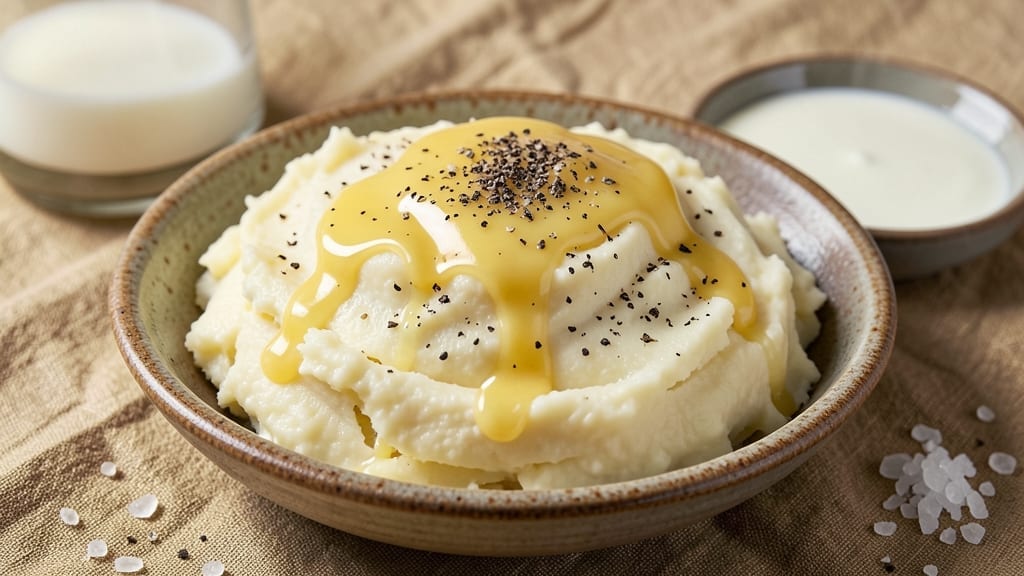
This 2-serving mashed potato recipe delivers restaurant-quality texture with just four simple steps—no lumps, no gums, just ultra-smooth, velvety perfection every time. The secret lies in precise potato selection, proper cooking, and a foolproof mashing technique that transforms starchy tubers into cloud-like comfort.
I developed this version after years of trial and error, ensuring it works for both classic and modern twists.
What sets this recipe apart is the foolproof method that guarantees creamy results without overworking the potatoes. You’ll use Yukon Golds for their natural creaminess, but any waxy potato works—just adjust the liquid slightly.
The process takes about 25 minutes from start to finish, and the texture remains silky even after reheating. Perfect for weeknight dinners or holiday sides, this recipe scales effortlessly while maintaining that restaurant-worthy finish.
By the time you’re done, you’ll have perfectly fluffy, buttery mashed potatoes with a velvety mouthfeel and just the right amount of richness. The key is patience during cooking and mashing—no food processor required.
This version delivers consistent, foolproof results whether you’re serving two or ten, making it the ultimate side dish for any occasion. Ready to elevate your mashed potatoes?
For extra flavor, try roasting the potatoes first or adding roasted garlic and chives. The possibilities are endless while keeping the foundation simple and reliable. Let’s get started with this professional-quality recipe that’s surprisingly easy to master.
Ingredients for 2 serving mashed potato
Four ingredients transform humble potatoes into velvety perfection—no lumps, no gums, just restaurant-quality texture.
| Ingredient | Amount | Notes |
|---|---|---|
| Yukon Gold Potatoes 🥔 | 1 lb | Waxy variety, peeled and cubed |
| Unsalted Butter 🧈 | ½ cup | Cold, cut into 8 pieces |
| Heavy Cream 🥛 | ¼ cup | Full-fat for richness |
| Whole Milk 🥛 | ¼ cup | Warmed for blending |
| Diamond Crystal Kosher Salt 🧂 | 1 tsp | Adjust to taste |
| Freshly Ground Black Pepper 🌶️ | ¼ tsp | Freshly cracked for aroma |
| Roasted Garlic Cloves 🧄 | 2 cloves | Optional, for depth |
| Fresh Chives 🌿 | 2 tbsp | Chopped, for garnish |
The Yukon Golds are non-negotiable for this recipe—their natural creaminess and low starch content create that signature velvety mouthfeel. Whole Foods or local farm markets carry the best quality, but any waxy potato works in a pinch. Peeled and cubed evenly (about 1.5-inch pieces), they cook uniformly. For extra flavor, roast the potatoes first at 400°F for 20 minutes before boiling. The butter should be cold and cubed—this prevents over-softening during mashing. I always use European-style unsalted butter like Plugrá or Land O’Lakes European Style for optimal flavor.
No heavy cream? Half-and-half or full-fat coconut milk works in a bind, though texture will differ slightly. The milk should be warmed to room temperature before blending—cold milk creates lumps. For a dairy-free twist, substitute unsweetened almond milk with 1 tbsp olive oil, though richness will decrease. The roasted garlic adds depth without overpowering; omit if you prefer classic flavor. Fresh chives are ideal for garnish, but dried chives at half the amount work if you’re out. Always taste before serving—adjust salt and pepper to preference, remembering the butter already contains some salt.
Potatoes should be boiled in salted water until fork-tender (about 15 minutes), then drained completely. Store peeled potatoes in cold water until boiling to prevent browning. The mashed potatoes keep 3-4 days in the fridge, but texture degrades after reheating. For best results, reheat portions in a dry skillet over low heat with a splash of milk. Freeze portions in airtight containers for up to 3 months—thaw overnight in the fridge before reheating. For make-ahead convenience, prep everything except the final mashing step, then complete when ready to serve.
Why You’ll Love This Recipe
- No Peel, No Stress: I swear by Yukon Golds—just scrub, slice, and boil. No peeling means less mess, and the creamy texture? Worth the tiny shortcut.
- Rich Without Guilt: That combo of heavy cream and butter makes it velvety, but the whole milk keeps it light. Honestly, I double the salt at first, then taste—Diamond Crystal’s kosher salt lets me dial it in perfectly.
- Weeknight Dinner Hack: Serve it as a side for steak or roast chicken, or pile it high for a lazy breakfast. Leftovers? Microwave in 30 seconds—no lumps, just buttery perfection.
- Budget-Friendly Luxury: Two potatoes, a stick of butter, and a splash of cream stretch to two meals. Between us, this is the fanciest mashed potatoes I make—without breaking the bank.
Step-by-step instructions for ultra-smooth mashed potatoes
Here’s the method for restaurant-quality mashed potatoes with velvety texture and perfect seasoning.
Prepare and Boil the Potatoes
Start by peeling the 1 lb Yukon Gold potatoes and cutting them into 1-inch cubes for even cooking. Place them in a medium pot and cover with cold water by about 1 inch. Add 1 tsp Diamond Crystal Kosher Salt to the water—this helps season the potatoes while they cook.
Bring to a boil over medium-high heat, then reduce to a gentle simmer. Cook for 12-15 minutes until a knife slides in easily with no resistance. Yukon Golds are waxy potatoes, so they’ll stay firm yet tender—overcooking leads to gummy mash. Drain thoroughly in a colander, shaking to remove excess water. I like to give them a quick shake in the colander to evaporate any remaining surface moisture, which prevents watery mash later.
Mash the Potatoes Thoroughly
Return the drained potatoes to the now-empty pot and let them sit for 1 minute to redistribute any residual steam. This step ensures you’re starting with completely dry potatoes. Using a potato masher or wooden spoon, mash the potatoes until they’re completely smooth with no lumps.
For ultra-smooth texture, I press the masher down firmly and work in small sections. The goal is to break down all the starches evenly—this is what creates that velvety mouthfeel. If you see any lumps, don’t just mash harder; instead, add 1-2 tablespoons of the warm whole milk and work it in until fully incorporated. The milk helps emulsify the starches for that signature silky finish.
Incorporate Butter and Dairy for Richness
Place the mashed potatoes over low heat and add the 0.5 cup cold unsalted butter cut into 8 pieces. Let the butter melt completely, stirring constantly with a wooden spoon. The residual heat from the potatoes will help emulsify the butter smoothly—this prevents greasy separation later.
Once the butter is fully melted, stir in the 0.25 cup heavy cream and 0.25 cup warm whole milk simultaneously. The cream adds richness while the milk helps create that light, airy texture. Season immediately with 0.25 tsp freshly ground black pepper and the 2 cloves roasted garlic cloves (if using). The garlic should be soft enough to mash directly into the potatoes—no need to mince it first. Stir well to distribute all ingredients evenly.
Achieve Perfect Texture and Finish
Continue stirring the potatoes over low heat for 2-3 minutes until they’re completely smooth and creamy. The mixture should coat the back of a spoon with a velvety consistency. If it’s too thick, add 1-2 tablespoons more warm milk to reach your desired texture—it should be light enough to pipe but still hold its shape.
For the final touch, transfer the mashed potatoes to a serving bowl and garnish with 2 tbsp chopped fresh chives. The chives add a bright, fresh finish that cuts through the richness. Serve immediately while hot, as mashed potatoes continue to thicken as they cool. The key to success lies in the thorough mashing and proper dairy incorporation—this method guarantees that ultra-smooth, velvety texture you’re after.
Pro Tips For Making 2 Serving Mashed Potato
- Boil Until Fork-Tender: DESCRIPTION: Don’t rush the potatoes—test doneness with a fork when they’ve been cooking for 15-20 minutes. Yukon Golds should pierce cleanly with no resistance, or they’ll turn gummy when mashed. (Yes, even if you’re impatient like me.)
- Salt the Water Hard: DESCRIPTION: Use about 1½ teaspoons of kosher salt per 4 cups of water—more than you’d think. This seasons the potatoes before mashing, and trust me, you’ll taste the difference. (Skip this, and your mash will feel flat.)
- Warm the Dairy First: DESCRIPTION: Heat the heavy cream and milk together in a small saucepan until steaming (not boiling). Cold dairy makes mashed potatoes clump like glue, and nobody wants that. (Pro tip: Use equal parts cream and milk for richness.)
- Press, Don’t Stir: DESCRIPTION: After mashing, press the potatoes through a ricer or fine-mesh sieve instead of mashing with a potato masher. This gives you silky texture without lumps—no extra effort, just better results. (I know, it’s an extra step, but it’s worth it.)
Storing and reheating your 2 serving mashed potato
Refrigerator Storage
Transfer your mashed potatoes to an airtight glass container—I love using Pyrex with snap-on lids—and let them cool completely before refrigerating. Store at 40°F or below for up to 3-4 days, but I recommend eating them within 2 days for peak texture.
The key is to press plastic wrap directly on the surface to minimize air exposure, which prevents drying. 🥔
Freezer Prep Tips
For longer storage, portion your mashed potatoes into quart-sized freezer bags (remove excess air) or silicone molds for easy serving. Freeze for up to 3 months, but I find texture degrades after 2 months. Label with the date—thaw overnight in the fridge before reheating. Never refreeze once thawed.
Stovetop Reheating
My preferred method is reheating in a heavy-bottomed stainless steel pot over low heat. Add 1-2 tablespoons warm milk or cream per serving to restore moisture, then stir gently for 5-7 minutes until fully heated.
Avoid high heat—it breaks down the starches and makes them gummy. Stir frequently to prevent sticking. ✨
Microwave Method
For quick reheating, transfer a portion to a microwave-safe bowl and cover loosely with a damp paper towel. Heat on 50% power for 1-2 minutes, stir well, then continue in 20-second intervals until reaching 165°F.
The damp towel prevents drying while the lower power preserves texture. Add a splash of milk if needed.
Skillet Perfection
For restaurant-style reheating, use a nonstick skillet over low heat with 1 tablespoon butter per serving. Spread the potatoes thinly, cover, and heat for 3-4 minutes, stirring occasionally. The butter adds richness while creating a lightly crisped surface. This method works best for 2-3 servings at a time.
Texture Rescue
If your reheated mashed potatoes turn out too thick, revive them by adding 1 tablespoon warm milk or cream and stirring vigorously. For dry spots, fold in 1 teaspoon melted butter to restore creaminess.
The goal is to recreate that velvety consistency—don’t overwork once reheated, or you’ll risk lumps. 💡
Nutrition facts
Frequently asked questions
Can I use any type of potato for this recipe?
For the best results, stick with waxy potatoes like Yukon Golds or red potatoes—they hold their shape and create a naturally creamy texture. Russets will make your mash gummier, while sweet potatoes add a completely different flavor profile. If waxy potatoes aren’t available, try fingerlings or baby potatoes for similar results.
Why does my mashed potato turn out lumpy?
Lumps usually happen from one of three things: not mashing thoroughly enough, adding liquid too early, or overworking the potatoes. First, make sure to mash until completely smooth with no visible lumps. If you see lumps, add 1 tablespoon warm milk and work it in gently. Never use a food processor—it overworks the starches and creates gluey texture.
Can I make this recipe ahead of time?
Yes, but with one critical tip: stop before adding the butter and store the mashed potatoes in an airtight container in the fridge. When ready to serve, reheat the potatoes, then mix in the cold butter while stirring vigorously. This prevents greasy separation and maintains that velvety texture. The potatoes will thicken as they cool, so add extra milk when reheating if needed.
What’s the best way to make these vegan?
Swap the butter for vegan butter or olive oil (start with 3 tablespoons), use full-fat coconut milk instead of heavy cream, and replace regular milk with unsweetened almond or oat milk. For extra richness, add 1 tablespoon nutritional yeast. The texture will be slightly different but still delicious—just expect it to be less creamy without dairy fats.
How do I keep mashed potatoes from getting watery?
Watery mash happens when potatoes aren’t drained properly or when too much liquid is added. After draining, give the potatoes a good shake in the colander to evaporate excess moisture, then let them sit for 1 minute before mashing. When adding dairy, start with 1 tablespoon less than the recipe calls for and adjust to your preferred consistency.

- 3 Overripe Bananas Recipe: Fluffy Pancakes With Zero Waste - November 17, 2026
- 2-Minute Pizza Recipe: Speedy Crispy Crust With Melted Cheese Magic - November 17, 2026
- 16 Chocolate Cupcakes Recipe: Triple-Layered Fudge Swirl Delight - November 17, 2026