
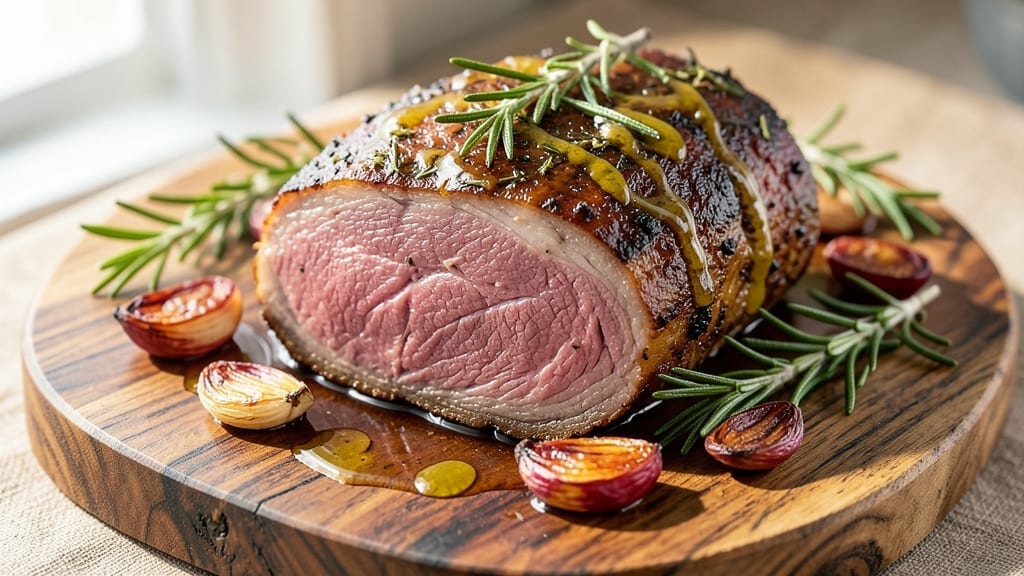
A 2 lb lamb roast with a herb-crusted pink center transforms a simple weeknight meal into an elegant centerpiece—without sacrificing tenderness. The secret lies in precise timing and a flavor-packed crust that seals in juices while keeping the interior succulent.
This isn’t your grandmother’s dry lamb; it’s a restaurant-quality roast that comes together with minimal effort but maximum impact.
Start with a simple yet bold seasoning blend of rosemary, garlic, and Dijon mustard, then roast at 375°F for just 20 minutes per pound—no guesswork, no overcooking.
The crust develops a golden, caramelized edge while the inside remains perfectly pink and juicy, a texture that’s both luxurious and approachable. This method ensures every slice delivers that melt-in-your-mouth experience you’d expect from a high-end dish.
Pair it with roasted root vegetables or a bright mint sauce to balance the richness, and serve with crusty bread to soak up every last drop of that herb-infused lamb drippings.
The result? A meal that feels special enough for guests but simple enough for a weeknight. Let’s get started—your taste buds (and dinner guests) will thank you.
Pro tip: Rest the lamb for 15 minutes before slicing—this crucial step keeps it juicy and tender, not dry. And if you’re feeling adventurous, a splash of red wine in the pan while searing adds depth that’ll elevate this roast to new heights.
Perfect for a cozy dinner or a showstopping main course.
Ingredients for 2 lb lamb roast
Herb-packed crust, pink center perfection—just 14 ingredients for restaurant-quality lamb.
| Ingredient | Amount | Notes |
|---|---|---|
| Lamb Roast (Frenched) 🥩 | 2 lb | Bone-in for better flavor, frenched for presentation |
| Fresh Rosemary 🌿 | ½ cup | Chopped finely, stems removed |
| Garlic Cloves 🧄 | 8 cloves | Minced into a paste with salt |
| Dijon Mustard 🍯 | 2 tbsp | High-quality, smooth variety |
| Extra-Virgin Olive Oil 🫒 | ¼ cup | For crust and basting |
| Kosher Salt 🧂 | 1 ½ tbsp | Diamond Crystal preferred |
| Freshly Ground Black Pepper 🌶️ | 1 tbsp | Coarsely cracked |
| Red Wine (optional) 🍷 | ½ cup | Bold dry variety like Cabernet |
| Fresh Thyme Leaves 🌿 | ¼ cup | Stems removed, finely chopped |
| Honey 🍯 | 1 tbsp | For basting glaze |
| Fresh Parsley 🌿 | ⅛ cup | Chopped, for garnish |
| Carrots (whole) 🥕 | 4 whole | Peeled, cut into chunks |
| Yellow Onions 🧅 | 2 whole | Quartered, peeled |
| Potatoes (Russet) 🥔 | 2 lb | Cut into 2-inch chunks |
The lamb roast is your star, so look for a well-marbled frenched cut from the butcher—Costco or Whole Foods carry excellent options. Fresh rosemary and thyme should smell vibrant, not wilted. For the garlic, peel and mince it while the lamb rests—it releases more flavor that way. If you’re feeling fancy, ask your butcher to french the cut for you; if not, trim any large fat caps yourself. The Dijon mustard adds depth, so don’t skip it—Maille or Colosio are my go-tos. For the crust, Diamond Crystal kosher salt
No fresh rosemary? Dried works at half the amount, but it won’t have the same punch. Short on garlic? Garlic powder at one-third the amount gets you close, though fresh is ideal. The red wine is optional but adds depth—Cabernet Sauvignon or Merlot work best. If you skip it, use an extra splash of beef broth instead. For the root vegetables, carrots and potatoes are classic, but swap in parsnips or sweet potatoes if you prefer. The honey glaze is optional but adds a beautiful caramelized finish—local raw honey has the best flavor. If you’re making this ahead, season the lamb and refrigerate it uncovered for up to 24 hours to dry-brine it for extra tenderness. This roast is all about resting time—don’t skip the 15-minute rest before slicing, or you’ll lose all that juicy goodness. The crust keeps well for 3 days in the fridge, but the lamb itself is best eaten fresh. For leftovers, slice thinly and reheat gently in the oven with a splash of water to keep it moist. The herb crust freezes beautifully—portion it into single servings before freezing for easy reheating. Store the roasted vegetables separately; they reheat best straight from the fridge. And save those pan drippings—they’re perfect for basting or making a quick pan sauce.
Why You’ll Love This Recipe
- Here’s what sold me: the crust. Searing the roast in olive oil until it’s golden, then basting with garlic-infused butter, gives you that perfect contrast—crispy edges that shatter, but a center so tender it melts. (Yes, even on a Tuesday night.)
- Fewer Ingredients, Big Payoff: I swear by this recipe because it’s all about focus—just five core ingredients, no weird pantry raids. The frenched lamb lets the garlic and rosemary sear right into the meat while I’m chopping veggies, and that Dijon mustard? It’s the secret that turns “weeknight dinner” into “restaurant-worthy” without trying.
- Crispy Outside, Tender Inside: Here’s what sold me: the crust. Searing the roast in olive oil until it’s golden, then basting with garlic-infused butter, gives you that perfect contrast—crispy edges that shatter, but a center so tender it melts. (Yes, even on a Tuesday night.)
- Leftovers That Don’t Suck: Between us, most roast leftovers are sad. Not this one. The rosemary and mustard keep it flavorful for days—slice it for wraps, shred it into grain bowls, or just reheat with a splash of broth. My kids actually ask for it the next day.
Step-by-step instructions for herb-crusted lamb roast
Here’s how to achieve that perfect pink center while building an irresistible herb crust.
Prepare the Herb Crust Mixture
In a food processor, combine the 0.5 cup fresh rosemary, 8 cloves garlic, 0.25 cup extra-virgin olive oil, 2 tbsp Dijon mustard, 0.25 cup fresh thyme leaves, 1 tbsp honey, 1.5 tbsp kosher salt, and 1 tbsp freshly ground black pepper. Pulse until you achieve a thick, paste-like consistency that will cling beautifully to the lamb.
This herb mixture is the secret to that coveted crust – the rosemary and thyme provide aromatic depth while the honey adds a subtle sweetness that balances the richness of the lamb. The garlic and mustard create a complex flavor foundation that infuses throughout the roast.
Season and Coat the Lamb
Take the 2 lb lamb roast out of the refrigerator and let it sit at room temperature for 30 minutes – this ensures even cooking. Pat it dry thoroughly with paper towels, then generously rub the herb mixture all over the meat, pressing it into the surface. Let it sit uncovered in the refrigerator for at least 2 hours (or up to overnight) to allow the flavors to penetrate deeply.
The longer you let it marinate, the more flavorful your lamb will be. I like to flip it occasionally during the resting time to ensure even coverage. This prepping step is where the magic happens – the lamb absorbs the aromatic herbs while the crust begins to form.
Roast the Lamb with Vegetables
Preheat your oven to 375°F. Place the lamb on a rack set inside a roasting pan. Arrange the 2 lb russet potatoes (cut into 2-inch chunks), 4 whole carrots (peeled and cut into chunks), and 2 whole yellow onions (quartered) around the lamb. Drizzle everything with the 0.5 cup red wine (if using) and 2 tbsp extra olive oil from the herb mixture.
Roast uncovered for 1 hour 15 minutes until the internal temperature reaches 130°F for medium-rare (this is the key to that perfect pink center). The vegetables will be tender and caramelized by this point, creating a flavorful bed for your lamb. Here’s where patience pays off – resist the urge to check the temperature early.
Rest and Create the Glaze
Remove the lamb from the oven and transfer it to a cutting board. Tent loosely with foil and let it rest for 20 minutes – this crucial step allows the juices to redistribute throughout the meat. While it rests, place the roasting pan on the stovetop over medium heat and add 1 tbsp honey along with any accumulated juices from the pan.
Simmer for 3-4 minutes until the mixture reduces to a glossy glaze. This honey glaze will add a beautiful finish to your lamb while enhancing its natural sweetness. The resting period is where the lamb truly transforms – what might seem underdone will become perfectly tender and juicy.
Carve and Serve
After resting, slice the lamb against the grain into ½-inch thick slices. Spoon the honey glaze over the top and garnish with 0.125 cup fresh parsley. Serve immediately with the roasted vegetables and any pan juices. The crust should be fragrant and slightly crisp, while the interior remains tender with just a hint of pink.
Each slice should be juicy and flavorful, with the herb crust breaking apart slightly as you cut. The vegetables should be perfectly tender with caramelized edges. This is where all your preparation pays off – a beautifully presented dish that tastes even better than it looks.
Pro Tips For Making 2 Lb Lamb Roast
- Sear First, Roast Slow: Get that pan screaming hot—cast iron or stainless steel—and sear the lamb for 3-4 minutes per side before transferring to the oven. I used to skip this, and the roast always tasted dull; the crust locks in flavor and keeps the meat juicy during the long cook.
- Smash, Don’t Just Chop Garlic: Use the flat side of your knife to crush those garlic cloves into a paste before mixing with mustard and oil. Whole cloves burn and taste bitter; smashed garlic blends smoothly and infuses every bite. (Yes, it’s extra work, but your roast will taste like it came from a fancy restaurant.)
- Skip the Overcrowded Pan: If you’re searing multiple pieces, do it in batches—even if it means an extra minute. Crowding steams the lamb instead of browning it, and no one wants a sad, pale roast. A busy pan is the enemy of good flavor.
- Rest Under Foil, Not Air: After roasting, tent the lamb loosely with foil and let it rest for 10 minutes. Air-drying it too long makes the meat tough; foil traps heat and keeps it tender. I learned this after slicing into a dry, chewy roast—never again.
Dietary considerations for this recipe
Gluten-Free Adaptations
This recipe is naturally gluten-free, but I always double-check my ingredients to avoid cross-contamination. The Dijon mustard and kosher salt brands I use are certified gluten-free, but if you’re sensitive, opt for gluten-free mustard like Annie’s or Maille gluten-free variety.
The crust remains intact without any gluten-containing ingredients, so no substitutions are needed—just ensure your seasonings are pure. 🌾
Dairy-Free Considerations
While this recipe doesn’t contain dairy, the crust’s richness comes from extra-virgin olive oil and honey, which naturally complement lamb. If you’re avoiding honey (for dietary reasons), swap it for agave syrup or maple syrup—both work beautifully in the glaze.
The red wine and herb mixture keep the dish dairy-free while maintaining depth. 🥛
Low-Carb/Keto Version
This roast is already keto-friendly, but you can enhance it by skipping the potatoes and onions (or swapping them for cauliflower or zucchini). The 2 lb lamb roast alone provides ~40g protein per serving with negligible carbs.
For extra flavor, add 1 tbsp nutritional yeast to the crust for a cheesy note without dairy. The honey glaze can be reduced or omitted entirely if strict low-carb adherence is needed. 🥩
Allergen-Friendly Swaps
For nut allergies, ensure your extra-virgin olive oil is nut-free (some brands process in shared facilities). If you’re avoiding garlic, replace the 8 cloves with 1 tbsp garlic powder or asafetida powder (a common substitute in Indian cuisine).
For mustard allergies, skip the Dijon and boost the rosemary and thyme by 0.25 cup each instead. Always check labels on pre-made ingredients like mustard. 🚫
Vegetarian Substitutes
While lamb isn’t vegetarian, you can adapt this method for plant-based roasts like portobello mushrooms or jackfruit. Marinate them in the same herb mixture and roast at 375°F for 25-30 minutes until tender.
The crust works equally well, though the texture will differ. For a closer lamb-like experience, use seitan or lentil-based roasts with the same seasoning blend. 🌱
Nutrition facts
Frequently asked questions
What does “frenched” mean for the lamb roast?
“Frenched” refers to a lamb roast with the small fat caps trimmed off the ends of the bones, creating clean edges for presentation. This step isn’t mandatory but makes slicing and serving easier. If your butcher doesn’t offer this service, simply trim any large fat caps yourself with kitchen shears.
Can I cook this lamb roast to medium or well-done?
This recipe is designed for medium-rare (130°F internal temp), where lamb remains most tender. For medium (140°F), roast 15-20 minutes longer and well-done (160°F) requires 30-40 minutes extra. The crust may become firmer at higher temps, but the meat will still be flavorful.
How do I know when the lamb is perfectly cooked?
Use a meat thermometer to check the internal temperature: 125°F for rare, 130°F for medium-rare (recommended), or 140°F for medium. The crust should be golden-brown and slightly crisp. For extra accuracy, insert the thermometer into the thickest part without touching bone.
What’s the best way to reheat leftovers?
Slice the lamb thinly and reheat in a 350°F oven for 10-15 minutes with a splash of water or broth to keep it moist. Avoid microwaving—it makes the meat tough. For the vegetables, warm them separately in the oven or stovetop with fresh herbs. Leftovers keep well for 3-4 days in the fridge.
Can I make this recipe in a slow cooker?
While not ideal for pink-center perfection, you can adapt it: Sear the lamb first, then slow cook on low for 6-8 hours with the herb mixture. The texture will be more tender than roasted, but the flavors will still shine. For best results, finish in a 400°F oven for 15 minutes to create a crust.

- 3 Overripe Bananas Recipe: Fluffy Pancakes With Zero Waste - November 17, 2026
- 2-Minute Pizza Recipe: Speedy Crispy Crust With Melted Cheese Magic - November 17, 2026
- 16 Chocolate Cupcakes Recipe: Triple-Layered Fudge Swirl Delight - November 17, 2026