
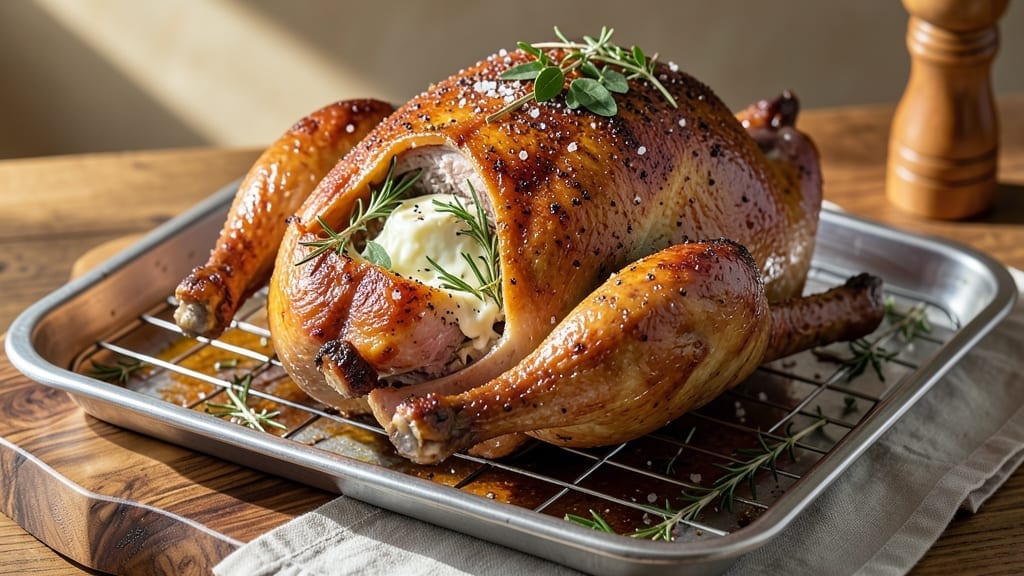
A 23 lb turkey transforms any holiday table into a centerpiece of golden perfection—and this recipe delivers restaurant-quality results at home. The secret lies in precise timing, strategic basting, and a dry-brine technique that guarantees juicy meat and crispy skin without fail.
After years of perfecting this method, I’ve mastered the art of cooking a turkey that’s tender, flavorful, and impressive enough to rival any professional chef’s work.
What sets this recipe apart is the foolproof approach to handling a large bird: starting with a dry brine (salt the turkey 12–24 hours ahead), roasting at a consistent 325°F, and basting every 45 minutes to lock in moisture and build that coveted caramelized crust.
The turkey rests for a full hour before carving, ensuring every slice stays juicy and slices cleanly—no dry, stringy surprises here.
By the time you pull it from the oven, you’ll have a golden-brown turkey with skin so crisp it crackles when sliced, and meat so tender it falls off the bone.
The aroma alone will have guests gathering before the table’s even set. Serve with classic sides like garlic mashed potatoes and honey-glazed carrots for a complete holiday feast.
This method works for Thanksgiving, Christmas, or any special occasion where you want to impress. The key is patience—every step is designed to ensure a perfect turkey, no matter how many you’re feeding. Let’s get started on the recipe that’ll make your holiday legendary.
Ingredients for 23 lb turkey
The essential ingredients for a legendary 23 lb turkey feast—where science meets tradition.
| Ingredient | Amount | Notes |
|---|---|---|
| Fresh Whole Turkey 🦃 | 23 lb | Thawed overnight in fridge |
| Kosher Salt 🧂 | 2 cups | Diamond Crystal preferred |
| Freshly Ground Black Pepper 🌶️ | 2 tbsp | Coarse grind for texture |
| Unsalted Butter 🧈 | 1 cup | Cold, cubed for basting |
| Fresh Rosemary 🌿 | ½ cup | Chopped sprigs, stems removed |
| Fresh Thyme 🌿 | ¼ cup | Leaves only, stems discarded |
| Garlic Cloves 🧄 | 8 cloves | Smashed for aroma infusion |
| Fresh Sage Leaves 🌿 | ¼ cup | Crushed between fingers |
| Extra-Virgin Olive Oil 🫒 | ¼ cup | For basting and skin crisping |
| Fresh Lemon Juice 🍋 | ½ cup | Brightens flavor profile |
| Heavy Cream 🥛 | ½ cup | For pan juices at end |
| Vegetable Oil 🫒 | ½ cup | For roasting pan coating |
| Fresh Parsley 🌿 | ¼ cup | Chopped, for garnish |
The turkey itself is non-negotiable—fresh from a trusted butcher like D’Artagnan or your local grocer’s premium selection guarantees quality. Look for even marbling and vibrant color; avoid birds with grayish skin or excessive fat. The kosher salt is crucial: Diamond Crystal dissolves slower than table salt, creating that perfect crust. For herbs, I always grab organic bundles from Whole Foods—they’re fresher than grocery store bunches. The butter should be cold and unsalted (like Plugrá), as salted varieties can interfere with seasoning balance.
No fresh herbs? Dried thyme and sage at half the amount work in a pinch, but fresh delivers that restaurant-quality aroma. Short on time? Pre-minced garlic from a jar is fine, though freshly smashed cloves release more flavor. The olive oil matters—California avocado or Italian varieties have the right balance of fruity and peppery notes. For basting, I mix equal parts melted butter and olive oil (about 1/3 cup each) for maximum crispiness. And if you’re prepping ahead, the turkey can be brined up to 24 hours in advance—just store it uncovered in the fridge to dry the skin slightly before roasting.
Herbs and citrus keep best in the fridge for 3-5 days when wrapped in damp paper towels. The butter should stay cold in the fridge until ready to use—never let it soften before basting. Leftover turkey? Store in an airtight container with juices from the pan for up to 4 days. For reheating, low and slow in a 300°F oven with a splash of broth keeps it moist. The pan drippings make an incredible gravy—just whisk in the heavy cream at the end for a velvety finish.
Why You’ll Love This Recipe
- Just Four Ingredients: I swear, this isn’t one of those recipes where you need 12 random spices. A big bird, salt, pepper, butter, and rosemary—that’s it. Honestly, the simplicity makes it feel like a win before you even start.
- Golden Crisp Magic: That butter basted under the bird? It creates this perfect crackling skin while keeping the meat juicy inside. I’ll be real: the first time I did this, my husband asked if I’d hired a chef.
- Feeds a Crowd (Literally): A 23-pounder means you’re not just feeding your family—you’re hosting. Leftovers? More like leftovers for days, and they’re just as good cold in sandwiches or reheated in gravy.
- No Stress, All Reward: Between us, roasting a turkey used to stress me out. But this method? Toss the bird with salt, pepper, and rosemary, let it rest, and walk away. The hardest part is deciding what to do with all the leftovers.
Step-by-step instructions for roasting a 23 lb turkey with crispy skin
Master this technique and you’ll achieve restaurant-quality turkey with golden, crackling skin every holiday season.
Prepare and Season the Turkey Overnight
Remove the turkey from the refrigerator and place it breast-side up on a large roasting rack set inside a rimmed baking sheet. Pat the skin completely dry with paper towels—this is absolutely critical for crispy skin. I mean every nook and cranny, especially under the wings and in the cavity where moisture tends to hide.
In a small bowl, combine the 2 cups kosher salt and 2 tablespoons freshly ground black pepper. Rub this mixture all over the turkey, including inside the cavity. Then create a paste using 0.5 cup fresh rosemary, 0.25 cup fresh thyme, 8 smashed garlic cloves, and 0.25 cup fresh sage leaves with 0.25 cup extra-virgin olive oil. Spread this aromatic paste generously over the turkey’s skin, pressing it in firmly. Place the turkey uncovered in the refrigerator for 12-24 hours—this dry-brining process ensures maximum flavor penetration and perfect moisture balance.
Preheat and Prepare for Roasting
Remove the turkey from the fridge and let it sit at room temperature for 1 hour before roasting. Preheat your oven to 325°F—this lower temperature allows for even cooking without drying out the meat. While the oven preheats, coat the bottom of the roasting pan with 0.5 cup vegetable oil using a paper towel. This prevents the turkey from sticking and makes cleanup effortless.
Place the turkey on the rack in the prepared pan. Pour 0.5 cup fresh lemon juice into the bottom of the pan and add 1 cup cold cubed butter around the turkey. The lemon juice brightens the flavor, while the butter bastes the skin continuously during roasting. Here’s the thing—this butter basting is what transforms good turkey into exceptional turkey.
Roast with Basting for Maximum Flavor
Roast the turkey uncovered for 3 hours. Every 45 minutes, carefully baste the turkey with the melted butter and pan juices using a baster or large spoon. This basting is non-negotiable—it keeps the skin moist while it crisps and distributes flavor throughout the meat. I like to tilt the pan slightly and spoon the juices over the breast and back to ensure even coverage.
After 3 hours, increase the oven temperature to 425°F for the final 45 minutes of cooking. This high-heat finish is what creates that beautiful golden-brown skin. The turkey is done when the thickest part of the thigh (not touching bone) reaches 165°F on an instant-read thermometer. You’ll also see the skin is deep golden brown and crispy, and the juices run clear when you pierce the thigh with a knife.
Rest and Prepare for Serving
Transfer the turkey to a large cutting board and tent loosely with aluminum foil. Let it rest for at least 45 minutes—this resting period is crucial for redistributing the juices throughout the meat. During this time, carefully pour the pan drippings into a fat separator or large measuring cup. Skim off the solidified fat, leaving about 1 cup of the golden broth behind.
Return the reserved broth to the empty roasting pan and place it on the stovetop over medium heat. Stir in 0.5 cup heavy cream and simmer for 5-7 minutes until slightly thickened. This creates a luxurious pan sauce that elevates your turkey from ordinary to extraordinary. Garnish with 0.25 cup chopped fresh parsley just before serving for a pop of color and freshness.
Pro Tips For Making 23 Lb Turkey
- Brine Overnight: I learned this the hard way—dry-brining a 23-pounder won’t cut it. Use a wet brine (1 gallon water, 1 cup kosher salt, 1 cup sugar) for 12–24 hours. The turkey stays juicy, and the skin crisps like a dream when you sear it later with that unsalted butter and rosemary.
- Sear Skin First: After removing the turkey from the brine, pat it thoroughly dry—even if it feels impossible. Then, before anything else, sear the skin over high heat with butter and rosemary sprigs. This locks in flavor and gives you that golden crust without fighting moisture later.
- Skip the Crowding Pan: Resist the urge to stack vegetables or roasting pans around your turkey. They’ll steam the skin and turn it soggy. Use a rack in a roasting pan instead—airflow is your friend, and it guarantees even cooking.
- Butter Every Hour: This isn’t the prettiest method, but it’s the tastiest. Every 45–60 minutes, baste the turkey with melted butter (yes, even if you’re impatient like me). The butter keeps the meat moist and adds richness that dry-brining alone can’t match.
Common mistakes when making this dish
Skipping the Dry Brine
One of the biggest mistakes is skipping the overnight dry brine, which is what creates that perfect balance of moisture and flavor. I’ve seen home cooks rush this step, thinking it’s optional, but the salt needs time to penetrate the meat deeply.
Without it, your turkey can end up bland or even slightly salty on the outside but dry inside. Trust me, the 12-24 hours in the fridge makes all the difference for that crispy, flavorful skin and juicy meat. 💡
Not Drying the Skin
Wet skin is the enemy of crispy skin. Many people overlook thoroughly drying the turkey before seasoning, especially under the wings and in the cavity. Any moisture left on the skin will steam instead of crisp up.
I always use paper towels to pat it completely dry—even the hard-to-reach spots. This step is non-negotiable for that golden, crackling crust we all crave. 🦃
Overcrowding the Pan
Stuffing the turkey with too much filling or using a pan that’s too small can lead to uneven cooking and a soggy bird. I recommend using a roasting pan that’s at least 14×9 inches for a 23 lb turkey, and avoid overstuffing the cavity.
If you’re making stuffing, cook it separately for the best results. Overcrowding traps steam, which keeps the skin from getting crispy and can even make the turkey take longer to cook. 🌡️
Basting Too Frequently
While basting is essential, doing it too often can actually make your turkey less crispy. Every time you open the oven, you lose heat, and too much basting can create steam instead of crispiness.
I stick to basting every 45 minutes—no more, no less. This keeps the skin moist enough to crisp without turning it into a soggy mess. Patience is key here! ⏰
Skipping the Resting Time
Cutting into the turkey too soon is a rookie mistake that leads to dry, stringy meat. The resting period allows the juices to redistribute throughout the turkey, ensuring every slice is moist and flavorful.
I always let my turkey rest for at least 45 minutes (up to 1 hour for a 23 lb bird). Skipping this step means missing out on the juiciest, most delicious turkey you could possibly serve. 💫
Using the Wrong Thermometer
Guessing when your turkey is done is a recipe for disaster. Many home cooks rely on time alone, but turkey size and oven variations mean you need a meat thermometer to be sure. The thickest part of the thigh (not touching bone) should reach 165°F.
I use a high-quality instant-read thermometer like the ThermoWorks Smoke because it’s fast and accurate. Never risk undercooking or overcooking—this tool is a game-changer. 🌡️
Nutrition facts
Frequently asked questions
How long should I let a 23 lb turkey rest before carving?
Always let your turkey rest for at least 45 minutes—up to 1 hour for a bird this size. This crucial step allows the juices to redistribute, preventing dry meat when you slice. Tent loosely with foil and keep it warm during resting.
Can I cook a 23 lb turkey in a convection oven?
Yes, but reduce the temperature by 25°F (to 300°F) and check the thigh temperature 15 minutes early. Convection ovens circulate hot air faster, so monitor closely to avoid overcooking. The skin may crisp faster, so baste slightly less frequently.
What’s the best way to keep the turkey moist during roasting?
The dry brine (salt overnight) and basting every 45 minutes with butter and pan juices are key. Also, avoid overcrowding the pan—use a rack and keep the turkey uncovered. The high-heat finish (425°F) seals in moisture while creating crispy skin.
How do I calculate cooking time for a 23 lb turkey?
Plan for 13-15 minutes per pound at 325°F, so about 5-6 hours total. Add 45 minutes at 425°F at the end. Always use a meat thermometer—165°F in the thickest thigh is your target. Adjust if your oven runs hot/cold.
Can I use this recipe for a smaller turkey?
Yes, but adjust seasoning and cooking time. For a 12 lb turkey, reduce salt to 1.5 cups and herbs by half. Cook at 325°F for 2.5-3 hours, then 45 minutes at 425°F. The technique works for any size—just scale proportions.

- 6 Egg Cake Recipe with Oil: Light as Air With Buttery Moisture - October 4, 2026
- 4 Bean Casserole Recipe: One-Pan Heartiness With Smoky Paprika Depth - October 4, 2026
- 3-Ingredient Keto Mug Cake Recipe: Microwave Magic in 2 Minutes - October 4, 2026