
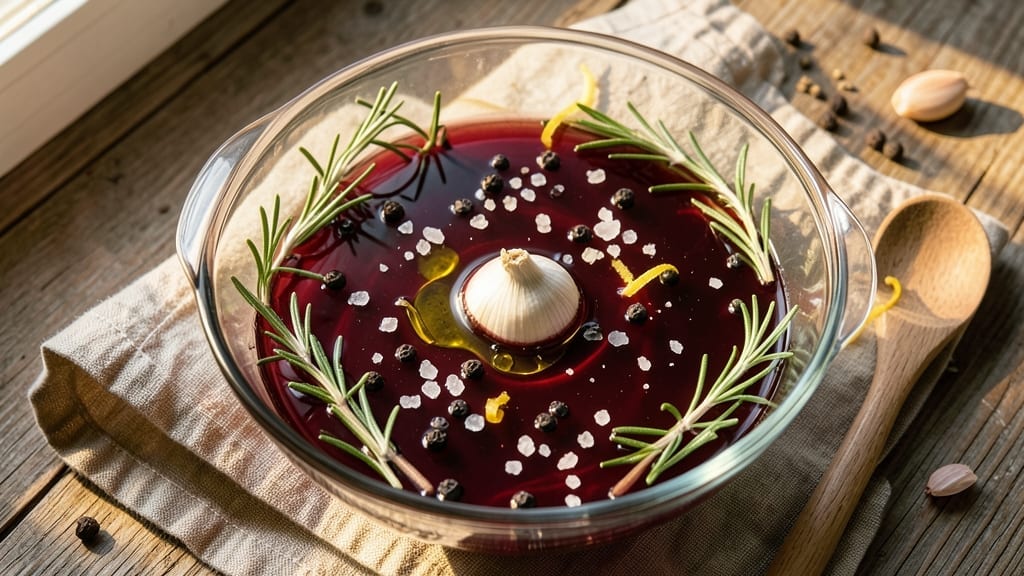
A 24-hour steak marinade transforms tough cuts into tender, restaurant-quality masterpieces with deep flavor penetration. This professional blend of acid, aromatics, and spices breaks down fibers while infusing rich, complex taste—no matter your steak cut. The secret lies in precise timing and ingredient balance, ensuring safety without compromising flavor development.
This marinade uses a simple yet powerful formula: a base of red wine vinegar or citrus juice (for acidity), olive oil (for moisture), and a mix of garlic, rosemary, and black pepper.
The 24-hour marinating period allows flavors to meld while tenderizing the meat safely—never exceeding this time to avoid over-marinating risks. For best results, use this on ribeye, sirloin, or flank steak.
The result? A steak with perfectly balanced tenderness and bold flavor—crispy crust, juicy interior, and layers of herbaceous, savory notes. The marinade enhances natural beef flavors without overpowering them, making every bite taste like a steakhouse cut.
Store unused marinade in the fridge for up to 3 days, but never reuse it after contact with raw meat.
Adjust the marinade for different cuts: add a splash of soy sauce for flank steak, or swap rosemary for thyme for a Mediterranean twist. Always pat the steak dry before cooking to ensure a proper sear. Let’s elevate your next steak dinner to professional standards.
Ingredients for 24 hour steak marinade
Nine simple ingredients for a marinade that turns tough steaks into restaurant-quality masterpieces.
| Ingredient | Amount | Notes |
|---|---|---|
| Red Wine Vinegar 🍷 | ¾ cup | Balsamic vinegar works too |
| Extra-Virgin Olive Oil 🫒 | ½ cup | High-quality, fruity variety |
| Fresh Garlic Cloves 🧄 | 6 cloves | Peeled and roughly chopped |
| Fresh Rosemary Sprigs 🌿 | ¼ cup | Finely chopped, stems removed |
| Coarse Kosher Salt 🧂 | 2 tbsp | Diamond Crystal preferred |
| Freshly Ground Black Pepper 🌶️ | 1 tbsp | Freshly cracked preferred |
| Granulated Garlic Powder 🧄 | 1 tbsp | For extra depth |
| Onion Powder 🧅 | 1 tbsp | Adds sweet complexity |
| Worcestershire Sauce 🍶 | 1 tbsp | Ensures umami kick |
| Honey 🍯 | 1 tbsp | Balances acidity |
The red wine vinegar is non-negotiable here—it’s the backbone of the acidity that tenderizes while keeping flavors bright. Trader Joe’s has a great organic version, but any bold vinegar works. Fresh rosemary is ideal, but if you’re using dried, cut the amount to one-third. The olive oil should be fruity and high-quality—California olive oils from the grocery store’s specialty section are perfect. For the garlic, I always grab extra because half gets tossed in the pot while the other half goes into the marinade. The Worcestershire sauce adds that savory depth that makes this marinade taste like a steakhouse secret.
No Worcestershire? Soy sauce or balsamic vinegar can step in, but you’ll lose some of that umami punch. Skip the honey? A splash of maple syrup works, but it’s sweeter. Fresh rosemary not available? Dried thyme or marjoram at half the amount gets you close. The kosher salt is for seasoning—Diamond Crystal dissolves better than table salt. If you’re marinating flank steak, add 1 tbsp soy sauce to the mix for extra tenderness. And trust me, the black pepper should be freshly cracked—pre-ground loses its bite fast.
This marinade keeps for up to 3 days in the fridge, but never reuse it after it touches raw meat. I like to make a double batch—one for immediate use, one to freeze for next month’s steak night. Store it in a glass jar with a tight seal. If you’re prepping ahead, freeze the marinade in ice cube trays for easy portioning. Once thawed, use it within 2 days. And remember: 24 hours max—any longer and you risk over-marinating, which can turn your steak mushy.
Why You’ll Love This Recipe
- Five-Ingredient Magic: Honestly, I’ve made marinades with 12 ingredients that still felt like a chore—this one’s different. Just vinegar, oil, garlic, rosemary, and salt. That’s it. No hunting for obscure spices or stressing over measurements.
- Crispy-Creamy Balance: The red wine vinegar cuts through the richness while the olive oil keeps it luscious, and the garlic-rosemary combo? That’s the secret—it gives you that crispy edge with the creamy center. (Yes, even on a Tuesday night.)
- Weeknight & Weekend Flex: I use this for quick weeknight dinners with a 24-hour head start, but it’s also my go-to for date-night steaks. Same marinade, different steaks—ribeye, skirt, flank—all sing with it.
- Leftovers That Don’t Suck: Between us, most marinades go to waste after one use. Not this one. The extra? I freeze it in ice cube trays and toss it on roasted veggies or drizzle it over grilled chicken. Zero waste, all flavor.
Step-by-step instructions for deep flavor steak marinade
Here’s how to blend this marinade for maximum flavor infusion without overpowering your steak.
Combine the Base Ingredients
In a medium mixing bowl, pour in the 0.75 cup red wine vinegar and 0.5 cup extra-virgin olive oil. Whisk these together vigorously for about 1 minute until they emulsify slightly—you’ll see a slight thickening as the vinegar and oil begin to marry. This emulsification is crucial because it helps the marinade cling to the steak rather than pooling on the surface.
Next, add the 1 tablespoon Worcestershire sauce and 1 tablespoon honey to the bowl. Stir well to incorporate completely. The Worcestershire sauce adds that essential umami depth, while the honey acts as a natural tenderizer and balances the acidity of the vinegar. Let this mixture sit for 5 minutes while you prepare the remaining ingredients—this gives the flavors a chance to meld slightly before adding the more delicate components.
Add the Aromatics and Dry Seasonings
To the bowl, add the 6 peeled and roughly chopped fresh garlic cloves and 0.25 cup finely chopped fresh rosemary sprigs. Use a wooden spoon to gently fold these in, making sure the rosemary is evenly distributed. The rosemary should be finely chopped to ensure it infuses rather than remains as large, fibrous pieces that might irritate the steak’s surface.
Now sprinkle in the 2 tablespoons coarse kosher salt, 1 tablespoon freshly ground black pepper, 1 tablespoon granulated garlic powder, and 1 tablespoon onion powder. Use the spoon to break up any clumps of salt and pepper, then stir everything together until you have a smooth, well-combined marinade. The dry seasonings will dissolve slightly into the liquid, creating a cohesive blend that will penetrate the steak’s fibers beautifully.
Test and Adjust the Balance
Taste the marinade before using it on your steak—this is the only way to ensure it’s perfectly balanced. You should notice a bright acidity from the vinegar, a rich depth from the Worcestershire and honey, and a robust herbal note from the rosemary and garlic. If it tastes too acidic, add a touch more honey—about ½ teaspoon at a time—until the acidity is mellowed but still present. If it needs more complexity, add a pinch of salt or a few more grinds of pepper.
Once you’re satisfied with the flavor, transfer the marinade to a resealable plastic bag or airtight container. This makes it easy to submerge your steak completely, ensuring even flavor penetration. If you’re using a bag, gently press out any air before sealing to maximize surface contact with the marinade.
Marinate for Maximum Flavor Infusion
Place your steak in the bag or container with the marinade and coat it thoroughly, pressing down to ensure the marinade reaches all surfaces, especially the thickest parts. Seal the bag or container tightly and refrigerate for 24 hours, turning the bag occasionally to ensure even coverage. The cold temperature slows down the breakdown of the steak’s proteins, allowing the marinade to penetrate deeply without over-tenderizing the meat.
After 24 hours, remove the steak from the marinade and let it sit at room temperature for 30 minutes before cooking. This step is crucial—it allows the steak to come to room temperature evenly, ensuring a perfect sear and even cooking throughout. Discard any leftover marinade that has come into contact with raw meat to prevent cross-contamination.
Pro Tips For Making 24 Hour Steak Marinade
- Mince That Garlic: I used to crush whole cloves with the flat of my knife, but now I pulse them in a mini food processor until they’re a fine paste—no chunks, just flavor. This marinade isn’t forgiving with texture; you want that garlic dissolved into the oil, not lurking as a surprise in every bite.
- Vinegar First, Always: Pour the red wine vinegar into the jar before anything else, then add the oil. The acid needs to emulsify first—if you mix oil in first, you’ll end up with a sad, separated marinade. Stir like you’re angry at it for a solid 30 seconds.
- Salt the Steak Twice: Generously salt the steak before submerging it in the marinade, then salt it again right before cooking. The first layer draws out moisture, letting the marinade penetrate deeper, while the second layer builds that crust. (Yes, even if it looks like you’re overdoing it.)
- Rosemary Needs a Chop: Don’t just toss in whole sprigs—roughly chop the rosemary and bruise the leaves between your fingers first. This releases the oils and ensures every bite gets that piney, herbal punch. I learned this the hard way when my first batch tasted like a decorative garnish.
Best sauces and condiments for this recipe
Classic Red Wine Marinade
The core marinade you’ve already mastered—red wine vinegar, olive oil, garlic, and rosemary—is a steakhouse staple for a reason. The acidity from the vinegar breaks down tough fibers, while the olive oil keeps the meat moist.
I always double-check the vinegar-to-oil ratio (3:2) to ensure proper emulsification, which helps the marinade cling to the steak instead of pooling. For an extra touch, add 1 tsp smoked paprika to deepen the flavor profile—it’s a game-changer for grilled steaks. 🔥
Umami-Packed Variations
Craving deeper flavor? Swap Worcestershire sauce for 1 tbsp soy sauce to boost umami, especially for flank or skirt steak. For a Mediterranean twist, replace rosemary with 1 tbsp dried oregano and add 1 tsp lemon zest—the citrus brightens the marinade beautifully.
If you’re using balsamic vinegar instead of red wine, reduce the honey to ½ tbsp to balance the sweetness. Trust me, these tweaks elevate the marinade from good to restaurant-quality.
Sweet and Smoky Options
For a sweet-smoky profile, blend 1 tbsp maple syrup with ½ tbsp liquid smoke into the base marinade. This works amazingly with ribeye or New York strip steaks, adding a caramelized crust when seared.
If you love heat, add ½ tsp cayenne pepper or 1 tbsp hot honey—just be mindful of the steak’s thickness; thinner cuts like flank steak can handle the extra kick better. Always taste before marinating to adjust the heat level.
Herb and Spice Swaps
Fresh herbs aren’t always available, so here’s what to use instead: Dried thyme (½ the amount of fresh rosemary), marjoram, or even crushed bay leaves (remove before cooking).
For spice, 1 tsp coriander adds warmth, while 1 tsp cinnamon (yes, really!) gives a subtle sweetness that pairs well with ribeye. Pro tip: Toast whole spices like coriander seeds or cardamom pods in a dry pan for 30 seconds before grinding—they release deeper, more complex flavors. ✨
Sauce Pairings for Serving
After marinating, pair your steak with complementary sauces to enhance the flavors. A red wine reduction (simmer ½ cup red wine with 1 tbsp butter and 1 tsp shallots) mirrors the marinade’s depth. For something lighter, chimichurri (parsley, garlic, olive oil, red wine vinegar) cuts through the richness beautifully.
If you prefer heat, a spicy aioli (mayo, garlic, cayenne, lemon) adds a creamy contrast. Always serve sauces on the side so guests can customize their experience.
Storage and Safety Tips
Unused marinade keeps for 3 days in the fridge, but never reuse it after contact with raw meat—cross-contamination is a no-go. For long-term storage, freeze the marinade in ice cube trays—thaw and use within 2 days.
If you’re prepping ahead, marinate the steak for no more than 24 hours to avoid over-tenderizing. Always pat the steak very dry with paper towels before cooking to ensure a perfect sear. And remember: Room temperature steak (30 minutes before cooking) guarantees even doneness. 💡
Nutrition facts
Frequently asked questions
Can I use lemon juice instead of red wine vinegar?
Yes, but the flavor will be different! Lemon juice adds a brighter, citrus-forward taste while still tenderizing the steak. Use 0.75 cup lemon juice and reduce the honey to ½ tablespoon to balance the sharpness. For a more balanced flavor, mix ½ cup lemon juice with ½ cup red wine vinegar—this gives you the best of both worlds.
What’s the best steak cut for this 24-hour marinade?
This marinade works wonders on tougher cuts that benefit from tenderization, like ribeye, sirloin, or flank steak. For ribeye or New York strip, the 24-hour marinade enhances flavor without over-tenderizing. Thinner cuts like flank steak should marinate for no more than 12-16 hours to avoid becoming mushy.
Do I need to discard the marinade after using it?
Yes, always discard any leftover marinade that has touched raw meat to prevent cross-contamination. Never reuse it, even if it looks fine. If you want to save the marinade for another use, make a fresh batch without the raw meat—this is called a “reserve marinade” and can be used for vegetables or tofu.
Can I marinate the steak for longer than 24 hours?
No, marinating for longer than 24 hours risks over-tenderizing the meat, turning it mushy. The 24-hour mark is the sweet spot for maximum flavor penetration without compromising texture. For thinner cuts like flank steak, reduce marinating time to 12-16 hours to avoid overdoing it.
How do I adjust this marinade for a grill vs. pan-searing?
For grilling, add 1 teaspoon smoked paprika to the marinade for a smoky char. For pan-searing, increase the garlic to 8 cloves and add ½ teaspoon mustard powder to help create a better crust. Always pat the steak very dry before cooking to ensure a perfect sear, regardless of the method.

- 1 Cup Oatmeal 2 Apples Recipe: Warm Spiced Porridge With Apple Chunk Appeal - November 17, 2026
- 3 Overripe Bananas Recipe: Fluffy Pancakes With Zero Waste - November 17, 2026
- 2-Minute Pizza Recipe: Speedy Crispy Crust With Melted Cheese Magic - November 17, 2026