
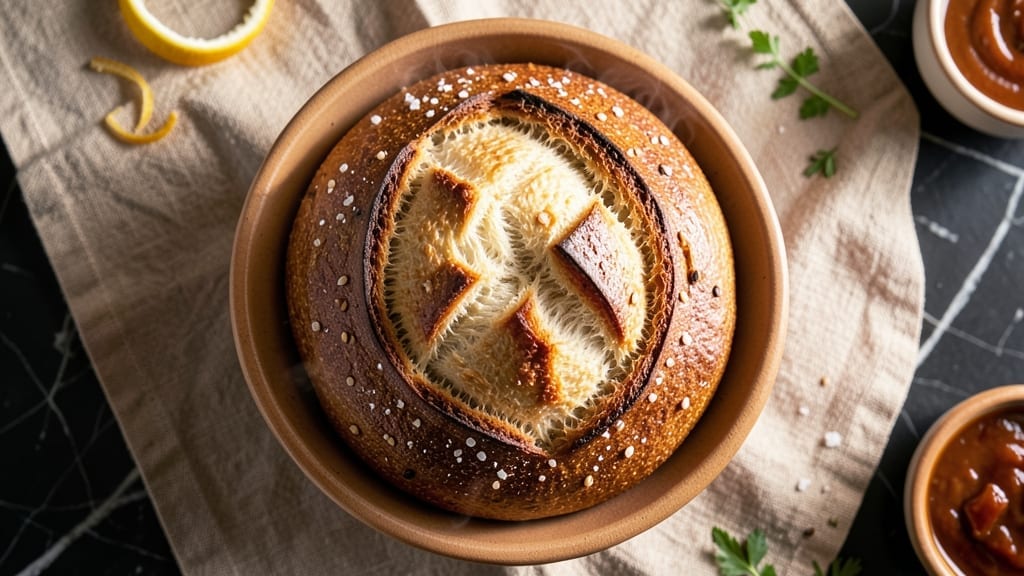
A 2lb bread loaf recipe that delivers sandwich bread perfection—crisp golden crust, airy crumb, and that fresh-baked aroma—is what separates homemade from store-bought. The secret lies in precise dough hydration, careful shaping, and steam-assisted baking, all of which I’ve refined over years of trial and error.
This isn’t just bread; it’s a foolproof method that yields a loaf so tender and flavorful, you’ll never buy it again.
The process begins with a balanced dough formula using bread flour, yeast, and a touch of sugar to feed fermentation. Kneading develops gluten for structure, while a 30-minute rest relaxes the dough before shaping into a classic sandwich loaf.
The real magic happens in the oven, where steam creates that coveted crisp crust while keeping the interior soft and even. Even beginners can achieve professional results with these exact steps.
What you’ll end up with is a 2lb loaf that slices cleanly, toasts beautifully, and holds up perfectly for sandwiches—no gummy centers or dense crumb here. The crust has just the right snap, while the interior remains pillowy and uniform.
This recipe builds confidence in your baking skills while delivering a loaf that rivals artisanal bakery quality.
Whether you’re making it for daily lunches or holiday gifts, this method scales perfectly. Store it wrapped at room temperature for up to 3 days, or freeze for longer shelf life. Ready to master homemade bread? Let’s get started with the exact techniques that guarantee success.
Ingredients for 2lb bread loaf
Nine simple ingredients transform into sandwich bread perfection—crisp crust, airy crumb, and that fresh-baked aroma.
| Ingredient | Amount | Notes |
|---|---|---|
| Bread Flour 🌾 | 4 cups | High-protein for structure |
| Active Dry Yeast 🍞 | ¼ oz | Or 2 1/4 tsp (7g) |
| Granulated Sugar 🍚 | ½ cup | Feeds yeast fermentation |
| Salt 🧂 | 1 ½ tsp | Kosher or sea salt |
| Unsalted Butter 🧈 | ½ cup | Cold, cubed for flavor |
| Warm Water 💧 | 1 ¼ cups | 110°F (43°C) ideal |
| Large Egg 🥚 | 1 whole | Room temperature preferred |
| All-Purpose Flour 🌾 | ¼ cup | For dough elasticity |
| Cornmeal 🌽 | ¼ cup | For dusting loaf pan |
| Ice Cubes ❄️ | ½ cup | For chilling dough |
| Steam Source 💧 | 1 cup | Water in oven tray |
Bread flour is non-negotiable here—King Arthur or Bob’s Red Mill are my go-tos, but any high-protein flour works. The yeast needs to be fresh, so check the date on the package—if it’s been sitting in your pantry for months, toss it. King Arthur sells it in small jars that stay potent longer. For the butter, Land O’Lakes unsalted is my default, but any brand works. Keep it cold when mixing to prevent melting. The warm water is key—too hot kills the yeast, too cold slows fermentation. Use an instant-read thermometer if you’re unsure.
No bread flour? All-purpose plus 1 tbsp vital wheat gluten gets you close. The egg can be swapped for 1 tbsp flaxseed meal + 3 tbsp water if you’re avoiding eggs. For the butter, vegetable shortening works in a pinch, though it won’t add the same richness. The cornmeal is just for dusting—semolina works too if you’ve got it. If your dough feels too sticky after kneading, add 1 tbsp more flour. Too dry? Add 1 tsp water. The ice cubes are optional but help with shaping—just toss them in a bowl and dump the dough on top to chill briefly before shaping.
This loaf keeps best at room temperature, wrapped in a clean kitchen towel, for up to 3 days. For longer storage, freeze the whole loaf for 3 months—thaw at room temperature before slicing. To revive stale bread, wrap in foil and warm in a 350°F (175°C) oven for 10 minutes. The crust stays crisp for about 2 hours after baking, so slice while still warm. Leftovers? Toast them—nothing beats fresh-baked sandwich bread.
Why You’ll Love This Recipe
- No-Fuss Dough: Mixing this loaf takes less time than waiting for the oven to preheat. Just toss the bread flour, yeast, sugar, and a pinch of salt—then let the butter work its magic while you make coffee.
- Buttery Crust Promise: That first slice? Golden crust with a pillowy interior, thanks to the butter baked right in. Honestly, it’s the kind of texture that makes you pause mid-bite.
- Meal Prep MVP: Slice it fresh for sandwiches or freeze half for later—it reheats like a dream. I keep a loaf in the fridge for quick toast or grilled cheese when I’m too tired to bake.
- Budget Baking Win: A 2lb loaf stretches across days without waste. The yeast and sugar keep it light, while the bread flour makes every bite feel special—no fancy ingredients needed.
Step-by-step instructions for homemade sandwich bread
Here’s how to bake a 2-pound loaf with a crisp crust and tender crumb—every time.
Activate the Yeast for Maximum Rise
In a small bowl, combine the 1.25 cups warm water (about 110°F) with the 0.5 cup granulated sugar and 0.25 oz active dry yeast. Let it sit for 5-10 minutes until it becomes frothy and bubbly—this means the yeast is alive and ready to work. If it doesn’t bubble, your yeast might be dead, and you’ll need to start over.
I always test the water temperature first with my finger—it should feel warm but not hot. Too hot kills yeast, and too cold makes it sluggish. Once it’s bubbly, add the 1.5 tsp salt and mix until fully dissolved. This salty water will help control fermentation later.
Mix the Dough and Knead Until Smooth
In a large bowl, whisk together the 4 cups bread flour and 0.25 cup all-purpose flour. Create a well in the center and pour in the yeast mixture. Add the 0.5 cup cold, cubed unsalted butter and the 1 whole large egg. Using a wooden spoon, stir until a shaggy dough forms.
Turn the dough onto a lightly floured surface and knead for 8-10 minutes until smooth and elastic. I press down with the heel of my hand and fold, then rotate the dough and repeat—this builds gluten for a light, airy crumb. The dough should spring back when poked and feel slightly tacky but not sticky.
First Rise and Chill for Better Texture
Lightly grease a large bowl, place the dough inside, and cover with a damp towel. Let it rise in a warm spot for 1-1.5 hours until it doubles in size. I set my oven to 200°F for 5 minutes to warm the space—this speeds up fermentation without overproofing.
Once doubled, punch down the dough to release air, then divide it into two equal pieces. Shape each into a 2-pound loaf and place them on a floured surface. Cover and refrigerate for 12-24 hours—this slow rise develops deep flavor and prevents overproofing. I like to do this overnight for the best results.
Shape and Proof the Loaves
Remove the dough from the fridge and let it sit at room temperature for 30 minutes to relax. Shape each piece into a smooth, round loaf by pinching the seams and tucking them under. Place them seam-side down in two 9×5-inch loaf pans dusted with 0.25 cup cornmeal—this prevents sticking and adds texture.
Cover loosely with a towel and let them proof for 1-1.5 hours until they rise 1-2 inches above the pan. The dough should feel springy when pressed lightly. While they proof, preheat your oven to 375°F and place a 1 cup steam source (water in a baking tray) on the lower rack.
Bake for a Golden Crust and Even Crumb
Bake the loaves for 30-35 minutes until the crust is deep golden brown and they sound hollow when tapped on the bottom. I like to rotate the pans halfway through for even browning. If the tops brown too quickly, tent them loosely with foil.
Remove from the oven and let cool on a wire rack for at least 1 hour before slicing. This resting time ensures the crumb sets properly. The bread should have a crisp crust, a soft interior, and no dense spots—proof you’ve nailed the technique.
Pro Tips For Making 2lb Bread Loaf
- Bloom the Yeast First: Skip mixing yeast directly into flour—it’s a surefire way to dull its power. Instead, whisk it with warm water (110°F, not hot) and a pinch of sugar for 5 minutes until frothy. This guarantees it’s alive and ready to work, not just sitting there like a lazy guest at your dough’s party.
- Salt the Butter: Unsalted butter in this loaf? Add ½ teaspoon salt per ½ cup butter—yes, even if the recipe doesn’t call for it. I learned this the hard way when my loaf tasted bland despite all the other seasoning. Trust me, the butter’s flavor carries more than you think.
- Knead Until Windowpane: Stop guessing when your dough is ready. Stretch a small piece—if it’s smooth, thin, and doesn’t tear (like a pulled-tight window), you’re golden. Over-kneading? It’ll fight back with a tough, dry crumb. Aim for 8–10 minutes by hand or 5–6 minutes in a stand mixer with the dough hook.
- Proof in Two Stages: First rise: Let the dough double in a warm spot (like a turned-off oven with a bowl of hot water inside). Then, after shaping, give it a second rise on a floured surface for 30–45 minutes—this builds structure and prevents a dense, sad loaf. Patience here makes all the difference.
Best sauces and condiments for these flavors
Classic Garlic Butter
Nothing elevates fresh bread like a simple garlic butter glaze. Mix ½ cup softened unsalted butter with 2 minced garlic cloves, 1 tbsp fresh parsley, and a pinch of salt.
Brush onto warm slices just before serving—this adds richness without overpowering the bread’s natural flavor. For extra depth, infuse the butter with ¼ tsp red pepper flakes while melting. 🧈
Honey Mustard Spread
This tangy-sweet combo works perfectly for sandwiches or as a dipping sauce. Whisk together ¼ cup Dijon mustard, 3 tbsp honey, 2 tbsp olive oil, and 1 tsp lemon juice. Adjust the honey-to-mustard ratio to your sweetness preference—I like a 2:1 ratio for balance.
Store in an airtight container for up to 1 week in the fridge. This pairing highlights the bread’s crust while complementing its soft interior.
Olive Oil & Sea Salt
For a Mediterranean twist, drizzle warm bread with high-quality extra-virgin olive oil (I recommend Colavita) and sprinkle with flaky sea salt. The oil enhances the crust’s texture, while the salt cuts through the richness.
Use a fine-mist spray bottle for even distribution—this prevents soggy slices. Serve immediately for the best experience, as the oil absorbs quickly.
Herbed Compound Butter
Create a flavorful spread by mixing ½ cup softened butter with 1 tbsp chopped fresh rosemary, 1 tbsp chopped fresh thyme, 1 minced garlic clove, and ½ tsp lemon zest. Roll into a log and chill for 1 hour to firm up.
Slice and spread on warm bread—this adds an aromatic, herby note that pairs beautifully with the bread’s buttery richness. Store the log wrapped in parchment in the fridge for up to 2 weeks.
Spicy Tomato Jam
Simmer 1 cup crushed San Marzano tomatoes, 2 tbsp balsamic vinegar, 1 tbsp brown sugar, and ½ tsp red pepper flakes for 20 minutes** until thickened. Spread a thin layer on toasted bread for a sweet-spicy contrast.
The acidity cuts through the bread’s richness, while the heat adds excitement. This works especially well for breakfast sandwiches or as a brunch accompaniment.
Cream Cheese & Everything Bagel Seasoning
Mix ½ cup softened cream cheese with 1 tbsp everything bagel seasoning and a pinch of black pepper. Spread on slices and toast until golden. The seasoning’s mix of sesame, poppy seeds, and garlic powder adds a savory crunch.
For extra flair, top with a sprinkle of toasted sesame seeds before serving. This combo is perfect for bagel-style sandwiches or as a snack with hummus. 🌟
Nutrition facts
Frequently asked questions
Why does your recipe use both bread flour and all-purpose flour?
The 4 cups bread flour provides the high protein needed for a strong gluten structure, giving that perfect sandwich bread texture. The 0.25 cup all-purpose flour adds just enough elasticity to prevent cracking during baking. This blend creates the ideal balance between chewiness and tenderness. Think of it as the secret to that professional bakery feel!
Can I make this recipe without a stand mixer?
This dough is perfectly manageable by hand. After mixing the ingredients, knead on a lightly floured surface for 8-10 minutes using the “press and fold” method. Work in a well-ventilated area—kneading develops heat, and the dough should feel smooth and springy when ready. The cold butter helps prevent sticking during kneading.
What if my dough doesn’t rise properly?
Check three things first: yeast freshness (test with warm water/sugar), water temperature (should be 110°F), and proofing environment (warm spot, not drafty). If it still fails, your dough might be too cold. Try placing the bowl in a 200°F oven with the light on for 10 minutes to create a warm, humid proofing chamber. Patience is key—some doughs need 2 hours to fully rise.
How do I know when the bread is fully baked?
Look for three signs: deep golden brown crust, a hollow sound when tapped on the bottom, and an internal temperature of 190°F (use an instant-read thermometer). The edges should pull away slightly from the pan. If the top browns too quickly, tent loosely with foil after 20 minutes. Overbaking dries out the crumb, so remove it when it meets these criteria.
Can I substitute the cold butter for oil?
You can try, but the butter adds unmatched flavor and tenderness. If you must substitute, use ½ cup melted and cooled vegetable shortening for the closest texture. The butter’s fat content creates those tiny pockets that make the crumb so soft. For extra richness, consider adding 1 tbsp melted butter to the water when activating the yeast—this infuses subtle flavor throughout.

- 3lb Prime Rib Roast Recipe: Juicy Pink Center Guaranteed in 3 Hours - October 31, 2026
- 5 Spice Cake Recipe: Warmly Spiced Layers With Crunchy Top - October 31, 2026
- 1950’s Macaroni and Cheese Recipe: Nostalgic Creamy Cheese Sauce with Buttery Noodles - October 31, 2026