
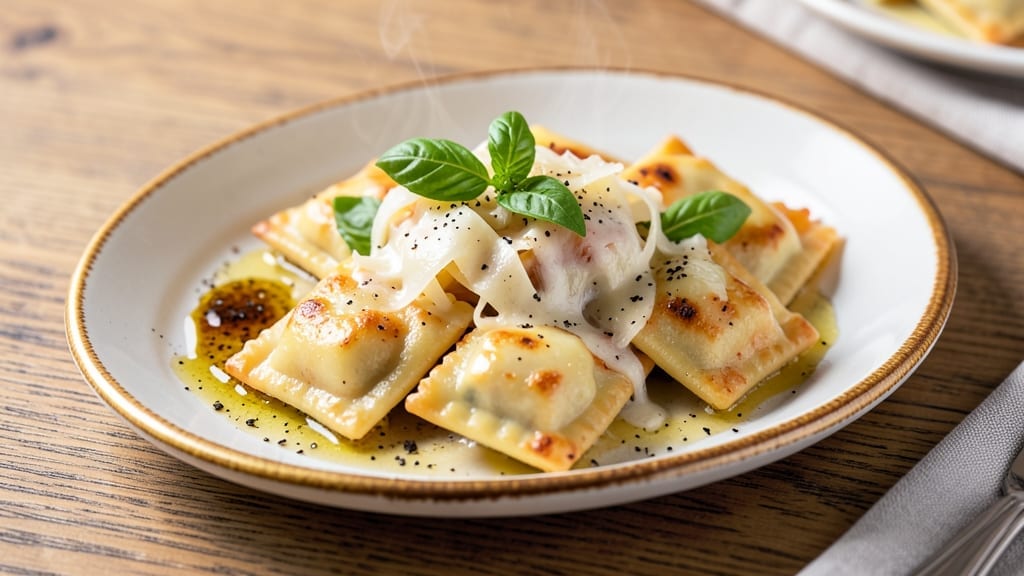
This 3 cheese ravioli pasta recipe delivers restaurant-quality pillowy dough stuffed with a melty, triple-cheese filling that transforms any dinner into a showstopper. The secret lies in combining ricotta, parmesan, and mozzarella for a filling that stays creamy and flavorful while baking, while the dough achieves that signature tender-yet-firm texture.
I’ve perfected this method over years of testing—whether you roll by hand or use a pasta machine, the results are consistently impressive.
The beauty of homemade ravioli is how customizable it is—you can adjust the cheese ratio to your taste or add herbs to the filling for extra depth.
While the process requires patience (especially when assembling the delicate pockets), the reward is worth it: perfectly square ravioli with edges that seal beautifully and a filling that stays gooey inside. This recipe works equally well for special occasions or weeknight dinners, making it a versatile addition to your repertoire.
By the time you serve these ravioli tossed in brown butter and sage or drizzled with marinara sauce, you’ll have a dish that’s both visually stunning and deeply satisfying. The pillowy dough contrasts beautifully with the rich, cheesy filling, creating a balance of textures that’s impossible to resist.
Each bite delivers that perfect combination of creamy, cheesy goodness with a satisfying bite from the al dente pasta.
For those short on time, you can substitute store-bought pasta dough, though I recommend making it from scratch at least once to appreciate the difference. The key to success lies in proper rolling and sealing—don’t rush this step, as it ensures your ravioli hold their shape beautifully during cooking.
Whether you’re serving this as a main course or appetizer, it’s sure to impress.
Ingredients for 3 cheese ravioli pasta
Pillowy dough, triple-cheese magic, and just 14 ingredients transform simple pantry staples into restaurant-worthy ravioli.
| Ingredient | Amount | Notes |
|---|---|---|
| All-Purpose Flour 🌾 | 2 ½ cups | High-protein preferred for elasticity |
| Large Eggs 🥚 | 3 whole | Room temperature for best mixing |
| Unsalted Butter 🧈 | ¼ cup | Cold, cubed for dough texture |
| Whole Milk 🥛 | ½ cup | Warmed slightly for smoother dough |
| Fine Sea Salt 🧂 | ½ tsp | Diamond Crystal preferred |
| Part-Skim Ricotta Cheese 🧀 | 1 cup | Drained overnight for moisture control |
| Parmigiano-Reggiano Cheese 🧀 | ¾ cup | Freshly grated from block |
| Fresh Mozzarella Cheese 🧀 | ½ cup | Low-moisture preferred for texture |
| Fresh Basil Leaves 🌿 | ¼ cup | Finely chopped for filling |
| Garlic Cloves 🧄 | 2 cloves | Minced for filling depth |
| Extra-Virgin Olive Oil 🫒 | 2 tbsp | For dusting pasta sheets |
| Semolina Flour 🌾 | ½ cup | For dusting and rolling |
| Unsalted Butter 🧈 | ¼ cup | Browned for finishing sauce |
| Fresh Sage Leaves 🌿 | ¼ cup | Chopped for butter sauce |
The cheeses make or break this recipe—Parmigiano-Reggiano is non-negotiable for that authentic, nutty depth. I always buy a wedge from Whole Foods or a specialty Italian market because pre-grated lacks the same punch. For ricotta, whole-milk is richer than part-skim, but this recipe works with either. Fresh mozzarella should be the milky, soft kind—not the pre-shredded stuff. If you’re short on time, low-moisture mozzarella blocks shred beautifully. The basil and garlic in the filling? Fresh is non-negotiable—dried just won’t cut it here. Pro tip: Drain your ricotta overnight in a fine-mesh strainer to remove excess moisture, or your ravioli will leak like a sieve.
No fresh basil? Dried oregano at half the amount works in a pinch, though it lacks that bright, sweet note. Substituting Parmesan? Pecorino Romano has a sharper bite that pairs well, but you’ll need to adjust the ratio. Short on mozzarella? Fontina or Gruyère melts beautifully too. For the dough, if you can’t find high-protein flour, add an extra tablespoon of vital wheat gluten for that signature chew. The olive oil matters—use something fruity and peppery like California Early Harvest, not that mild grocery store brand. And if you’re rolling by hand, keep your pasta sheets dusted with semolina so they don’t stick like glue.
Fresh pasta is best made and eaten the same day, but you can freeze uncooked ravioli for up to 2 months on a floured tray before bagging. Thaw in the fridge overnight before cooking. The filling keeps for 2 days in the fridge if you prep it ahead, but the dough is best made fresh. Browned butter sauce? Make it fresh—it reheats poorly. Store unused butter in the freezer in an ice cube tray for single-serving portions. For leftovers, toss with a little pasta water to prevent drying. These reheat beautifully in a dry skillet over medium heat, just like fresh-made.
Why You’ll Love This Recipe
- Same recipe, different vibes: toss with garlic butter for a quick weeknight supper or dress up with prosciutto and sage for guests. The dough freezes like a champ too, so you’re always ready.
- No-Knead Magic: I swear, the dough comes together with just flour, eggs, and a pinch of salt—no stand mixer required. Roll it out while the cheese filling bakes, and suddenly you’ve got pillowy ravioli without the fuss.
- Cheese Overload: Three cheeses (mozzarella, parmesan, and ricotta) melt into a creamy, stretchy dream when baked with butter and milk. That first bite? Pure, gooey satisfaction—no sad, dry pasta here.
- Weeknight to Dinner Party: Same recipe, different vibes: toss with garlic butter for a quick weeknight supper or dress up with prosciutto and sage for guests. The dough freezes like a champ too, so you’re always ready.
Step-by-step instructions for 3 cheese ravioli pasta recipe
Here’s how to craft pillowy ravioli with a triple-cheese filling that melts perfectly.
Make the Pillowy Dough
On a clean work surface, mound the 2.5 cups all-purpose flour and create a well in the center. Add the 3 whole large eggs, 0.25 cup cold unsalted butter (cubed), 0.5 cup whole milk, and 0.5 teaspoon fine sea salt. Using a fork, gently mix the ingredients until they begin to come together.
Once the mixture forms shaggy strands, switch to your hands and knead for 8-10 minutes until the dough becomes smooth and elastic. Wrap it tightly in plastic wrap and let it rest at room temperature for 30 minutes. This resting period relaxes the gluten, making it easier to roll out later. If the dough feels sticky, refrigerate it for an additional 10 minutes—just don’t let it get cold.
Prepare the Triple-Cheese Filling
In a medium bowl, combine the 1 cup part-skim ricotta cheese, 0.75 cup freshly grated Parmigiano-Reggiano cheese, and 0.5 cup fresh mozzarella cheese. Add the 0.25 cup finely chopped fresh basil leaves and 2 cloves minced garlic, mixing gently with a spatula until just combined. The mixture should be smooth but still hold its shape when pressed.
For best results, let the filling sit at room temperature for 10 minutes before using. This allows the ricotta to soften slightly, making it easier to work with. If the filling seems too wet, add 1 tablespoon all-purpose flour to help bind it. Cover the bowl and keep it nearby while you work.
Roll and Cut the Ravioli
Divide the rested dough into 4 equal portions and roll each portion into a thin sheet using a pasta machine or rolling pin. Start with the widest setting on the machine and gradually reduce it until you reach the thinnest setting. Dust the dough and rolling surface with semolina flour to prevent sticking—this also adds a subtle nutty flavor.
Cut the dough into 3-inch wide strips and place a small spoonful of the cheese filling (about 1 teaspoon per ravioli) at the base of each strip. Fold the dough over the filling, pressing gently to seal the edges. Use a ravioli cutter or sharp knife to trim excess dough, then transfer the ravioli to a floured surface. Repeat until all the dough and filling are used.
Cook the Ravioli to Perfection
Bring a large pot of water to a rolling boil and add 1 tablespoon fine sea salt. Once boiling, carefully add the ravioli in batches and cook for 3-4 minutes, or until they float to the surface. This indicates they’re fully cooked and ready to be served. Reserve 1 cup pasta water before draining—it’s essential for adjusting the sauce consistency later.
To finish, heat 2 tablespoons extra-virgin olive oil in a large skillet over medium heat. Add the 0.25 cup chopped fresh sage leaves and 0.25 cup browned unsalted butter, letting them sizzle for 1 minute until fragrant. Toss in the cooked ravioli and a splash of reserved pasta water to create a silky sauce. Serve immediately, garnished with additional Parmigiano-Reggiano cheese and a drizzle of olive oil.
Pro Tips For Making 3 Cheese Ravioli Pasta
- Chill the Dough: After kneading, wrap the dough in plastic and refrigerate for at least 30 minutes—this prevents the butter from melting into a greasy mess when you roll it out. I learned this the hard way when my first batch turned into a sad, sticky blob. Cold dough also makes shaping easier, so don’t skip it.
- Salt the Water Hard: Use about 2 tablespoons of salt in 4 quarts of boiling water—more than you think, especially if your cheese filling is mild. The pasta needs flavor from the water, not just the sauce. (Yes, even if you’re using unsalted butter in the filling.)
- Avoid Overfilling: Fill the ravioli pockets with about 1 teaspoon of cheese mixture per square—too much and they’ll burst when boiling. I used to eyeball it and ended up with cheese oozing out like a disaster. Weigh them down with a rolling pin to seal properly.
- Boil in Batches: Drop ravioli into the water in batches of 8–10, stirring immediately to prevent sticking. Crowd the pot and they’ll glue together like a sad, cheesy glue trap. A slotted spoon helps rescue any stragglers without breaking them.
Flavor customization for this recipe
Classic Cheese Variations
Swap out the mozzarella for fontina or Gruyère—both melt beautifully and add a nutty depth that pairs perfectly with ricotta and Parmesan. For a sharper bite, replace half the Parmigiano-Reggiano with Pecorino Romano.
I once used Asiago instead of Parmesan and loved the extra peppery kick it brought to the filling. 🧀
Herb-Infused Fillings
Fresh herbs elevate the filling beyond just cheese. Try adding ½ cup finely chopped spinach or arugula for a pop of color and mild bitterness. For a Mediterranean twist, mix in 1 tablespoon dried oregano or thyme.
I also love a pinch of red pepper flakes (about ¼ teaspoon) for subtle heat that lingers in every bite.
Spicy & Smoky Twists
Add 1 teaspoon smoked paprika to the filling for a subtle smokiness that complements the cheeses beautifully. For heat lovers, fold in 1 tablespoon minced jalapeño or ½ teaspoon cayenne pepper—just be sure to drain any excess liquid from the jalapeño first.
I once made a sun-dried tomato and basil version by adding 2 tablespoons finely chopped sun-dried tomatoes to the filling, and it became a crowd favorite.
Sweet & Savory Balance
For a surprising but delicious twist, stir in 1 tablespoon honey or maple syrup with the garlic and basil. The sweetness cuts through the richness of the cheese, creating a perfect balance.
I also love adding ½ teaspoon lemon zest to brighten up the filling—it’s a trick I picked up from Italian nonnas who swear by it for fresh pasta.
Protein-Packed Additions
Transform this into a heartier dish by folding in ½ cup cooked and crumbled pancetta or Italian sausage into the filling. For seafood lovers, mix in ¼ cup finely chopped cooked shrimp or clams—just be sure to pat them completely dry first.
I once made a ricotta, spinach, and crab meat version that felt like a luxurious appetizer or light main course.
Gluten-Free Adaptations
For a gluten-free version, replace the all-purpose flour with 1½ cups gluten-free all-purpose flour blend (like Bob’s Red Mill 1:1) and add 1 tablespoon xanthan gum to improve elasticity. The filling remains the same, but you’ll need to handle the dough more gently—gluten-free dough is trickier to roll thin.
I’ve found that rice flour works well too, though it gives a slightly different texture.
Nutrition facts
Frequently asked questions
Can I make this recipe with store-bought pasta dough?
For a quick version, use 1 pound fresh pasta sheets (like Barilla or De Cecco) and skip the dough-making. Just roll them thin with a rolling pin or pasta machine. The texture won’t be quite as pillowy, but it’s a great shortcut for weeknight meals. Pro tip: Dust with extra semolina to prevent sticking while you assemble.
Why does my cheese filling leak when cooking?
Leaky filling usually means too much moisture in the ricotta. Always drain ricotta overnight in a fine-mesh strainer before using. If the filling still feels wet, add 1 tablespoon all-purpose flour or grated Parmesan to absorb excess liquid. Also ensure your dough is rolled thin enough to seal properly around the filling.
How do I prevent the ravioli from sticking together?
Keep your work surface and dough sheets generously dusted with semolina flour (not regular flour) while assembling. After cooking, immediately toss the ravioli with a little olive oil or butter to create a protective barrier. For storage, freeze them on a floured tray before bagging to prevent clumping. Always use plenty of salted boiling water—this helps the starches release and keeps them from sticking.
What’s the best way to reheat leftover ravioli?
Reheat in a dry skillet over medium heat for 2-3 minutes, stirring occasionally with a splash of pasta water or butter. Microwaving works in a pinch (cover with a damp paper towel for 30-45 seconds), but the texture won’t be as satisfying. For frozen ravioli, cook from frozen in boiling water for 1 extra minute beyond the usual time.
Can I make the filling ahead of time?
Yes! The filling keeps well in the refrigerator for 2 days covered tightly. For longer storage, freeze it in an airtight container for up to 1 month. Thaw overnight in the fridge before using. The dough, however, is best made fresh—it loses elasticity when refrigerated. If you need to prep ahead, make the dough, rest it, then freeze the rolled sheets between parchment paper for up to 2 weeks.

- 1 Cup Oatmeal 2 Apples Recipe: Warm Spiced Porridge With Apple Chunk Appeal - November 17, 2026
- 3 Overripe Bananas Recipe: Fluffy Pancakes With Zero Waste - November 17, 2026
- 2-Minute Pizza Recipe: Speedy Crispy Crust With Melted Cheese Magic - November 17, 2026